Maria Isabel RIBEIRO1, Edson MUSSALAMA2, Agnaldo MANHIÇA2, Paula CABO1
Armando VENÂNCIO3, Sandra AFONSO4, Paula RODRIGUES1 and Custódia MACUAMULE2
1CIMO, LA SusTEC, Instituto Politécnico de Bragança, Campus de Santa Apolónia,Bragança, Portugal
2UEM-Veterinary Faculty, Universidade Eduardo Mondlane, Maputo, Mozambique
3CEB – Centre of Biological Engineering, University of Minho, Braga, Portugal/LABBELS – Associate Laboratory, Braga/Guimarães, Portugal
4ISPCS- Instituto Superior Politécnico de Cuanza Sul,. Angola/CNIC- Centro Nacional de Investigação Científica, Avenida Ho Chi Minh, Maianga, Luanda, Angola
Volume 2026,
Article ID 545016,
Research in Agriculture and Agronomy,
17 pages,
DOI: https://doi.org/10.5171/2026.545016
Received date: 19 September 2026; Accepted date: 7 January 2026; Published date: 11 February 2026
Cite this Article as:
Maria Isabel RIBEIRO, Edson MUSSALAMA, Agnaldo MANHIÇA, Paula CABO, Armando VENÂNCIO, Sandra AFONSO, Paula RODRIGUES and Custódia MACUAMULE (2026), “Food Consumption Practices and Implications for Mycotoxin Exposure Risk: A Cross-sectional Study in Inhambane and Gaza Provinces, Mozambique”, Research in Agriculture and Agronomy, Vol. 2026 (2026), Article ID 545016, https://doi.org/10.5171/2026.545016
Diet is considered the main route of exposure to the risk of mycotoxin poisoning. Consequently, given the prevalence of mycotoxins in Mozambique, there is a need to develop studies on the population’s consumption habits to implement control and mitigation strategies in a sustainable way. This quantitative and cross-sectional study aimed to report the dietary habits of the population in two provinces of Mozambique and to investigate whether province, place of residence, gender, and age were differentiating factors in dietary habits. Primary data were collected using a food frequency questionnaire adapted from a validated version for Portugal, which was modified to include foods commonly consumed in Mozambique. The data, collected by agricultural technicians between October and November 2022, refer to 300 individuals from 55 households. According to the results, 58.4% of the products consumed by families were of local origin, 40.2% were of national origin, and only 1.4% were imported. Foods such as milk, oil, fresh fish, eggs, rice, bread, sugar, onions, water, mango, and bananas are part of the daily diet of these households. In addition, it was found that the province, environment, and gender of the participants acted as differentiators of eating habits. That is, a greater quantity of foods from all food groups was consumed in the urban environment compared to the rural one. Considering the province, the consumption of fats, bread, and cereals is higher in Gaza, while, in Inhambane, dairy products, fats, fruits, and beverages are consumed in greater quantities. Finally, considering gender, it was found that women consume a greater quantity of dairy products. These results are crucial for the development of sampling strategies that assess fungal and mycotoxin contamination and estimate the risk of exposure to the studied population.
Understanding dietary habits is essential for elucidating the relationship between nutrition and health outcomes at both individual and population levels (Volp et al., 2010). Food safety has emerged as a pressing public health concern, as consumers are increasingly exposed to diverse hazardous agents through food consumption (Malissiova et al., 2020). Among these, mycotoxins, secondary metabolites produced by specific filamentous fungi (Unicsovics et al., 2024), pose a particularly significant risk. These compounds can enter the human diet through contaminated plant products or residues in animal-derived foods (Unicsovics et al., 2024) and have been implicated in disorders affecting the gastrointestinal, urogenital, vascular, renal, and nervous systems. Importantly, mycotoxin exposure has been linked to the development of various cancers, including breast, lung, brain, skin, and colon malignancies (Malissiova et al., 2020; Demirel & Doğan, 2023).
In Mozambique, mycotoxins represent a substantial public health threat. Approximately 80% of the population relies primarily on agriculture for income, often as their sole livelihood. Key staple crops, including maize, cassava, and peanuts, are particularly susceptible to mycotoxin contamination (Tamele et al., 2022). The paucity of experimental research and the absence of systematic monitoring programs further exacerbate the population’s risk of exposure (Van Rensburg et al., 1985).
Against this backdrop, the present study aimed to describe the dietary habits of populations in Gaza and Inhambane provinces and to assess potential differences in monthly consumption by province, residence, sex, and age group.
The manuscript is structured into five sections. Section 1 introduces the study and its rationale; Section 2 provides a review of the relevant literature; Section 3 details the methodology, including data collection and analysis procedures; Section 4 presents the results with accompanying tables and figures, followed by a critical discussion; and Section 5 concludes with key findings, recommendations, study limitations, and suggestions for future research.
Literature Review
Dietary exposure to contaminants is influenced by various factors, including eating habits, food types and quantities, contaminant concentrations, processing methods, seasonal variations, and geographic location (Malissiova et al., 2020). Mycotoxins are a diverse group of environmentally persistent compounds that can cause adverse health effects or death in humans and animals when ingested, inhaled, or absorbed (Stoev, 2013). The most common species belong to Aspergillus,Penicillium, and Fusarium (Unicsovics et al., 2024).
Marin et al. (1996) reported that trichothecenes, fumonisins, ochratoxins, and zearalenone contribute substantially to dietary exposure. Cereals, nuts, fruits, fats and oils, and alcoholic beverages are primary sources of human exposure.
Malissiova et al. (2020) studied 403 residents in Thessaly, Greece, finding adherence to a Mediterranean diet rich in fruits, vegetables, milk, and dairy products. Mycotoxins and pesticides were primarily detected in cereals, including rice, with women and older adults (aged 65 years and above) exhibiting higher exposure.
Unicsovics et al. (2024) conducted a cohort study of 52 women (44-86 years) with histologically confirmed endometrial cancer, divided into low-grade (grades 1-2) and high-grade (grade 3) groups. Higher aflatoxin and zearalenone levels correlated with greater cancer severity.
Frequent contamination of crops by mycotoxin-producing fungi is driven by climatic conditions, poor agricultural practices, poverty, limited producer knowledge, and weak regulation (Ezekiel et al., 2021). In humid tropical regions, high temperatures and rainfall favor fungal growth, while socioeconomic challenges exacerbate the risk of contamination (Ekwomadu & Mwanza, 2015).
Mozambique faces high food insecurity and malnutrition due to limited access to safe, nutritious foods (FAO, 2009). Droughts and irregular rainfall exacerbate vulnerability in Nampula, Tete, Manica, Gaza, Inhambane, and Maputo, while floods affect Sofala, Manica, and Gaza (CNSAN, 2021).
Although research on mycotoxins in Mozambique is limited, aflatoxins, especially aflatoxin B1 (AFB1), have been most studied due to their toxicity, association with liver cancer (Van Rensburg et al., 1985), and export restrictions on peanuts and maize (Augusto et al., 2014). Warth et al. (2012) detected high aflatoxin levels in maize and peanuts from Nampula markets, while a review of 42 maize and soil samples confirmed predominance of Aspergillus flavus (Probst et al., 2014). Post-harvest practices further influence toxin levels in the diet. Hlashwayo (2018) found mean AFB1 concentrations in raw peanuts from Maputo markets of 2.71 µg/kg, exceeding the European Union limit of 8 µg/kg. Based on this context, the following null hypotheses were formulated:
H01: Eating habits are similar in Gaza and Inhambane provinces.
H02: Rural or urban environment does not influence eating habits.
H03: Food consumption, by food groups, is independent of gender.
H04: Food consumption, by food group, is not associated with age.
Methodology
A quantitative, cross-sectional study was conducted in Gaza and Inhambane provinces, southern Mozambique, between October and November 2022. Three districts per province were selected: Gaza (Chokwé, Chonguene, Mandjakaze) and Inhambane (Jangamo, Massinga, Inharrime). Selection criteria included high production of crops prone to fungal contamination and mycotoxin formation (such as maize, peanuts, and beans) (MADER, 2021), elevated household food insecurity (INE, 2020), a lack of local dietary studies, and limited research funding.
Data were collected using a food frequency questionnaire (FFQ) adapted from a validated Portuguese version to include Mozambican foods and categorized according to the Food Pyramid (Philippi et al., 1999). Portion sizes were recorded in grams or household measures. A pilot test with six households ensured clarity and comprehension of the questionnaire.
The final FFQ, administered by trained interviewers, comprised three sections: (1) socio-economic profile, including residence, gender, age, marital status, education, household size and income, ethnicity, religion, occupation, and housing type; (2) dietary habits, including food origin, presence of infants, meals outside the home, and frequency of eating out; and (3) average monthly consumption across nine food groups: Dairy; Oils and Fats; Eggs, Meat and Fish; Bread, Cereals and Similar; Sweets and Pastries; Vegetables; Fruits; Beverages; and Others.
A non-probabilistic convenience sample was used. Based on 2017 census data (Gaza: 1,465,802 inhabitants; Inhambane: 1,564,289 inhabitants) (INE, 2022) and the formula (1) presented by Yamane (1967) at a 90% confidence level, and 10% margin of error, a minimum of 100 participants per province was required.
Where:
n – sample size to be calculated.
N – relevant population.
e – standard error (dependent on the desired level of confidence).
Data were entered into Excel and analyzed descriptively. As the distributions were non-normal, the Mann–Whitney and Kruskal–Wallis tests were applied, with significance set at 0.05. Participants were fully informed of the study’s aims, assured of anonymity, and provided written informed consent prior to participation.
Results and Discussion
In this section, the respondents’ profiles are initially presented. This is followed by the weight of food consumed by food groups and by provinces. Finally, monthly consumption is compared by province, place of residence, gender, and age groups.
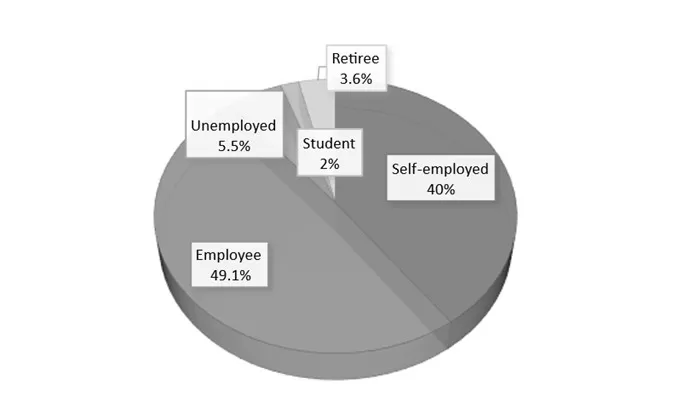
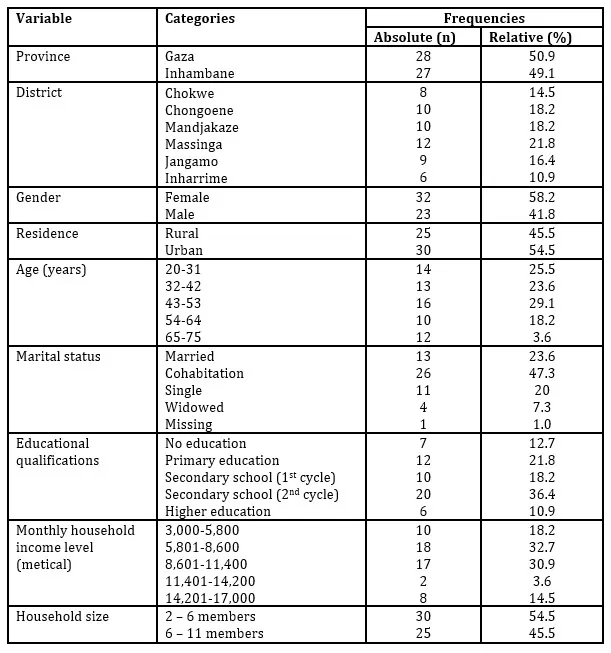
Considering the profile of the family head, Table 1 indicates that most family heads resided in urban areas (54.5%), were female (58.2%), relatively young (49.1%), married or in a marital union (70.9%), and had completed at least lower secondary education (65.5%). Ages of family heads ranged from 20 to 75 years, with a mean of 42.3 years (SD = 13.73). The median and mode were 43 and 21 years, respectively. Additionally, most households reported an income between 5,800 and 11,400 metical (63.6%), equivalent to 2 to 3 minimum wages in Mozambique. Most family heads were either self-employed (49.1%) or employed by others (40.0%), as shown in Figure 1.
Fig 1. Professional status of the head of the family
The heads of 55 households were interviewed, 28 from Gaza Province (50.9%) and 27 from Inhambane Province (49.1%), as shown in Table 1. Most households consisted of 2 to 5 members (54.5%), while the remaining households had between 6 and 11 members (45.5%).
Table 1: Respondents’ profile
Considering all members of the 55 families (n = 300; Gaza: n = 151; Inhambane: n = 149), only 10 were infants (Gaza: n = 8; Inhambane: n = 2), although only 8 reported being breastfed (Gaza: n = 7; Inhambane: n = 1). In Gaza, of these, 3 were exclusively breastfed, 3 received mixed feeding (breast milk/formula, or porridge), and 1 was predominantly breastfed, with the introduction of water/tea. In Inhambane, there was only one infant, who was exclusively breastfed. In Mozambique, maize is the staple food. Most children consume maize flour porridge as their first food, with most mothers adding table sugar to enhance flavor and palatability (Dewey & Brown, 2003). In the northern regions of the country, sweet potatoes and cassava flour are commonly included in main meals. These foods are among the agricultural products that present varying levels of risk for mycotoxin contamination, ranging from moderate to high.
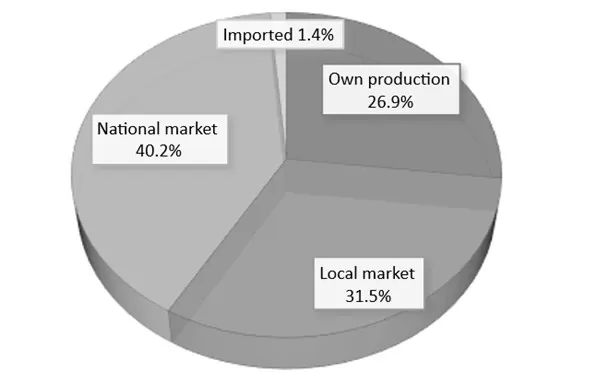
As shown in Figure 2, 58.4% of the products consumed by families were locally sourced, 40.2% were of national origin, and only 1.4% were imported.
Fig 2. Origin of products consumed by families
To approach the dietary intake, the relative weight of each food item within its respective food group was first determined, followed by an analysis of the distribution of each food item by province. The relative frequency of consumers per food item and per food group was also calculated.
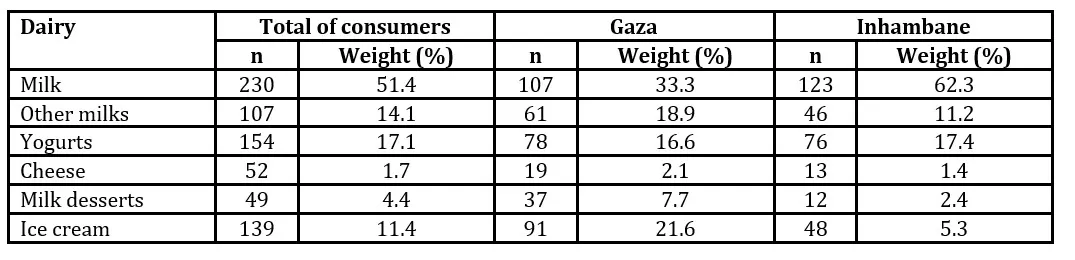
Within the “Dairy” group, Table 2 shows that the three foods with the highest weight were milk (51.4%), yoghurt (17.1%), and other dairy products (14.1%), with milk and yoghurt having a higher weight in Inhambane compared to Gaza.
Table 2: Weight of products consumed in the “Dairy” food group and number
of consumers in total and by province
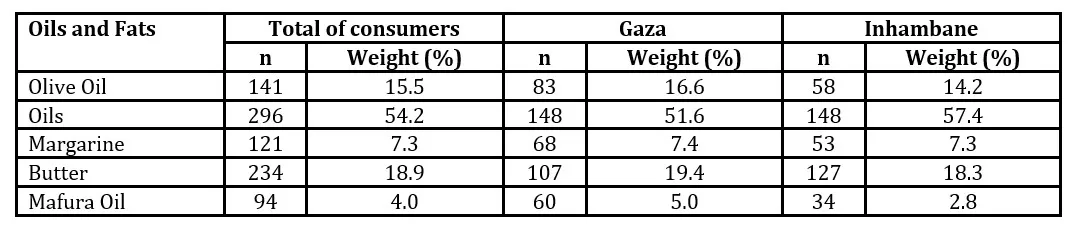
Regarding “Oils and Fats,” Table 3 shows that oils (54.2%), butter (18.9%), and olive oil are the products with the highest weight in the food group (over 10%). These are also the products with the highest weight by province.
Table 3: Weight of products consumed in the “Oils and Fats” food
group and number of consumers in total and by province
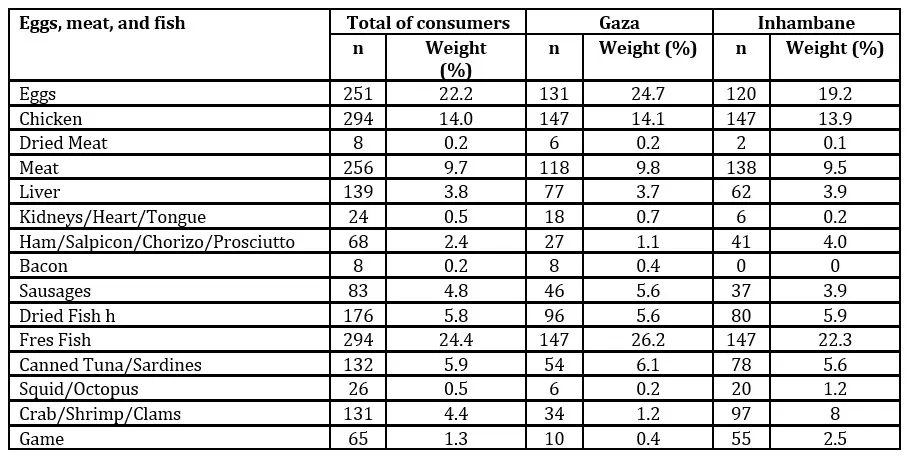
In the “Eggs, meat, and fish” food group, Table 4 shows that the three products with the highest weight are fresh fish (24.4%), eggs (22.2%), and chicken (14.0%). Furthermore, fresh fish, chicken, beef, pork, goat, and rabbit meat, as well as eggs and dried fish, are among the foods commonly consumed by most household members.
Table 4: Weight of products consumed in the “Eggs, meat, and fish”
food group and number of consumers in total and by province
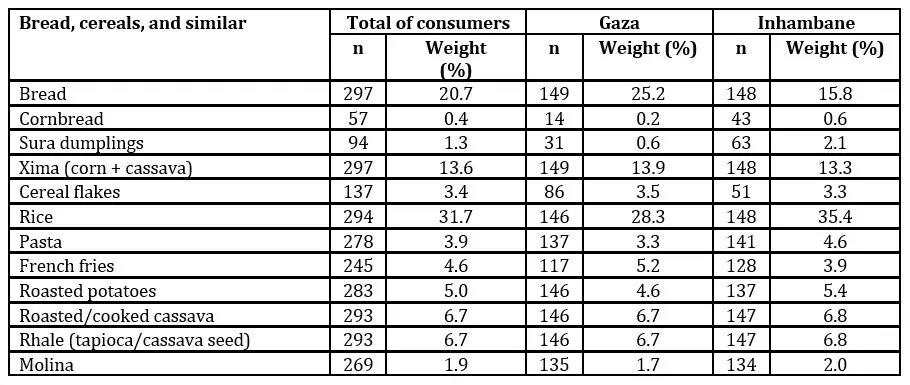
In the food group “Bread, cereals and similar”, rice (31.7%), bread (20.7%), and xima (13.6%) are foods that account for more than 10% (Table 5) and are also the products sought by the largest number of consumers.
Table 5: Weight of products consumed in the “Bread, cereals and similar”
food group and number of consumers in total and by province
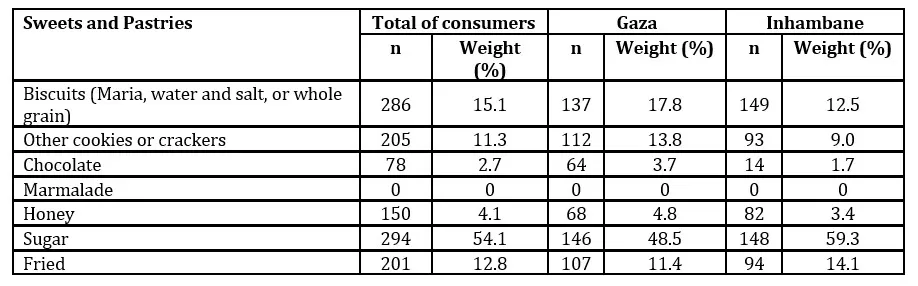
Within the “Sweets and Pastries” group, the three products with the highest consumption weight were sugar (54.1%), biscuits (Maria, water & salt, or wholemeal) (15.1%), and fried cakes (12.8%) (Table 6). In Inhambane, biscuits were consumed by all family members, while fried cakes (14.1%) had a higher weight compared to Gaza (11.4%).
Table 6: Weight of products consumed in the “Sweets and Pastries” food group and number of
consumers in total and by province
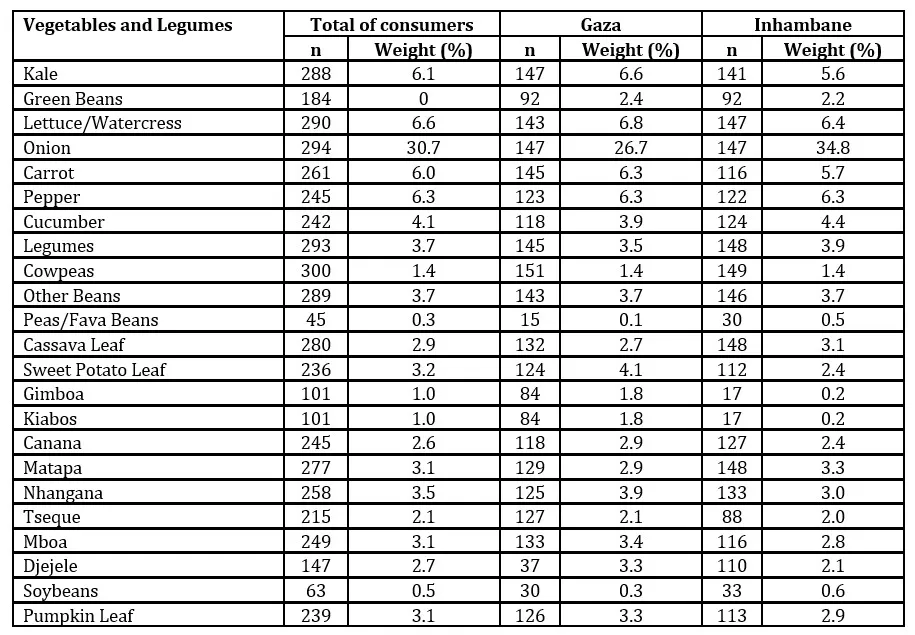
Within the “Vegetables and Legumes” group, onion (30.7%), lettuce/watercress (6.6%), and carrot (6.0%) were the three most representative products. Beans showed equal consumption across provinces, whereas onion consumption was higher in Inhambane. Overall, the three foods consumed by the vast majority of participants were Nhemba beans (100%), onion (98.0%), and other beans (96.3%) (Table 7).
Table 7: Weight of products consumed in the “Vegetables and Legumes”
food group and number of consumers in total and by province
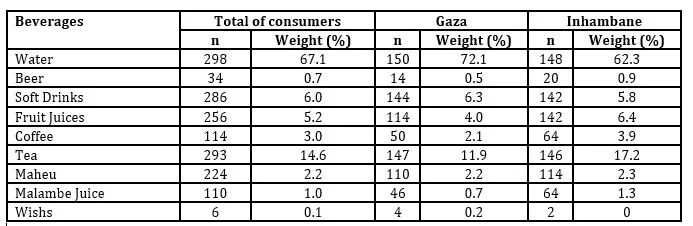
Within the “Beverages” group, water (67.1%), tea (14.6%), and soft drinks (6.0%) were the three products with the highest weight in the diet, as well as the most frequently consumed (Table 8). However, by province, consumers in Inhambane preferred fruit juices, whereas those in Gaza preferred soft drinks.
Table 8: Weight of products consumed in the “Beverages” food group
and number of consumers in total and by provinces
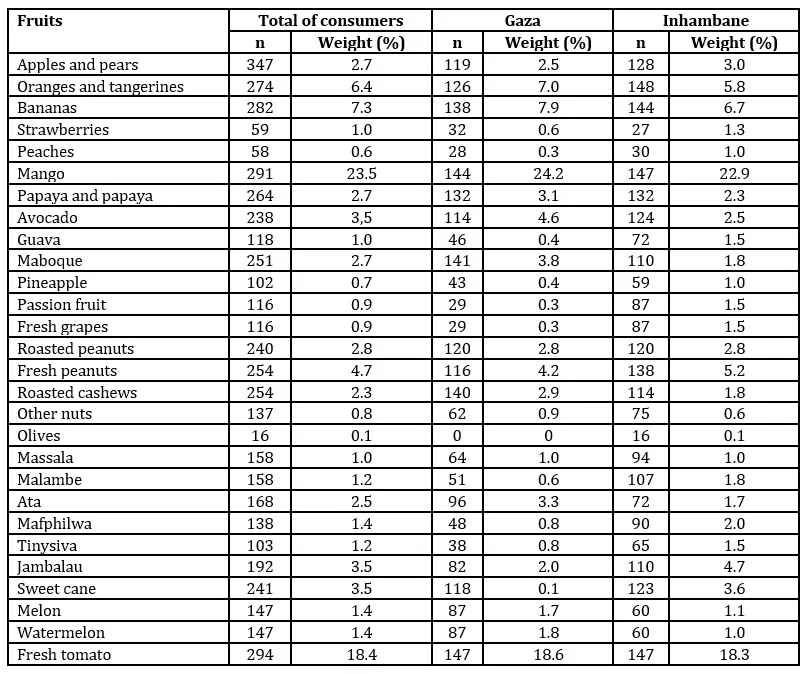
Within the “Fruits” group, the most consumed items were mango (97.0%), fresh tomato (98.0%), and banana (94.0%). These products were also the most representative when considering average monthly consumption (Table 9).
Table 9: Weight of products consumed in the “Fruits” food group and
number of consumers in total and by province
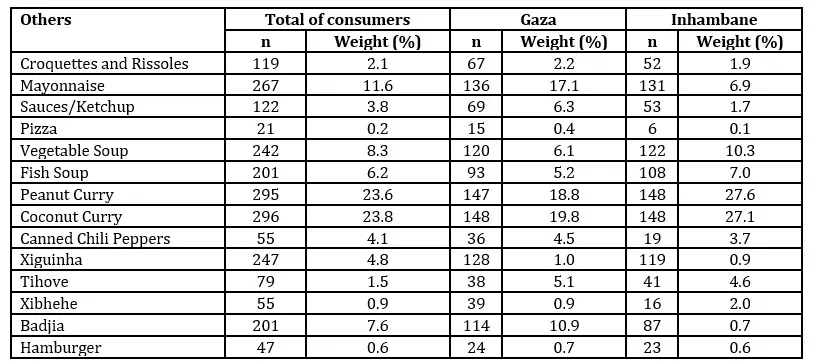
Within the “Others” food group, coconut curry (23.8%), peanut curry (23.6%), and mayonnaise (11.6%) had the highest consumption weight
(Table 10). In Inhambane, the average consumption of coconut and peanut curry was higher than in Gaza. In Inhambane, vegetable soup ranked third among the highest-weighted products, while in Gaza it was mayonnaise.
Table 10: Weight of products consumed in the “Others” food group
and number of consumers in total and by province
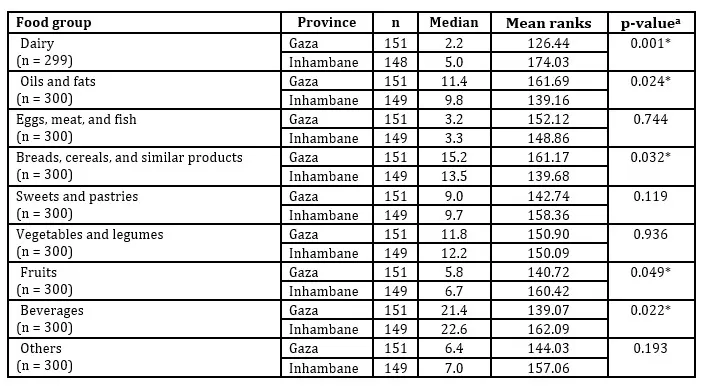
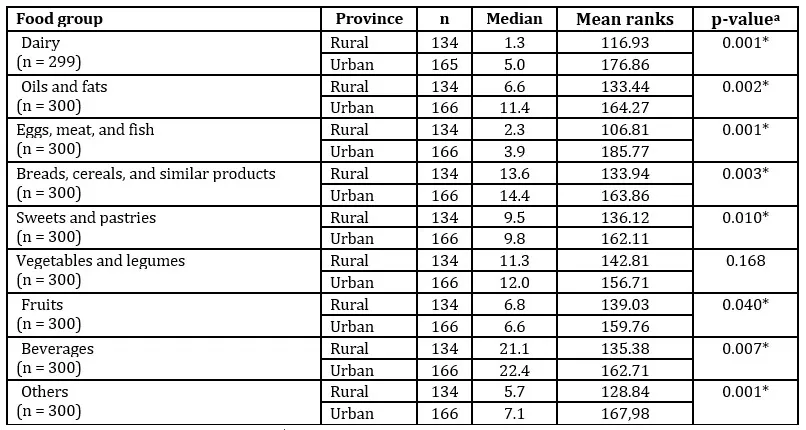
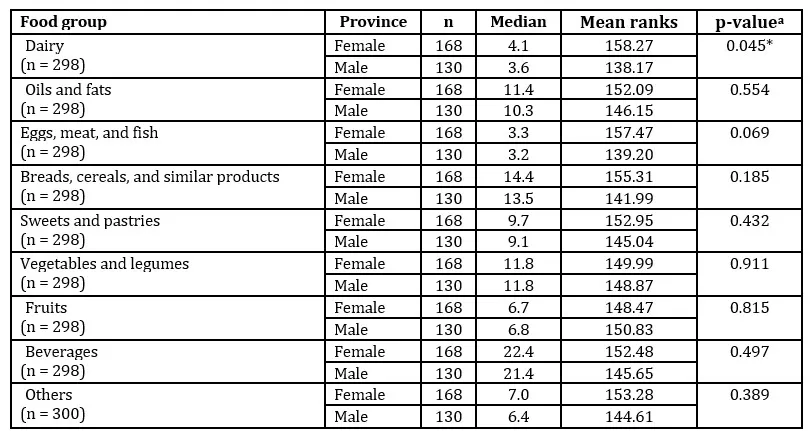
To identify differences, monthly median food consumption was compared by province, place of residence, gender, and age group. The results are presented in Tables 11–16.
The comparison of consumption by province shows no statistically significant differences for “Eggs, meats and fish” (p-value = 0.744 > 0.05), “Sweets and pastries” (p-value = 0.119 > 0.05), “Vegetables and legumes” (p-value = 0.936 > 0.05), and “Others” (p-value = 0.193 > 0.05), indicating that monthly quantities were similar across provinces. However, Gaza showed higher consumption of “Oils and fats” and “Bread, cereals and similar products” (p-value < 0.05). In contrast, Inhambane showed higher consumption of “Dairy” (p-value = 0.001 < 0.05), “Fruits” (p-value = 0.049 < 0.05), and “Beverages” (p-value = 0.022 < 0.05), as shown in Table 11.
Table 11: Weight of Monthly quantity (portions) of food consumed by food group and by province
*Statistically significant differences at the 5% significance level.
a Obtained with the Mann-Whitney test.
In Table 12, the median consumption by food group according to place of residence is presented. The results indicate that food consumption differs statistically across all food groups (p-value < 0.05), except for the “Vegetables and legumes” group (p-value = 0.168 > 0.05), for which no statistically significant differences were observed. However, consumption of these products was slightly higher in urban areas compared to rural areas. A similar pattern was observed for the remaining food groups. Overall, median food consumption was generally higher in urban areas.
Table 12: Weight of Monthly quantity (portions) of food consumed by food group and by place of residence
*Statistically significant differences at the 5% significance level.
a Obtained with the Mann-Whitney test.
Only “Dairy” consumption differed significantly by gender, with females consuming more than males (p = 0.045 < 0.05). For other groups, consumption was similar across genders (p-value > 0.05) (Table 13).
Table 13: Weight of Monthly quantity (portions) of food consumed by food group and by gender
tatistically significant differences at the 5% significance level.
a Obtained with the Mann-Whitney test.
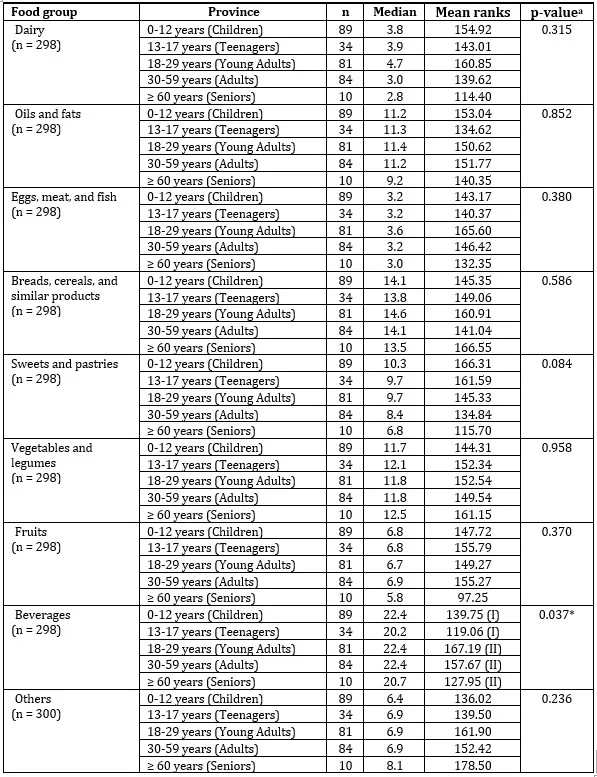
Regarding age groups, the “Beverages” food group was the only one to show statistically significant differences (p-value = 0.037 < 0.05). For the remaining food groups, although differences were not statistically significant (p-value > 0.05), some disparities were observed. For instance, elderly individuals consumed the least amounts of “Dairy,” “Eggs, Meats and Fish,” “Sweets and Pastries,” and “Fruits.” This age group, however, had the highest consumption of “Vegetables and Legumes,” “Bread, Cereals and Similar,” and “Other” food items. In contrast, children consumed higher amounts of “Oils and Fats” and “Sweets and Pastries,” and lower quantities of “Vegetables and Legumes” and “Other” foods. Young adults consumed the most “Dairy” and, together with adults, were the highest consumers of “Eggs, Meats, and Fish.” Additionally, adults consumed lower quantities of “Bread, Cereals and Similar” but higher amounts of “Fruits,” along with adolescents. Adolescents, in turn, consumed the lowest amounts of “Oils and Fats” (Table 14).
Table 14: Weight of Monthly quantity (portions) of food consumed by food group and by age
*Statistically significant differences at the 5% significance level.
a Obtained with the Kruskal-Wallis test.
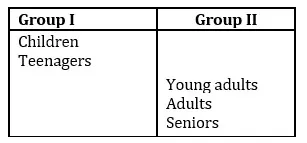
Statistically significant differences were observed in the “Beverages” food group across age categories, leading to the identification of two homogeneous groups (I and II). Group I included children and adolescents, whose consumption did not differ significantly from each other (p > 0.05) but was significantly lower (p-value < 0.05) than that of Group II, which comprised young adults, adults, and the elderly. In Group II, beverage consumption was both statistically higher and significantly different from that in Group I (Figure 3).
Fig 3. Homogeneous groups within the “Beverages” food group
Conclusion
This study provides a comprehensive analysis of the dietary habits of families residing in Gaza and Inhambane provinces, Mozambique. Their diets were dominated by vegetables and greens (notably onions, lettuce/watercress, and carrots), beverages (mainly water and tea), fruits (such as mangoes, fresh tomatoes, and bananas), and staple foods including rice, bread, and xima.
The comparative analysis of median monthly consumption revealed that the intake of eggs, meat, and fish, sweets and pastries, and other foods was largely consistent across both provinces. However, differences emerged across all food groups when considering the type of residence, most prominently in the vegetables and greens category. Demographic factors, including age and gender, influenced consumption patterns primarily in the dairy and beverages groups.
Importantly, these diets include substantial quantities of foods either produced domestically or sourced from local and national markets, which are highly vulnerable to contamination by fungi and mycotoxins. This represents a significant public health concern, emphasizing the need for systematic screening, monitoring, and control strategies, alongside preventive and proactive interventions at every stage of the food supply chain, from production and distribution to consumption.
Future work will focus on in situ sampling of foods across these categories to assess fungal and mycotoxin contamination and to quantify the associated risk of population exposure. Such data will be crucial for informing targeted public health strategies and mitigating dietary exposure to mycotoxins.
Funding
This research was funded by the Foundation for Science and Technology (FCT, Portugal) and the Aga Khan Development Network (AKDN), through the project Ref. FCT AGA-KHAN/541590696/2019 “MYCOTOX-PALOP—Multi-actor partnership for the risk assessment of mycotoxins along the food chain in African Portuguese-speaking countries (PALOP)”. We also thank FCT for their financial support through national funds FCT/MCTES (PIDDAC) to CIMO (UIDB/00690/2020 and UIDP/00690/2020), SusTEC (LA/P/0007/2020), and LABBELS (LA/P/0029/2020).
References
Augusto, J., Atehnkeng, J., Akello, J., Cotty, P., & Bandyopadhyay, R. (2014). Prevalence and distribution of Aspergillus section flavi in maize and groundnut fields and aflatoxin contamination in Mozambique. Proceedings of the 2014 APS-CPS Joint Meeting, 9–13 August 2014. The American Phytopathological Society, Minneapolis, MN, USA.
CNSAN (Conselho Nacional de Segurança Alimentar e Nutricional). (2021). Relatório da avaliação de segurança alimentar e nutricional aguda, CNSAN, Maputo.
Demirel, G., & Doğan, N.N. (2023). Assessment of awareness and behavioral habits to reduce dietary exposure to mycotoxins, Journal of Faculty of Pharmacy of Ankara University, 47 (3), 994-1002.
Dewey, K. G., & Brown, K. H. (2003). Update on technical issues concerning complementary feeding of young children in developing countries and implications for intervention programs, Food and Nutrition Bulletin, 24, 5-2.
Ekwomadu, T. I., & Mwanza, M. (2015). Decade of mycotoxins research in Africa: a review. Occurrence, Toxicology and Management Strategies, Academia: Prague, 169-216.
Ezekiel, C.N., Ayeni, K.I., Akinyemi, M.O., Sulyok, M., Oyedele, O.A., Babalola, D.A., Ogara, I.M., & Krska, R. (2021). Dietary risk assessment and consumer awareness of mycotoxins among household consumers of cereals, nuts and legumes in North-Central Nigeria, Toxins, 13 (9), 635.
FAO (Food and Agriculture Organization) (2009). Declaration of the World Summit on Food Security, World Summit on Food Security, United Nations, Rome, Italy.
Hlashwayo, D.F. (2018). Aflatoxin B1 contamination in raw peanuts sold in Maputo City, Mozambique and associated factors, Journal of Stored Products and Postharvest Research, 9 (6), 58-67.
Instituto Nacional de Estatística (INE) (2020). Indicadores Básicos de Agricultura e Alimentação: Breves Comentários, INE, Maputo.
Instituto Nacional de Estatística (INE) (2022). Indicadores Básicos de Agricultura e Alimentação 2018-2022, INE, Maputo.
(2021). Inquérito Agrário Integrado 2020: Marco Estatístico. Ministério da Agricultura e Desenvolvimento Rural, Maputo.
Malissiova, E., Soultani, G., Kogia, P., Koureas, M., & Hadjichristodoulou, C. (2020). Analysis of 20-year data for the assessment of dietary exposure to chemical contaminants in the region of Thessaly, Greece, Food Control, 136, 108838.
Marin, D.H., Sutton, T.B., Blankenship, S.M., Swallow, W.H. (1996). Pathogenicity of fungi associated with crown rot of bananas in Latin America on Grande Naine and disease-resistant hybrid bananas. Plant Dis, 80, 525–528.
Philippi, S.T., Latterza, A.R., Cruz, A. T.R., & Ribeiro, L.C. (1999). Pirâmide alimentar adaptada: guia para escolhas de alimentos, Brazilian Journal of Nutrition, 12 (1), 65-80.
Probst, A., Weinmaier, T., Raymann, K. et al. (2014). Biology of a widespread uncultivated archaeon that contributes to carbon fixation in the subsurface, Nature Communications, 5, 5497.
Stoev S. D. (2013). Food safety and increasing hazard of mycotoxin occurrence in foods and feeds, Critical Reviews in Food Science and Nutrition, 53, 887-901.
Tamele, I., Hassouani, M., Timba, I., Guimarães, T., Maia, R., Falé, Z., & Vasconcelos, V. (2022). Mycotoxins in Mozambique: Need for a national monitoring programme, South African Journal of Science, 118 (9/10), 1-8.
Unicsovics, M., Molnár, Z., Mézes, M., Posta, K., Nagyéri, G., Várbíró, S., Ács, N., Sára, L., & Szőke, Z. (2024). The Possible Role of Mycotoxins in the Pathogenesis of Endometrial Cancer, Toxins, 16 (6), 236.
Van Rensburg, S. J., Cook-Mozaffari, P., Van Schalkwyk, D.J., Van der Watt, J.J., Vincent, T.J., & Purchase, I.F. (1985). Hepatocellular carcinoma and dietary aflatoxin in Mozambique and Transke, British Journal of Cancer, 51, 713-726.
Volp, A.C.P., Alfenas, R.C.G., Costa, N.M.B., Minim, V.P.R., Stringueta, P.C., & Bressan, J. (2010). Índices dietéticos para avaliação da qualidade de dietas, Brazilian Journal of Nutrition, 23 (2), 281-295.
Warth, B.A., Parich, J., Atehnkeng, R., Bandyopadhyay, R., Schuhmacher, M., &Sulyok, R.K. (2012). Quantitation of Mycotoxins in Food and Feed from Burkina Faso and Mozambique Using a Modern LC-MS/MS Multitoxin Method, Journal of Agricultural and Food Chemistry, 60 (36), 9352–63.
Yamane, T. (1967). Statistics: An Introductory Analysis, 2nd Edition, Harper and Row, New York.