2Kent University,Advisor to the Rektor for the Relations and Brand Management
Volume 2025,
Article ID 585927,
Communications of the IBIMA,
15 pages,
DOI: https://doi.org/10.5171/2025.585927
Received date: 17 February 2025; Accepted date: 24 June 2025; Published date: 24 July 2025
Academic Editor: Feyza Ağlargöz
Cite this Article as:
Özlem Tuğçe KELEŞ and Ayça Can KIRGIZ (2025)," Framing the City: How Turkish Netflix Dramas Use Historical Locations for Urban Branding", Communications of the IBIMA, Vol. 2025 (2025), Article ID 585927, https://doi.org/10.5171/2025.585927
The convergence of digital platforms and television content has reshaped global media consumption, offering new opportunities for cultural communication and branding. This study examines how Turkish Netflix dramas utilize historical locations to contribute to city branding and public diplomacy. Departing from traditional narratives, contemporary Turkish series strategically integrate iconic cultural and historical sites into diverse genres, creating a visual narrative that elevates the touristic and cultural value of cities. Employing a qualitative methodology grounded in Charles Sanders Peirce’s semiotic framework, the research analyzes historical locations in Turkish series as visual signs that construct meaning through narrative positioning. The study reveals three main functions of these representations: (1) reinforcing national identity through symbolic cultural imagery, (2) enhancing global visibility of cities as cultural destinations, and (3) supporting public diplomacy efforts by framing Turkey’s heritage in a globally accessible format. This research contributes to the evolving discourse on digital media, cultural representation, and city branding by highlighting the symbolic power of audiovisual storytelling in shaping international perceptions of place and identity. Turkish television dramas, which have garnered considerable global popularity, often embed historical settings into their storylines. Whereas earlier internationally exported productions largely centered on historical narratives, more recent Turkish series on platforms such as Netflix display genre diversity while purposefully incorporating cultural and historical landmarks. This research contends that such spatial representations actively contribute to the branding of cities by framing them as sites of cultural and touristic significance, ultimately shaping international perceptions of Turkey’s cultural identity and heritage. Utilizing a qualitative methodology grounded in Charles Sanders Peirce’s semiotic framework, the study explores the role of historical sites as signifiers within Turkish television narratives. The analysis reveals that these representations fulfill three core functions: (1) reinforcing national identity through cultural symbolism, (2) enhancing the global visibility of cities as cultural destinations, and (3) advancing the objectives of public diplomacy through digitally mediated storytelling. By examining the nexus of digital platforms, media imagery, and urban representation, this study offers a fresh lens on how visual storytelling can function as a potent symbolic mechanism for cultural communication and identity construction. The integration of television content into digital platforms has redefined the consumption and distribution of audiovisual media, enabling global accessibility across multiple countries and cities. This shift challenges traditional media theories and raises questions regarding the strategic functions of TV series and films beyond entertainment. One significant aspect of this transformation is its role in public diplomacy and city branding, particularly through the representation of historical and cultural locations. Turkish TV series, which have gained substantial international recognition, frequently incorporate historical sites as narrative elements. While earlier productions exported abroad predominantly featured historical themes, recent Turkish series on platforms like Netflix encompass a wider range of genres while strategically utilizing historical locations and cultural landmarks. This study argues that such representations contribute to the branding of cities by positioning them as cultural and touristic destinations, thereby influencing global perceptions of Turkey’s heritage and identity. Employing a qualitative approach grounded in Charles Sanders Peirce’s semiotic analysis, this study examines how historical places function as signs within the context of Turkish TV series. The findings suggest that the use of historical sites in these productions serves three primary functions: (1) reinforcing national cultural identity, (2) enhancing the international visibility of cities as cultural hubs, and (3) contributing to broader public diplomacy efforts through digital media. By exploring the intersection of digital platforms, media representation, and city branding, this study offers a novel perspective on the symbolic power of audiovisual narratives in shaping cultural perception.
Keywords: City Branding, Netflix, Turkish TV Series, Historical PlacesJEL Clasifiaction: Z1
Introduction
Digital media are inseparable from traditional media only in terms of accessibility and fundamentally differ from traditional media in terms of the possibilities that new media bring. While these possibilities offer a consumption opportunity independent of time and space, they can also bring accessibility and even orientation with an algorithmic evaluation. According to the strong effects approach, the basic view is that traditional media may not present people what to think, but they can reveal or present what they need to think about. In the most obvious way, “The media tells people what to think about, not what to think” (Özçetin, 2019, p. 117). It has become possible to say this claim for digital media and especially for platforms such as netflix within digital platforms. These platforms, which have a comprehensive algorithm of the audience profile, narrow the options while guiding the preference process with their tracking suggestions. For this reason, the planned content of these platforms allows both countries and production processes to reach a certain target audience within a certain time frame.
Within the scope of this claim, this study evaluates the role of historical places in city branding in Turkish TV series broadcast on Netflix and produced for digital platforms. It has been taken into account that the examples to be analyzed with the semiotic method are made in formats suitable for digital platforms and that they are an example of the country’s public diplomacy.
Method
The motivation behind this study stems from the increasing global influence of Turkish TV series and their role in shaping perceptions of cities and cultural heritage sites. While extensive research has been conducted on the relationship between media and public diplomacy, the specific impact of digital platforms such as Netflix on city branding remains an emerging area of inquiry. This study addresses this gap by examining how historical locations featured in Turkish TV series contribute to city branding and cultural representation on an international scale.
Although there is substantial literature on media representation and tourism, few studies focus on the semiotic role of historical sites in TV productions within the context of digital platforms. Most existing research primarily investigates the economic and touristic effects of media exposure on cities, whereas this study explores the deeper cultural and symbolic meanings embedded in these representations. By applying semiotic analysis, the study seeks to uncover how historical locations function as narrative elements that shape cultural perception and city branding.
The methodological approach of this study is based on Charles Sanders Peirce’s semiotic theory, which conceptualizes meaning-making through the triadic relationship between the sign, interpretant, and object. In this context, historical places in Turkish TV series act as signs, with their meanings interpreted by audiences within cultural and geopolitical frameworks. This study employs semiotic analysis to deconstruct how these locations are encoded with meaning, how they are positioned within the narrative, and how they contribute to the branding of cities. Unlike Ferdinand de Saussure’s language-centered semiotics, Peirce’s approach allows for a broader interpretation of signs beyond linguistic constraints, emphasizing the dynamic nature of meaning-making.
The basic approach and focus of semiotics is “sign”. When semiotics is processed through codes and signs, a meaning emerges and a cultural code opening can occur with its processing (Fiske, 2014, p. 123). The semiotic analysis method used in this study is primarily the model of C. S. Peirce. In this study, the triangle of sign, interpreter and object, which Peirce expresses as meaning elements, shows itself as the role of historical places in the city branding within the scope of cultural policy in the Turkish series on the Netflix platform.
According to this method; “A sign is something that has the property and capacity to be substituted for something else. The indicator calls out to someone, that is, it creates an equivalent indicator or perhaps a much more advanced indicator in the mind of the person to whom it is addressed”, Fisk quoted from Zeman and translated İrvan (Fiske, 2014, p. 125). At this point, Pierce talks about a semiotic analysis for understanding, pointing out that there may be different implications for the person’s production of meaning and the meaning between people and objects. The indicator may vary according to the interpreter, and this situation may therefore be affected by language, cultural codes, and beliefs. Unlike Ferdinand de Saussure, with this approach that does not center language, signs are sufficient to produce meaning, they do not need language and discourse. Meaning making is an active process, Pierce refers to this process as ‘semiosis’, that is, the acquisition of meaning (Fiske, 2014, p. 130). Here, as David Morley states with reference to Stuart Hall, the television audience is not only influenced by the cultural background (sociological) and does not make sense of it. It can also produce meaning according to the internal structure of the television message (Stevenson, 2008, p. 135). When evaluated in this context, the historical and cultural places discussed in this study can be analyzed in another study with different theories and approaches in terms of the audience’s evaluation. However, within the scope of this study, an analysis has been made based on the claim that historical places are used in the context of the role of these productions in city branding through the semiotic method. Because the study was not an impact study, the effects were not measured. The claim that the evaluated popular contents produce and represent a certain subject is important in terms of examining their roles.
The findings of this study indicate that the strategic use of historical sites in Turkish TV series serves multiple functions: (1) reinforcing a cultural identity that aligns with national branding efforts, (2) positioning cities as attractive cultural and touristic destinations, and (3) fostering a sense of authenticity and historical depth in the narratives. These findings support the argument that digital platforms like Netflix not only expand the global reach of Turkish productions but also play a crucial role in reshaping city and country branding strategies.
By focusing on the semiotic dimensions of city branding, this study provides a novel perspective on how historical locations in digital media productions contribute to cultural diplomacy. Future research could build upon this work by incorporating audience reception studies or comparative analyses with productions from different cultural contexts.
Findings
The development and change of communication technologies is not only a concept change that evolves from traditional media to “new media”. It is a transformation that enables a form of consumption independent of time and space, which necessitates the transformation of the audience in practice. As a result of this transformation, digital platforms can broadcast more target-oriented, message-oriented, and more planned content that can be produced. This situation has affected not only the channels such as social media, etc., but also the process of reaching the audience for TV series and movies. In this structure, it is also important when, in which period, the next seasons will be broadcast, as more message-oriented, more planned series and movies are produced, and even as a part of media planning strategies. The claim that the effective power of traditional media is effective in the distribution of an idea and concept (Stevenson, 2008, p. 148) has become much more planned and effective with today’s new media planning strategies. It is possible to discuss all this planned production with the title of “strong effects theory”. Especially when cultural indicators and cultivation theory are evaluated, it constitutes an important infrastructure in terms of supporting approaches such as TV series and films produced on digital platforms to represent the country, contribute to the country’s tourism revenues, etc.
The sowing-cultivation theory, defined and conceptualized by the American communication scientist George Gerbner, claims that the mass media, especially television, have great power in influencing beliefs, views and thoughts, and in creating behavior patterns (McOail & Windahl, 2015, p. 127). 110) (Özçetin, 2019, p. 129). Gebner argued that the power of television turned into the transmission area of cultural codes, that it had the power to change the public, and that this would also have a power to transform society. Gebner stated that details/things that are shown on television but are often not noticed or recognized by the society are shown (Güngör, 2013, p. 111) and that television is a field of cultural indicators that turn into an input.. And in fact, he stated that television has turned into a platform of indicators. This indicates that, when evaluated together with Pierce’s role of signifiers in creating meaning, many indicators shown on television can serve different meanings and purposes.
Özçetin (2019, p.129) conveyed from Gebner that the bread-cultivation theory has nutritional characteristics from symbolic and cultural indicators;
“I believe in magic. To unleash the masses of incredible wealth with the help of music and dance, to bring to mind images of the invisible through art, to create imaginary and real worlds of situations through poetry, song and story. This is the basic magic of human life. Telling a story is my acronym for this magic. Storytelling is what makes humans a species of homosapiens.”
Cultural indicators expressed by Gerbner through storytelling and art play an active role in mass media. This approach, which Gerbner defines mostly through traditional media tools, makes the role of the message to be given, the phenomenon to be conveyed or the indicator put forward more target-oriented when evaluated through the power of digital media and digital platforms today.
Although the commercial structure of the media seems to have moved away from the mainstream and dominant ideological and cultural systems and structures through digital platforms, it allows cultural messages and signifiers to spread over a much wider interactive area.
While Gebner states that the messages presented on television through cultural indicators do not have an immediate impact on people, he states that, when the audience receives these messages and transfers them as part of their life practices, they can be affected. He claims that the factor that provides this is personal interactions (Güngör, 2013, p. 111). While this claim can be limited to the personal domain for traditional media, the social media integration of digital platforms and the creation of an interactive space framed by continuous notifications accelerate this process and expand its sphere of influence.
In this context, in the process of broadcasting the TV series that are the subject of the study, the promotional content in the social media is about the cities where the TV series were shot, and the Netflix platform’s regular sharing of reels videos and contents and sections from TV series with their followers plays a role in increasing the visibility of these historical places. In addition, it contributes to the awareness of the city brand and markets cities as centers of attraction.
Gebner’s statement that different social class structures can be reached through cultural codes gives historical places much more importance. It can be claimed that cinema has been the carrier of cultural codes throughout history. Likewise, television has carried the cultural codes of different societies across borders. In this case, television has been an important tool for the spread of popular culture and cultural products. Along with digitalization, this situation has revealed a target-oriented code carrier that can be consumed quickly, in a structure that transcends time and space. For this reason, Gerbner’s sowing-cultivation theory is also valid for digital content and especially digital series. For this reason, the choice of venue and subject of the series and movies on these platforms are also very important. Because it is accessible not only in the country where it is produced but also in transnational countries, the impact of the placement theory is important both in terms of public diplomacy and brand awareness of countries/cities.
City branding is “all the activities carried out to transform a particular city into attractive living centers where people will want to continue their lives, work, invest, study and visit, instead of perceiving a particular city as an ordinary settlement in the minds of the target audience by using brand strategies and techniques” (Dinnie, 2011, p.7). Similarly, branding of a city refers to transforming all the resources of the city into high value in the minds of the target audience in terms of cultural, commercial and political aspects (Ailawadi & Keller, 2004). The process of creating a city brand is much more difficult and more complex when compared to the branding of products. The city brand includes many tangible and intangible features such as the city’s natural resources, nature, tourism potential, infrastructure, institutions and organizations, and the characteristics of the people living in the city. It is seen that cities with suitable conditions (climatic conditions, geographical and natural resources, etc.) grow economically and solve urban transformation and infrastructure problems to a large extent (Fan, 2006).
Making the city a brand is the process of creating awareness about the city by arousing curiosity in the minds of the target audience, creating a center of attraction that will enable living in the city, and creating positive associations about the city by differentiating it from other cities (Aaker, 2010). Today, cities turn to the tourism sector in order to differentiate themselves from other cities and make them preferable. Tourists are forced to choose from more and more cities every day. In this case, the decision-making process of tourists becomes difficult. The most effective way to overcome such a challenge is to create a strong city brand.
Building a brand is an important competitive tool in an intensifying competitive environment (Aaker, 2009). Branded cities, on the other hand, require strong promotional strategies to appeal to more tourists and increase their competitiveness and number of visits. Its nature, history, climate and gastronomy of course make a city a center of attraction, but, unless these features are shared with the world with the right marketing strategy, the desired efficiency will not be achieved. With today’s modern marketing approach, cities can be promoted by using many channels in an integrated manner. In addition to traditional channels, modern marketing strategies are also used. Especially the internet is one of the most powerful channels in this respect.
Furthermore, alternative promotional channels have begun to be developed. Streaming platforms like Netflix, which serve as significant tools of entertainment marketing, are increasingly being utilized for promotional purposes. Given the vast audience reach of these platforms, their influence in promotion is undeniable. Huang et al. (2013) conducted a study focused on tourists from the New York and Buffalo regions who take short weekend trips. Their research examined the relative importance of city branding and other urban attributes in tourism marketing, highlighting how such factors impact destination preferences.As a result of their research, shopping opportunities, food, culture, variables such as festivals, sports, nature and tourism activities are more decisive factors in terms of the issue. Social and entertainment channels such as Netflix are important tools in terms of bringing all these opportunities and activities to the audience.
Discussion
Digitization has not only transformed traditional media such as newspapers, television, and radio, it has also pushed cinema and film production forms to a fundamental change. The Netflix platform comes to the fore when world-wide statistics are evaluated, especially in studies on the digitalization of cinema and new viewing habits, which are mentioned many times in audience studies. Different sources about Türkiye share different data. While some highlight the Netflix digital platform, some sources highlight the Blue Tv, Amazon Prime and Disney+ platforms.
These data reveal how powerful digital platforms are not only against movies but also against television. For this reason, these platforms have the opportunity to reach and interact with many people in different geographies at the same time, as they can offer social media integrations and even game playing experience. The role of the use and positioning of historical places, which are the subject of this research, in city branding is a very important discussion point.
On the Netflix platform, content reaches over 190 countries with a membership system. In this way, it shows the feature of being a carrier for the cultures of different countries. According to the cultural affinity research conducted for the second time this year; “Audiences around the world watch productions produced in Turkey 1.5 times more. In other words, Netflix, in a sense, helps local productions reach more people, make cultural elements more visible and move them to different geographies.” In the same research, it is concluded that “the desire to visit Turkey is 2.6 times higher than those who do not watch it”. In this context, the claim that Turkish and/or co-productions broadcast on Netflix increases the interest in Turkey in getting stronger. When evaluated in the light of this information, the importance of the cultivation theory emerges once again.
While the discourse, expressions, cultural codes and values in the TV series carry many diagnoses, approaches and views about Turkey to various parts of the world, they also make a great contribution to the brand awareness of the country/city.
It is also understood from the targets and determinations set by the Ministry of Development in 2018 for the years 2019-2023 that cultural policies and the TV series industry have a planned and strategic approach about Turkey’s awareness and especially being a part of public diplomacy.
Production in line with cultural policies and export strategy,
State supports, regional funds,
Establishing a bank credit system for film production,
Use of alternative advertising channels,
Sponsorship system and product placement,
Increasing advertising revenues,
Ensuring original and sustainable content production,
Script writing development,
Qualified production suitable for export,
Realization of co-productions,
Sequence times and working conditions,
Rating system,
Creation and effective use of international market strategies,
Entering strong markets that have not yet been entered,
Tourism, promotion and export of goods with serials.
As seen in these determinations, items such as being used as an advertising tool, cultural policies being a part of export strategies, and highlighting co-productions indicate that serials on digital platforms have a very important place in terms of export. Again, solutions and targets have been added to the determinations in the same report, and some of those targets also aim to support exports not only to support the country’s economy, but also to represent the country’s culture in foreign policy with cultural products.
In this sense, the long-term main objectives covering the planning period in the field of television content, serials and online platforms are expressed as follows: “To ensure the production of works containing cultural values, to use television contents and serials effectively for cultural diplomacy and country promotion, to produce serials. Increasing its exports to 1 billion dollars in 2023, using Turkish TV series effectively in terms of spreading and promoting Turkish, Creating world-renowned rich content online platform brands, Entering powerful markets such as Western Europe, Canada and the USA, which are not yet entered, to prevent piracy and to protect international copyrights.”
This report once again supports the claim that these TV series, which are produced and marketed on digital platforms, can be a part of long-term country/city promotion strategies. In this context, this claim gains strength again with the placement theory.
One of the most important features of the sowing-cultivation theory is that it points to an effect that spreads over time beyond creating an opinion at once. For this reason, it can be claimed that the examples on the Netflix platform are spread over time, and that they contribute to awareness by offering long-term content consisting of several seasons. In order to understand these findings more clearly, it would be right to exemplify the first Turkish TV series on Netflix, Muhafız (The Protector).
Muhafız (The Protector), 2018
The Protector series, which met with the audience in December 2018, is an adaptation of Nilüfer İpek Gökdel’s novel Charcoal and the Strange Story of a Young Boy. The story of the book takes place in Istanbul on the journey of the hero, who has superpowers. Not only is it the first Turkish series on the Netflix platform, it also has emerged as one of the important examples in the history of Turkish TV series with its subject. Because although it has tried to deal with similar topics before, it can be considered as one of the first examples of action and science fiction genres. This series, which features action and adventure genres, takes place in Istanbul. After a young man named Hakan discovers that he has special powers, the series, which basically deals with the fact that some “heirlooms” (shirts, daggers) that are the source of this power are found in the Grand Bazaar and Hagia Sophia and their protection against the “immortals” who want to take them, was shot and broadcast for four seasons.
The Protector series is not the first example of Turkish TV series in the international market. Many television series and productions have been exported abroad for a long time. In fact, the fact that these are working series about historical events also shows features that can be evaluated in the context of planting-planting theory. The fact that these exported TV series have a place and are in demand especially in the Middle East market has had a positive and negative impact on the Turkish TV series industry (Öztürk M., Atik, A, 2016). However, due to the role of historical places in the city branding in Turkish TV series on digital platforms, which is the main problem of this study, it remains out of this discussion.
As stated at the beginning of this research, the common feature of these series is that they were produced for digital platforms. This situation reveals the claim that serials may have been produced more target-oriented, unlike traditional production methods.
Audience algorithms, algorithms of digital platforms and processing of collected data guide media planning strategies. In this way, it becomes easier to put forward a more planned and target-oriented marketing strategy. For example, since the Netflix platform is both a content server and a producer, the acquisition and processing of data can enable subsequent marketing and sales strategies. Confidentiality agreements are signed by users/viewers in order to process these data.
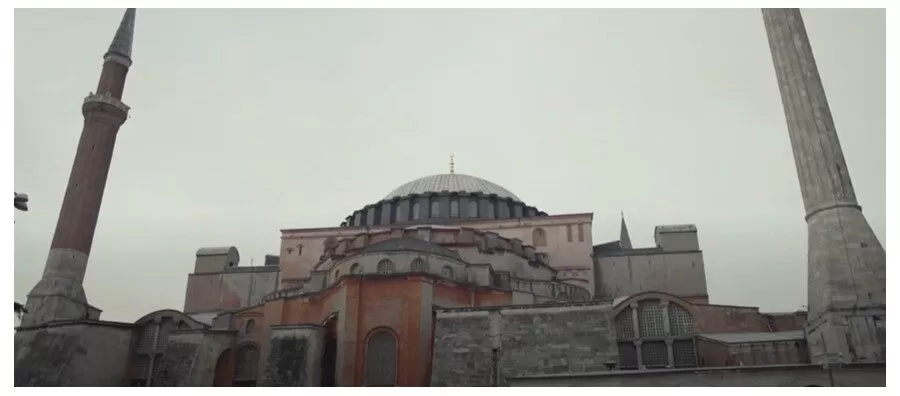
Picture 1: Hagia Sophia in real time
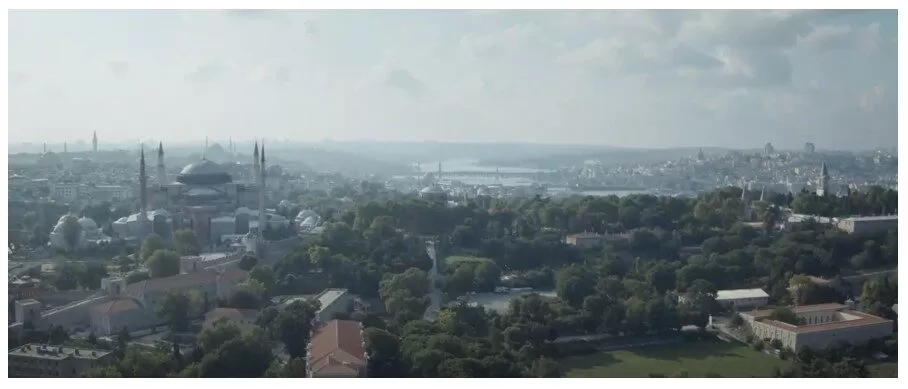
Picture 2: Hagia Sophia
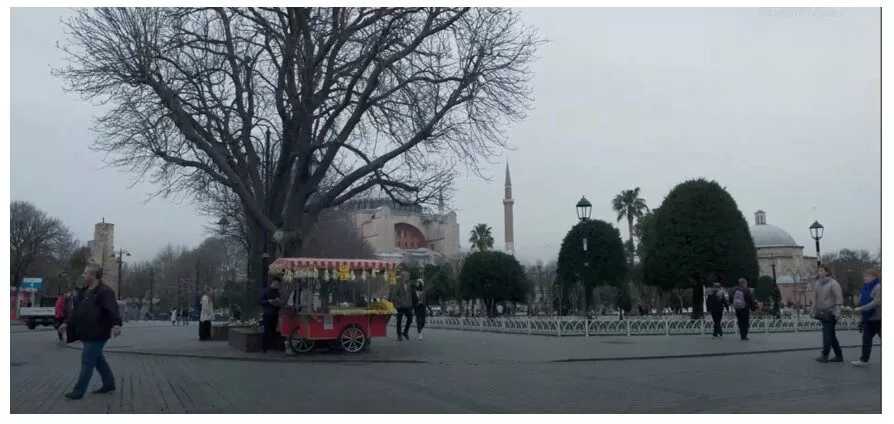
Picture 3: Hagia Sophia
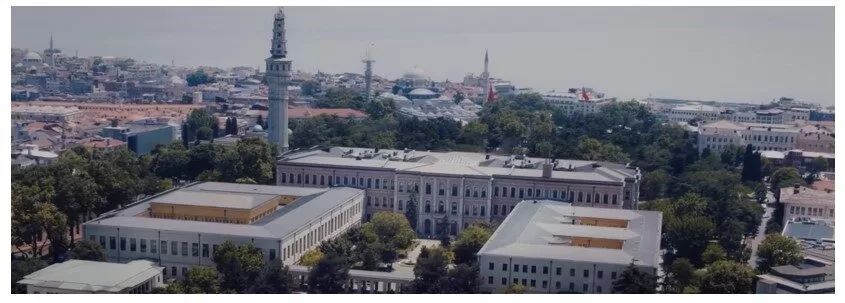
Protector series; It was shot in today’s venues of Istanbul, as it takes place today in terms of venue design and selection. This is also important in that the series reflects the promotional elements and visuals of Istanbul. The series starts with the image of Hagia Sophia in the first episode. Subsequently, landmarks that hosted important periods in the history of Istanbul such as the corridors, the historical peninsula, the Grand Bazaar, and the Belgrad forest are featured.
It is important both in terms of cinematography and semiotics that historical places are venues for a series. The purpose for which the spaces are used and the subject matters are also important.
The historical places that come to the fore in this series are read as “sanctity”, “immortality”, “the sanctity of Istanbul”, “the magnificence of Hagia Sophia” and are supported by very repetitive visuals.
Some of the news shared by netfilx and on different news platforms about whether this series contributed to awareness as claimed during the broadcasting period are as follows:
“The first season of Muhafız attracted great attention not only in Turkey but also around the world. So much so that Hakan’s story, from being a modest carpet merchant in the Grand Bazaar, to a hero fighting against dark forces to protect Istanbul, has been watched by more than 10 million people all over the world.
According to Netflix’s data, the series was watched mostly in Latin American countries, especially Brazil and Mexico, after Turkey. After Latin America, it attracted the most attention in African countries. However, Netflix’s first original Turkish series created excitement in Canada and Australia. The total viewership rate in these two countries is equivalent to that in Mexico. Muhafız also has a considerable audience in the Middle East and Europe. In Europe, it was most watched in France. Next comes Germany. Spain and Italy follow respectively.”
Another news is about the increased interest in learning Turkish thanks to these exported serials.
“According to the result of the “Cultural Affinity Research” conducted by the digital broadcasting platform Netflix in 7 countries: It was observed that the desire of people watching Turkish productions from various platforms such as Netflix to visit the country as tourists increased by 2.6 times, while the desire to learn Turkish increased by 4.6 times”
When evaluated in this context, both the mystical and historical aura created by the visuals and the unsolved mystery of these places in the series contribute to both the curiosity of these historical places and the awareness of Turkey.
Since these historical places have been used in many television productions and are featured in TV series exported to various countries, they offer a familiar place of cinematography for the audiences of international platforms. These places, which are the subject of historical TV series, reflect today’s Istanbul, create city brand awareness and make the city a center of attraction. The fact that the TV series broadcast on the international platform attracts attention and its contribution to the country’s economy and awareness has also been encouraging for later TV series.
ATİYE, 2019
The Atiye series, which was broadcast on the Netflix platform in 2019, is also a series produced for the digital platform, as in the previous example.
In addition to being the second series to be released on the international market after the Protector series, it also shows similar features with the Protector series in terms of the use of historical places. The series, which started to be shown simultaneously in 190 countries, is an important example for recognition in the international market. Beren Saat, who plays the role of Atiye in the leading role, is a well-known name especially in the Middle East market due to the fact that television series were exported abroad before. Likewise, the leading role of Mehmet Günsur, who has acted in international films and is especially well-known in Europe, may also be one of the factors affecting the viewing rates of the series.
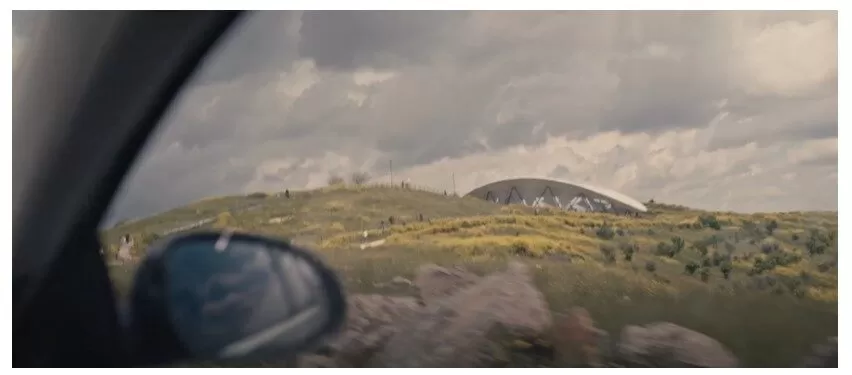
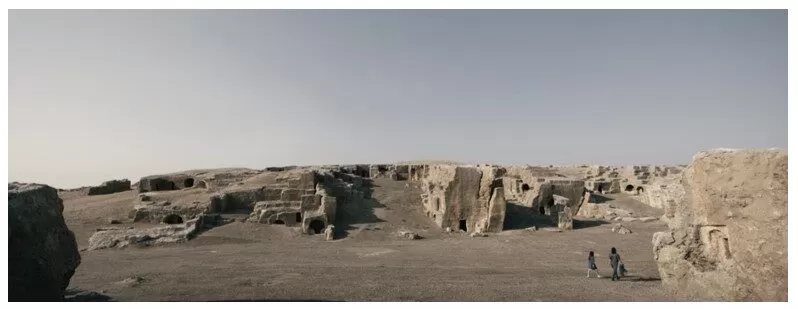
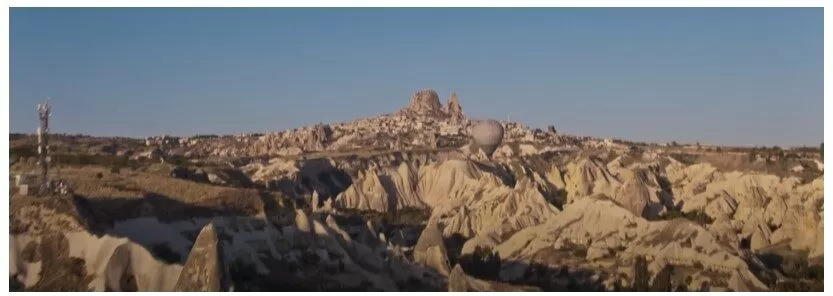
The locations used in the series are Istanbul, Şanlıurfa Göbeklitepe, Adıyaman Mount Nemrut and Cappadocia, Mardin, Bursa Suuçtu waterfall. Especially Göbeklitepe is one of the most powerful historical places used. Göbeklitepe was built 7,500 years earlier than the Egyptian pyramids. It contains important findings for the first traces of the transition to settled life. Because the first traces of wheat, symbolizing settled life and pointing to agriculture, were found in Göbeklitepe. Göbeklitepe, which also affected the history of religions, is the first known center of worship.
2019 has been chosen as the year of Göbeklitepe by the Ministry of Culture and Tourism of Turkey. Göbeklitepe is not just a historical place in the series, which centers Anatolia and Göbeklitepe and where all the promotions are made within the framework of its mystery, it is the main theme of the series.
Within the scope of the series; In the journey of self-discovery of Atiye character, the road always leads to Göbeklitepe, the symbols he uses in his paintings always point to Göbeklitepe. For this reason, it would not be wrong to claim that this series played a major role in the awareness of Gökbeklitepe. Atiye, who goes to Gökbeklitepe with the journey starting from Istanbul, gets lost in the mystery of Göbeklitepe while searching for herself on this journey.
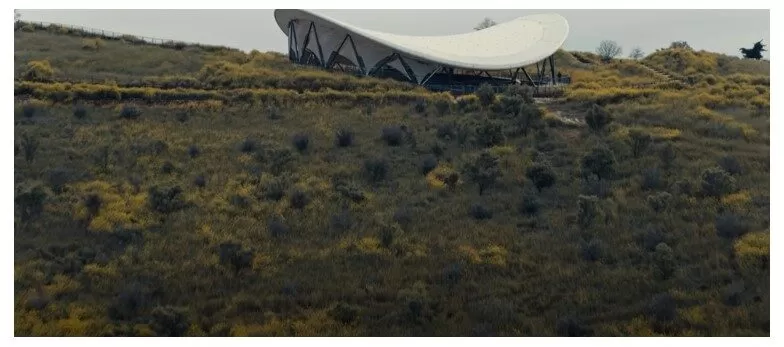
Just like Hagia Sophia in the Protecter series, Göbeklitepe also took part in the Atiye series with its mysteries. While the plan sequences in an exploration form the genre of the series close to tension, it actually constructs it over a familiar narrative. To explain this narrative with an example; When the relationship between Egypt and the pyramids is considered, document films and fictional films are all about Egypt’s undecipherable codes. Therefore, the reason why Egypt can still attract so many tourists can be shown as the new mysterious document films produced about Egypt and the Pyramids and appearing on digital platforms every year. Göbeklitepe, whose historical ruins have not been solved, appears as the main element in the series Atiye. In addition, the majestic statues of Mount Nemrut and the underground caves offer visual codes that support these mysteries. Göbeklitepe, whose historical ruins have not been solved, appears as the main element in the series Atiye. In addition, the majestic statues of Mount Nemrut and the underground caves offer visual codes that support these mysteries.
Another important factor of the Atiye series is that 2019 was chosen as the year of Göbeklitepe, as stated before. The fact that this work of the Turkish Ministry of Culture and Tourism coincides with the series strengthens the brand awareness of the country and cities.
Picture 4: Göbeklitepe
Picture 5: Göbeklitepe
Picture 6: Nemrut
Picture 7: Istanbul
Picture 8: Cappadocia
Just like in the TV series The Protector, Atiye also took the historical places and the cultural memory created by these historical places as the main subject and developed the whole scenario flow in this direction.
Conclusion and Recommendation
Anthony Giddens states that the environments prepared by institutional structures play a major role in the structuring and maturation of human activities (Stevenson, 2008, s. 144). In this context, the theoretical structure of the new media, independent of time and space, has an effective power in the formation of human activities and decisions. In this respect, this judgment, which is evaluated sociologically, completely overlaps with Gebner’s upbringing theory. Visually fed through series and content on digital platforms, viewers may be curious about, want to visit, or tend to research, especially historical places. While this adds to the brand awareness in the short term, it may cause touristic visits to the city/country in the long term. The use of space in these series should be considered and designed as a promotional tool. It is also important to support this sector, which contributes to the revival of tourism, which is one of the locomotive sectors of the country’s economy.
Kotler and Gertner (2002) think that Turkey, which has a lot of cultural, historical and natural beauties and has different characteristics from other countries, cannot get a share from tourism at the desired level. They see the reason for this situation as that although Turkey has so many different natural and historical beauties, it cannot create an effective brand image and brand value as the countries that have similarities with it.
Before the formation of the brand image and value, of course, brand awareness of the city/country should be created in the people of the world. For this awareness, all traditional and modern marketing strategies and channels should be used in an integrated manner.
The trademarks of the country/city brand to be featured should be placed in the promotional strategies as symbols and repeated frequently. Movies and serials broadcast on digital platforms are very suitable for this. As seen in this study, historical places in Turkish series broadcast on Netflix are especially important for country/city brand awareness. Considering the number and diversity of viewers of these platforms, the impact power is estimated.
Tourism marketing refers to the entirety of processes that must be managed in an integrated manner. Different channels must be actively managed simultaneously. This study was conducted to demonstrate the role of Netflix in city branding. Such a study can be supported by a quantitative study, its scope can be expanded, and its impact processes can be examined. In future studies, the effects of platforms such as Netflix on city branding, destination branding, product, service, and even individual branding can be examined.
Notes
1Disney+ platforms : According to data from various sources, some show Netflix as the most-watched digital platform, while others highlight Blu TV, Amazon Prime, and Disney+. The same applies to the posts and assessments of some research companies in Turkey. Some sample data:
Aaker, J. (2009), Building Innovate Brands, Stanford Press, Stanford.
Aaker, D. (2010), Building Strong Brands, Pocket Books, London, UK.
Ailawadı, K. L. and Keller, K. L. (2004), ‘Understanding retail branding: Conceptual insights and research priorities,’ Journal of Retailing, 80 (4), 331-342.
Bulut, S. (2009), Sermayenin Medyası Medyanın Sermayesi – Ekonomik Politik Yaklaşımlar, Ütopya Yayınevi, Ankara.
Dinnie, K. (2011), City Branding: Theory and Cases, Palgrave Macmillan Publisher Limited, Hampshire, UK.
Fan, Y. (2006), ‘Branding the nation: What is being branded?’ Journal of Vocation Marketing, 12 (1), 5-14.
Fiske, J. (2014), İletişim Çalışmalarına Giriş, (S. İrvan, Çev.), Pharmakon, Ankara.
Hall, S. (2005), ‘Kodlama, kodaçımı,’ Medya ve İzleyici/Bitmeyen Tartışma, (Ş. Yavuz, Çev.), Vadi Yayınları, Ankara.
Huang, C., Oh, K., Zhang, Q. and Choi, Y. (2013), ‘Understanding the city brand in the regional tourism market among college students,’ Journal of Travel & Tourism Marketing, 30 (7), 662-671. DOI:10.1080/10548408.2013.827544.
İrvan, S. (1994-1995), ‘Eleştirel yaklaşımlarda izleyici araştırmaları: Bir yöntem olarak alımlama çözümlemesi,’ İLEF Yıllık, 94, 205-223.
Karaduman, S. (2017), ‘Television broadcasting in new media platform and interaction,’ in E. Doğan and E. Geçgin (eds), Current Debates in Public Relations and Cultural Media Studies, IJOPEC, London, 115-129.
Güngör, N. (2013), İletişim Kuramları ve Yaklaşımlar, Siyasal Kitap, Ankara.
Güder, S. and Mercan, M. H. (2011), ‘2000 sonrası Türk dış politikasının temel parametreleri ve Ortadoğu politikaları,’ İnsan ve Toplum Hakemli Dergisi, 2 (3), 57-82.
Öztürk, M. and Atik, A. (2016), ‘Ulusal pazardan küresel pazarlara uzanan süreçte Türk dizilerinin gelişimi,’ Maltepe Üniversitesi İletişim Fakültesi Dergisi, 3 (2), 66-82. [Online], [Accessed 24 July 2023], Available: https://dergipark.org.tr/en/pub/iled/issue/29371/314266.
Kara, T. (2013), Sosyal Medya Endüstrisi, Beta Yayınları, İstanbul.
Kotler, P. and Gertner, D. (2002), ‘Country as brand, product, and beyond: A place marketing and brand management perspective,’ Brand Management, 9, 231-242.
Stevenson, N. (2008), Medya Kültürleri: Sosyal Teori ve Kitle İletişimi, Ütopya, Ankara.
Online Sources:
(2023), ‘Yurtta Atiye, dünyada The Gift.’ [Online], [Accessed 24 July 2023], Available: https://www.fortuneturkey.com/yurtta-atiye-dunyada-the-gift.
Hizmet İhracatçıları Birliği. (2020), ‘2020 Çalışma Yılı Raporu.’ [Online], [Accessed 24 July 2023], Available: https://www.hib.org.tr/Dosya/2020CalismaYiliRaporu.pdf.
Hizmet İhracatçıları Birliği. (2021), ‘2021 Çalışma Yılı Raporu.’ [Online], [Accessed 24 July 2023], Available: https://www.hib.org.tr/Dosya/2021-calisma-yili-raporu.pdf.
Sputnik News Türkiye. (2019), ‘Netflix Hakan Muhafız en çok nerede izlendi?’ [Online], [Accessed 24 July 2023], Available: https://sputniknews.com.tr/20190313/netfliz-hakan-muhafiz-en-cok-nerede-izlendi-1038185284.html.
(2023), ‘Netflix açıkladı: Dünyanın Türk yapımlarına ilgisi artıyor.’ [Online], [Accessed 24 July 2023], Available: https://www.cumhuriyet.com.tr/yasam/netflix-acikladi-dunyanin-turk-yapimlarina-ilgisi-artiyor-2015465.
Veri Kaynağı. (2023), ‘Türkiye’nin en fazla izlenen dijital platformları.’ [Online], [Accessed 24 July 2023], Available: https://www.verikaynagi.com/grafik/turkiyenin-en-fazla-izlenen-dijital-platformlari-2023/.
Donanım Haber. (2023), ‘Türkiye’de en çok izlenen dijital platformlar belli oldu.’ [Online], [Accessed 24 July 2023], Available: https://www.donanimhaber.com/turkiye-de-en-cok-izlenen-dijital-platformlar-belli-oldu–165725.
Adjust Brand. (2023), ‘Ülkelere göre en popüler dijital yayın platformları.’ [Online], [Accessed 24 July 2023], Available: https://www.adjustbrand.com/haberler/dijital/ulkelere-gore-en-populer-dijital-yayin-platformlari/.
Box Office Türkiye. (2023), ‘Türkiye ve dünya genelinde en çok abonesi olan dijital yayın platformları.’ [Online], [Accessed 24 July 2023], Available: https://boxofficeturkiye.com/haber/turkiye-ve-dunya-genelinde-en-cok-abonesi-olan-dijital-yayin-platformlari–3084.
Data Stats. (2023), ‘Dünyada ve Türkiye’de yayın yapan dijital platformlar.’ [Online], [Accessed 24 July 2023], Available: https://www.drdatastats.com/dunyada-ve-turkiyede-yayin-yapan-dijital-platformlar/.
(2023), ‘Netflix kültürel yakınlık araştırması sonuçları.’ [Online], [Accessed 24 July 2023], Available: https://listelist.com/netflix-kulturel-yakinlik-arastirmasi/.