Volume 2025,
Article ID 568943,
IBIMA Business Review,
12 pages,
DOI: 10.5171/2025.568943
Received date: 24 March 2025; Accepted date: 5 July 2025; Published date: 11 September 2025
Academic Editor: Karima Haoudi
Cite this Article as:
Loubna ANIBA and Karim GASSEMI (2025)," Journals Investigating Immigration Motivations among IT Graduates from Generation Y and Z : Qualitative and Quantitative Research in Morocco", IBIMA Business Review, Vol. 2025 (2025), Article ID 568943, https://doi.org/10.5171/2025.568943
This research examines the factors influencing the emigration intentions of Moroccan IT professionals through two complementary studies: a qualitative analysis of immigrants’ motivations based on Lee’s (1966) model and a quantitative survey of future graduates, guided by the Theory of Planned Behavior (Ajzen, 1991). Findings reveal that low local salaries and limited career growth are key drivers of emigration, with attitudes and perceived behavioral control playing a significant role in shaping intentions. The study highlights the importance of local initiatives to retain talent and the need for HR strategies aligned with young professionals’ expectations to mitigate brain drain.
JEL Classification : F22, J61, J24, O15
Keywords: brain drain, Generation Y, Generation Z, young IT professionals, motivations, factors, intention
Introduction
International migration, driven by the pursuit of better opportunities and improved living standards, spans all skill levels (Koser, 2007). Nowadays, globalization has further facilitated this movement, transforming the world into a “global village” where individuals seek common economic and social goals (Castells, 2010). A major migration trend is brain drain—the emigration of skilled professionals to developed countries offering better career prospects and quality of life. First observed in the 1950s among scientists moving from the United Kingdom, Canada and the former Soviet Union to the United States, this phenomenon now primarily affects developing countries (Docquier & Rapoport, 2012; Meyer, 1977). Nations like Morocco, which heavily invest in education, face significant setbacks when skilled workers leave, hindering national development (Chami, Fullenkamp, & Jahjah, 2003).
Morocco has one of the highest skilled emigration rates in the region, largely due to higher salaries, better working conditions, and greater career opportunities abroad (World Bank, 2020). This trend is especially pronounced in the IT sector, a key pillar of the national economy. Despite 315,000 IT job postings in 2019 (only in Rekrute Joboard), around 600 engineers and specialists leave Morocco annually (Haut Commissariat au Plan, 2019). Additionally, foreign firms actively recruit Moroccan IT talent through biweekly hiring events, exacerbating the talent drain. This migration weakens critical industries, disrupts the economy, and undermines Morocco’s global competitiveness.
This article explores the brain drain in Morocco’s IT sector, analyzing the key drivers behind this migration, its broader implications, and potential strategies to mitigate skilled talent loss.
Literature Overview
This section reviews key theories explaining brain drain and skilled migration. It first examines Lee’s Push-Pull Model (1966), which identifies factors driving individuals away from their home countries (push factors) and those attracting them to new destinations (pull factors). Next, the Theory of Planned Behavior (TPB) is explored to understand the decision-making process behind migration. Finally, the traits of Generations Y and Z, the study’s target population, are discussed before introducing the research questions guiding the empirical studies.
Human capital is a key driver of innovation and economic competitiveness (Becker, 1993). Organizations thrive when investing in skilled professionals, essential for success and competitiveness (Barney & Wright, 1998). However, brain drain—especially in developing countries—creates talent shortages and hampers economic progress (Docquier & Rapoport, 2012). This challenge is particularly pressing in Morocco’s IT sector, where skilled workers increasingly seek opportunities abroad.
Lee’s Push-Pull Model explains migration motivations by distinguishing between push and pull factors. As the gap between these factors widens, the likelihood of migration increases. Beyond economic and social conditions, personal perceptions and social networks play a crucial role, while various obstacles—logistical or personal—can influence final decisions.
Figure 1: Lee’s Push-pull Model (1966)
Source: Lee, 1966
This research integrates two complementary models: Lee’s Push-Pull Model (1966) and the Theory of Planned Behavior (TPB) (Ajzen, 1985). Each framework addresses specific research questions and aligns with the methodological approach of the corresponding empirical phase.
Lee’s Push-Pull Model was applied in the qualitative exploratory study to analyze the motivations of Moroccan IT professionals who have immigrated. This model categorizes migration drivers into push factors (e.g., low salaries, limited career opportunities, political instability) and pull factors (e.g., better remuneration, career growth, quality of life), while also considering intervening obstacles like logistical challenges or family constraints. The qualitative approach enables a deeper understanding of these dynamics by capturing emigrants’ subjective experiences and perceptions.
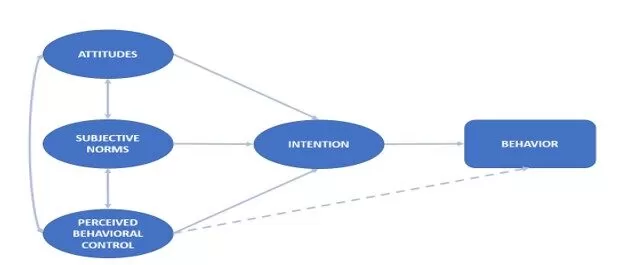
For the second empirical study, the TPB was used to examine migration intentions among Moroccan IT graduates. This model explains behavioral intentions through three key determinants: attitudes toward migration, subjective norms (social pressures from peers, family, or the professional environment), and perceived behavioral control (PBC), which reflects individuals’ confidence in their ability to immigrate. In this context, a graduate’s intention to immigrate is shaped by their perception of international opportunities and the feasibility of acting on their decision.
Figure 2: Theory of Planned Behavior
Source: Ajzen, 1991
The Theory of Planned Behavior (TPB) explains behavioral intentions through three key factors: attitudes, subjective norms, and perceived behavioral control (PBC). PBC, which includes logistical and financial constraints, plays a crucial role in migration decisions, as even individuals with positive attitudes and social support may face barriers such as visa restrictions or economic limitations.
In this study, TPB is applied to analyze migration intentions among Moroccan IT graduates. A survey was designed to measure attitudes, social norms, and PBC, particularly focusing on logistical challenges and access to resources. This approach provides a comprehensive understanding of both the drivers and barriers of migration.
Beyond identifying migration determinants, this research highlights practical obstacles that may prevent individuals from acting on their intentions. The findings support policy recommendations that address both motivational and logistical challenges, contributing to efforts to mitigate brain drain in Morocco’s IT sector.
Additionally, this study focuses on Generations Y and Z, whose career aspirations and digital fluency shape their migration decisions.
Millennials (Gen Y, 1980–1995) value flexibility, meaningful work, and collaborative environments (Dejoux & Wechtler, 2011; McCrindle, 2015).
Generation Z (1995–2010), the most digitally connected generation, prioritizes authenticity, inclusivity, and professional autonomy (Bernstein, 2015; McCrindle, 2015).
To examine brain drain in Morocco’s IT sector, this research adopts a dual empirical approach. The first is a qualitative study, applying Lee’s Push-Pull Model to explore migration motivations among young IT professionals. The second is a quantitative study, employing the Theory of Planned Behavior (TPB) to analyze attitudes, social influences, and perceived control over migration. Together, these approaches provide a comprehensive understanding of migration drivers and inform strategies to retain skilled talent in Morocco.
Research Methodology
This research employed two empirical studies to explore the factors influencing immigration among Moroccan IT professionals. The first is a qualitative exploratory study examining the motivations of young Moroccan IT professionals who have already immigrated, while the second is a quantitative study analyzing the key factors influencing the intention to immigrate among future graduates.
First Empirical Study: Exploring Migration Motivations
The main goal of this study was to investigate the motivations driving young Moroccan IT professionals to immigrate, as they play a significant role in the brain drain phenomenon. Semi-structured interviews were conducted with 22 participants who have successfully immigrated. The key questions addressed were:
What are the main motivating factors for immigration?
Why are young IT professionals leaving Morocco in large numbers?
How do destination countries attract these young talents?
What specific demands do these professionals have?
Would they recommend this migration path to others?
Each interview lasted 35 to 45 minutes and focused on participants’ immigration journeys. Conversations were recorded, transcribed, and analyzed using NVivo software to identify key themes. The study followed three phases: an introductory phase to collect personal information, an in-depth exploration of motivations and decision-making, and a final summary with participant reflections. Confidentiality was ensured throughout.
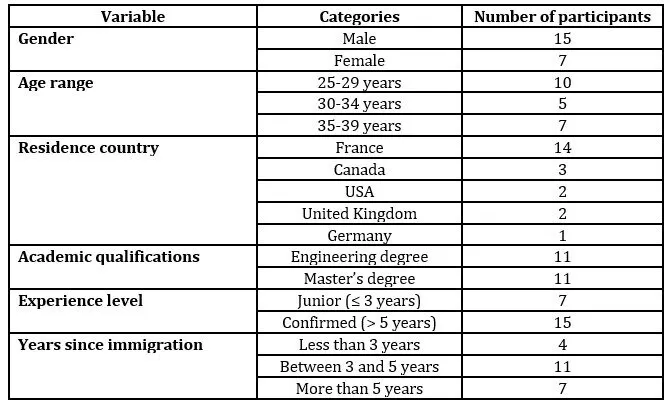
The study included 22 Moroccan IT professionals from Generations Y and Z, selected based on data saturation. Participants were recruited via LinkedIn and were particularly affected by brain drain.
The semi-structured interviews began with an introductory phase to build rapport, followed by probing questions to encourage detailed responses, yielding rich qualitative data. NVivo was used for data organization and analysis, categorizing transcriptions into themes. Key patterns and insights were identified, and visual representations were generated to deepen the understanding of the motivations and challenges faced by young Moroccan IT professionals in their migration journeys.
Table 1: Characteristics of the Population in the Qualitative Exploratory Research
Source: Created by the author
Second Empirical Research
This study explores the key factors influencing the immigration intentions of Moroccan IT students nearing graduation, aiming to provide data-driven insights on their migration motivations. The study focused on 348 final-year IT students, including 57% women, recruited via LinkedIn and university partnerships. A pre-test ensured the reliability and validity of the questionnaire. The findings aim to help policymakers devise strategies to retain young IT talent and address brain drain in Morocco.
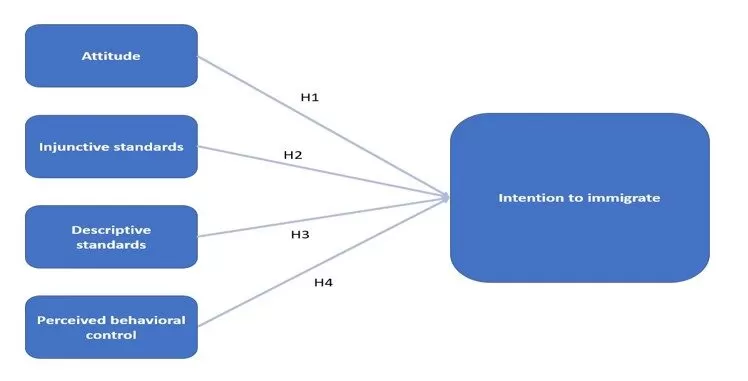
Figure 3: Research Model of the Quantitative Study
Source: Created by the author
The research model is grounded in the Theory of Planned Behavior (TPB), which suggests that behavior is guided by intentions influenced by attitudes, subjective norms, and perceived behavioral control. Four hypotheses were tested:
H1: There is a positive correlation between attitudes and immigration intentions, where negative perceptions of local job opportunities drive individuals to seek better prospects abroad.
H2: Social pressures (injunctive norms) from peers and family positively influence immigration intentions.
H3: Observing successful migration stories of peers positively impacts individuals’ own immigration intentions.
H4: Perceived behavioral control has a positive correlation with immigration intentions, reflecting students’ confidence in navigating the migration process and succeeding abroad.
To address brain drain in the IT sector, data were collected through an online questionnaire distributed via LinkedIn and academic institutions, with a pre-test to ensure clarity. 348 valid responses were gathered using convenience and snowball sampling methods. Data analysis was conducted with SPSS, including outlier checks and Cronbach’s alpha for reliability. Linear regression analyses were performed to explore the relationships between the variables and examine the factors influencing immigration intentions among young IT graduates in Morocco.
Data Analysis
This chapter presents the analytical methods used to examine both qualitative and quantitative data regarding the immigration intentions of young Moroccan IT professionals. It explores their motivations, destination choices, post-immigration experiences, and future plans, utilizing specialized tools to provide a comprehensive understanding of individual experiences and broader trends.
First Empirical Research
Nvivo, a qualitative analysis software developed by QSR International, was used to systematically organize, code, and interpret interview data. As noted by Komis, Depover, and Karsenti (2013), qualitative analysis combines technical and intellectual processes to identify patterns and generate hypotheses. Nvivo was employed for:
Data Importation: Uploading transcripts from 22 semi-structured interviews and recording key participant attributes (e.g., gender, age, education).
Thematic Coding: Organizing data into nodes based on key research themes, such as immigration motivations and integration experiences.
Structured Analysis: Identifying trends and patterns through coded data segmentation.
Visual Representations: Generating word clouds and matrices to highlight key themes.
This methodological approach enabled an in-depth exploration of the complex immigration experiences of Moroccan IT professionals, particularly regarding economic opportunities and career progression.
Choice of Destination Country
The study identified three categories of Moroccan IT professionals based on their migration motivations:
Students pursuing further education: Many seek master’s degrees, engineering programs, or academic exchanges, often remaining in their host countries due to better career prospects.
Professionals seeking improved job opportunities: Higher salaries and better working conditions attract this group to countries with strong IT job markets.
Professionals with flexible destinations: Motivated by intellectual challenges and innovation, these individuals prioritize career growth over a specific location.
France emerged as the most popular destination due to its strong job market and reputable educational institutions.
Influence of Networks
Social and professional networks play a crucial role in facilitating migration by providing:
Emotional Support: Encouragement from family and friends reduces relocation stress.
Shared Experiences: Advice from previous immigrants helps newcomers navigate job searches and local life.
Professional Integration: Alumni networks and local contacts offer job referrals and networking opportunities.
Language proficiency in French or English significantly aids cultural adaptation, enhancing integration and confidence.
Evaluating the Immigration Experience
Most participants perceived immigration positively, citing career advancement, higher salaries, and personal growth. However, challenges such as emotional separation from family and cultural adjustment were noted. While many encouraged others to immigrate, strong family ties or cultural attachment deterred some from making the move.
Push and Pull Factors
A word frequency analysis and interview insights revealed several push and pull factors influencing Moroccan IT professionals’ immigration decisions. These factors fall into three categories:
Economic Factors: Limited local job prospects and low salaries push professionals abroad, where higher wages provide financial stability.
Professional Factors: Opportunities for innovation and career growth attract talent abroad, whereas stagnation in Morocco discourages retention.
Socio-Cultural Factors: Greater social freedoms and efficient public services in host countries contrast with bureaucratic hurdles in Morocco.
The interplay of these factors underscores the complexity of the brain drain phenomenon, as young professionals balance career aspirations with local limitations. Their positive perception of immigration highlights the urgency for policies that mitigate brain drain while fostering local talent retention.
Second Empirical Research
This study applies the Theory of Reasoned Action (TRA) and the Theory of Planned Behavior (TPB) to quantitatively assess Moroccan IT professionals’ immigration intentions, providing insights for policymakers on talent retention. Data were gathered from 348 Moroccan IT students nearing graduation via LinkedIn and academic institutions (52% master’s/engineering, 48% undergraduate, 57% women). SPSS was used for data analysis, ensuring data quality and reliability through descriptive statistics, Cronbach’s alpha for scale consistency, and linear regression to examine influencing factors.
Validity and Reliability Analysis of the Measures:
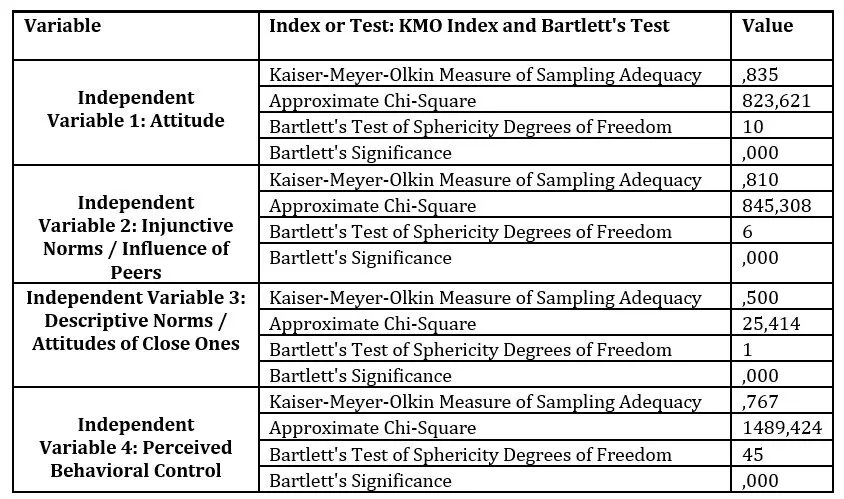
To assess the suitability of data for Exploratory Factor Analysis (EFA), validity was tested using the Kaiser-Meyer-Olkin (KMO) index and Bartlett’s test.
Table 2: KMO Indices and Bartlett’s Test of Independent Variables
Source: Created by the author
Results indicated good to excellent sampling adequacy for most variables, including attitudes (0.835), injunctive norms (0.810), and perceived behavioral control (0.767). However, descriptive norms (0.500) showed moderate adequacy, suggesting weaker correlation consistency. Bartlett’s test confirmed the appropriateness of EFA (p < 0.001). Reliability analysis demonstrated strong internal consistency for attitudes (0.855) and injunctive norms (0.895), whereas descriptive norms exhibited low reliability (0.421), indicating potential inconsistencies. Refinement of this measure is recommended to enhance data quality.
Exploratory Factor Analysis
Exploratory Factor Analysis (EFA) was conducted to explore relationships between observed variables and reduce dimensionality while preserving variance
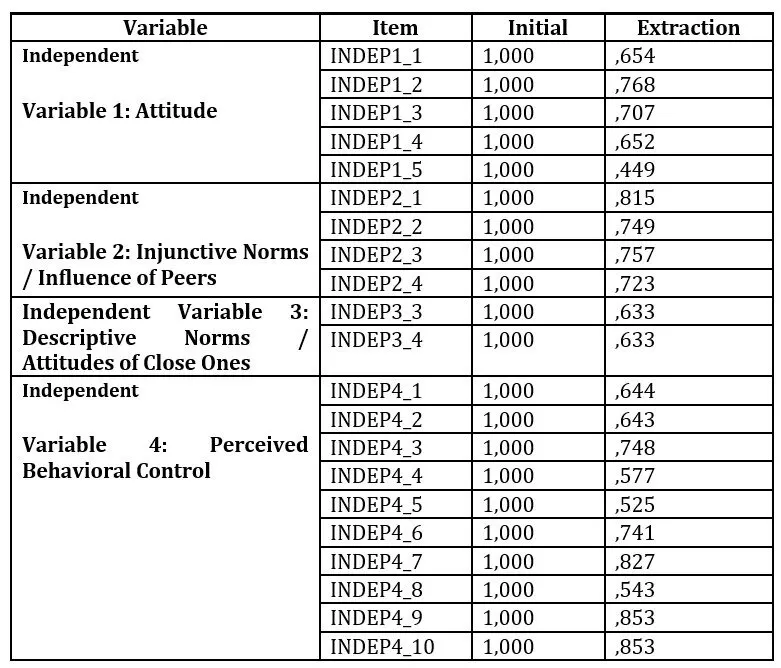
Table 3: Representation Quality Matri
Source : Created by the author
The analysis confirmed satisfactory factor representation across variables. For attitudes, items such as INDEP1_2 (0.768) and INDEP1_3 (0.707) demonstrated strong communalities, whereas INDEP1_5 (0.449) indicated a need for refinement. Injunctive norms exhibited robust communalities (0.723–0.815), reinforcing their significance in behavioral influence. However, descriptive norms showed lower communalities (0.633), suggesting potential ambiguity for respondents. Perceived behavioral control displayed a broad range (0.525–0.853), with INDEP4_9 and INDEP4_10 showing the strongest representation.
Overall, these findings confirm the adequacy of the factor structure, supporting further analysis.
Linear Regression Analysis
This section presents the results of the linear regression analysis, examining relationships between the studied variables. Descriptive statistics summarize key data characteristics, including means and standard deviations, providing insights into trends and variability. Correlation matrices and diagnostic statistics are also analyzed to assess model performance and validity.
Descriptive Statistics
Descriptive statistics offer an overview of the dataset’s central tendencies (mean) and response variability (standard deviation). A high standard deviation indicates greater dispersion, while a low standard deviation suggests responses are more clustered around the mean.
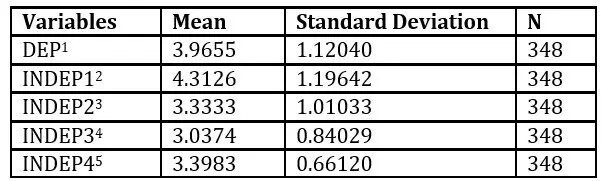
Table 4: Descriptive Statistics of the Research Model
Source : Created by the author
The results provide key insights into immigration perceptions. The dependent variable, immigration intention (DEP), has a mean of 3.97, indicating a slightly positive inclination toward immigration with moderate variability (SD = 1.12). Attitude (INDEP1) shows a strong positive mean (4.31) but notable variability (SD = 1.20), reflecting diverse opinions. Injunctive norms (INDEP2) exhibit a neutral stance (mean = 3.33) with lower variability (SD = 1.01), indicating more consistent responses. Descriptive norms (INDEP3) lean toward a neutral to slightly negative stance (mean = 3.04) with low variability (SD = 0.84). Finally, perceived behavioral control (INDEP4) presents a neutral to slightly positive perspective (mean = 3.40) with the lowest variability (SD = 0.66), suggesting strong agreement among participants.
These findings highlight a general trend toward positive immigration intentions while revealing variances across independent variables. These insights set the stage for deeper analysis and practical recommendations.
Regression Coefficients and Hypothesis Testing
This section presents the regression coefficients and evaluates the hypotheses related to the factors influencing the immigration intentions of young Moroccan IT professionals. The regression coefficients highlight the contribution of each independent variable to the dependent variable.
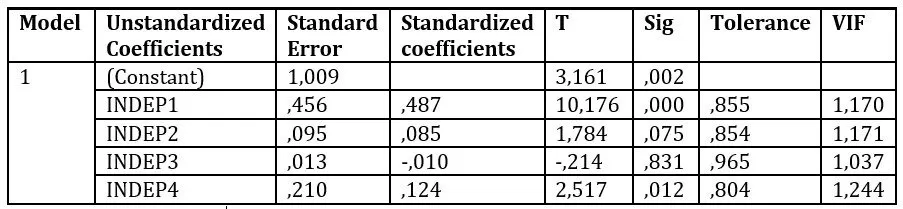
Table 5: Regression Coefficients Matrix
Source : Created by the author
Among the variables, INDEP1 demonstrates a significant positive effect with a coefficient of 0.456 and a p-value of 0.000. INDEP4 also shows a notable positive effect (coefficient 0.210, p-value 0.012). INDEP2 shows a positive effect but is not statistically significant (p = 0.075). Conversely, INDEP3 exhibits no significant impact (p = 0.831), suggesting it may be excluded in future analyses.
Hypothesis Testing Summary
Attitude and Immigration Intention: A significant positive correlation (r = 0.552, p < 0.01) confirms that favorable attitudes toward immigration are strongly associated with the intention to immigrate.
Injunctive Norms: A significant correlation (r = 0.263, p < 0.01) supports the role of social pressure from family and friends in shaping immigration intentions.
Descriptive Norms: This hypothesis is not supported, as peer migration behaviors do not significantly affect individual immigration intentions (r = 0.015, p > 0.05).
Perceived Behavioral Control: A positive correlation (r = 0.311, p < 0.01) indicates that greater perceived control over the immigration process increases the likelihood of intending to immigrate.
In summary, positive attitudes and perceived control are the primary determinants of immigration intentions among young IT professionals. While social influences, such as support from family and friends, play a role, they remain secondary to individual attitudes and self-confidence. These findings underscore the importance of creating a supportive environment for migration while also enhancing local opportunities to retain talent.
This study confirms that a positive perception of immigration is a central factor influencing young Moroccan IT professionals’ intentions. Those who see immigration as a pathway to better quality of life and career prospects are more inclined to consider it. Additionally, self-efficacy in managing migration challenges further reinforces this intention. While social support is significant, personal aspirations and beliefs take precedence, emphasizing the dominant role of individual motivation in migration decisions.
Residual Statistics
The analysis of residual statistics is essential for evaluating the accuracy of a linear regression model, as it highlights the differences between observed and predicted values, providing insights into the model’s fit.
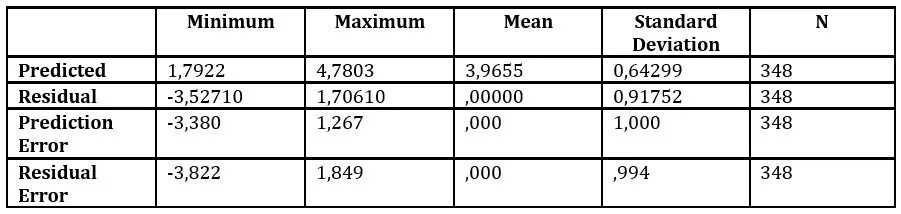
Table 6: Residual Statistics
Source : Created by the author
The residual analysis shows that predicted values are closely centered around the mean, indicating that the model generally performs well. The mean residual value near zero suggests that predictions are unbiased. However, the relatively high standard deviation of residuals indicates some unexplained variability, possibly due to outliers or underlying complexities within the data. While the model provides reliable predictions, its accuracy could be further improved by integrating additional explanatory variables or exploring more advanced modeling techniques.
Discussion of empirical findings
The two empirical studies conducted on the immigration of young Moroccan IT professionals provide a comprehensive analysis of the motivations, perceptions, and determinants underlying their desire to immigrate. The exploratory qualitative study highlights economic, professional, and social aspects, while the confirmatory quantitative study validates the psychological and social dimensions influencing migration intentions.
Exploratory Qualitative Study
The qualitative findings indicate that young Moroccan IT professionals are primarily drawn to the prospect of higher salaries and better career opportunities abroad, which promise an improved quality of life and greater financial stability. They perceive local salaries as inadequate given their skills and living costs, leading to frustration and a growing desire to seek opportunities elsewhere. Additionally, the availability of engaging and well-structured projects in host countries, which facilitate skill development and offer internationally recognized training, further reinforces their motivation.
Conversely, career prospects in Morocco are often seen as limited, particularly for recent graduates. Many participants express dissatisfaction with the local job market, citing a lack of professional growth opportunities and the predominance of hierarchical work structures that restrict autonomy and innovation. In contrast, foreign companies are frequently perceived as providing more inclusive and stable environments, where meritocracy prevails, and career progression is based on skills and performance rather than seniority. This combination of financial constraints, career stagnation, and rigid organizational dynamics significantly strengthens their intention to immigrate.
Confirmatory Quantitative Study
The quantitative findings confirm that young Moroccan IT professionals’ positive attitudes toward migration significantly influence their intent to immigrate, consistent with behavioral theories emphasizing personal attitudes in decision-making. Confidence in handling the immigration process—perceived behavioral control—also plays a key role, as those who feel capable of managing bureaucratic procedures, securing employment, and adapting abroad are more likely to take concrete steps toward migration. Strengthening this perception through training programs, administrative support, and career guidance could further shape migration intentions.
While social expectations from family and peers (subjective norms) have only a minor influence, they can still reinforce positive attitudes. Conversely, confidence in succeeding abroad (descriptive norms) does not significantly impact migration intentions, suggesting that economic opportunities and professional networks weigh more heavily in the decision.
Overall, dissatisfaction with local salaries, career stagnation, and unfavorable working conditions contrast with the promise of better prospects abroad, driving migration aspirations. Enhancing career opportunities, improving work environments, and ensuring market stability within Morocco could help retain talent and reduce brain drain.
Managerial contributions
This research provides key insights into the motivations driving young Moroccan IT professionals to immigrate, offering guidance for organizations seeking to retain talent in an increasingly competitive market. From a managerial perspective, it highlights the need for Moroccan IT companies to rethink their HR strategies to attract and retain skilled professionals. Creating a supportive work environment that prioritizes employee well-being, career growth, and flexibility is essential. Companies should implement policies such as remote work options, inclusive organizational cultures, and professional development programs tailored to employees’ aspirations.
Aligning career opportunities with young professionals’ expectations—through mentorship, continuous training, and clear progression paths—can enhance job satisfaction and loyalty. Beyond financial incentives, recognizing contributions through performance-based rewards and fostering a collaborative work culture can further improve retention. These strategies, while focused on IT, can also be adapted to other sectors like healthcare and engineering to mitigate brain drain.
Despite its contributions, this research has limitations. The qualitative study’s small sample size may affect generalizability, and focusing on Generation Y and Z may overlook differences across age groups. Additionally, Morocco’s unique socio-economic context limits the direct application of findings to other regions. Future research should explore family and social influences on migration, expand to other industries, and compare results across countries to identify best practices.
Ultimately, this study enhances the understanding of migration drivers among Moroccan IT professionals and offers practical recommendations to improve talent management. By addressing these motivations, companies can strengthen their competitiveness, retain skilled professionals, and contribute to a more dynamic and attractive job market in Morocco.
Conclusion
This research provides valuable insights into the immigration motivations of young Moroccan IT professionals through two empirical studies. The qualitative study, focusing on those who have already immigrated, highlights key drivers such as career growth, work-life balance, and access to advanced training. The quantitative study, based on a survey of 348 final-year IT students, confirms that innovation, career advancement, and perceived professional opportunities abroad significantly shape migration intentions.
From a managerial standpoint, these findings underscore the need for Moroccan IT companies to rethink their HR strategies to better attract and retain young talent. Offering flexible policies, improved working conditions, and inclusive corporate cultures that align with the expectations of Generations Y and Z can enhance job satisfaction and strengthen employee loyalty, ultimately reducing talent loss and improving global competitiveness.
Despite its contributions, this research has limitations. The qualitative study’s small sample and focus on specific generational cohorts may limit the generalizability of the findings. Future studies should examine the influence of social and family dynamics on migration decisions, expand the analysis to other sectors, and conduct international comparisons to identify best practices.
Overall, this study enhances the understanding of migration drivers among young Moroccan IT professionals, providing actionable recommendations for talent management and policy initiatives that could help mitigate brain drain and foster a more dynamic professional landscape in Morocco.
References
Ajzen, I., & Fishbein, M. 1980. Understanding attitudes and predicting social behavior. Englewood Cliffs, NJ: Prentice-Hall.
Ajzen, I. 1991.” The theory of planned behavior». Organizational Behavior and Human Decision Processes50(2) :179-211.
Barney, J. B., & Wright, P. M. 1998. “On becoming a strategic partner: The role of human resource management in gaining competitive advantage”. Human Resource Management37(1):31-46.
Becker, G. S. 1993. Human Capital: A Theoretical and Empirical Analysis, with Special Reference to Education (3rd ed.). Chicago: University of Chicago Press.
Bernstein, A. 2015. “The Millennials and Generation Z: Two generations with a lot in common”. Harvard Business Review.
Castells, M. 2010. The Rise of the Network Society. Wiley-Blackwell.
Chami, R., Fullenkamp, C., & Jahjah, S. 2003. “Are immigrant remittance flows a source of capital for development? “IMF Working Paper No. 03/189. International Monetary Fund.
Dejoux, C., & Wechtler, H. 2011. “Understanding the millennial generation: An overview of their work values and attitudes”. Journal of Business and Management.
Docquier, F., & Rapoport, H. 2012. “Globalization, brain drain, and development”. Journal of Economic Literature 50(3): 681-730.
Fishbein, M., & Ajzen, I. 1975. Belief, attitude, intention, and behavior: An introduction to theory and research. Addison-Wesley.
Haut Commisariat au Plan. 2019. “Rapport sur la fuite des cerveaux au Maroc“.
Komis V ; Depover C & Karsenti, Thierry.2013. “L’usage des outils informatiques en analyse des données qualitatives“.
Koser, K. 2007. International Migration: A Very Short Introduction. Oxford University Press.
Lee, E. S. 1966. “A theory of migration”. Demography, 3(1), 47-57.
McCrindle, M. 2015. The ABC of XYZ: Understanding the Global Generations. McCrindle Research.
Meyer, J. W. 1977. “The effects of the international migration of skilled manpower on the developing countries: The case of the brain drain”. International Migration Review 11(4): 589-601.
World Bank. 2020. “Morocco: Country Economic Memorandum”. Washington, DC: World Bank.
[1] It refers to the dependent variable: the intention of immigration
[2] It refers to the independent variable 1: the attitude
[3] It refers to the independent variable 2: the Injunctive Norms / Influence of Peers
[4] It refers to the Independent Variable 3: the descriptive Norms / Attitudes of Close Ones
[5] It refers to the independent variable 4: the perceived Behavioral Control