Volume 2026,
Article ID 337228,
IBIMA Business Review,
11 pages,
DOI: https://doi.org/10.5171/2026.337228
Received date: 14 October 2025; Accepted date: 9 January 2026; Published date: 26 February 2026
Cite this Article as:
Merly Liseth Huamán Sánchez, Cintia Yureth Alvarado Rodriguez and Jhaquelin Mareli Mendoza Castañeda (2026)," “Occupational Health and Its Impact on The Teleworking System of Private Higher Education Teachers, Cajamarca, 2025” “, IBIMA Business Review, Vol. 2026 (2026), Article ID 337228, https://doi.org/10.5171/2026.337228
The objective of this study was to analyze the impact of occupational health on the teleworking system of teachers at private higher education institutions in Cajamarca, 2025. A quantitative, explanatory, non-experimental, cross-sectional design was used. The sample consisted of 198 teachers selected through simple probability sampling, who were given a questionnaire validated by expert judgment and with high reliability (α > 0.80). Spearman’s analysis showed a very high positive correlation between occupational health and teleworking (ρ = 0.985; p < 0.001). Likewise, significant associations were identified with the following dimensions: organizational culture (ρ = 0.749), technological tools (ρ = 0.911), process optimization (ρ = 0.712), and training (ρ = 0.903). These findings confirm that occupational health is a determining factor in the perception and effectiveness of teleworking for teachers, particularly in contexts with technological limitations such as Cajamarca. It is concluded that strengthening institutional policies on ergonomics, psychosocial support, and digital training promotes teacher well-being and productivity, contributing to the sustainability of educational institutions in virtual environments.
Keywords: occupational health; teleworking; ergonomics; university teachers; higher education.
Introduction
Occupational health in the context of teleworking has emerged as a growing concern internationally, especially following the expansion of this work modality driven by the COVID-19 pandemic. In several countries, higher education teachers have faced challenges related to excessive screen time, the blurring of the line between personal and professional life, and increased psychosocial risks such as stress, anxiety, and burnout. At the national level, Peru has not been immune to this reality: while teleworking has allowed educational processes to continue, it has also highlighted gaps in ergonomics, access to technology, digital training, and occupational health prevention strategies for teachers. In particular, in Cajamarca, a region characterized by limited connectivity and technological resources, teachers in private higher education institutions have been doubly affected, as they must meet academic demands in a virtual environment without always having adequate working and health conditions. This situation highlights the urgent need to analyze the impact of occupational health on the teacher teleworking system, in order to generate proposals that contribute to professional well-being and educational quality in the region.
Internationally, various studies have highlighted the effects of teleworking on the occupational health of university teachers. For example, Magnusson et al. (2020) found that academic teleworking is associated with both benefits and risks to the health and well-being of university staff, showing that ergonomic demands and work overload have a direct impact on quality of life. Complementarily, a systematic review conducted by BMC Public Health (2022) revealed that working conditions at home generate musculoskeletal problems, work stress, and difficulties in time management, reinforcing the need for preventive occupational health policies. Similarly, Souza et al. (2021) highlighted that remote teaching, in the context of the pandemic, brought with it new demands that had a negative impact on the mental and physical health of teachers.
In Latin America, teleworking has also been analyzed from a comparative perspective. Oviedo-Gil and Cala (2023) demonstrated that the quality of employment under this modality presents inequalities between countries in the region, where technological gaps and precarious working conditions affect the sustainability of teleworking. Similarly, research published in the International Journal of Environmental Research and Public Health (2021) analyzed the situation in Latin America during the pandemic, concluding that teleworking intensified work stress and disrupted the balance between personal and professional life. Along the same lines, Ciênca & Saúde Coletiva (2023) emphasized that the demands of teleworking during COVID-19 increased the risks of anxiety, depression, and mental health problems among workers in various sectors, including teachers.
In Ecuador, Álvarez et al. (2025) examined ergonomic risks in university teachers, highlighting that inadequate technological infrastructure and the absence of preventive measures increase muscular and visual problems. For their part, Maza et al. (2021) identified that teleworking by teachers increases exposure to occupational health risks due to the lack of adequate ergonomic conditions and prolonged use of digital devices. These findings highlight the urgency for educational institutions to implement occupational health prevention programs.
In Peru, multiple studies have highlighted the repercussions of teleworking in the teaching sector. López et al. (2023) indicated that remote work during the pandemic impacted the job satisfaction of university professors, who reported high levels of burnout. Similarly, Pacotaipe, C. (2022) found that the work effectiveness of teachers in Metropolitan Lima was closely related to teleworking conditions, revealing limitations in infrastructure and digital training. In Puno, a study published by Educare (2024) revealed that the job satisfaction of university professors was conditioned by access to technological resources and institutional support policies. More broadly, Ríos et al., (2024) proposed a teleworking approach centered on human well-being, demonstrating that in the Peruvian public sector, labor management policies directly influence the sustainability of teacher well-being.
Specific research on teacher well-being and occupational health reinforces the importance of this issue. Ramos et al. (2023) highlighted that teleworking can promote research training, but at the cost of greater risks to teachers’ mental and emotional health. Similarly, Dávila, R. (2023) concluded in a systematic review that teleworking significantly increases levels of work-related stress in various sectors, including education. Likewise, Lizondo, R. (2021) identified that the accelerated implementation of teleworking during the pandemic exposed regulatory gaps and institutional preparedness in the region. This background allows us to understand that teleworking for teachers, while enabling educational continuity, poses significant challenges to occupational health that require priority attention in contexts such as Cajamarca.
At the local level, research has been conducted that provides evidence on the relationship between teleworking, occupational health, and productivity in Cajamarca. Carranza, J. (2022) examined the situation of administrative workers at the Attorney General’s Office in Cajamarca, finding that both occupational health and teleworking were rated as “fair” (63.3%) and that both variables maintain a high positive correlation (r = 0.929, p < 0.01). These results show that when teleworking conditions, such as physical space, ergonomics, and technological equipment, are inadequate, occupational health is significantly compromised.
Complementarily, Díaz, D., & Malca, M. (2024) analyzed work stress and occupational performance in a public educational institution in Cajamarca, concluding that there is a negative correlation between both variables (Pearson’s R = ‒0.260). Among the most relevant factors, they identified work overload, emotional exhaustion, and lack of control over activities, aspects that are also related to the demands of teleworking for teachers.
Similarly, Mejía, D. (2022) evaluated the relationship between remote work and productivity among employees at the Cajamarca Pension 65 Territorial Unit, finding that remote working conditions—such as infrastructure, environment, and time management—have a direct impact on work efficiency. Although the study did not focus on teachers, its findings allow us to extrapolate the importance of an adequate remote environment for maintaining productivity in other professional sectors.
Another relevant precedent is the study by Manosalva, L. & Potosí, J. (2022), who investigated the relationship between occupational health and safety and productivity among workers at the company Maquinaria y Construcción Los Andes E.I.R.L., Cajamarca. The authors identified a high positive correlation (Spearman’s Rho ≈ 0.800), showing that the implementation of occupational health and safety measures has a direct impact on work performance, a finding that can be extrapolated to the educational field.
Finally, Rodríguez, M. (2024) investigated ergonomic risks and work absenteeism among staff at health centers in Cutervo-Cajamarca. His results show that factors such as the physical environment, physical and mental workload, and working hours contribute significantly to absenteeism, reinforcing the idea that ergonomic risks have a direct impact on occupational health. Although this study was conducted in the health sector, its findings are valuable for understanding how occupational risks can impact the continuity of activities in the teaching field.
Variable 1: Occupational Health
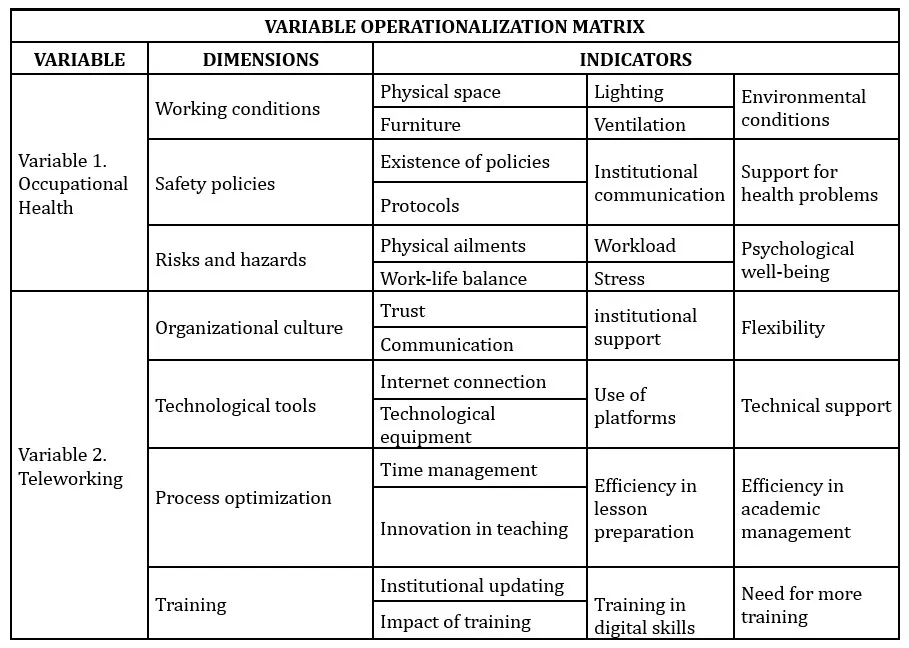
Occupational health is defined as the discipline that seeks to promote and maintain the physical, mental, and social well-being of workers in all occupations (WHO, 2022). According to the operationalization table, this variable is measured through teachers’ perceptions of working conditions, safety policies, and the risks inherent in teleworking.
Dimension – Working conditions. These are the physical, ergonomic, and environmental factors that shape the work environment and influence worker performance and health. They include aspects such as lighting, ventilation, furniture, and adequacy of the workspace (Quispe, J. 2023).
Dimension – Safety policies. These are understood as the set of rules, programs, and actions implemented by the organization to prevent accidents, train staff, and ensure safe working environments (Ministry of Labor and Employment Promotion [MTPE], 2022).
Dimension – Risks and hazards. These are elements or conditions present in the work environment that have the potential to cause harm to health, whether physical, psychological, or social (International Labor Organization [ILO], 2021).
Variable 2: Teleworking
Teleworking is defined as a form of work that uses information and communication technologies (ICT) to perform paid activities outside the traditional workplace (ILO, 2021). In higher education, teleworking became established as a fundamental alternative during the pandemic, maintaining academic continuity but also generating challenges in terms of infrastructure, organization, and teacher well-being. According to the operationalization table, this variable is measured based on teachers’ perceptions of their remote work experience.
Dimension – Organizational culture. This refers to the set of values, norms, and practices shared within the institution that influence how telework is organized and supported (Schein, 2017).
Dimension – Technological tools. These are the digital resources, platforms, and computer equipment that enable remote work to be carried out efficiently (Criscuolo et al., 2021).
Dimension – Process optimization. This involves the ability to redesign methods and activities to increase productivity and improve time management in remote work (Gibson et al., 2021).
Dimension – Training. This includes ongoing training activities aimed at strengthening digital, pedagogical, and management skills in virtual environments (Bautista et al., 2020).
For this study, the research question is:
What is the impact of occupational health on the teleworking system of employees in the private higher education sector in the city of Cajamarca in 2025?
The overall objective of this research is:
To determine the impact of occupational health on the teleworking system of employees in the private higher education sector in the city of Cajamarca in 2025.
The general hypothesis of this research is:
Occupational health has a significant impact on the teleworking of employees in the private higher education sector in Cajamarca in 2025.
Methodology
The study adopts a quantitative approach, focusing on the collection and analysis of numerical data to test hypotheses and establish statistical patterns (Hernández-Sampieri & Mendoza, 2018). It is explanatory in nature, analyzing how occupational health affects telework (Sampieri et al., 2014), with a correlational-causal scope, as it seeks to identify associations and the direction of influence between variables (Hernández-Sampieri & Torres, 2018). The design is non-experimental and cross-sectional, given that the variables will not be manipulated and will be observed at a single point in time (Hernández et al., 2014).
The population consists of 407 teachers from private higher education institutions in Cajamarca in 2025 (Ministry of Education, 2024). Using simple random probability sampling and a confidence level of 95%, a sample of 198 teachers was determined.
The data collection technique was a survey, administered using a structured questionnaire on a five-point Likert scale, which included dimensions of occupational health and teleworking (Kerlinger & Lee, 2002). The validity of the instrument was established through expert judgment, ensuring the relevance and consistency of the items (Escobar & Cuervo, 2008).
In the present study, the reliability of the questionnaire was evaluated using Cronbach’s alpha coefficient, calculated independently for each variable.
Table 1: Instrument reliability test
The results of the reliability test using Cronbach’s alpha coefficient show adequate values for both variables. In the case of Occupational Health, a value of α = 0.841 was obtained, while for the Telework variable the value was α = 0.811. According to George & Mallery (2003), values above 0.80 are considered indicators of high internal consistency, which allows us to conclude that the questionnaire used is sufficiently reliable for measuring the study variables.
Data processing will be performed using IBM SPSS Statistics v.26, applying descriptive statistics (measures of central tendency, dispersion, and frequencies) to characterize the participants. Subsequently, inferential statistics will be used: Kolmogorov-Smirnov test to verify normality, Pearson or Spearman correlation as appropriate, and simple and multiple linear regressions to analyze the effect of occupational health on teleworking. The analysis will be performed with a significance level of 5% (p < 0.05), presenting the results in tables and graphs for interpretation.
The estimated dimensions for each variable were as follows:
Table 2: Variable Operationality
Results
The results of the survey conducted among private higher education teachers in the Cajamarca region are presented. The survey uses a Likert scale consisting of five levels from 1 to 5, where 1 = strongly disagree and 5 = strongly agree. The information was collected through a survey conducted via Google Forms and administered to 198 private higher education teachers in Cajamarca.
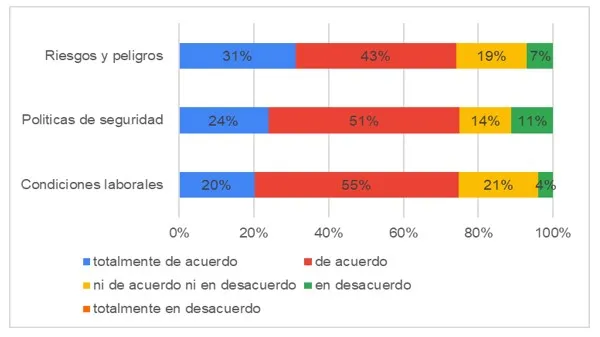
Figure 1 Results for the Occupational Health variable
Figure 1 shows that most of the teachers surveyed perceive their occupational health conditions to be positive. Responses in the “agree” and “strongly agree” categories predominate, suggesting that, in general, they have relatively adequate working environments in terms of lighting, ventilation, furniture, and institutional support. However, a smaller percentage of participants chose the options “neither agree nor disagree” and even “disagree,” reflecting that there are still deficiencies in ergonomic aspects and in the implementation of preventive policies. These results show that, although occupational health is perceived favorably by a significant portion of the sample, there are still gaps that could affect the quality of life and performance of a significant group of teachers.
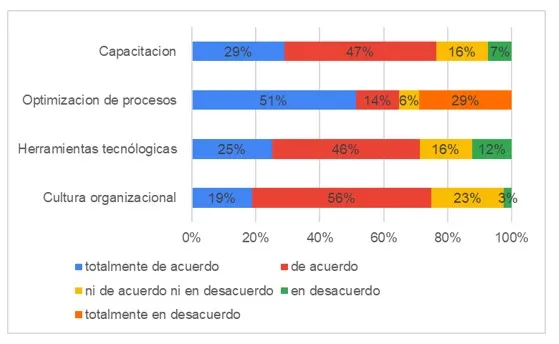
Figure 2. Results for the teleworking system variable
Figure 2 reveals that teachers value the teleworking system implemented in their institutions positively. The highest proportion of responses is concentrated in the “agree” and “strongly agree” levels, indicating that respondents perceive organizational support, availability of technological tools, and training opportunities. However, responses in intermediate and low categories were also identified, revealing limitations mainly related to connectivity, technical support, and task overload. This heterogeneity suggests that, although teleworking has established itself as a functional modality, it requires institutional adjustments to ensure equity in access to technological resources, time management, and psychosocial support.
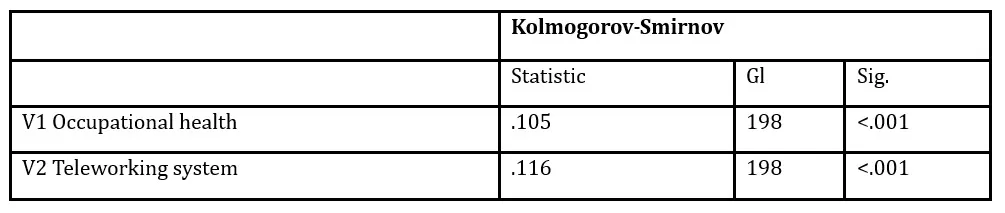
Table 3: Normality test of variables
Note. Normality by variables
The Kolmogorov-Smirnov test revealed that both the Occupational Health variable (K-S = 0.105; p < 0.001) and the Telework variable (K-S = 0.116; p < 0.001) have significance values lower than 0.05. This indicates that the data do not follow a normal distribution. Consequently, to test the hypotheses, it was decided to apply non-parametric tests, specifically Spearman’s correlation coefficient, which is appropriate when the data do not meet the assumption of normality (Hernández-Sampieri & Mendoza, 2018).
For this study, it is necessary to perform a hypothesis test
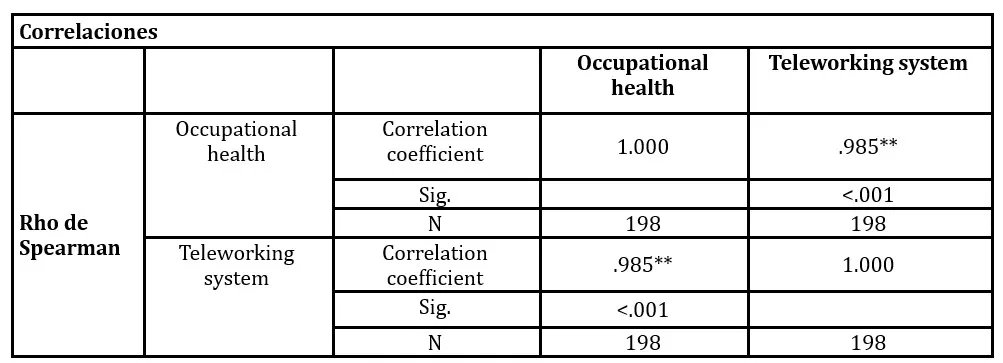
Table 4: General hypothesis test
Note. ** The correlation is significant at the 0.01 level (two-tailed).
For the overall relationship between occupational health and the teleworking system, Spearman’s correlation was ρ = 0.985 (p < .001), indicating a very high and significant positive correlation. Therefore, the general hypothesis is accepted: occupational health has a significant impact on the teleworking of private higher education teachers in Cajamarca (2025).
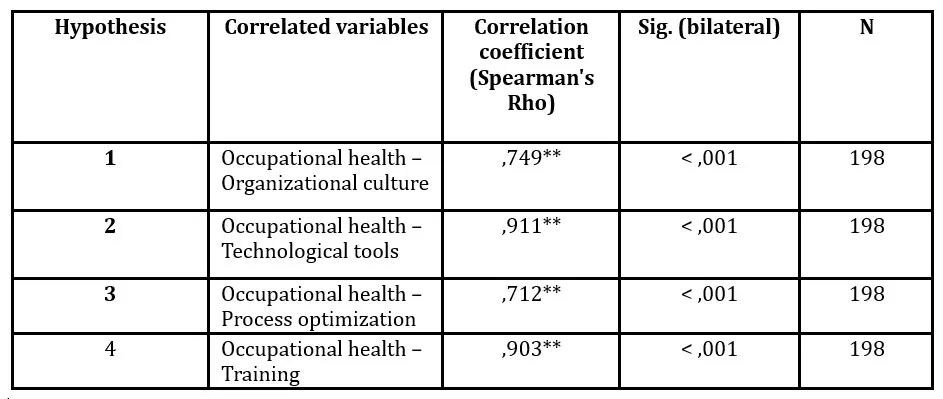
Table 5: Testing specific hypotheses
Note. ** p < 0.01 (two-tailed). The correlation is significant at the 0.01 level.
The results confirm that occupational health has a significant influence on all dimensions of teacher teleworking. High and very high positive correlations were found with organizational culture (ρ = 0.749), the use of technological tools (ρ = 0.911), process optimization (ρ = 0.712), and training (ρ = 0.903), all with statistical significance (p < 0.001). Consequently, the general hypothesis is accepted, concluding that strengthening occupational health directly improves the performance and sustainability of teleworking among private higher education teachers in Cajamarca.
Discussion And Conclusions
The results obtained show that occupational health has a decisive impact on teleworking among teachers at private higher education institutions in Cajamarca (ρ = 0.985; p < 0.001). This finding confirms the hypothesis and is consistent with the literature that highlights the link between working conditions and remote performance (Mendoza-Saldaña & Vitery-Silva, 2021; Souza et al., 2021). The magnitude of the correlation found is particularly high compared to research in other contexts, which can be explained by the centrality of teleworking in teaching functions and by the limited technological infrastructure in the region, which makes the role of occupational health in the perception of remote work more evident.
Organizational culture showed a high positive correlation (ρ = 0.749), confirming that trust, communication, and institutional support strengthen adaptation to teleworking. This result coincides with Schein (2017), who argues that a strong organizational culture facilitates change processes, and with Carranza, J. (2022), who found similar conclusions in a local study. However, the finding also reflects the need to strengthen communication channels and institutional management in Cajamarca, as some teachers still perceive a lack of effective support.
In the case of technological tools, the correlation was very high (ρ = 0.911), showing that the availability of equipment, connectivity, and technical support is directly associated with well-being at work. This result coincides with Pacotaipe, C. (2022), who demonstrated that digital infrastructure conditions teaching effectiveness, and with Criscuolo et al. (2021), who highlight the relationship between digitization and productivity. In Cajamarca, where technological gaps persist, the provision of equipment and improved connectivity should be considered part of occupational health policy, beyond being merely an academic resource.
Process optimization showed a significant correlation (ρ = 0.712). This result indicates that, although occupational health influences the organization of telework, there are still limitations related to academic overload, multiple roles, and the lack of clear mechanisms for task distribution. These findings coincide with Díaz, D., & Malca, M. (2024), who showed that work overload in Cajamarca has an impact on teacher stress and performance deterioration. This suggests that, in order to consolidate teleworking as a sustainable modality, it is not enough to guarantee ergonomic conditions: structural changes in workload and working time management are required.
For its part, training achieved a very high correlation (ρ = 0.903). This confirms that teachers with better occupational health conditions are more motivated and better equipped to undertake continuing education programs. Bautista et al. (2020) and Ramos et al. (2023) argue that digital training not only increases skills but also reduces the frustration and stress associated with using technology. In the context of Cajamarca, where familiarity with digital platforms is still uneven, this result underscores the need to consider training as an integral part of occupational health strategy.
Taken together, the findings reaffirm that the success of teleworking for teachers does not depend solely on ICT, but also on institutional policies that integrate physical health, ergonomics, psychosocial well-being, and organizational culture. According to the WHO and ILO (2022), sustainable teleworking requires a comprehensive vision that balances productivity with quality of life, which is especially relevant in regions where technological and labor gaps are more pronounced.
Finally, it is necessary to acknowledge the limitations of the study: its cross-sectional design prevents the establishment of temporal causality; furthermore, the use of self-report questionnaires may introduce perception biases. Likewise, the sample was restricted to private institutions in Cajamarca, which limits the generalization of the results to other contexts. Future studies should apply longitudinal or experimental methodologies, as well as compare public and private institutions in different regions, to enrich the understanding of the relationship between occupational health and teleworking in the Peruvian educational setting.
It is concluded that occupational health is a determining factor for the sustainability and efficiency of teacher teleworking in private higher education institutions in Cajamarca. The results showed very high and significant correlations between occupational health and key dimensions such as organizational culture, the use of technological tools, process optimization, and training, which shows that ensuring safe and healthy working conditions not only protects faculty well-being but also enhances their academic performance, strengthens institutional cohesion, and improves the quality of virtual education as a whole.
References
Álvarez, A., Delgado, D., Luna, A., & Calva, L. (2025). Riesgos ergonómicos en la salud de los docentes universitarios en el teletrabajo. UNESUM Ciencias, 9(1), 61-73. https://doi.org/10.47230/unesum-ciencias.v9.n1.2025.61-73
Bautista, A., Luján-Mora, S., & Thang, S. (2020). Training teachers for technology-enhanced learning in higher education: A systematic review. Educational Technology & Society, 23(4), 1–15. https://www.jstor.org/stable/26911691
BMC Public Health. (2022). Working conditions and occupational health in home office: A systematic review. BMC Public Health, 22, 2291. https://bmcpublichealth.biomedcentral.com/articles/10.1186/s12889-021-12481-2
Carranza, J. (2022). Salud ocupacional y teletrabajo en los trabajadores administrativos de la Fiscalía de la Nación, Cajamarca 2022 [Tesis de licenciatura, Universidad Privada del Norte]. Repositorio UPN. https://repositorio.upn.edu.pe/handle/11537/40152
Ciênca & Saúde Coletiva. (2023). Trabalho, teletrabalho e saúde mental no contexto COVID-19. Ciência & Saúde Coletiva, 28(10), 4793-4805. https://doi.org/10.1590/1413-812320232810.11752023
Cieza, M., & Rodríguez, P. (2022). Salud ocupacional y teletrabajo en la Fiscalía de la Nación de Cajamarca. Repositorio UPN. https://repositorio.upn.edu.pe/handle/11537/40152
Criscuolo, C., Gal, P., Leidecker, T., & Los, B. (2021). The role of digital technologies in productivity: Evidence from firm-level survey data. OECD Science, Technology and Industry Working Papers, 2021/04. https://doi.org/10.1787/2d6f657d-en
Dávila, R. (2023). Influence of remote work on the work stress of workers in the context of the COVID-19 pandemic: A systematic review. Sustainability, 15(16), 12489. https://doi.org/10.3390/su151612489
Díaz, D., & Malca, M. (2024). Estrés laboral y desempeño ocupacional en docentes de una institución educativa pública de Cajamarca [Tesis de maestría, Universidad Nacional de Cajamarca]. https://renati.sunedu.gob.pe/
(2024). Job satisfaction and remote work: Analysis of the relationship in professors of a public university in Puno, Peru. Educare, 28(1), 1-15. https://doi.org/10.15359/ree.28-1.18504
Escobar, J., & Cuervo, A. (2008). Validez de contenido y juicio de expertos: una aproximación a su utilización. Avances en Medición, 6(1), 27-36. PDF disponible: https://www.humanas.unal.edu.co/lab_psicometria/application/files/9416/0463/3548/Vol_6._Articulo3_Juicio_de_expertos_27-36.pdf
George, D., & Mallery, P. (2003). SPSS for Windows step by step: A simple guide and reference (4th ed.).
Gibson, C., Gibbs, J., & Stanko, T. (2021). Including virtual work in management curricula: How to optimize processes for distributed teams. Academy of Management Learning & Education, 20(3), 283–303. https://doi.org/10.5465/amle.2019.0254
Hernández-Sampieri, R., & Mendoza, C. (2018). Metodología de la investigación. Las rutas cuantitativa, cualitativa y mixta. Enlace al PDF: Universidad de Bellas Artes, repositorio: https://bellasartes.upn.edu.co/wp-content/uploads/2024/11/METODOLOGIA-DE-LA-INVESTIGACION-Sampieri-Mendoza-2018.pdf
Hernández-Sampieri, R., Collado, C., & Lucio, P. (2014). Metodología de la investigación (6.ª ed.). McGraw-Hill Education. Enlace: https://zenodo.org/records/15338867
Instituto Nacional de Salud. (2023). Donde exista interacción humana con un puesto de trabajo en cualquier modalidad existirá el potencial de afectar la salud del trabajador. https://www.gob.pe/institucion/ins/noticias/969907-donde-exista-interaccion-humana-con-un-puesto-de-trabajo-en-cualquier-modalidad-existira-el-potencial-de-afectar-la-salud-del-trabajador
International Journal of Environmental Research and Public Health. (2021). Remote work, work stress, and work-life during pandemic times: A Latin America situation. IJERPH, 18(13), 7069. https://doi.org/10.3390/ijerph18137069
Kerlinger, F., & Lee, H. (2002). Investigación del comportamiento. Métodos de investigación en ciencias sociales.
Lizondo, R. (2021). Análisis de la implementación del teletrabajo durante la pandemia. Revista Pensamiento Académico. https://revistapensamientoacademico.cl/index.php/Repeac2/article/download/82/84/
López, C., Paz-Peregrino, M., & López, J. (2023). Impacto del teletrabajo en la satisfacción laboral de los docentes universitarios peruanos. Revista Científica de Ciencias Sociales, 29(2), 115–127. https://doi.org/10.17163/rcss.n29.2023.07
Magnusson, L., Hanson, L., & Olsson, A. (2020). Telework in academia: Associations with health and well-being among staff. Higher Education, 81(4), 707-722. https://link.springer.com/article/10.1007/s10734-020-00569-4
Manosalva, L. & Potosí, J. (2022). Relación entre la seguridad y salud ocupacional (SSO) y la productividad en los trabajadores de la empresa Maquinaria y Construcción Los Andes E.I.R.L., Cajamarca, 2020 [Tesis de licenciatura, Universidad Privada del Norte]. Repositorio UPN. https://hdl.handle.net/11537/32026
Maza, E., Loor, L., & Tomalá, M. (2021). Riesgo de la salud ocupacional en el teletrabajo docente. Higia de la Ciencia, 1(4), 44-53. https://doi.org/10.37117/higia.v1i4.488
Mejía, D. (2022). Trabajo remoto y productividad laboral de los colaboradores de la Unidad Territorial Pensión 65, Cajamarca 2022 [Tesis de licenciatura, Universidad Privada del Norte]. Repositorio UPN. https://hdl.handle.net/11537/30552
Mendoza-Saldaña, J., & Vitery-Silva, A. (2021). Teletrabajo docente y condiciones de salud ocupacional. Archivos de Prevención de Riesgos Laborales, 24(3), 175–181. https://archivosdeprevencion.eu/index.php/aprl/article/view/175
Ministerio de Educación (2024). Censo educativo 2024. https://escale.minedu.gob.pe/inicio
Ministerio de Trabajo y Promoción del Empleo. (2022). Informe anual sobre la situación del teletrabajo en el Perú. MTPE. https://www.gob.pe/mtpe
Ministerio de Trabajo y Promoción del Empleo. (2023). Observatorio Socioeconómico Laboral de Cajamarca. https://www2.trabajo.gob.pe/promocion-del-empleo-y-autoempleo/informacion-del-mercado-de-trabajo/red-observatorios-socio-economicos/osel-cajamarca/fuente-osel-cajamarca/
Organización Internacional del Trabajo. (2021). Guía para la regulación del teletrabajo. OIT. https://www.ilo.org/es/media/380146/download
Organización Internacional del Trabajo. (2022). La OIT advierte sobre el costo humano del trabajo inseguro. https://www.ilo.org/global/about-the-ilo/newsroom/news/WCMS_848197/lang–es/index.htm
Organización Mundial de la Salud. (2022). Salud ocupacional para todos. https://apps.who.int/iris/bitstream/handle/10665/42109/951802071X_spa.pdf
Oviedo-Gil, D., & Cala, L. (2023). Desigualdades laborales en el teletrabajo en América Latina: Retos para la sostenibilidad. Revista Latinoamericana de Estudios del Trabajo, 28(1), 45–62. https://www.redalyc.org/journal/4096/409669889004/
Pacotaipe, P. (2022). Teletrabajo y efectividad laboral en docentes de Lima Metropolitana [Tesis de maestría, Universidad César Vallejo]. Repositorio UCV. https://repositorio.ucv.edu.pe/handle/20.500.12692/109607
Quispe, J. (2023). Gestión de seguridad laboral y salud ocupacional en trabajadores de salud de un hospital de Sicuani – Cusco, 2022 [Tesis de maestría, Universidad César Vallejo]. Repositorio UCV. Enlace: https://hdl.handle.net/20.500.12692/109607
Ramos, M., Argota, G., Maldonado, R., Yana, A., & Paredes, J. (2023). Bienestar y salud ocupacional de docentes universitarios en la formación investigativa mediante el teletrabajo. MEDISAN, 27(3), 508-516. https://medisan.sld.cu/index.php/san/article/view/4702
Ríos, M., Ramos, E., Arbulú, M., Otiniano, M., Bravo, J., Suysuy, E., Reyes-Pérez, M., Ganoza-Ubillús, L., & Alarcón, R. (2024). Human-centric telework and sustainable well-being: Evidence from Peru’s public sector. Sustainability, 16(22), 9713. https://doi.org/10.3390/su16229713
Rodríguez, M. (2024). Riesgos ergonómicos y ausentismo laboral en el personal de Centros de Salud de Cutervo-Cajamarca 2024 [Tesis de licenciatura, Universidad Privada del Norte]. Repositorio UPN. https://hdl.handle.net/11537/35894
Schein, E. (2017). Organizational culture and leadership (5th ed.). https://books.google.com.pe/books/about/Organizational_Culture_and_Leadership.html?id=l2jpCgAAQBAJ&redir_esc=y
Souza, K., Lima, A., & Fernandes, M. (2021). Remote teaching and teachers’ health in Brazil during the pandemic. Revista de Saúde Pública, 55, 101. https://doi.org/10.11606/s1518-8787.2021055003765
Suárez, V. (2020). Implementación del teletrabajo y calidad de servicio de la Unidad de Gestión Educativa Local San Pablo, año 2020 [Tesis de maestría, Universidad César Vallejo]. Repositorio UCV. Enlace: https://hdl.handle.net/20.500.12692/46386.