Mohd Shahfie JABARULLAH1,2, Mohd Fairuz Abd RAHIM3,2 and Jeen Wei ONG3,2
1Management Service Division, Public Service Department, Putrajaya, Malaysia
2Faculty of Management, Multimedia University, Cyberjaya, Malaysia
3Centre for Management and Marketing Innovation, CoE for Business Innovation and Communication
Volume 2026,
Article ID 845807,
IBIMA Business Review,
17 pages,
DOI: https://doi.org/10.5171/2026.845807
Received date: 30 September 2025; Accepted date: 12 March 2026; Published date: 1 April 2026
Academic Editor: Arshad Ahmad
Cite this Article as:
Mohd Shahfie JABARULLAH, Mohd Fairuz Abd RAHIM and Jeen Wei ONG (2026)," Digital Leadership and Adaptive Performance in the Malaysian Public Sector: The Mediating Role of Data-Driven Decision-Making “, IBIMA Business Review, Vol. 2026 (2026), Article ID 845807, https://doi.org/10.5171/2026.845807
A significant transformation has been occurring within the public sector as a result of the VUCA environment. It poses challenges for civil servants to adapt to such an event in a rapidly evolving environment. To deal with it, civil servants will need adaptive performance. Prior research on adaptive performance has shown that it is important in the private sector, but there is insufficient evidence in the public sector. Therefore, this study investigates the impact of digital leadership, data-driven decision-making, and adaptive performance in the public sector using the contingency theory as a guide. Applying the quantitative approach, a survey was carried out to collect data from 105 administrative and diplomatic officers in three ministries in Putrajaya, Malaysia. This study supports our hypothesis that digital leadership is a good predictor of adaptive performance and that data-driven decision-making mediates the relationship between digital leadership and adaptive performance. These results enrich both theoretical and practical understanding by applying contingency theory to the public sector context. It proposes the development of a novel model to improve adaptive performance in the public sector, recommending new leadership development training and strategies for organizations to enhance their effectiveness and efficiency in a challenging environment, while also offering an improved delivery system to meet public demands.
Keywords: adaptive performance, digital leadership, data-driven decision-making, public sector
Introduction
The global rapid change due to the vulnerability, uncertainty, complexity, and ambiguity (VUCA) environment, such as technological advancement, climate change, political turbulence, and geopolitical conflict, has a huge impact on all countries around the world (Dewi and Soeling, 2024; Junça-Silva and Caetano, 2024). Therefore, organizations today need to change quickly and adapt to the demands of the environment. The impact of the VUCA environment has led most organizations to adapt to such situation, including the public sector (Potsangbam, 2017; Ramakrishnan, 2021). At the same time, the public has also asked for the public sector to be more efficient and effective. This has added to the push for the public sector to adapt continuously. Adaptive performance is critical for the public sector and the civil servants to adjust and embrace change, and meet demands (Charbonnier-Voirin and Roussel, 2012; Sakti, Parimita and Widyastuti, 2024). There is a need to understand the adaptive performance for the public sector (Park et al., 2020). The public sector, especially the civil servants, needs to be agile and adaptive to be relevant and remain effective. Despite its significance, studies on adaptive performance have mostly been done in the private sector. The public sector is also changing faster as in the private sector. Therefore, it is important to investigate the crucial factor of adaptive performance in the public sector in the VUCA environment. Most of the studies on adaptive performance concentrate on individual factors, which lack the contextual role (Charbonnier-Voirin et al., 2010).
Leaders play an important role in ensuring how they lead their organization and employees in dealing with such a challenging environment and the demand from the public (Thanh and Quang, 2022; Ahmed et al., 2024). Most of the leadership styles in the past in the public sector were hierarchical-based, and the most recent research surrounds the transformational leadership style (Backhaus and Vogel, 2022). Yet, the pressure of the Industrial Revolution 4.0 is mounting with the introduction of the Internet of Things, artificial intelligence, blockchain, and other technological innovations, which require leadership to be integrated with digital capabilities and competencies to align with them (Tigre et al., 2025). Digital leadership is suited to address such digital requirements in the current situation (Anwar and Saraih, 2024). Most digital leadership studies are in the United States and Europe (Tigre et al., 2023). Furthermore, digital leadership has been mostly studied in the private sector, but there is a lack of research in the public sector (Branderhorst and Ruijer, 2025). Both sectors have different aims, structures, and cultures. Therefore, the influence of digital leadership in the public sector is important to study to understand its impact on adaptive performance among civil servants.
The decision-making process that has an impact on the civil servants’ performance is another crucial factor in an effective and efficient public sector. Sound decision-making is a result of good research with reliable and accurate data (Maxwell et al., 2016). The vast and huge administration of the public sector is a major challenge for civil servants, especially leaders, to make informed decisions. The issues of silo, unintegrated data, and data collection across ministries and agencies have created a lot of problems with misinformation (Ali et al., 2021). The challenges of a VUCA environment add to this issue. Therefore, data-driven decision-making is vital for organizations. Its role needs to be highlighted as it has become the core of the organizational process (Szukits and Móricz, 2023). Despite this, leaders are still not fully committed and engaged in the process of having the benefits of such decision-making (Elragal and Elgendy, 2024).
From existing studies, it was found that adaptive performance and digital leadership are less been studied in the context of the public sector. Both have a significant impact on civil service in dealing with the VUCA environment and meeting the demand from the public to ensure the effectiveness and efficiency of service delivery. The role of data-driven decision-making in mediating the influence of digital leadership and adaptive performance has not been sufficiently tested, although it is a valuable element in an organization’s dynamism. To address these gaps, the study investigates the direct effect of digital leadership on adaptive performance and tests the mediating role of data-driven decision making. Based on Contingency Theory, adaptive performance also depends on the situational and contextual factors (Yulk and Gardner, 2020; Sakinah et al., 2024), which is the case of leadership and decision-making style in this study. In this digital transformation era, leaders need to adapt to technologies that are rapidly developing to enhance their organization’s adaptability. Digital leadership has the vision and a strong force that encourages its employees to respond resiliently to environmental challenges (Van Chien et al., 2023; Qiao et al., 2024). But its influence on adaptive performance is contingent on other contextual factors, such as, in this study, the data-driven decision-making. Data-driven decision-making acts as a contextual medium that enhances the relationship between digital leadership and adaptive performance. Leaders who use data and encourage a culture of informed decision-making would make employees have a better understanding and clearer picture of a situation, which will translate into a dynamic response towards uncertainty (Okwechime et al., 2021). Therefore, the quality and effectiveness of adaptive performance depend on the alignment between leadership and the contextual mediation of data culture in the public sector. To achieve the objectives, the key research question that has been identified is as follows: What is the relationship between digital leadership and adaptive performance, and the mediating effect of data-driven decision-making between the relationship of digital leadership and adaptive performance in public sector organizations?
Literature Review
The concept of adaptive performance refers to an individual’s capacity to quickly accommodate himself to the evolving work environments (Pulakos et al., 2000). Pulakos et al. (2000) identified eight dimensions for the adaptive performance construct, which are dealing with uncertain or unpredictable work situations; handling emergencies or crisis situations; solving problems creatively; handling work stress; learning new tasks, technologies and procedures; demonstrating interpersonal adaptability; demonstrating cultural adaptability; and demonstrating physically oriented adaptability. Although their concept is comprehensive, it has been criticized for its overlapping across its dimensions and limited generalization across other contexts. Therefore, Charbonnier-Voirin and Roussel (2012) later came out with five factors with a parsimonious scale, which are based on the dimensions of Pulakos et al. (2000) to provide a greater generalization. It catered to a broader performance system context, whereby, from individual to contextual focus in a changing environment, thus making it more applicable to the public sector. Recent studies by Nandini et al. (2022), and Park and Park (2019), found four types of antecedents of adaptive performance. Nandini et al. (2022) identified individual characteristics, motivation and self-regulation, job, task, contextual factors, and training and learning, while Park and Park (2019) proposed that individual, job, group, and organization characteristics are the major types of antecedents of adaptive performance. Both studies found that adaptive performance is not merely upon individual capability but also on contextual factors, which echoes Charbonnier-Voirin and Roussel’s (2012) finding. Therefore, this suggests that contextual factors are gaining attention, which play an important role in determining the adaptive behavior outcomes.
Digital leadership has been fast evolving in the latest development of leadership studies. Tigre et al. (2023) define digital leadership as a leader who is morally sound and adaptable in a fast manner to changes. Digital leadership requires leaders with the capability to create a clear, useful vision and direction for digital processes and then put those plans into action (Qiao et al., 2024). A leader must know and understand the latest technology to foster positive relationships with their employee and meet their needs (Zam et al., 2025). The leader promotes a culture of trust in individuals, respects their differences, and helps them work together and prosper in a digital environment. Leaders behave throughout the digital transformation process and beyond leading the transformation process (Büyükbeşe, 2022). The leader uses his knowledge and expertise to contribute to the organization’s transformation (Shah and Patki, 2020). These studies show that digital leadership is not only focusing on the technological capability per se, but it also encompasses ethics, direction, adaptability, and trust in the organization. Therefore, although the Industrial Revolution 4.0 pushes leaders to adopt and develop technology-driven characteristics for them to maneuver their organization through the digital transformation agenda, digital leadership goes beyond that. Thus, Tigre et al. (2025) proposed a conceptual model of digital leadership with four dimensions, which are interpersonal oriented, strategic focus, personal attributes, and delivery related. These studies indicate that digital leadership is contextually based, which requires the leader to act upon the development of technology, plus leading the organization and employees in the age of digital transformation.
Data-driven decision-making, as defined by Diván, (2017), refers to the approach of making decisions that are based more on data analysis than merely on one’s gut feeling. Elragal and Elgendy (2024) refer to it as the systematic use of data and analytics at all levels of organization, which is based on advanced technologies to guide and improve decision-making. Technological advancement, rapid development of the digital world, and the wave of the Industrial Revolution 4.0 have accelerated people’s ability to make quicker and more accurate decisions (Bousdekis et al., 2021). Maxwell et al. (2016) emphasized that, to increase performance, organizations need to have three main activities, which are: collecting the data needed, analyzing the data, and using the data systematically. Elragal and Elgendy (2024) echo that by introducing new elements of what a modern decision-making theory would be, which are data and analytics, apart from the classical elements, which are the decision-maker, decision, and decision-making process. These studies show the progress of decision-making from intuitive to data analysis and making way towards strategic decision-making. This indicates that data, which used to be a tool, are now acting as a strategic enabler that enhances leadership effectiveness towards adaptive performance in complex settings.
Hypotheses Development
Al-Husban et al. (2021) and Shin et al. (2023) found that there are substantial effects of digital leadership on organizational performance. Each study uses a cross-sectional approach in collecting data in the field of industry in Jordan and South Korea. The studies were based on the upper echelon perspective, where respondents were from the top managerial executive. Jimoh and Adenekan (2024) found that digital transformation capabilities are critical factors that underlie the adaptive performance of administrative staff of federal tertiary institutions in South-west, Nigeria, and other public tertiary institutions. The study has digital leadership as one of its dimensions of the digital transformation capabilities. It does not have a specific construct to measure digital leadership toward adaptive performance. However, Muniroh et al. (2022) discovered that employee performance is indirectly impacted by digital leadership. Their study shows that digital leadership has a direct effect on innovation. They suggest that the role of digital leadership is important in trying the latest technologies for facilitating employee innovation, which the study found improves employee performance. Based on the review of the literature, the following hypothesis is proposed.
H1: There is significant relationship between digital leadership style and adaptive performance.
Digital leadership has a major impact on data-driven decision-making. It comes in handy when the leadership has the strong force to digitalize the organization, and thus would enable them to access data easily than with a traditional organization that is based on manual data collection and analysis (Van Chien et al., 2023). This digital transformation by the leadership would offer better decision-making with the availability of data in seconds, even during an ongoing crisis (Zeike et al., 2019). With remote working being prevalent today, the availability of data digitally will allow leaders to make decisions wisely and timely (Büyükbeşe, 2022). Hung et al. (2023) found that, with strong digital leadership as a moderator, it enables the effects of digital transformation through cloud-based accounting effectiveness for decision-making qualities intensified. Based on the review of the literature, the following hypothesis is proposed.
H2: There is significant relationship between digital leadership style and data-driven decision-making.
It is vital that a leader who makes decisions will bear the consequences of the outcome of the performance of their employee. According to Taramuel-Taramuel et al. (2023), there is increasing research on farmers’ decision-making and farm performance, particularly in developing countries. The research is done through a systematic literature review of 24 articles. They found that decision-making plays a great role in determining the performance of the farmers. However, the study is limited to the field of agriculture and is based on a qualitative method. Hsu and Chang’s (2021) research on top managers from the resource-based view found that those who showed transformational leadership traits will influence the decision-making style, which then allows the performance of the company to be higher. However, this study is limited to those who are at the top of the company, who are the CEOs that barely have frequent relationships with employees, thus possibly also do not reflect and show a clear influence on the employees. However, there are also studies that found it may not lead to any relation at all. According to Miller and Lee (2001), there is no direct relation between decision-making and performance. However, further studies would need to be done with other cultures and nations, as their studies are based on Korean companies and Confucian ethics that require both to have reciprocal responsibilities. Based on the review of the literature, the following hypothesis is proposed.
H3: There is significant relationship between data-driven decision-making and adaptive performance.
The interrelationship between leadership, decision-making, and performance is important to study. Leadership has a significant role and is the key player in an organization (Osborne, 2006; Yulk and Gardner, 2020). They are the ones who guide the whole organization to achieve its goal. Therefore, all eyes are on the leadership steps and strategy that will be laid out. The most important thing is their decision-making. The leadership decision-making style will determine how the employee will perform (De Hoogh et al., 2015). Having mere rational or even emotional decision-making would only cause harm to the employee and the organization as a whole. Thus, it is where data-driven decision-making would benefit the whole organization (Ali et al., 2021). Data-driven decision-making involves analyzing organizational data or relevant information, which then guides leadership in determining the next steps or strategies to implement. By using data-driven decision-making, leadership will have a better and clearer picture of any scenario or phenomenon. This will allow them to make informed decisions, rather than gut feeling perse (Okwechime et al., 2021). Therefore, with the rapid changes in the world and uncertainty, data-driven decision-making by the leadership will assist employees in having the ability of adaptive performance much more easily. They will provide them with the right information and feedback to suit the changes and uncertainty (Chaskar and Upadhyay, 2023). With data-driven decision-making as the mediator, leadership will have an effect on adaptive performance to steer the organization effectively. Based on the review of the literature, the following hypothesis is proposed.
H4: Data-driven decision-making mediates the relationship between leadership style and adaptive performance.
Methodology
Research design and measurement
This study employed a quantitative method, cross-sectional, with an online survey-based questionnaire using Google Forms. The measurement used for the variables is by Van Chien et al. (2023) 5 items for digital leadership (α=0.956), data-driven decision-making, 8 items by Szukits and Móricz (2023) (α=0.913), and Marques-Quinteiro et al. (2015) 8 items for adaptive performance (α=0.840). Applying different scale properties for independent, mediator, and dependent variables could minimize common method bias (Podsakoff et al., 2012). The seven-point rating scale starts from 1 (strongly disagree) to 7 (strongly agree) for the independent variable and the mediator. For the dependent variable, a seven-point rating scale was also applied, with different types ranging from 1 (totally ineffective) to 7 (strongly effective).
Sampling
The respondents are middle managers from the group of administrative and diplomatic officers in three ministries at Putrajaya, Malaysia, as shown in Table 1. The survey has been sent to the respective ministry’s human resource division, where they sent it to all of the respondents by email and WhatsApp group of the ministry. The data collection was conducted from early May 2025 until the end of June 2025. The number of respondents from these ministries is 105. The G*Power for this study is 68.
Table 1: List of Agencies and Number of Respondents
Results
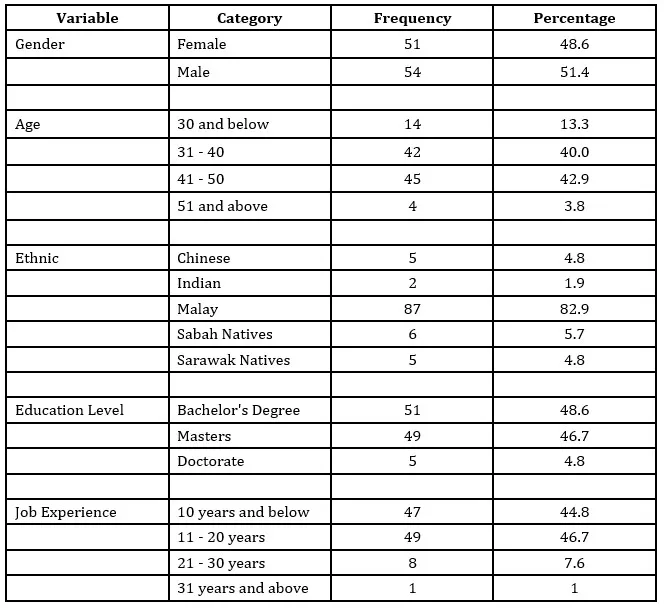
Table 2 shows the demographics of the respondents, which includes their gender, age, ethnic group, education level, and job experience. Female and male respondents are fairly distributed. Most of the respondents are from the age groups of 31-40 and 41-50. Malay is the highest respondent. The education level is mostly bachelor’s and master’s degrees. Finally, on job experience, the majority of respondents are coming from the group of 20 years of experience and below.
Next, the multivariate skewness and kurtosis were assessed as suggested by Hair et al. (2022) and Cain et al. (2017). The results showed that the data collected were not multivariate normal, Mardia’s multivariate skewness (β = 3.227, p< 0.01), and Mardia’s multivariate kurtosis (β = 27.067, p< 0.01). Then, a full collinearity test is performed to confirm the absence of common method bias, as shown in Table 3. The VIF values are all below 5, indicating no issue of common method bias (Hair et al., 2017). In addition, based on Podsakoff et al. (2024), this study applied procedural remedies by ensuring anonymity, improving scale items, and using different scale types. Combining both statistical and procedural remedies will be able to mitigate the potential influence of common method bias in this study.
Table 2: Demographics of participants (N = 105)
Table 3: Full Collinearity Testing
Measurement Model
This study tested the measurement model to test the validity and reliability of the instruments used, following the guidelines of Hair et al. (2022). All constructs in this study, which are digital leadership, data-driven decision-making, and adaptive performance, were modeled as reflective constructs. This study assessed the loadings, average variance extracted (AVE), and the composite reliability (CR). The values of loadings should be ≥0.5, the AVE should be ≥ 0.5, and the CR should be ≥ 0.7. As shown in Table 4, the AVEs are all higher than 0.5, and the CRs are all higher than 0.7. Thus, the measurement model was valid and reliable.
Table 4: Measurement Model
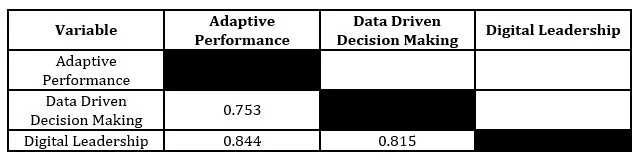
Next, this study assessed the discriminant validity using the HTMT criterion suggested by Henseler et al. (2015) and updated by Franke and Sarstedt (2019). The HTMT values should be ≤ 0.85, the stricter criterion, and the more lenient criterion is that it should be ≤ 0.90. As shown in Table 5, the values of HTMT were all lower than the stricter criterion of ≤ 0.85; as such, it can be concluded that the respondents understood that the 3 constructs are distinct. Taken together, both these validity tests have shown that the measurement items are both valid and reliable.
Table 5: Discriminant Validity (HTMT ratio)
Structural Model
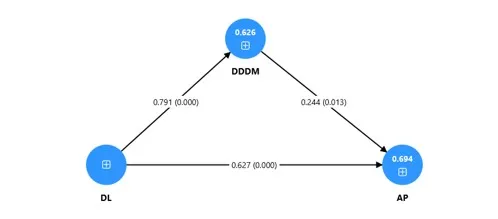
Then, the structural model has been run to test the hypothesis developed. The path coefficients, standard deviation, t-values, p-values, f2, r2, and hypothesis testing are reported in Figure 1 and Table 6. The r2 value indicates the level of predictive with a value of 0.694 showing moderate. The effect size, f2, the value of 0.481, shows a major effect of the digital leadership on the adaptive performance. All three paths are significant, with p-values less than 0.05, thus H1, H2, and H3 were supported.
Mediation Analysis
To test the mediation hypotheses, this study followed the suggestions of Preacher and Hayes (2004, 2008) by bootstrapping the indirect effect. If the confidence interval does not straddle a 0, then it can be concluded that there is significant mediation. As shown in Table 7, DL -> DDDM -> AP p-value is significant. The confidence intervals bias corrected 95%, also did not show any intervals straddling a 0, thus confirming the finding. These results indicate that the data-driven decision-making partially mediates the influence of digital leadership on adaptive performance. Thus, H4 is also supported.
Figure 1. Structural Model
Table 6: Hypothesis Testing Direct Effects
Table 7: Hypothesis Testing Indirect Effects
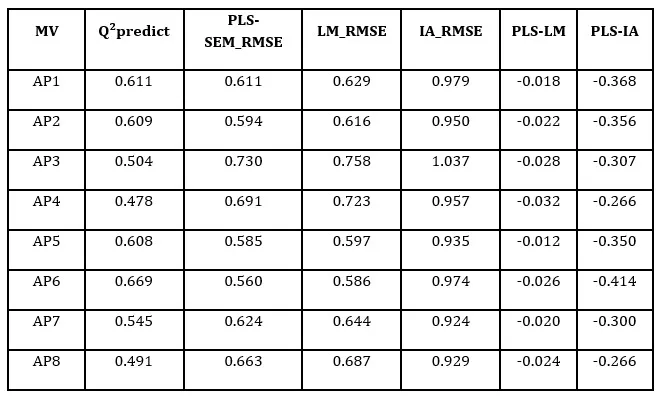
Additional analysis using PLSpredict, as suggested by Shmueli et al. (2019), has been applied. If all the item differences (PLS-LM) were lower than, there is strong predictive power; if all are higher than, predictive relevance is not confirmed; while if the majority is lower than, there is moderate predictive power; and if minority, then, there is low predictive power. Based on Table 7, all the errors of the PLS model were lower than the LM model, thus we can conclude that our model has a strong predictive power.
Table 8: PLS-Predict
Discussion
This study aimed to examine how digital leadership and data-driven decision-making affect adaptive performance and the mediating effect of data-driven decision-making. The results strongly supported all four hypotheses, giving empirical evidence that leadership and decision-making are important drivers of adaptability in the public sector. Overall, the findings suggest that the model proposed a new pathway of having adaptive performance outcomes in the context of the public sector. Adaptive performance is significant in the public sector as it is in the private. The public sector has its challenges, which differ from the private, as it operates with bureaucratic processes, limited resources, and huge accountability to the stakeholders. This model will be able to address such challenges in the public sector. Digital leadership is not about emphasizing the technology per se, but driving and shaping a culture that embraces adaptability in the organization, while data-driven decision-making is a key enabler of adaptive performance. These form a complementary system that enhances the public sector’s capacity to be more effective and efficient in thriving in the VUCA environment.
Hypothesis 1 confirms that digital leadership significantly enhances adaptive performance. This is aligned with Al-Husban et al. (2021), Jimoh and Adenekan (2024), and Shin et al. (2023), who found that leadership is important in the context of performance. This study contributes by showing the direct influence of digital leadership towards adaptive performance in the public sector, not just the industry. Next, Hypothesis 2 indicates that leaders who foster data-driven practices in the workplace are those who embrace digital leadership. It supports the findings by Büyükbeşe (2022), Van Chien et al. (2023), and Zeike et al. (2019). With regards to the study by Hung et al. (2023), this study shows that digital leadership itself, not just digital transformation, creates better decision-making effectiveness. Moreover, Hypothesis 3 establishes that informed decision-making through data would enable adaptive performance, which supports the study by Hsu and Chang (2021) and Taramuel-Taramuel et al. (2023). It also clarifies the limitations identified by Miller and Lee (2001) by offering empirical evidence in a new context, which is the public sector. Lastly, Hypothesis 4 demonstrated that data-driven decision-making partially mediates digital leadership’s influence on adaptive performance. It indicates that, with such mediation of data-driven decision-making, it enhances the overall effectiveness of digital leadership, which has a direct effect on adaptive performance. Furthermore, this result also supports the theory of contingency whereby the availability of informed-based decision-making will allow leadership to influence performance in an organization. Therefore, it adds value by showing the importance of having a better decision-making process in between of the leadership’s direct influence towards performance quality.
Theoretically, the present research contributes to three main areas. First, it supports the contingency theory by showing that the effectiveness of leadership depends on the quality of decision-making, which will affect the performance in a VUCA environment. The findings highlight that digital leadership enhances adaptive performance when it has been supported by a data-driven decision-making culture in the organization. This indicates that the theory’s application is extended to the digital transformation era. Second, it expands the literature of leadership and performance from a private context to the public sector. Previous studies have concentrated more on how companies and businesses thrive through adaptability and maximizing digital transformation. This study shifted to the public sector, where it differs in terms of its own unique challenges, especially in bureaucratic and red tape constraints such as the layers of hierarchical structure, rules rigidity, and overwhelming processes. People are expecting high accountability demands, such as transparency and integrity. Moreover, resource limitations such as insufficient budget, talent recruitment, and slow technological adoption added to the challenges. As a result, adaptive performance in the public sector requires a unique set of behavior and leadership capabilities to allow the civil service to deal with those challenges in maintaining the performance of public service delivery. Third, it proposed a new integrated model by linking digital leadership, data-driven decision-making, and adaptive performance, which brings a novel pathway to understand how the public sector can develop resilience and dynamic capability. The model highlighted that effective leadership goes beyond translating digital capacity to adopting technology. Leaders who manage to use technology to consolidate the data into actionable strategies and evidence-based decisions will be able to enhance employee adaptive performance and organizational agility.
Practically, this empirical evidence offers new actionable strategies for organizations. It shows that it is important to develop digital leadership competencies among civil servants in this digital era. But it should not only focus on implementing and adopting technology per se. Leaders need to foster a culture of innovation, encouraging learning and being able to cope and adapt to the environment. Next, human resource divisions should look into their training program. Their leadership development program needs to instill in the elements of digital leadership, evidence-based decision-making skills, and adaptive capabilities. In parallel, performance management systems in the public sector should be strengthened further with the inclusion of adaptive performance dimensions. Furthermore, public organizations also need to formulate and add to their governance policy concerning data-driven, especially with regard to their public administration reform agendas. The issue of silo and mismatched data among agencies can be solved once inter-organizational collaboration and data sharing can be materialized. In addition, organizations need to invest in data infrastructure, integration, and systems for better decision-making, as these are critical for faster and more accurate decisions that will improve the public service delivery. Finally, public organizations need to foster a culture of having data-based strategies rather than intuition-based ones. This data-driven culture encourages organizations to have analytical and transparent decision-making practices. Collectively, with such a transformation in the public sector, it will enhance their service delivery effectiveness and efficiency. This will allow the public sector to sustain public trust and be relevant in this VUCA turbulence era.
Limitations and Future Research
Although this study has contributed towards a deeper understanding of the relationship between digital leadership, data-driven decision-making, and adaptive performance in the public sector, it has several limitations for future research directions. First, the study is bound to the context of the public sector at a certain organizational level. Therefore, it could be expanded to other hierarchical levels in the public sector, such as to the top management and lower levels of operation, or conduct comparative analysis between public and private sectors to understand different context variations. Second, its cross-sectional design limits causal inference. Therefore, longitudinal studies are recommended to test the dynamic interactions of the variables in response to any environmental changes. Third, the reliance on self-reported data in this study could be complemented with rater-reported data, which provides external perspectives and reduces potential bias. Fourth, exploring other mediators or moderators, such as digital culture and the role of artificial intelligence, could better explain other contingency factors that affect adaptability. Fifth, adopting a qualitative or mixed-method approach by using interviews or case studies could enrich the understanding of these studied variables. Finally, it is suggested to replicate this study across different countries to see cultural variations and offer valuable global public sector findings. By addressing these limitations, future research will be able to provide a more comprehensive and deeper understanding of how digital leadership and data-driven decision-making jointly can enhance adaptive performance in the public sector.
References
Ahmed, S., Abd Aziz, N., Haque, R., Bin S.Senathirajah, A.R. and Qazi, S.Z. (2024) “Digital transformation in Malaysian manufacturing: a study of change sensing and seizing capabilities,” Cogent Business & Management, 11(1). Available at: https://doi.org/10.1080/23311975.2024.2392046.
Al-Husban, A.O., Nassar Dieb Almarshad, M. and Ali Altahrawi, M. (2021) “Digital Leadership and Organization’s Performance: The Mediating Role of Innovation Capability,” International Journal of Entrepreneurship, 25(5).
Ali, R., Shaharudin, A., Latiff, A. and Wahab, S.A. (2021) Factors Influencing Decision-Making Process In Relation To Public Service Delivery (PSD) In Malaysia.
Anwar, S. and Saraih, U.N. (2024) “Digital leadership in the digital era of education: enhancing knowledge sharing and emotional intelligence,” International Journal of Educational Management, 38(6), pp. 1581–1611. Available at: https://doi.org/10.1108/IJEM-11-2023-0540.
Backhaus, L. and Vogel, R. (2022) “Leadership in the public sector: A meta‐analysis of styles, outcomes, contexts, and methods,” Public Administration Review, 82(6), pp. 986–1003. Available at: https://doi.org/10.1111/puar.13516.
Bousdekis, A., Lepenioti, K., Apostolou, D. and Mentzas, G. (2021) “electronics A Review of Data-Driven Decision-Making Methods for Industry 4.0 Maintenance Applications.” Available at: https://doi.org/10.3390/electronics.
Branderhorst, E.M. and Ruijer, E. (2025) “Digital leadership in local government: an empirical study of Dutch city managers,” Local Government Studies, 51(3), pp. 576–599. Available at: https://doi.org/10.1080/03003930.2024.2363368.
Büyükbeşe, T. (2022) “A Study On Digital Leadership Scale (DLS) Development Dijital Liderlik Ölçeği (Djl) Geliştirme Çalışması Sevgin BATUK ÜNLÜ,” Kahramanmaraş Sütçü İmam Üniversitesi Sosyal Bilimler Dergisi, 19(2), pp. 740–760.
Cain, M.K., Zhang, Z. and Yuan, K.-H. (2017) “Univariate and multivariate skewness and kurtosis for measuring nonnormality: Prevalence, influence and estimation,” Behavior Research Methods, 49(5), pp. 1716–1735. Available at: https://doi.org/10.3758/s13428-016-0814-1.
Charbonnier-Voirin, A., El Akremi, A. and Vandenberghe, C. (2010) “A multilevel model of transformational leadership and adaptive performance and the moderating role of climate for innovation,” Group and Organization Management, 35(6), pp. 699–726. Available at: https://doi.org/10.1177/1059601110390833.
Charbonnier-Voirin, A. and Roussel, P. (2012) “Adaptive performance: A new scale to measure individual performance in organizations,” Canadian Journal of Administrative Sciences, 29(3), pp. 280–293. Available at: https://doi.org/10.1002/CJAS.232.
Chaskar, A. and Upadhyay, S. (2023) “Effective Crisis Response to COVID-19 in Tourism and Hospitality: The Intersection of Crisis Leadership and Crisis Decision-Making,” in Procedia Computer Science. Elsevier B.V., pp. 185–191. Available at: https://doi.org/10.1016/j.procs.2023.07.026.
Dewi, K.S. and Soeling, P.D. (2024) “Does Psychological Capital Mediate the Relationship Between Transformational Leadership and Adaptive Performance of Civil Servant?,” Technium Soc. Sci. J., 53. Available at: www.techniumscience.com.
Diván, M.J. (2017) “Data-driven ecision making,” in 2017 international conference on Infocom technologies and unmanned systems (trends and future directions)(ICTUS). IEEE, pp. 50–56.
Elragal, A. and Elgendy, N. (2024) “A data-driven decision-making readiness assessment model: The case of a Swedish food manufacturer,” Decision Analytics Journal, 10, p. 100405. Available at: https://doi.org/10.1016/j.dajour.2024.100405.
Franke, G. and Sarstedt, M. (2019) “Heuristics versus statistics in discriminant validity testing: a comparison of four procedures,” Internet Research, 29(3), pp. 430–447. Available at: https://doi.org/10.1108/IntR-12-2017-0515.
Hair, J.F., Matthews, L.M., Matthews, R.L. and Sarstedt, M. (2017) PLS-SEM or CB-SEM: updated guidelines on which method to use “PLS-SEM or CB-SEM: updated guidelines on which method to use,” Organizational Research Methods, MIS Quarterly, and International Journal.
Hair, J.F.J., Hult, G.T.M., Ringle, C.M., and Sarstedt, M. (2022) A Primer on Partial Least Squares Structural Equation Modeling (PLS-SEM). Third. SAGE Publications Inc.
Henseler, J., Ringle, C.M. and Sarstedt, M. (2015) “A new criterion for assessing discriminant validity in variance-based structural equation modeling,” Journal of the Academy of Marketing Science, 43(1), pp. 115–135. Available at: https://doi.org/10.1007/s11747-014-0403-8.
De Hoogh, A.H.B., Greer, L.L. and Den Hartog, D.N. (2015) “Diabolical dictators or capable commanders? An investigation of the differential effects of autocratic leadership on team performance,” Leadership Quarterly, 26(5), pp. 687–701. Available at: https://doi.org/10.1016/j.leaqua.2015.01.001.
Hsu, Y.T. and Chang, K.C. (2021) “A study on top managers from a resource-based perspective,” Measuring Business Excellence, 25(1), pp. 58–77. Available at: https://doi.org/10.1108/MBE-02-2020-0038.
Hung, B.Q., Hoa, T.A., Hoai, T.T. and Nguyen, N.P. (2023) “Advancement of cloud-based accounting effectiveness, decision-making quality, and firm performance through digital transformation and digital leadership: Empirical evidence from Vietnam,” Heliyon, 9(6). Available at: https://doi.org/10.1016/j.heliyon.2023.e16929.
Jimoh, T.A. and Adenekan, T.E. (2024) “Exploring the Dynamics of Digital Transformation Capabilities and Adaptive Performance of Administrative Staff in Public Tertiary Institutions, South-West Nigeria,” European Journal of Science, Innovation and Technology [Preprint]. Available at: www.ejsit-journal.com.
Junça-Silva, A. and Caetano, A. (2024) “Uncertainty’s impact on adaptive performance in the post-COVID era: The moderating role of perceived leader’s effectiveness,” BRQ Business Research Quarterly, 27(1), pp. 40–56. Available at: https://doi.org/10.1177/23409444231202809.
Marques-Quinteiro, P., Ramos-Villagrasa, P.J., Passos, A.M. and Curral, L. (2015) “Measuring adaptive performance in individuals and teams,” Team Performance Management, 21(7–8), pp. 339–360. Available at: https://doi.org/10.1108/TPM-03-2015-0014.
Maxwell, N.L., Rotz, D. and Garcia, C. (2016) “Data and Decision Making,” American Journal of Evaluation, 37(4), pp. 463–485. Available at: https://doi.org/10.1177/1098214015623634.
Miller, D. and Lee, J. (2001) The people make the process: commitment to employees, decision making, and performance.
Muniroh, M., Hamidah, H. and Abdullah, T. (2022) “Managerial implications on the relation of digital leadership, digital culture, organizational learning, and innovation of the employee performance (case study of pt. telkom digital and next business department),” Management and Entrepreneurship: Trends of Development, 1(19), pp. 58–75. Available at: https://doi.org/10.26661/2522-1566/2022-1/19-05.
Nandini, W., Gustomo, A. and Sushandoyo, D. (2022) “The Antecedents and Consequences of Individual Adaptive Performance: A Systematic Literature Study,” BISNIS & BIROKRASI: Jurnal Ilmu Administrasi dan Organisasi, 29(2). Available at: https://doi.org/10.20476/jbb.v29i2.1271.
Okwechime, E., Duncan, P.B., Edgar, D.A., Magnaghi, E. and Veglianti, E. (2021) “Big Data: An Introduction to Data-Driven Decision Making,” in Lecture Notes in Information Systems and Organisation. Springer Science and Business Media Deutschland GmbH, pp. 35–46. Available at: https://doi.org/10.1007/978-3-030-60607-7_3.
Osborne, S.P. (2006) “The new public governance?,” Public Management Review. Taylor and Francis Ltd., pp. 377–387. Available at: https://doi.org/10.1080/14719030600853022.
Park, Sohee and Park, Sunyoung (2019) “Employee Adaptive Performance and Its Antecedents: Review and Synthesis,” Human Resource Development Review, 18(3), pp. 294–324. Available at: https://doi.org/10.1177/1534484319836315.
Park, Y., Lim, D.H., Kim, W. and Kang, H. (2020) “Organizational Support and Adaptive Performance: The Revolving Structural Relationships between Job Crafting, Work Engagement, and Adaptive Performance,” Sustainability, 12(12), p. 4872. Available at: https://doi.org/10.3390/su12124872.
Podsakoff, P.M., MacKenzie, S.B. and Podsakoff, N.P. (2012) “Sources of method bias in social science research and recommendations on how to control it,” Annual Review of Psychology, pp. 539–569. Available at: https://doi.org/10.1146/annurev-psych-120710-100452.
Podsakoff, P.M., Podsakoff, N.P., Williams, L.J., Huang, C. and Yang, J. (2024) “Annual Review of Organizational Psychology and Organizational Behavior,” 29, p. 4. Available at: https://doi.org/10.1146/annurev-orgpsych-110721.
Potsangbam, C. (2017) “Adaptive Performance in VUCA Era-Where is Research Going?,” International Journal of Management (IJM), 8(6), pp. 99–108. Available at: http://www.iaeme.com/IJM/index.asp99http://www.iaeme.com/ijm/issues.asp?JType=IJM&VType=8&IType=6JournalImpactFactor.
Preacher, K.J. and Hayes, A.F. (2004) SPSS and SAS procedures for estimating indirect effects in simple mediation models, Behavior Research Methods, Instruments, & Computers. Available at: www.psychonomic.org/archive/.
Preacher, K.J. and Hayes, A.F. (2008) “Asymptotic and resampling strategies for assessing and comparing indirect effects in multiple mediator models,” Behavior Research Methods, 40(3), pp. 879–891. Available at: https://doi.org/10.3758/BRM.40.3.879.
Pulakos, E.D., Arad, S., Donovan, M.A. and Plamondon, K.E. (2000) “Adaptability in the workplace: Development of a taxonomy of adaptive performance,” Journal of Applied Psychology, 85(4), pp. 612–624. Available at: https://doi.org/10.1037/0021-9010.85.4.612.
Qiao, G., Li, Y. and Hong, A. (2024) “The Strategic Role of Digital Transformation: Leveraging Digital Leadership to Enhance Employee Performance and Organizational Commitment in the Digital Era,” Systems, 12(11), p. 457. Available at: https://doi.org/10.3390/systems12110457.
Ramakrishnan, R. (2021) “Leading in a VUCA World,” Ushus Journal of Business Management, 20(1), pp. 89–111. Available at: https://doi.org/10.12725/ujbm.54.5.
Sakinah, R., Okta, V., Windar, O. and Anshori, M.I. (2024) “Measuring Leadership Effectiveness: An Empirical Study of Contingency Theory,” International Journal of Economic Literature (INJOLE), 2(6), pp. 1550–1558.
Sakti, P., Parimita, W. and Widyastuti, U. (2024) “Factors Explaining Adaptive Performance in Indonesian Government Employees: A Theoretical Approach,” Australasian Accounting Business and Finance Journal, 19(6), pp. 97–119. Available at: https://doi.org/https://doi.org/10.14453/aabfj.v19i2.06.
Shah, S.S. and Patki, S.M. (2020) “Getting traditionally rooted Indian leadership to embrace digital leadership: challenges and way forward with reference to LMX,” Leadership, Education, Personality: An Interdisciplinary Journal, 2(1), pp. 29–40. Available at: https://doi.org/10.1365/s42681-020-00013-2.
Shin, J., Mollah, M.A. and Choi, J. (2023) “Sustainability and Organizational Performance in South Korea: The Effect of Digital Leadership on Digital Culture and Employees’ Digital Capabilities,” Sustainability (Switzerland), 15(3). Available at: https://doi.org/10.3390/su15032027.
Shmueli, G., Sarstedt, M., Hair, J.F., Cheah, J.-H., Ting, H., Vaithilingam, S. and Ringle, C.M. (2019) “Predictive model assessment in PLS-SEM: guidelines for using PLSpredict,” European Journal of Marketing, 53(11), pp. 2322–2347. Available at: https://doi.org/10.1108/EJM-02-2019-0189.
Szukits, Á. and Móricz, P. (2023) “Towards data-driven decision making: the role of analytical culture and centralization efforts,” Review of Managerial Science [Preprint]. Available at: https://doi.org/10.1007/s11846-023-00694-1.
Taramuel-Taramuel, J.P., Montoya-Restrepo, I.A. and Barrios, D. (2023) “Drivers linking farmers’ decision-making with farm performance: A systematic review and future research agenda,” Heliyon. Elsevier Ltd. Available at: https://doi.org/10.1016/j.heliyon.2023.e20820.
Thanh, N.H. and Quang, N. Van (2022) “Transformational, Transactional, Laissez-faire Leadership Styles and Employee Engagement: Evidence From Vietnam’s Public Sector,” Sage Open, 12(2). Available at: https://doi.org/10.1177/21582440221094606.
Tigre, F.B., Curado, C. and Henriques, P.L. (2023) “Digital Leadership: A Bibliometric Analysis,” Journal of Leadership and Organizational Studies, 30(1), pp. 40–70. Available at: https://doi.org/10.1177/15480518221123132.
Tigre, F.B., Henriques, P.L. and Curado, C. (2025) “The digital leadership emerging construct: a multi-method approach,” Management Review Quarterly, 75(1), pp. 789–836. Available at: https://doi.org/10.1007/s11301-023-00395-9.
Van Chien, L., Duc Thang, N., Kien Trung, P. and Thihoainga, N. (2023) “The Impact of Digital Leadership on Organizational Performance: A Study in Vietnam’s coal Mining Companies,” in Inzynieria Mineralna. Polish Mineral Engineering Society, pp. 121–130. Available at: https://doi.org/10.29227/IM-2023-02-20.
Yulk, G. and Gardner, W.L. (2020) Leadership in Organizations.
Zam, E.Z., Amin, S., Johannes, J. and Rosita, S. (2025) “Digital leadership and employee performance in the public sector organizations: An investigation of organizational learning, dynamic capability and digital capability as mediation,” Multidisciplinary Science Journal, 7(9), p. 2025448. Available at: https://doi.org/10.31893/multiscience.2025448.
Zeike, S., Bradbury, K., Lindert, L. and Pfaff, H. (2019) “Digital leadership skills and associations with psychological well-being,” International Journal of Environmental Research and Public Health, 16(14). Available at: https://doi.org/10.3390/ijerph16142628.