Department of Trade and Finance, Faculty of Economics and Management, Czech
University of Life Sciences in Prague, Prague, Czech Republic
Volume 2025,
Article ID 889040,
Journal of Eastern Europe Research in Business and Economics,
15 pages,
DOI: 10.5171/2025.889040
Received date: 8 April 2025; Accepted date: 14 August 2025; Published date: 1 October 2025
Academic Editor: NIKI DERLUKIEWICZ
Cite this Article as:
Daniela ŠÁLKOVÁ, Renáta KŘEČKOVÁ and Václav HOUBA (2025)," Smart Technologies for Sustainable Appliance Consumption ", Journal of Eastern Europe Research in Business and Economics Vol. 2025 (2025), Article ID 889040, https://doi.org/10.5171/2025.889040
Driven by the growing global emphasis on energy savings and environmental responsibility, this study explores how digital innovation can improve consumer purchasing decisions for energy efficient appliances. While previous research has analysed individual factors influencing sustainable consumption, there is a significant gap in understanding how advanced technologies – such as artificial intelligence, blockchain and augmented reality – collectively influence consumer behaviour in the appliance market. This study addresses this gap by developing a digital decision support application that integrates life cycle data, energy consumption indicators and supply chain transparency into the purchasing process. A mixed-methods approach was used, combining analysis of consumer purchasing patterns from 2021 with current digital trends and regulatory frameworks projected for 2025. Data were synthesized to design and simulate the application and evaluate its effectiveness in supporting sustainable decisions. The findings show that increased transparency, real-time feedback and user-centric digital tools significantly improve consumer engagement with energy-efficient technologies. In addition, the study highlights the crucial role of increasing energy literacy and trust in digital information to promote sustainable consumption. This research contributes to closing existing knowledge gaps by offering a practical framework that links digital innovation to sustainability objectives and provides practical insights for manufacturers, policymakers and researchers.
Environmental sustainability and energy efficiency are key priorities on today’s political agenda. This issue also has its economic side, which includes the occurrence of economic damage from environmental degradation. Usually, this issue in the literature is solved from the perspective of producers, transporters, and retailers. Households represent an important target group for energy-saving and thus reduce negative impacts on the environment (Cheng et al., 2014; Kobus et al., 2015). Environmental challenges related to household appliances are increasingly discussed in connection with the circular economy concept and the need for extending product lifecycles (Castellano et al., 2024; Kouloumpis et al., 2023). Recent research also highlights the importance of integrating digital technologies, such as blockchain and artificial intelligence, to improve the transparency of energy consumption data and facilitate more sustainable purchasing decisions (Ge & Mehmood, 2024; Hacopian Dolatabadi et al., 2023). Moreover, adopting eco-design principles and eco-labels remains crucial for promoting environmentally responsible consumer behaviour, particularly when supported by real-time feedback through innovative applications (De Ayala & Solà, 2022; Lin & Dong, 2023).
With the rapid digital transformation and the increasing role of AI-based decision-making, consumers demand more intuitive tools to assess energy efficiency and environmental impact. Consumers need simple tools to understand energy efficiency and environmental impacts when making decisions (Lin & Dong, 2023). The article aims to create a set of possible measures to reduce the negative impact of household electrical appliances on the environment across their entire life cycle.
Theoretical Background
The production of CO2 in the case of electrical appliances has a significant impact on the environment (Kaiser et al., 2022). Energy efficiency is key to reducing greenhouse gas emissions (Gillingham et al., 2009). Beak et al. (2020) found that consumers did not yet perceive this aspect as crucial when making a purchase decision. At the same time, human behaviour can significantly influence energy consumption (Chen & Hu, 2023). Households have a significant share of carbon emissions due to rapid urbanization (Ye et al., 2011; Zhu et al., 2012). Electricity consumption by household appliances is responsible for up to 17% of total emissions of CO2 (Nejat et al., 2015).
Furthermore, greenhouse gases are released during the production and transport of electrical appliances, which often travel thousands of kilometers from the manufacturer to the consumer. Hundreds of kilograms of CO2 are released before appliances begin to fulfil their intended purposes. Energy efficiency can be important in reducing global carbon emissions (Brounen et al., 2013). With the development of modern technologies, companies producing electrical appliances can produce many appliances at low prices; thus, they will secure consumer demand. However, the low price of electrical appliances is often redeemed by their lower quality, worse energy efficiency, and shorter service life. This contributes to generating electrical waste, which is not currently fully recycled, and many valuable raw materials in electrical appliances are not reused. As Bakker et al. (2014) confirm, the declining service life of electrical and electronic products has detrimental consequences on the environment. Inefficient electrical appliances also consume more electricity in their operation, which exacerbates greenhouse gas emissions. Households represent an important energy-saving target group (Marchi & Gaspari, 2023). Education can be implemented, for example, through household-focused energy reduction campaigns (Papageorgiou et al., 2020; Vogiatzi et al., 2018). The relationship between investments in technological efficiency and household energy consumption has been confirmed by several studies (Adua & Clark, 2019; Irandoust, 2019). Alternatively, other studies prefer technical improvements to behavioural measures (Crutzen, 2021). More efficient production and consumption systems are important prerequisites for sustainable consumption (Castellano et al., 2024). Investments in energy efficiency measures also contribute to environmental goals (Ge & Mehmood, 2024). Recent research highlights the need to assess the full life cycle impacts of household appliances, from extraction of raw materials to end-of-life management, recognising the hidden environmental costs that are often overlooked in traditional assessments (Kaiser et al., 2022; Liu et al., 2024). Lifecycle assessment studies indicate that the production and transportation phases contribute significantly to total carbon emissions, highlighting the urgent need for localized manufacturing and low-carbon logistics (Ahmad et al., 2022; Ge & Mehmood, 2024). The integration of eco-design principles and the promotion of circular economy practices such as modularity and product recyclability are increasingly seen as essential strategies to reduce the ecological footprint and increase resource efficiency (Forti et al., 2020; Elevli, 2022). In addition, blockchain technologies are being piloted to ensure transparency in supply chains and offer verifiable information on the environmental performance of appliances, thereby increasing consumer confidence (Chen & Hu, 2023; Anil Varma et al., 2024). In addition, hybrid lifecycle assessment models combining economic and environmental datasets provide deeper insights into the trade-offs associated with technological innovation in appliance manufacturing (Du et al., 2024; Kaiser et al., 2022).
Analyses reveal that modern appliances’ embodied energy and material complexity have increased, necessitating sophisticated recycling technologies and reverse logistics systems to manage end-of-life phases sustainably (Forti et al., 2020). Understanding consumer behaviour has become central to achieving real-world energy savings, as studies show that discrepancies between theoretical appliance efficiency and actual household performance are largely behaviour-driven (Chen & Hu, 2023; Harding & Lamarche, 2016). Despite the proliferation of energy labels, many consumers still misinterpret or underestimate this information, highlighting persistent gaps in energy literacy (Gul et al., 2021; Ahmad et al., 2022). Behavioural interventions such as personalised feedback, real-time energy monitoring and social norms messaging have proven effective in promoting sustainable consumer choices and reducing household energy consumption (Delmas et al., 2013).
The advancement of digital technologies offers unprecedented opportunities to enhance energy efficiency awareness and behaviour change among consumers through intuitive platforms and innovative applications (Lin & Dong, 2023; Nilsson et al., 2018). IoT-enabled appliances allow users to access detailed energy consumption data, facilitating informed decisions and enabling adaptive management of energy use based on real-time feedback (Lin & Dong, 2023). To translate technological and behavioural advancements into widespread change, comprehensive policy frameworks integrating regulatory standards, market incentives, and educational campaigns are essential (Castellano et al., 2024; Ge & Mehmood, 2024). Future policy designs are increasingly advocated to be dynamic, incorporating real-time behavioural data to refine interventions and ensure adaptive support for sustainable consumption patterns (Khan et al., 2024). Behavioural patterns are also influenced by cultural norms and socio-economic factors, and evidence suggests that awareness campaigns need to be carefully tailored to local conditions to maximise their effectiveness (Gul et al., 2021). Moreover, longitudinal studies indicate that feedback interventions have greater long-term effectiveness when combined with commitment devices and goal-setting strategies, reinforcing habitual energy-saving behaviours (Delmas et al., 2013). The integration of augmented reality (AR) and virtual reality (VR) interfaces into consumer applications is opening new pathways for educating users about appliance efficiency and sustainability impacts through immersive experiences (Han et al., 2023).
Predictive analytics based on AI are being increasingly utilized to anticipate consumer energy behaviour patterns and optimize appliance usage autonomously, reducing energy waste without compromising comfort (Kwon et al., 2022; Olawumi & Oladapo, 2025). Policy simulations suggest that combining minimum energy performance standards (MEPS) with dynamic eco-labelling and financial incentives produces synergistic effects, accelerating market transformation toward high-efficiency appliances (Gonzalez-Torres et al., 2023). Furthermore, adaptive regulatory models incorporating real-time digital feedback loops between consumers and policymakers are increasingly advocated to ensure that interventions remain relevant and responsive to evolving technological and behavioural landscapes (Michie et al., 2017; Viswanath & Agha, 2023). Eco-taxes on inefficient appliances and financial incentives for high-efficiency models have shown potential to shift market demand towards greener products (Krass et al., 2013; László, 2021).
Methodology
As a part of the methodological procedure, the life cycle of electrical appliances was divided into four phases (production, transport, use, and disposal). In each phase, the decisions of consumers influencing the negative impact of electrical appliances on the environment were examined. For this purpose, a survey with 1,725 respondents was conducted. The respondents answered the questionnaire voluntarily and were assured that the results of their questionnaire would be reported in an anonymized statistical way and the data would not be transferred to a third party. The sampling relied on a snowball technique. Data were collected via the software Google Forms.
The questionnaire was divided into eight sections, aiming not only to capture current consumer purchasing behaviour but also to gain insights relevant to developing an environmentally conscious mobile decision support application. The questionnaire was distributed only in an electronic form using social networks. Data collection took place in January 2021. A sample of respondents was obtained, corresponding to the population’s age structure in the age range of 15 to 65 years. The research interviewed consumers over 18 who live in a separate household or participate in decisions about household equipment. The research focused on identifying consumer purchasing behaviour patterns and decision criteria that can inform the logic and functionality of digital tools to promote sustainable appliance purchasing. Although the research data were collected in January 2021, the findings are still relevant in 2025 as consumers still face challenges in understanding energy labels and assessing the environmental impact of appliances.
The research also covered the preferred method of transport of electrical appliances, usage patterns and subsequent disposal of obsolete products. The overall consumers’ information awareness in the context of the environmental impact was also surveyed. Emphasis was placed on comparing the perception of the researched issue from economic and ecological points of view. Respondents were asked about the significance of individual parameters of appliances when choosing them. Respondents evaluated the significance of the defined parameters using a Likert scale from 1 to 5, where 1 = is not important, 5 = is essential. In the research, consumers were asked how much time they spend choosing different appliances and the parameters they prefer when choosing specific appliances. For research purposes, the following appliances were selected: light bulb, refrigerator, freezer, washing machine, direct heater, mixer, drill, boiler, computer, and television. It was necessary to compare the average price of individual appliances and the average values of other parameters, such as consumption or average energy class for a given device. For this purpose, 50 appliances of one type were selected, and average values were calculated from the values of these appliances. The data were evaluated using IBM SPSS STATISTICS version 26. The article presents partial research results. These findings were then used to prioritize features in the proposed mobile application, such as highlighting the most influential parameters for decision-making and adjusting the granularity of information based on the user’s literacy level.
The following was examined:
– the relationship between “consumer’s responsibility” in the collection of consignments and the age of the consumer,
– the relationship between the price of the appliance and the time devoted to the consumer’s decision,
– the relationship between the length of the decision-making and the expected lifetime.
Qualitative research was conducted through follow-up interviews with selected respondents. For a better understanding of consumers’ perceptions and reasons for their preferences, quantitative research was complemented by qualitative research. Qualitative research was conducted through interviews with consumers who filled in a contact e-mail address at the end of the questionnaire. More than 70 respondents filled in the address, and nearly 60 replied to the e-mail. A specific date and time were agreed upon with 40 respondents. The interview took place in February 2021 via telephone and sometimes via an online application. The interviews lasted 10 to 20 minutes; the communication course was recorded with the respondents’ consent. Respondents answered 13 predefined questions. These interviews helped to uncover deeper motivations, knowledge gaps and barriers to interpreting energy labels. They provided user-centric data that supported the conceptual design of the application interface and features.
Synthesis of the obtained data identified the areas where it is possible to reduce the negative impact of electrical appliances on the environment. Individual problems were defined, their causes were revealed, and specific solutions were proposed. The results were compared with the research carried out so far and placed in the context of the current political situation and the situation in the electrical appliances market. Integrating quantitative and qualitative data served as the basis for outlining the logic, structure and content of a prototype smartphone app tailored to overcome information asymmetry and enhance environmentally responsible purchasing behaviour.
Recent years have confirmed the persistent problems identified in this research, particularly the lack of consumer information and the limited adoption of environmentally informed purchasing behaviour. Integrating quantitative and qualitative data served as the basis for outlining the logic, structure and content of a prototype smartphone app tailored to bridge the information asymmetry and reinforce environmentally responsible purchasing behaviour.
Results and Discussion
The main results show that price is more important than energy efficiency when choosing an appliance. Digital tools such as smart apps and real-time analytics effectively support environmentally conscious purchasing. Each appliance goes through production, transportation, use and disposal phases, each of which has a different environmental impact. In manufacturing, 31% of consumers refused to purchase more expensive but more efficient appliances due to uncertainty about the return on investment within three years. If a three-year warranty is guaranteed, 42% would opt for more expensive, energy-efficient appliances. Manufacturers should, therefore, include innovative features such as self-optimization, energy monitoring and modular designs to facilitate repairs. In the transport phase, only 19.3% of consumers preferred domestic products, while 8.3% considered transport distances but did not have enough information on origin and driving distances. A significant 43% did not decide based on the product’s origin or the distance travelled. This suggests the need for transparent labelling of the place of production and transport distances to help consumers make environmentally responsible choices.
Transport burden coefficient
If retailers were required to publish information on the distance products have travelled from the manufacturer to the warehouse, consumers could make more informed environmental choices. This information could include a ‘transport load factor’, which would give an approximate level of CO₂ emissions depending on the distance and mode of transport. QR codes and international databases could facilitate access to this information. More than half (54.1%) of appliances are purchased online, highlighting the importance of delivery methods in determining environmental impact. Parcel services are preferred (efficient delivery and minimizing emissions), while express couriers and personal collection by car (chosen by 89%) are the least environmentally friendly. In addition, 30% of consumers sometimes fail to collect their parcels, which causes additional emissions. The survey found that the age of consumers has no impact on parcel pick-up behaviour.
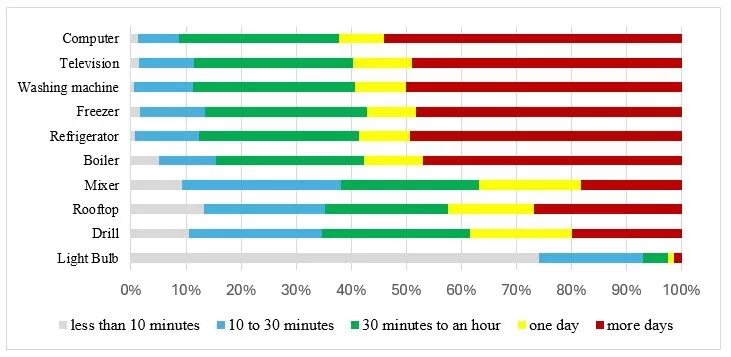
The main environmental factor of using appliances is electricity consumption, which is responsible for 39.5% of greenhouse gases. Consumers spend more time deciding on more expensive appliances, which links higher prices with a longer decision-making process. Fig 1 shows the length of the purchase decision-making when buying selected appliances.
Fig 1. Length of the purchase decision-making regarding the type of electrical appliances
The investigation confirmed the assumption that the price of an appliance directly influences consumer decision time and showed a moderate correlation (0.67). Consumers typically spend longer choosing more expensive appliances, such as computers or televisions, due to gathering detailed information and expecting a longer lifetime. Indeed, the correlation between decision-making time and product life expectancy proved strong (correlation 0.86).
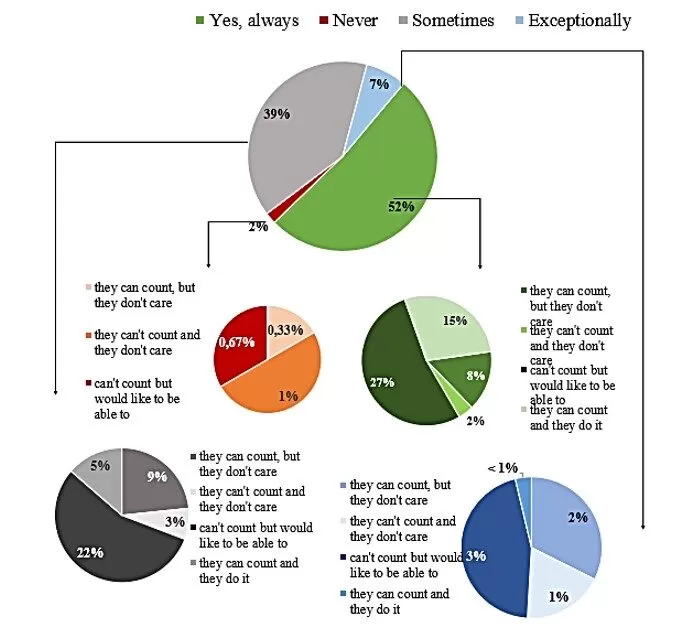
Energy labels should provide consumers with precise data on annual energy consumption and operating costs to help them make purchasing decisions. Respondents were asked whether they used energy labels when choosing appliances and whether they could calculate their annual running costs based on them (Fig 2). Although 52% of respondents said they always rely on energy labels, the results showed significant gaps in their understanding. Specifically, 27% of these respondents could not consistently calculate the approximate annual costs and a further 22% could only make these calculations occasionally.
Research shows that current energy labels are not fully effective. Most consumers cannot estimate annual running costs from labels but prefer this information to be displayed. Without understanding the link between energy consumption and costs, consumers may choose less efficient appliances because of uncertainty about the return on investment.
Fig 2. Using energy labels
Importance of parameters in purchase decision-making
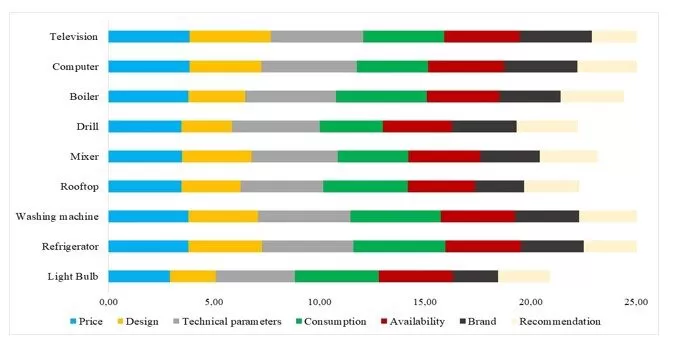
The respondents were asked about the importance of appliance parameters according to the significance they gave them while choosing (Fig 3). The right part of the Fig shows the average price for a given appliance. When comparing the average price and the values obtained from the Likert scale, it is evident that for more expensive appliances, all parameters were evaluated as more important than for cheaper variants.
Fig 3. Importance of parameters for selected electrical appliances
The Likert scale showed a key relationship between price and energy consumption. For 87% of respondents, price was equally or more important than consumption, which is consistent with previous findings that 42% of respondents are hesitant to purchase more expensive, energy-efficient appliances due to uncertainty about the return on investment. To encourage better choices, consumption should be reflected in product prices, possibly through excise duty or tax advantages for green products.
Disposal, the last life cycle stage, has a significant environmental impact. Appliances contain harmful substances and valuable recyclable materials such as gold, copper and iron. The survey found that 24.5% of respondents are unaware of take-back programs, and 17.2% know about them but do not participate. The regular use of take-back schemes is low (19.4%), with 26–45-year-olds being the least likely to participate. Around 30% of respondents use take-back occasionally, but only for large appliances, and do not know what the options are for small appliances. Better informing this group about convenient take-back options, such as in-store take-back, could increase participation. A further 33% of respondents never use take-back due to lack of awareness, which represents further potential for improvement.
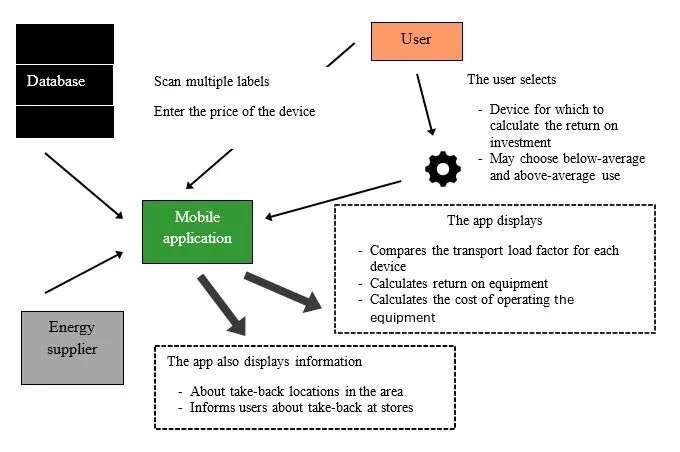
In the age of widely available modern technologies, it is possible to facilitate purchasing decisions for consumers when buying electrical appliances through an interactive application on a smartphone. The survey among respondents showed that most of them were not sufficiently informed, had no access to information about the environmental impact of appliances, or did not know where and how to look for them. The smartphone, which is now a standard device, has a camera. Utilizing this tool, a personal device can be used as a reader. In unison with the application, it can quickly work with the read data, create comparisons, and inform consumers. Using the application, in the first step, the consumer would scan the QR code on a new energy label, his energy supplier, or directly on the price per 1 kWh. The application would allow you to quickly and easily compare multiple appliances and prepare a calculation of a return on investment.
For the application to work, it is necessary to create a central database into which manufacturers and carriers would scan the QR code of the product. Carriers would enter the type of transport used for a particular route. Consumers would have access to the database by scanning the QR code on the energy label.
When the manufacturer dispatches the finished electrical appliances, he provides each piece with the QR code. This code is read using the manufacturer’s application, so the product record is inserted into a central database. The manufacturer supplements the information with technical data on the appliance, particularly its consumption. The manufacturer also adds the place of production and the model designation of the product. The carriers are the next part in order. Every carrier reads each transported product at the place where the goods are handed over to another carrier or seller. At the same time, a carrier must state the type of transport from which the proposed transport load coefficient is derived. The database will thus have information about the route taken by individual appliances and the mode of transport used. The seller will provide an energy label as soon as the product is ready for sale. New energy labels already contain the QR code in the upper right corner. It will be a code referring to the product in the database. The user scans the code with the help of a smartphone, based on which information about a product is displayed, see Fig 4. The app can use artificial intelligence to provide personalized recommendations. Based on the user’s profile, appliance usage habits and historical data, the system can suggest optimal energy-saving devices with the shortest return on investment.
Fig 4. Detailed scheme of the proposed application
The user records the price for the scanned appliance and chooses which appliances he is interested in calculating the return on investment. The data on the price of electricity from energy suppliers available to the application will be used. Without data, the application can work with an average price. At the same time, the user can choose whether he/she belongs to the category of below average, average, or excessive device users. For example, if the appliance is placed in a recreation facility with irregular use or if the appliance is purchased for a multi-member household and is expected to be used daily. After entering all the data, the application could be used to compare the transport burden coefficients of individual appliances or to inform about the amount of tax paid for the transport of the appliance. If the purchase of an appliance is associated with a high coefficient of transport load, and thus with the high taxation of the appliance, it should be the demotivation to purchase such a product because the final price will not sufficiently reflect the quality of the appliance because the excise tax or high duty creates a large part of the price.
Recent advances in digital sustainability tools show the need to integrate artificial intelligence and blockchain to engage consumers and implement policy more effectively.
From an economic point of view, it is understandable that with the development of modern technologies, products become cheaper (Guarascio & Pianta, 2017). If the price of appliances falls due to technical progress, this is all right. However, suppose the price falls too fast, for example, due to the penetration of a new part of the market. In that case, this low price is redeemed by the low quality of appliances, which often affects energy efficiency (Wang et al., 2024). The market is thus flooded with large quantities of inefficient appliances. An uneconomical appliance must be seen as an appliance with a negative externality, which must be internalized (Hacopian Dolatabadi et al., 2023). This means producing higher quality and more economical electrical appliances, which can be achieved by extending the mandatory warranty period, taxing uneconomical appliances with excise duty, and, conversely, reducing the VAT rate for the most economical electrical appliances (De Ayala & Solà, 2022). These measures would be reflected in the final price of appliances, which would be significantly higher than at present. Increasing the price of appliances would also reduce the demand for them, thereby reducing the consumption of valuable resources used in their production. This will have a positive impact on the environment (Wu et al., 2024). Appropriate steps must be taken to slow down the trend of cheaper electrical appliances and to support their high quality and energy efficiency. One way to reduce carbon emissions and increase energy use is to work with new technologies and procedures (Gul & Chaudhry, 2022). It is necessary to disadvantage electrical appliances that above average burden the environment (Kouloumpis et al., 2023) and, on the contrary, to favour those that represent the least burden. For this purpose, a transport burden coefficient was proposed, according to which it would be possible to internalize the negative externality in the form of CO2 released during the transport of electrical appliances. One of the possibilities is the introduction of a CO2 tax, as suggested by the study by Brännlund et al. (2007). However, in the case of the so-called carbon tax, the impact on different social classes must also be considered (Többen et al., 2023).
Environmental protection is an increasingly topical issue in society. Although efforts to reduce the negative impacts of human activity are also advancing in the field of household appliances, research and an accompanying analysis revealed several problems associated with single phases of the electrical appliances’ life cycle.
Limitations
The limit of the work is a considerable scope of this issue. A detailed analysis of all the factors that affect environmental pollution by electrical appliances makes it possible to go much deeper into every phase of their life cycle. More detailed research should be directed to analyzing specific problems within individual phases of the life cycle of electrical appliances. The transport burden coefficient should also be further developed as a tool to guide consumers towards the purchase of more environmentally friendly appliances.
Conclusion
This study highlights the growing importance of integrating new digital technologies – such as artificial intelligence, blockchain, augmented reality and connected databases – into consumer decision-making tools. By analyzing purchasing behaviour from 2021 and aligning the findings with current digital advances and policy directions in 2025, the proposed application offers solutions for the future to promote sustainability in the electrical appliance market. Improving energy literacy, increasing the transparency of supply chains and facilitating access to life cycle data remain essential to promote informed and environmentally responsible consumption. The recommendations of the study are therefore important to guide future strategies in innovation, regulation and consumer education in the context of digital sustainability. Future research should examine the long-term impact of digital tools on sustained energy efficiency improvements across different consumer demographics and regions. How behavioural interventions can be dynamically adapted using AI-based insights to increase their effectiveness over time should be explored. In addition, interdisciplinary studies combining digital innovation, behavioural science and policy analysis could identify more robust mechanisms to promote sustainable consumption patterns in the household sector. Further research should focus on longitudinal experimental designs to track actual behavioural changes over more extended periods. There is also a need to develop theoretical models capturing the interaction between technology acceptance, behavioural economics and environmental psychology in the context of smart appliance adoption. It is recommended that appliance manufacturers integrate innovative features to enable real-time feedback on energy consumption, user adaptation and predictive maintenance alerts. Policymakers should support the introduction of standardized digital energy labels accessible via smartphones to simplify decision-making. In addition, educational campaigns aimed at increasing digital and energy literacy among consumers, particularly focusing on under-represented groups, should be designed to maximize inclusive uptake of energy-efficient appliances. Companies should invest in user-centred design strategies that reduce the complexity of innovative features and make them intuitive for different age and skill groups. In addition, public-private partnerships could accelerate the diffusion of innovation by subsidizing the upfront costs of smart energy-efficient appliances for low-income households.
Research has confirmed that integrating digital innovations into consumers’ decision-making processes significantly increases the use of energy efficient appliances and promotes sustainable consumption patterns. From a theoretical perspective, the findings demonstrate the relevance of technology acceptance models when extended with behavioural economics principles and environmental awareness factors. The interaction of real-time feedback mechanisms and personalized consumer engagement strategies shows the potential of dynamic models that adapt to evolving user needs and preferences. The application of blockchain technology to supply chain transparency has proven to be theoretically sound in building consumer trust and influencing purchase intentions. Moreover, the results highlight that an interdisciplinary framework combining digital innovation, consumer behaviour theories and sustainability science offers a more comprehensive understanding of the dynamics of modern consumption. The evidence supports the theoretical proposition that informed decision-making enabled by transparent and accessible digital tools is critical to achieving widespread adoption of energy-efficient technologies. Therefore, theoretical models of consumer behaviour should increasingly incorporate factors related to digital literacy, perceived ease of use of smart technologies and the credibility of environmental claims. The research thus forms the basis for refining theoretical constructs that explain how the digital environment mediates sustainable consumer behaviour in the appliance sector.
References
Adua, L. and Clark, B. (2019), ‘Even for the environment, context matters! States, households, and residential energy consumption’, Environmental Research Letters, 14(6), 064008. https://doi.org/10.1088/1748-9326/ab1abf
Ahmad, M.R., Lao, J., Dai, J.-G., Xuan, D. and Poon, C.S. (2022), ‘Upcycling of air pollution control residue waste into cementitious products through geopolymerization technology’, Resources, Conservation and Recycling, 181, 106231. https://doi.org/10.1016/j.resconrec.2022.106231
Aravena, C., Riquelme, A. and Denny, E. (2016), ‘Money, comfort or environment? Priorities and determinants of energy efficiency investments in Irish households’, Journal of Consumer Policy, 39(2), pp. 159–186. https://doi.org/10.1007/s10603-016-9311-2
Bakker, C., Wang, F., Huisman, J. and Den Hollander, M. (2014), ‘Products that go round: Exploring product life extension through design’, Journal of Cleaner Production, 69, pp. 10–16. https://doi.org/10.1016/j.jclepro.2014.01.028
Beak, Y., Kim, K., Maeng, K. and Cho, Y. (2020), ‘Is the environment‐friendly factor attractive to customers when purchasing electric vehicles? Evidence from South Korea’, Business Strategy and the Environment, 29(3), pp. 996–1006. https://doi.org/10.1002/bse.2412
Brännlund, R., Ghalwash, T. and Nordström, J. (2007), ‘Increased energy efficiency and the rebound effect: Effects on consumption and emissions’, Energy Economics, 29(1), pp. 1–17. https://doi.org/10.1016/j.eneco.2005.09.003
Brounen, D., Kok, N. and Quigley, J.M. (2013), ‘Energy literacy, awareness, and conservation behaviour of residential households’, Energy Economics, 38, pp. 42–50. https://doi.org/10.1016/j.eneco.2013.02.008
Castellano, R., De Bernardo, G. and Punzo, G. (2024), ‘Sustainable well-being and sustainable consumption and production: An efficiency analysis of Sustainable Development Goal 12’, Sustainability, 16(17), 7535. https://doi.org/10.3390/su16177535
Chen, X. and Hu, Y. (2023), ‘The influence of residential behavior on dwelling energy consumption and comfort in hot-summer and cold-winter zones of China—taking Shanghai as an example’, Sustainability, 15(18), 13686. https://doi.org/10.3390/su151813686
Cheng, Y.-T., Shih, L.-H. and Ha, J. (2014), ‘Design framework of household appliance for users’ sustainable behaviors’, The Anthropologist, 17(3), pp. 701–711. https://doi.org/10.1080/09720073.2014.11891484
Crutzen, R. (2021), ‘Hardwired… to self-destruct? Using technology to improve behavior change science’, Health Psychology Bulletin, 5. https://doi.org/10.5334/hpb.26
De Ayala, A. and Solà, M.D.M. (2022), ‘Assessing the EU energy efficiency label for appliances: Issues, potential improvements and challenges’, Energies, 15(12), 4272. https://doi.org/10.3390/en15124272
Delmas, M.A., Fischlein, M. and Asensio, O.I. (2013), ‘Information strategies and energy conservation behaviour: A meta-analysis of experimental studies from 1975 to 2012’, Energy Policy, 61, pp. 729–739. https://doi.org/10.1016/j.enpol.2013.05.109
Du, J., Zhong, Z., Shi, Q., Cao, Y., Yang, C. and Wang, L. (2024), ‘A review of household carbon footprint: Measurement methods, evolution and emissions assessment’, Carbon Footprints, 3(2). https://doi.org/10.20517/cf.2024.08
Elevli, S. (2022), ‘Lifetime extension approach for decreasing e-waste’, Journal of Turkish Operations Management, 6(2), pp. 1230–1238. https://doi.org/10.56554/jtom.1060746
Ge, F. and Mehmood, U. (2024), ‘How natural resources, renewable energy, and energy productivity integrate with environmental quality under the load capacity curve in OECD nations’, Journal of Cleaner Production, 459, 142564. https://doi.org/10.1016/j.jclepro.2024.142564
Gonzalez-Torres, M., Bertoldi, P., Castellazzi, L. and Perez-Lombard, L. (2023), ‘Review of EU product energy efficiency policies: What have we achieved in 40 years?’, Journal of Cleaner Production, 421, 138442. https://doi.org/10.1016/j.jclepro.2023.138442
Guarascio, D. and Pianta, M. (2017), ‘The gains from technology: New products, exports and profits’, Economics of Innovation and New Technology, 26(8), pp. 779–804. https://doi.org/10.1080/10438599.2016.1257446
Gul, M.S. and Chaudhry, H.N. (2022), ‘Energy efficiency, low carbon resources and renewable technology’, Energies, 15(13), 4553. https://doi.org/10.3390/en15134553
Hacopian Dolatabadi, S., Latify, M. A., Karshenas, H. & Sharifi, A., 2023. Achieving economic efficiency in the electricity markets through internalizing negative externalities. IET Generation, Transmission & Distribution, 17(10), pp.2401–2418. https://doi.org/10.1049/gtd2.12816.
Han, B., Weeks, D. J. & Leite, F., 2023. Virtual reality‐facilitated engineering education: A case study on sustainable systems knowledge. Computer Applications in Engineering Education, 31(5), pp.1174–1189. https://doi.org/10.1002/cae.22632.
Harding, M. & Lamarche, C., 2016. Empowering consumers through data and smart technology: Experimental evidence on the consequences of time‐of‐use electricity pricing policies. Journal of Policy Analysis and Management, 35(4), pp.906–931. https://doi.org/10.1002/pam.21928.
Chen, X. & Hu, Y., 2023. The influence of residential behavior on dwelling energy consumption and comfort in hot-summer and cold-winter zones of China—Taking Shanghai as an example. Sustainability, 15(18), p.13686. https://doi.org/10.3390/su151813686.
Cheng, Y.-T., Shih, L.-H. & Ha, J., 2014. Design framework of household appliance for users’ sustainable behaviors. The Anthropologist, 17(3), pp.701–711. https://doi.org/10.1080/09720073.2014.11891484.
Irandoust, M., 2019. On the causality between energy efficiency and technological innovations: Limitations and implications. International Journal of Green Energy, 16(15), pp.1665–1675. https://doi.org/10.1080/15435075.2019.1681430.
Kaiser, S., Gold, S. & Bringezu, S., 2022. Environmental and economic assessment of CO2-based value chains for circular carbon use in consumer products. Resources, Conservation and Recycling, 184, p.106422. https://doi.org/10.1016/j.resconrec.2022.106422.
Kerkhof, A. C., Nonhebel, S. & Moll, H. C., 2009. Relating the environmental impact of consumption to household expenditures: An input-output analysis. Ecological Economics, 68(4), pp.1160–1170. https://doi.org/10.1016/j.ecolecon.2008.08.004.
Khan, Q. W. et al., 2024. Optimizing energy efficiency and comfort in smart homes through predictive optimization: A case study considering indoor environmental parameters. Energy Reports, 11, pp.5619–5637. https://doi.org/10.1016/j.egyr.2024.05.038.
Kobus, C. B. A., Mugge, R. & Schoormans, J. P. L., 2015. Long-term influence of the design of energy management systems on lowering household energy consumption. International Journal of Sustainable Engineering, 8(3), pp.173–185. https://doi.org/10.1080/19397038.2014.991776.
Kouloumpis, V. et al., 2023. Does the circularity end justify the means? A life cycle assessment of preparing waste electrical and electronic equipment for reuse. Sustainable Production and Consumption, 41, pp.291–304. https://doi.org/10.1016/j.spc.2023.08.008.
Krass, D., Nedorezov, T. & Ovchinnikov, A., 2013. Environmental taxes and the choice of green technology. Production and Operations Management, 22(5), pp.1035–1055. https://doi.org/10.1111/poms.12023.
Kwon, K., Lee, S. & Kim, S., 2022. AI-based home energy management system considering energy efficiency and resident satisfaction. IEEE Internet of Things Journal, 9(2), pp.1608–1621. https://doi.org/10.1109/JIOT.2021.3104830.
Lin, C.-C. & Dong, C.-M., 2023. Exploring consumers’ purchase intention on energy-efficient home appliances: Integrating the theory of planned behavior, perceived value theory, and environmental awareness. Energies, 16(6), p.2669. https://doi.org/10.3390/en16062669.
Liu, J., Tan, L. & Ma, Y., 2024. An integrated risk assessment method for urban areas due to chemical leakage accidents. Reliability Engineering & System Safety, 247, p.110091. https://doi.org/10.1016/j.ress.2024.110091.
Marchi, L. & Gaspari, J., 2023. Energy conservation at home: A critical review on the role of end-user behavior. Energies, 16(22), p.7596. https://doi.org/10.3390/en16227596.
Michie, S. et al., 2017. Developing and evaluating digital interventions to promote behavior change in health and health care: Recommendations resulting from an international workshop. Journal of Medical Internet Research, 19(6), p.e232. https://doi.org/10.2196/jmir.7126.
Nejat, P. et al., 2015. A global review of energy consumption, CO2 emissions and policy in the residential sector (with an overview of the top ten CO2 emitting countries). Renewable and Sustainable Energy Reviews, 43, pp.843–862. https://doi.org/10.1016/j.rser.2014.11.066.
Nilsson, A. et al., 2018. Smart homes, home energy management systems and real-time feedback: Lessons from a Swedish field study for influencing household energy consumption. Energy and Buildings, 179, pp.15–25. https://doi.org/10.1016/j.enbuild.2018.08.026.
Olawumi, M. A. & Oladapo, B. I., 2025. AI-driven predictive models for sustainability. Journal of Environmental Management, 373, p.123472. https://doi.org/10.1016/j.jenvman.2024.123472.
Papageorgiou, G., Efstathiades, A., Poullou, M. & Ness, A. N., 2020. Managing household electricity consumption: A correlational, regression analysis. International Journal of Sustainable Energy, 39(5), pp.486–496. https://doi.org/10.1080/14786451.2020.1718675.
Többen, J. et al., 2023. Unequal carbon tax impacts on 38 million German households: Assessing spatial and socioeconomic hotspots. Environmental Research: Climate, 2(4), p.045006. https://doi.org/10.1088/2752-5295/aceea0.
Ueno, T., Sano, F., Saeki, O. & Tsuji, K., 2006. Effectiveness of an energy-consumption information system on energy savings in residential houses based on monitored data. Applied Energy, 83(2), pp.166–183. https://doi.org/10.1016/j.apenergy.2005.02.002.
Viswanath, K. & Agha, S., 2023. Adaptive interventions to promote change in the 21st century: The responsive feedback approach. Global Health: Science and Practice, 11(Supplement 2), p.e2300450. https://doi.org/10.9745/GHSP-D-23-00450.
Vogiatzi, C. et al., 2018. Energy use and saving in the residential sector and occupant behaviour: A case study in Athens. Energy and Buildings, 181, pp.1–9. https://doi.org/10.1016/j.enbuild.2018.09.039.
Wang, Y., Li, Y. & Xu, S., 2024. Repositioning to sink: The pricing and quality decisions for product line considering the sinking market. European Journal of Operational Research, 317(2), pp.578–591. https://doi.org/10.1016/j.ejor.2024.04.012.
Wu, L., Xu, C., Zhu, Q. & Zhou, D., 2024. Multiple energy price distortions and improvement of potential energy consumption structure in the energy transition. Applied Energy, 362, p.122992. https://doi.org/10.1016/j.apenergy.2024.122992.
Ye, H. et al., 2011. Relationship between construction characteristics and carbon emissions from urban household operational energy usage. Energy and Buildings, 43(1), pp.147–152. https://doi.org/10.1016/j.enbuild.2010.09.002.
Zhu, Q., Peng, X. & Wu, K., 2012. Calculate and decompose indirect carbon emissions from residential consumption in China based on the input-output model. Energy Policy, 48, pp.618–626. https://doi.org/10.1016/j.enpol.2012.05.068.