Comenius University Faculty of Management, Bratislava, Slovakia
Volume 2025,
Article ID 462056,
Journal of Human Resources Management Research,
12 pages,
DOI: https://doi.org/10.5171/2025.462056
Received date: 21 March 2025; Accepted date: 29 August 2025; Published date: 15 October 2025
Academic Editor: Łucja Waligóra
Cite this Article as:
Pascal MANGOLD and Ľubica BAJZIKOVA (2025)," Can it be Measured? Using Psychometric Tools for Assessing Intercultural Competence in HRM ‘, Journal of Human Resources Management Research, Vol. 2025 (2025), Article ID 462056, https://doi.org/10.5171/2025.462056
Due to global economic, demographic, and geopolitical shifts, intercultural competence has become essential for success in international business. However, evaluating this competence remains challenging. Human resource departments often rely on established psychometric methods such as the Big Five, MBTI, MMPI, OPD, and IRI. This study argues that these tools are often misused because they were designed primarily for clinical or general personality assessments, not for intercultural business interactions. This creates a critical research gap between the need for accurate assessment and the limitations of current instruments. This paper conducts a systematic SWOT analysis of these major psychometric methods to evaluate their strengths, weaknesses, opportunities, and threats when applied to intercultural competence in a business context. Our findings reveal that, although each tool assesses relevant personality traits, none can adequately measure the multifaceted nature of the intercultural competence required in modern human resource management (HRM). The study concludes that a new, integrated assessment framework is urgently needed. This framework should combine the strengths of existing methods, such as the empirical rigor of the Big Five and the validity scales of the MMPI, while being tailored to business scenarios. This will enable more effective and efficient human resource management in a globalized world. Until then, based on the SWOT analysis, some recommendations are offered to help practitioners use these existing tools when assessing intercultural competence.
Keywords: Intercultural competence, human resource management, psychometric analysis methods.
Introduction
Worldwide, rapid demographic shifts, geopolitical transformations (rise of populistic political leaders and global wars), and economic integration (e.g. supply chain issues during covid and recent wars), have transformed intercultural competence from a social asset to an essential professional skill. The growing complexity of international relations, cross-border trade, and multinational collaboration (Bozhko et al., 2024) has heightened the need for individuals who can effectively navigate diverse cultural contexts in business environments.
Intercultural competence functions as a crucial hybrid qualification, enabling productive, empathetic, and success-oriented interactions that foster collaboration, innovation, and long-term business growth. Effective communication, adaptability, cultural awareness, and emotional intelligence (Dennett and Dedonno, 2024) are among the core components of this competence, allowing professionals to bridge cultural gaps, mitigate misunderstandings, and enhance team dynamics.
To this end, efforts have been made to assess an individual’s personal skills, behavioral tendencies, cognitive flexibility, openness to cultural diversity, and other psychometric values to gain insight into intercultural competence. However, these projects (A Google scholar search for “assessment of intercultural competence” for the years 2020 to 2025 yields about 17,000 results) are mainly focused on the areas outside of business and concern language learning and communication, intercultural student exchange, teaching, education and pedagogy, or various specific topics such as religion, the military, video games, or country-specific issues. There is a huge research gap in understanding, assessing, and teaching intercultural competence in managing international teams in business environments. The purpose of this study is to analyze the strengths and weaknesses of the current main psychometric methods for the determination of intercultural competence. It also aims to understand their general applicability for the development of a more advanced and specific assessment method.
Bolton (2016) proposed a shift in the understanding of culture from structure-oriented and homogenized stereotypes to a heterogeneous, process-oriented and fuzzy understanding of culture, which is particularly appropriate in today’s global society. Bolten requires that both soft and hard factors need to be integrated and analyzed equally in testing and assessment processes (Bolten, 2007). Thomas confirms (2007, p. 170): “Many economic studies, practice reports and efficiency analyses of international management have now shown that it is not so much the ‘hard’ economic facts as the ‘soft’ human resource management factors that determine the success or failure of an international assignment.” [translated]
Hard factors are understood as professional and strategic competences, determined by language skills and the ability to communicate content, as well as business management competences that drive goal orientation and operational process coordination. Soft factors include social and individual characteristics like resilience, willingness to learn, self-awareness, self-control, role distance, flexibility, tolerance of ambiguity as individual and team skills, conflict management skills, (meta) communication skills, tolerance, critical faculties and empathy as social skills (Bolten, 2007).
The focus on ‘social’ and ‘individual’ competences makes their objective assessment in standard personnel selection procedures very difficult. Existing instruments do not provide sufficient results that do justice to the complexity without an individual or socially oriented competence assessment (Bolten, 2016). Thus, generally accepted and validated instruments are needed to complement the interview as an effective assessment strategy. Psychometric methods can be used to achieve this, but their usefulness and efficiency need to be tested.
Psychometric Test Procedures
Psychological tests are used to analyze human characteristics and their individual extent. Different characteristics, such as emotional intelligence, empathy, understanding of human nature, emotional self-control, persuasiveness, can be tested objectively and in a standardized manner (Satow, 2019).
In HR, standardized tests with defined scales are essential for measuring and comparing individual characteristics. The absence of fundamental standards frequently results in the attainment of erroneous results (Fesefeldt, 2018). The close connection between intercultural competence and personal characteristics necessitates the incorporation of applicants’ personality traits into the selection process for personnel, in addition to their performance skills (Sarges, 2000, 2015). Utilizing these traits offers the advantage of enabling comprehensive assessments that extend beyond the scope of a job interview or application letter (Scheffer and Heckhausen, 2018) (Schmid & Reicherts, 2015).
The Big Five Personality Test
This Big Five Personality Test (B5T®) is based on the 5-factor model (“Big Five”), widely used and empirically validated in industrial psychology (Scheffer & Heckhausen, 2018). The term “Big Five” is derived from the individual factors of a well-defined, universal personality framework identified in the history of the development of psychology (Fortis, 2019; Mukhtar, Jan and Zahoor, 2023).
The individual dimensions of the Big Five (abbreviated as OCEAN) are:
Openness
Conscientiousness
Extraversion
Agreeableness
Neuroticism
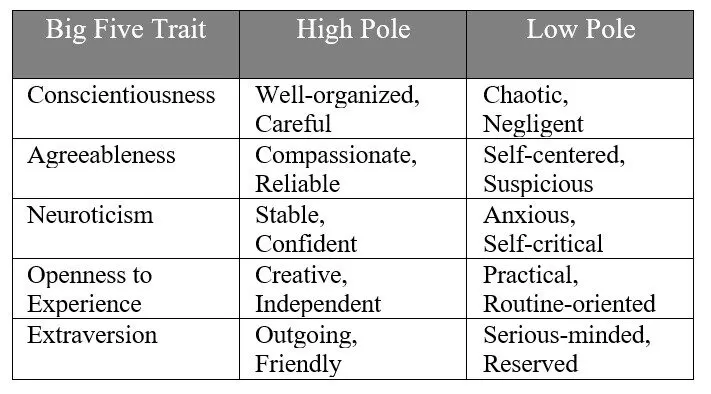
They all have opposing sub-dimensions (Table1).
Table 1: Big 5 dimensions / Adapted (Myers, 2014, p. 574).
These dimensions are used as a basis for selecting individuals for management or leadership positions in HRM (Kauffeld, Ianiro-Dahm and Sauer, 2019). According to this approach, a personality trait is “[…] a pattern of behavior or disposition that is typical of a particular person and is expressed in the way he or she feels and acts; [it] can be measured by questionnaires to collect self-assessments and assessments of others.” [translated] (Myers, 2014, p. 569)
According to Satow (2020), the test is also very reliable and suitable for human resource management (HR): “With a convincing factorial structure and high reliability (Cronbach’s alpha), the B5T® is shorter than previous inventories (McCrae & Costa, 2004) and is also suitable for use in a professional context (e.g., career counseling, personnel selection, personnel development, coaching).”
Myers-Briggs Type Indicator (MBTI)
The ‘Myers-Briggs Type Indicator’ (MBTI) (Myers, 1962) is one of the most widely used tests in the business world. It distinguishes between “thinking and feeling types” who either follow their gut feeling or a strict logic in their actions (Lorenz and Oppitz, 2006). The method is based on the findings of the Swiss psychoanalyst Jung, who in the 1920s defined two types of human perception as crucial for decision-making. These are either anchored in a sensitive feeling (empathy) or as intuition. They also determine judgment and action (Jung, 1921).
“This results in typical personality traits that reflect certain behavioral patterns and lead to a personality type. Depending on the type, each person has certain behavioral preferences that lead them to prefer one function over another.” [Translated] (Lorenz and Oppitz, 2006, p. 299).
The MBTI analyzes four pairs of opposites by a Likert scale questionnaire:
Extraversion – Introversion
Sensitive perception – Intuition Thinking
Thinking – Feeling
Judgement – Perception
The MBTI categorizes how individuals gather, process, and apply information in decision-making and actions, resulting in a personality profile cluster (Myers-Briggs, 2025).
The MBTI has often been criticized for the fact that respondents’ answers reflect their own expectations and can therefore manipulate the test to their advantage (Pittenger, 1993; Druckman, Bjork, and National Research Council (U.S.), 2010; Myers, 2014).
Furthermore, clustering personality traits is not sufficient for assessment, as a definitive umbrella term is not able to capture complex personalities and the complexity of intercultural competence in a valid way (Kauffeld and Güntner, 2018).
In addition, the long-standing knowledge of the Barnum Effect casts a critical light on the practical value of the MBTI, e.g. (Hua and Zhou, 2023; Suwanaposee et al., 2023; Gonthier and Thomassin, 2024). McCrae and Costa (1989) stated already “[…] there was no support for the view that the MBTI measures truly dichotomous preferences or qualitatively distinct types; instead, the instrument measures four relatively independent dimensions. […] correlational analyses showed that the four MBTI indices did measure aspects of four of the five major dimensions of normal personality [related to the Big Five]. The five-factor model provides an alternative basis for interpreting MBTI findings within a broader, more commonly shared conceptual framework.”
The Minnesota Multiphasic Personality Inventory (MMPI)
The Minnesota Multiphasic Personality Inventory (MMPI) by Hathaway and McKinley (1943) was developed as an instrument to measure adult personality and psychopathology structure elements. Today, the MMPI is also used in business settings (human resource management, application procedures, personnel management, and selection of people for promotion) (Butcher, Ones and Cullen, 2006; Zapata-Sola et al., 2009; Skoglund, 2022). It is more commonly used in English-speaking countries and is somewhat controversial in other countries because it is strongly psychological by nature and requires adaptation to be used in other cultural settings (Myers, 2014).
The MMPI has a large number of items divided into validity scales to detect exaggeration, inconsistencies, or dishonesty in responses, clinical scales that measure conditions like anxiety, paranoia, depression, and schizophrenia, and content scales for behavioral and psychological items (Tarescavage et al., 2013; Marek, Block and Ben-Porath, 2015, 2015; Hall, Menton and Ben-Porath, 2022).
According to Ingram and Ternes (2016), the validity scales of the MMPI-2-RF (Version 2, Restructured Form) effectively distinguish between groups of people who use a pattern of exaggeration or give honest answers. Such investigations of fake behavior can help to uncover social and individual undesirable traits and remove such people from the applicant pool (Haupt, 2013).
All variants of the MMPI can be computerized and work continues on digitally assisted assessment procedures to make them more valid (Babbie, 2016).
Operationalized Psychodynamic Diagnostic (OPD)
Operationalized Psychodynamic Diagnostics (OPD) was developed as an analytical tool in psychotherapy (Schneider et al., 2002). It allows a fine-grained assessment of human’s experience of illness (axis I), interpersonal relations (axis II), intrapsychic conflicts (axis III) and personality structure (axis IV), and thus, in parts, is relevant and interesting for measuring managerial and intercultural aspects. As a result, a differentiated, holistic and realistic perception of oneself and others can be obtained, and indicators of impulses, emotions, communication skills, and relationship skills are determined (Faller and Lang, 2016).
The relations, conflict and personality axes are relevant for leadership roles, as the latter require the ability to deal with structural and conflictual issues. (Kauffeld, Ianiro-Dahm and Sauer, 2019). In this context, the OPD can be used to determine the self-perception of managers and their interaction with other people in areas relevant to a company.
Ehrenthal et al. (2015) developed a short form of the OPD, which is a reliable and valid self-assessment tool for recognizing structural limitations, which can further be used in the context of analyzing intercultural competence.
Interpersonal Reactivity Index (IRI)
Empathy requires self-awareness (attention to self and others) and influences interactions between management, employees and external partners. According to Silbereisen and Schulz (1997), empathy is defined as in terms of “[…] the willingness and ability of an individual to understand emotions through the expressive behavior of other people and to comprehend them by relating them to situational cues. It is characterized by the perception of affective signals in other individuals, the perception of relevant situational cues, and the perception of one’s own corresponding emotions.” [Translated]. Silbereisen and Schulz (1997) conclude that empathy requires perceptual skills, self-awareness (through self-assessment), and an external, person-focused orientation.
The Davis Interpersonal Reactivity Index (IRI), developed in the 1980s, is still the most commonly used measure to test and analyze empathy in court trials (Davis, 1980). Today, it is also used to determine the empathic abilities of workers in helping professions and in medicine, and it has an analytical function in order to conduct psychological characterization and causal research in connection with mental illness (Paulus, 2009; Keaton, 2017).
According to Davis (1980), the IRI asks about four categories that help to identify empathy:
Perspective taking – the tendency to spontaneously take the psychological perspective of others.
Fantasy – measures respondents’ tendency to empathize with the feelings and actions of fictional characters in books, movies, and plays.
Empathic sympathy – measures ‘other-directed’ feelings of compassion and concern for unfortunate others.
Personal distress – measures ‘self-centered’ feelings of personal anxiety and discomfort in tense interpersonal situations.
Due to the strong factual orientation, valid and reliable results are generated for the determination of the soft factor “empathy” (Bolten, 2016). In German research, the American IRI has been criticized for problems with stability, factorial validity, and item selectivity. A modification of the original IRI resulted in the Saarbrücken Personality Questionnaire (SPF) for the German research area, which can be used to measure respondents’ empathy (Paulus, 2009).
Methods
This study employed a systematic SWOT (strengths, weaknesses, opportunities, threats) analysis to evaluate the suitability of current psychometric tools for measuring intercultural competence. The evaluation included the most commonly used and validated psychometric instruments in personnel selection: the Big Five Personality Test (B5T®), the Myers-Briggs Type Indicator (MBTI), the Minnesota Multiphasic Personality Inventory (MMPI), Operationalized Psychodynamic Diagnostics (OPD), and the Interpersonal Reactivity Index (IRI) and its German adaptation, the Saarbrücken Personality Questionnaire (SPF).
A qualitative, expert-led evaluation was conducted to ensure the findings were grounded in practical, high-stakes experience. Two subject matter experts were selected from different yet highly relevant professional fields in which intercultural competence is essential for success. The first expert has extensive experience in international military operations, where misunderstandings can have immediate and severe consequences. The second expert has over 30 years of experience leading a global organization with partner institutions in 24 countries and provides a long-term strategic business perspective. This dual-expert approach was chosen to triangulate the assessment by combining insights from intense, short-term operational contexts and sustained, long-term strategic management.
Each expert conducted an independent SWOT analysis for each psychometric instrument based first on its intended clinical or general use and second on its applicability to measuring intercultural competence in a business context. The authors then consolidated these evaluations, synthesizing the findings for each method. A final, summative SWOT analysis was conducted to identify overarching patterns and draw comprehensive conclusions about all the evaluated tools. This structured, expert-driven methodology ensures a rigorous, contextually relevant assessment of the instruments’ fitness for purpose in modern human resource management.
Results
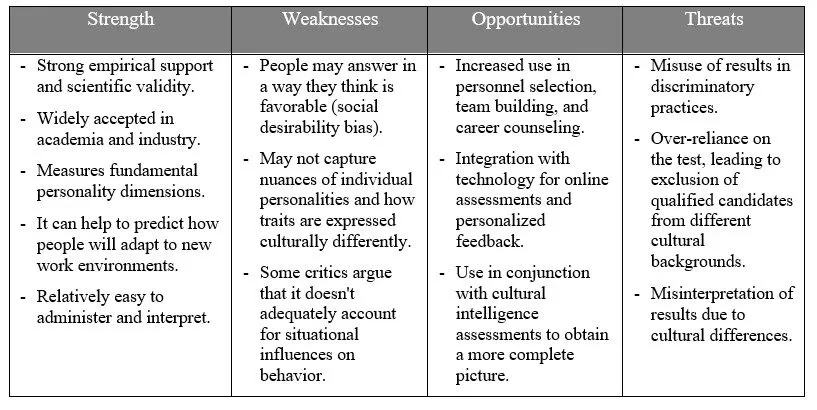
The Big Five Test is a scientifically validated personality assessment and offers professional insights but needs careful, culturally sensitive interpretation to avoid bias and discrimination. While the test provides a robust framework for understanding individual traits, its effectiveness depends on nuanced application that considers cultural context and situational variations (Table 2).
Table 2: Big Five Test (OCEAN)
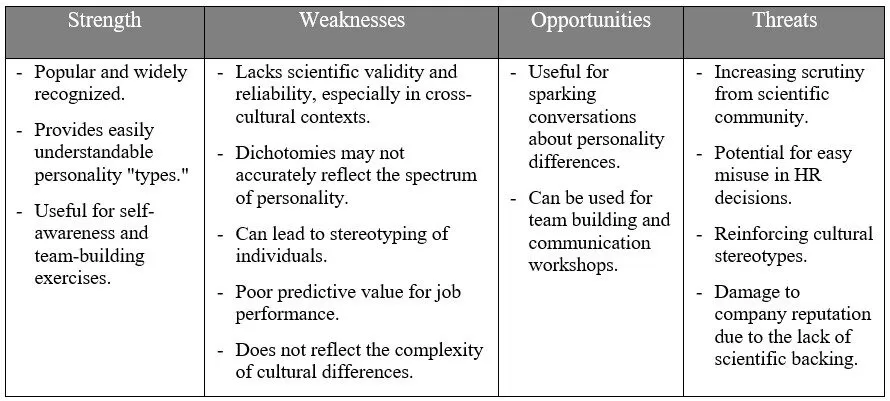
The popular Myers-Briggs (MBTI) offers engaging insights into personality differences and can spark meaningful conversations, but it lacks strong scientific backing and may oversimplify complex human characteristics. Widely used for team exercises and self-awareness, the MBTI is criticized for weak scientific validity and potential for stereotyping. Because the MBTI is too easily manipulated, it is not recommended for strategic hiring. (Table 3).
Table 3: Myers-Briggs Type Indicator (MBTI).
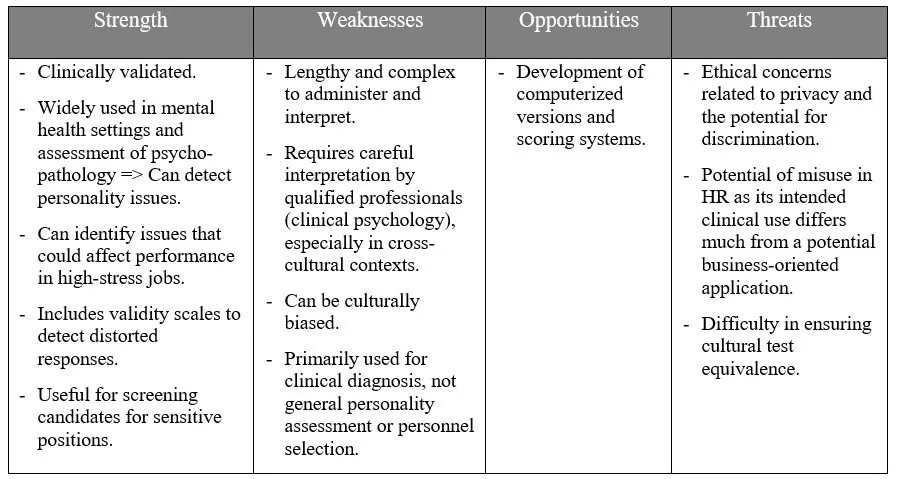
The MMPI, a clinically validated tool, excels at detecting psychological issues and screening for sensitive roles, but its clinical complexity and potential cultural bias limit its use in non-medical contexts. Expert interpretation is needed, and it faces challenges in cross-cultural settings and HR applications (Table 4).
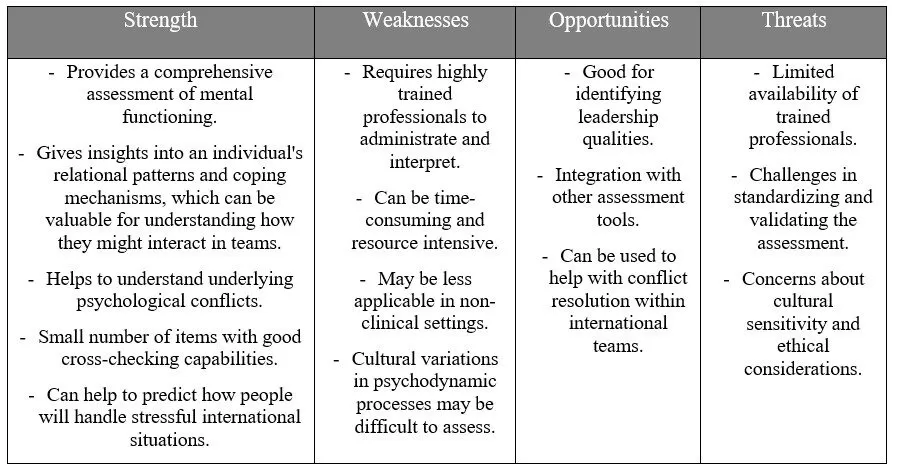
The Operationalized Psychodynamic Diagnostics offers a deep, nuanced exploration of an individual’s psychological functioning and relational patterns, providing valuable insights into potential leadership qualities and interpersonal dynamics, particularly in international contexts. However, the assessment’s complexity, reliance on highly trained professionals, and potential cultural limitations significantly constrain its broader application and scalability (Table 5).
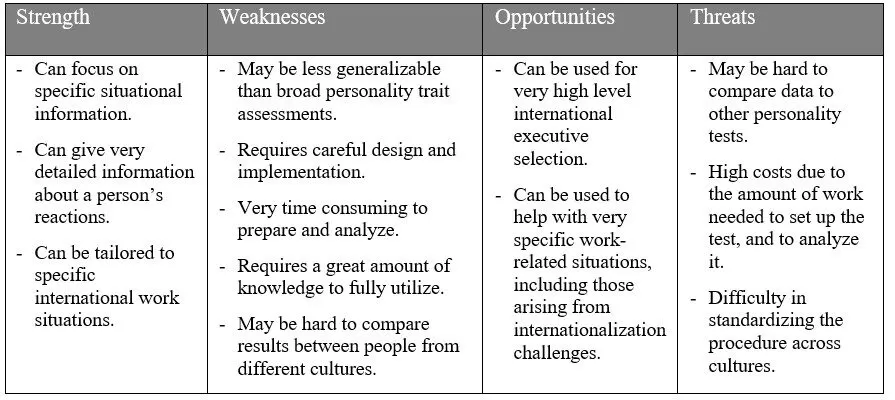
The Interpersonal Reactivity Index provides highly customized, context-specific insights into individual behavioral responses and reactions in specific work scenarios, particularly in international roles. However, its complexity, high resource needs, and difficulty in cross-cultural standardization hinder widespread use (Table 6).
Table 6: IRI procedure / Saarbrucken personality questionnaire.
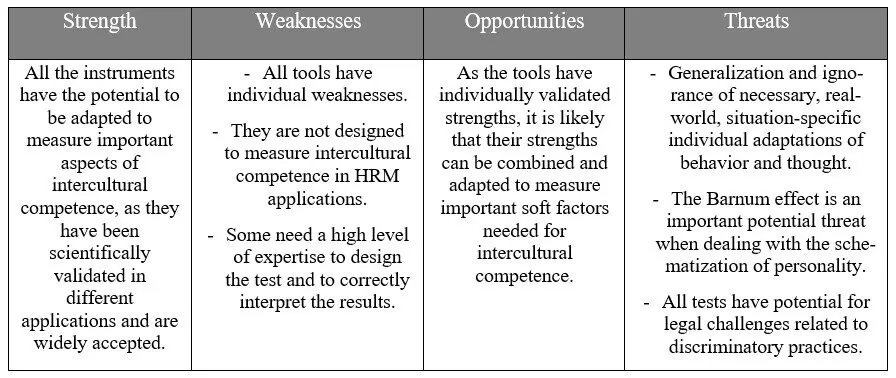
The overall consolidated results of the individual analysis are presented in a summarized SWAT table (Table7).
Table 7: SWAT summary.
Discussion
Personality is complex, shaped by conditioning, learning, and experience. The currently most widely used psychometric tools have strength in specific applications but also major weaknesses, especially in fast-paced business settings. They also face complex challenges with cultural adaptation. The instruments employed in this study are either excessively clinical (MMPI, OPD), overly general (Big Five), or lack scientific validity and are susceptible to manipulation (MBTI) and, thus, require additional truth-checking mechanisms. The MMPI, with its validity scales, has a good mechanism for making statements verifiable. The OPD, closely related to the Big Five and IRI, can enhance an integrated approach for getting a more accurate overall picture of participants’ soft skills.
No single method adequately assesses intercultural competence for business leadership. However, all five dimensions of the Big Five should be considered when measuring intercultural competence, as they appear to be fundamental for assessment in the context of personnel analysis. In order to create a psychometrically valid and practically useful tool for assessing intercultural competence for personnel selection and development in a global business context, this tool must move beyond measuring general personality traits and instead measure behaviors and cognitive flexibility in simulated business scenarios. Most importantly, any new tool must be valid, reliable, business-focused, and culturally sensitive.
Although the most used psychometric analysis methods have been evaluated, others might be more appropriate for the intended measures. Cultural aspects are typically under-represented in existing tools due to their clinical origin in specific cultural setting, which may call such tools into question in general.
Further research is needed to develop appropriate scales, parameters, quality criteria and procedures for measuring intercultural competence in international teams. It should be especially investigated whether the MBTI items can be adapted to the MMPI to create a complete approach that analyses both strengths and weaknesses of personality in a consistent manner. This would enable HRM departments to select and develop talent more efficiently and effectively to meet the challenges of intercultural competence in international teams.
Status Quo Recommendations for Practitioners
While this paper argues for the development of a new, more integrated assessment tool, HR practitioners must continue to make critical hiring and development decisions today. Based on the SWOT analysis of existing psychometric instruments, the following recommendations are offered to help practitioners use these tools more effectively and mitigate their inherent risks when assessing intercultural competence.
Never Rely on a Single Test.
No single analyzed psychometric test can capture the complexity of intercultural competence. Combine a validated personality assessment (like the Big Five) with a structured, behavior-based interview focused on past intercultural experiences. This must be supplemented with realistic job previews or case study exercises that simulate cross-cultural challenges.
Select the right tool for the right purpose.
The greatest risk comes from using a tool for a purpose it was not designed for. Understand the specific strengths and weaknesses of each instrument so you can apply them correctly.
Big Five (OCEAN): It can be used as a baseline to understand a candidate’s general dispositions (e.g., high Openness, high Emotional Stability). It is excellent for identifying foundational traits that correlate with adaptability. It cannot be used as the sole predictor of on-the-job intercultural performance. It measures traits, not applied skills.
Myers-Briggs Type Indicator (MBTI): It should be used exclusively for non-evaluative team-building workshops and communication training after a team has been formed. It provides a useful, non-threatening language for discussing differences in work styles. It is not a valid predictor of job performance and can lead to stereotyping, that’s why it should not be used for hiring, promotion, or personnel selection.
Interpersonal Reactivity Index (IRI) / Saarbrücken Personality Questionnaire (SPF): The dimensions it measures, such as Perspective Taking and Empathic Concern, can be used to structure behavioral interview questions. For example: “Tell me about a time when you had to understand a situation from a colleague’s completely different cultural perspective. What was the situation, and what did you do?”. Don’t use the IRI/SPF itself as a hiring test. While it measures empathy, the results can be easily manipulated by candidates trying to appear empathetic. It is more reliable as a guide for inquiry than as a direct measure.
Not recommended tools:
Operationalized Psychodynamic Diagnostics (OPD): Consider its concepts (like relational patterns and conflict resolution) as a framework for designing in-depth, one-on-one coaching plans for senior executives in key international roles. It provides a rich vocabulary for understanding deep-seated interpersonal dynamics. Do not use it as a standard screening or selection tool. It is a complex diagnostic system requiring highly trained psychotherapists to administer and interpret. Its use is impractical and inappropriate for scalable HR processes.
Minnesota Multiphasic Personality Inventory (MMPI): It could be used for screening candidates for high-stakes, high-stress roles (e.g., sensitive government positions, expatriate security) where identifying underlying psychopathology is a critical risk-mitigation step. However, this must be done by a qualified clinical psychologist and its application in a business context raises significant ethical, legal, and cultural bias concerns. That’s why this tool is not recommended to be used in a business environment.
Prioritize Behavioral and Situational Assessment.
The most reliable indicator of future performance is past behavior in a similar context. It is often difficult to verify past intercultural experiences, so simulating future scenarios is the next best alternative. Present candidates with short, realistic intercultural dilemmas they would face in the role instead of asking them about past experiences or cases. It is not about finding the right answer but more importantly about the candidates’ thought process, empathy, and problem-solving skills.
Account for Cultural Bias in Both the Tool and the Interpretation.
Recognize that many mainstream psychometric tools were developed in a Western (often American) context. Traits like extraversion or directness may be valued very differently across cultures. When debriefing assessment results with a candidate or hiring manager, explicitly discuss the potential for cultural bias. Ask the candidates to think and answer in their individual cultural context. This opens a dialogue rather than imposing a rigid interpretation.
Adopting this nuanced and multi-faceted approach is essential for practitioners to make well-informed decisions, mitigate the risk of discriminatory hiring practices, and build more resilient and effective international teams.
Conclusion
The findings indicate a strong need for a novel, integrated test instrument for intercultural competence that can be used universally and computerized in a resource-limited, fast-paced HR business environment without constant reliance on test-specific experts. While efficiency is important, the effectiveness and validity of such results are of paramount importance. Building upon the analyzed instruments’ strength offers a promising path to success.
References
Babbie, E.R. (2016) The practice of social research. Fourteenth edition. Boston, MA: Engage Learning.
Bolten, J. (2007) ‘Was heißt „Interkulturelle Kompetenz”? Perspektiven für die internationale Personalentwicklung’, in J. Berninghausen and V. Kuenzer (eds) Wirtschaft als interkulturelle Herausforderung: business across cultures. Frankfurt am Main: IKO – Verl. für Interkulturelle Kommunikation (Studien zu interkulturellem Management und diversity, 1), pp. 21–42.
Bolten, J. (2016) ‘Interkulturelle Kompetenz — eine ganzheitliche Perspektive’, in R. Elberfeld et al. (eds) Interkulturelle Kompetenz. Wien: Wiener Gesellschaft für Interkulturelle Philosophie (Polylog, 36), pp. 23–38.
Bozhko, D. et al. (2024) ‘GLOBALIZATION AND INTERNATIONAL RELATIONS. THE ROLE OF INFORMATION IN THEIR DEVELOPMENT’, Collection of scientific papers «SCIENTIA», (September 13, 2024; Pisa, Italia), pp. 45–56.
Butcher, J.N., Ones, D.S. and Cullen, M. (2006) ‘Personnel Screening With the MMPI-2.’, in MMPI-2: A practitioner’s guide. Washington, DC, US: American Psychological Association, pp. 381–406. Available at: https://doi.org/10.1037/11287-014.
Davis, M.H. (1980) ‘A Multidimensional Approach to Individual Differences in Empathy’, JSAS Catalog of Selected Documents in Psychology, 10, p. 85.
Dennett, S.K. and Dedonno, M.A. (2024) ‘Resilience and Emotional Intelligence: A Dynamic Partnership for Human Resources Professionals in Today’s Workplace’, Journal of Human Resource Management – HR Advances and Developments, 2024(1), pp. 1–13. Available at: https://doi.org/10.46287/UCDC3457.
Druckman, D., Bjork, R.A., and National Research Council (U.S.) (eds) (2010) In the mind’s eye: enhancing human performance. Washington, D.C: National Academy Press.
Ehrenthal, J.C. et al. (2015) ‘Entwicklung einer Zwölf-Item-Version des OPD-Strukturfragebogens (OPD-SFK)/ Development of a 12-item version of the OPD-Structure Questionnaire (OPD-SQS)’, Zeitschrift für Psychosomatische Medizin und Psychotherapie, 61(3), pp. 262–274. Available at: https://doi.org/10.13109/zptm.2015.61.3.262.
Faller, H. and Lang, H. (2016) ‘Gesundheits- und Krankheitsmodelle’, in Faller, Hermann and Lang, Hermann, Medizinische Psychologie und Soziologie. Berlin, Heidelberg: Springer Berlin Heidelberg (Springer-Lehrbuch), pp. 15–50. Available at: https://doi.org/10.1007/978-3-662-46615-5_2.
Fesefeldt, J. (2018) ‘Künstliche Intelligenz im Personalmanagement 2018’, dgp informationen, 59. Jahrgang(Heft 68), pp. 6–37.
Fortis, E. (2019) ‘Manager’s Personality and Their Professional Career’, Acta Educationis Generalis, 9(1), pp. 20–38. Available at: https://doi.org/10.2478/atd-2019-0002.
Gonthier, C. and Thomassin, N. (2024) ‘Getting Students Interested in Psychological Measurement by Experiencing the Barnum Effect’, Teaching of Psychology, p. 00986283241240454. Available at: https://doi.org/10.1177/00986283241240454.
Hall, J.T., Menton, W.H. and Ben-Porath, Y.S. (2022) ‘Examining the Psychometric Equivalency of MMPI-3 Scale Scores Derived From the MMPI-3 and the MMPI-2-RF-EX’, Assessment, 29(4), pp. 842–853. Available at: https://doi.org/10.1177/1073191121991921.
Hathaway, S.R. and McKinley, J.C. (1943) Manual for administration and scoring. Minneapolis: University of Minnesota Press.
Haupt, T.C. (2013) ‘Der MMPI-2 (Minnesota Multiphasic Personality Inventory-2)’. Ludwig Maximilian University. Available at: https://www.tobias-haupt.de/ (Accessed: 10 January 2025).
Hua, J. and Zhou, Y.-X. (2023) ‘Personality assessment usage and mental health among Chinese adolescents: A sequential mediation model of the Barnum effect and ego identity’, Frontiers in Psychology, 14, p. 1097068. Available at: https://doi.org/10.3389/fpsyg.2023.1097068.
Ingram, P.B. and Ternes, M.S. (2016) ‘The detection of content-based invalid responding: a meta-analysis of the MMPI-2-Restructured Form’s (MMPI-2-RF) over-reporting validity scales’, The Clinical Neuropsychologist, 30(4), pp. 473–496. Available at: https://doi.org/10.1080/13854046.2016.1187769.
Jung, C.G. (1921) Psychological Types – Jung (1921/1923) Chapter 10, Classics in the History of Psychology. Available at: https://psychclassics.yorku.ca/Jung/types.htm (Accessed: 1 March 2025).
Kauffeld, S. and Güntner, A.V. (2018) ‘Teamfeedback in Feedbackinstrumente im Unternehmen’, in I. Jöns and W. Bungard (eds) Feedbackinstrumente im Unternehmen. Wiesbaden: Springer Fachmedien Wiesbaden, pp. 145–172. Available at: https://doi.org/10.1007/978-3-658-20759-5_7.
Kauffeld, S., Ianiro-Dahm, P.M. and Sauer, N.C. (2019) ‘Führung’, in S. Kauffeld (ed.) Arbeits-, Organisations- und Personalpsychologie für Bachelor. Berlin, Heidelberg: Springer Berlin Heidelberg (Springer-Lehrbuch), pp. 105–138. Available at: https://doi.org/10.1007/978-3-662-56013-6_5.
Keaton, S.A. (2017) ‘Interpersonal Reactivity Index (IRI): (Davis, 1980)’, in D.L. Worthington and G.D. Bodie (eds) The Sourcebook of Listening Research. 1st edn. Wiley, pp. 340–347. Available at: https://doi.org/10.1002/9781119102991.ch34.
Lorenz, T. and Oppitz, S. (2006) ‘Myers-Briggs Typenindikator (MBTI) – Profilierung durch Persönlichkeit’, in W. Simon (ed.) Persönlichkeitsmodelle und Persönlichkeitstests. Bad Kreuznach: Gabal, pp. 299–319. Available at: https://www.gabal.de/medien/rezensionen/persoenlichkeitsmodelle-und-persoenlichkeitstests/.
Marek, R.J., Block, A.R. and Ben-Porath, Y.S. (2015) ‘The Minnesota Multiphasic Personality Inventory–2–Restructured Form (MMPI-2-RF): Incremental validity in predicting early postoperative outcomes in spine surgery candidates.’, Psychological Assessment, 27(1), pp. 114–124. Available at: https://doi.org/10.1037/pas0000035.
McCrae, R.R. and Costa, P.T. (1989) ‘Reinterpreting the Myers-Briggs Type Indicator from the perspective of the five-factor model of personality’, Journal of Personality, 57(1), pp. 17–40. Available at: https://doi.org/10.1111/j.1467-6494.1989.tb00759.x.
Mukhtar, S., Jan, A. and Zahoor, A. (2023) ‘Beyond the Big Five: How Dynamic Personality Traits Predict Financial Risk Tolerance?’, Acta Universitatis Sapientiae, Economics and Business, 11(1), pp. 93–114. Available at: https://doi.org/10.2478/auseb-2023-0005.
Myers, D.G. (2014) Psychologie. 3rd edn. Springer Berlin Heidelberg. Available at: https://doi.org/10.1007/978-3-642-40782-6.
Myers, I.B. (1962) The Myers-Briggs Type Indicator: Manual (1962). Palo Alto: Consulting Psychologists Press. Available at: https://doi.org/10.1037/14404-000.
Myers-Briggs (2025) The 16 MBTI® Personality Types, org. Available at: https://www.myersbriggs.org/my-mbti-personality-type/the-16-mbti-personality-types/ (Accessed: 27 February 2025).
Paulus, C. (2009) ‘Der Saarbrücker Persönlichkeitsfragebogen SPF (IRI) Zur Messung Von Empathie’. Saarbrücken. Available at: http://bildungswissenschaften.uni-saarland.de/personal/paulus/empathy/SPF_Artikel.pdf (Accessed: 1 February 2025).
Pittenger, D.J. (1993) ‘The Utility of the Myers-Briggs Type Indicator’, Review of Educational Research, 63(4), p. 467. Available at: https://doi.org/10.2307/1170497.
Sarges, W. (2000) ‘Einleitende Überlegungen’, in Hossiep, R., Paschen, M., and Mühlhaus, O., Persönlichkeitstests im Personalmanagement: Grundlagen, Instrumente und Anwendungen. Göttingen: Verl. für Angewandte Psychologie, p. Introduction.
Sarges, W. (2015) ‘Management-Diagnostik’, in Handbuch der Psychologischen Diagnostik.
Satow, L. (2019) ‘Big-Five-Persönlichkeitsassessment für die gezielte Personalentwicklung’, in Laske, A. Orthey & M. J. Schmid (Hrsg.), Personal Entwickeln: Das aktuelle Nachschlagewerk für Praktiker. 245. Aktualisierung. (Loseblattwerk).
Satow, L. (2020) ‘B5T®. Big-Five-Persönlichkeitstest’. ZPID (Leibniz Institute for Psychology) – Open Test Archive. Available at: https://doi.org/10.23668/PSYCHARCHIVES.4611.
Scheffer, D. and Heckhausen, H. (2018) ‘Eigenschaftstheorien der Motivation’, in J. Heckhausen and Heinz Heckhausen (eds) Motivation und Handeln. 5th edn. Berlin, Heidelberg: Springer Berlin Heidelberg (Springer-Lehrbuch), pp. 49–82. Available at: https://doi.org/10.1007/978-3-662-53927-9_3.
Schneider, W. et al. (2002) ‘Operationalized psychodynamic diagnostics: A new diagnostic approach in psychodynamic psychotherapy’, in Rethinking the DSM: A psychological perspective. Washington, DC, US: American Psychological Association (Decade of behavior), pp. 177–200. Available at: https://doi.org/10.1037/10456-007.
Silbereisen, R.K. and Schulz, W. (1997) ‘Prüfung der Testgüte einer “Empathie-Skala”’, Diagnostica: Zeitschrift für Psychologische Diagnostik und Differentielle Psychologie, pp. 179–187.
Skoglund, T.H. (2022) A short-form personality measure for military personnel selection: Psychometric investigation and perspectives on usage. Doctoral thesis. UiT The Arctic University of Norway. Available at: https://munin.uit.no/handle/10037/24840 (Accessed: 1 March 2025).
Suwanaposee, P. et al. (2023) ‘“Specially For You” – Examining the Barnum Effect’s Influence on the Perceived Quality of System Recommendations’, in Proceedings of the 2023 CHI Conference on Human Factors in Computing Systems. New York, NY, USA: Association for Computing Machinery (CHI ’23), pp. 1–11. Available at: https://doi.org/10.1145/3544548.3580656.
Tarescavage, A.M. et al. (2013) ‘Reliability, validity, and utility of the Minnesota Multiphasic Personality Inventory-2-Restructured Form (MMPI-2-RF) in assessments of bariatric surgery candidates’, Psychological Assessment, 25(4), pp. 1179–1194. Available at: https://doi.org/10.1037/a0033694.
Thomas, A. (2007) ‘Interkulturelle Kompetenzen im internationalen Management’, in Grenzen, Differenzen, Übergänge. Spannungsfelder inter- und transkultureller Kommunikation. transcript, pp. 169–182. Available at: https://doi.org/10.25969/MEDIAREP/1521.
Zapata-Sola, A. et al. (2009) ‘Personality assessment in personnel selection using the MMPI-2: A cross-cultural comparison’, International Journal of Clinical and Health Psychology, 9, pp. 278–298.
‘’AI tools were used to improve some of the original writing:
Claude, Feb 2025. Personal communication [AI assistant]. Anthropic.