1Comenius University in Bratislava, Faculty of Management, Heppenheim, Germany
2Engineering diploma in Industrial Engineering, Salem, Germany
Volume 2026,
Article ID 324365,
Journal of Human Resources Management Research,
23 pages,
DOI: https://doi.org/10.5171/2026.324365
Received date: 5 November 2025; Accepted date: 12 January 2026; Published date: 26 March 2026
Academic Editor: Marzena Syper-jedrzejak
Cite this Article as:
Norbert HETTSTEDT and Maria ALEKSANOV (2026)," Beyond Single-Dimension Diversity: A Multilevel Review of Organisational Effects ‘, Journal of Human Resources Management Research, Vol. 2026 (2026), Article ID 324365, https://doi.org/10.5171/2026.324365
This article examines the organisational implications of increasing social and cultural diversity in contemporary workplaces, a development driven by the globalisation of labour markets and the growing heterogeneity of workforces. Although research on workplace diversity has expanded substantially, the literature remains theoretically fragmented and empirically inconsistent. Existing reviews often focus on single diversity dimensions, such as gender, culture, or age, and rarely provide an integrative perspective that connects organisational behaviour, leadership studies, and human resource management. This fragmentation represents a critical research gap, as diversity simultaneously operates across multiple organisational levels and therefore requires multidimensional analytical approaches.
To address this gap, the study conducts a systematic mapping review of empirical research published between 2014 and 2023. Following PRISMA 2020 guidelines and the methodological framework of James et al. (2016), the review identifies, screens, and classifies 19 high-quality studies published in Q1-ranked journals. A structured multi-stage selection process is applied, followed by thematic categorisation across three core domains – team interaction, leadership, and human resource management – allowing for comparative analysis of theoretical perspectives, methodological patterns, and recurring conceptual tensions.
The findings indicate that diversity exerts predominantly positive effects on organisational functioning when supported by inclusive behavioural norms, diversity-oriented leadership, and aligned HR practices. Under these conditions, diversity enhances organisational citizenship behaviour, knowledge sharing, innovation, and problem-solving quality. Diverse leadership teams contribute to improved decision-making and social responsibility, while inclusive HR systems foster stronger diversity climates and organisational performance. Conversely, poorly managed diversity may lead to subgroup formation, coordination problems, and organisational cynicism.
Overall, the study conceptualises diversity as a multilevel organisational resource whose effects depend on the systemic alignment of behaviour, leadership, and institutionalised HR practices, and highlights the need for integrative theoretical models and future longitudinal and mixed-methods research.
Keywords: Team Dynamics, Organisational Citizenship Behaviour (OCB), Diversity Management, Human Resource Management, Organisational Climate
Proposal
The dynamic, ever-evolving global landscape has heightened the importance of workplace diversity. A recent McKinsey Survey found that companies with more diverse leadership teams are more likely to outperform their industry medians. Diverse companies are better positioned to attract top talent, enhance customer orientation, and make better decisions (Hunt et al., 2015). Overcoming unconscious bias and implementing diversity programs are crucial for organisations to leverage the advantages of diversity in a globally interconnected world.
Organisations are thus increasingly recognising the pivotal role that diversity plays in fostering innovation, driving competitiveness, and enhancing overall performance (Ely & Thomas, 2020). The current study recognises diversity as more than just a moral or legal obligation, but as a dynamic capacity that bolsters learning, adaptability, and resilience. In this context, the paper defines diversity as a multidimensional concept that impacts the performance of individuals, teams, and organisations at various levels. The idea of workplace diversity encompasses the representation of individuals with differing attributes, experiences, and perspectives within an organisation. Diversity goes beyond the mindset of avoiding discrimination but entails the development of an inclusive attitude in business practice and the establishment of the conviction that the collaboration of people from different cultures, genders, and ethnic orientations enhances organisations’ ability to create, develop, and continuously reinvent themselves (Ely & Thomas, 1996).
The contemporary landscape of globalisation, demographic shifts, discussions on equality and inclusion, and evolving social attitudes toward diversity and inclusivity have instigated growing interest in organisational behaviour research (Acedo et al., 2009; Tamtik & Guenter, 2019; Richardson & Monro, 2017). As an interdisciplinary field of study that investigates the behaviour, attitudes, and actions of individuals and groups within organisational contexts (Andersson et al., 2013), organisational behaviour research is particularly apt to evaluate the impacts of diversity in a work environment.
Over the past decade, a substantial body of academic literature has emerged, illuminating the significance of diversity in shaping organisational dynamics and outcomes. The discourse has shifted from merely recognising diversity as a moral imperative to acknowledging it as a strategic advantage that empowers organisations to thrive in an increasingly complex global economy (Moss, 2009). Recent studies in this field encompass a wide range of manifestations of diversity in work practices and explore their potential impacts on organisational performance (Simons & Rowland, 2011; Pitts & Jarry, 2007). These investigations comprise effects on individual behaviour (Kidder et al., 2004; Chuang et al., 2004), organisational culture and learning (Ahmad & Karim, 2019; Smaldino et al., 2022), organisational entrepreneurship (Baron, 2002), leadership behaviour (Lee et al., 2021; Ashikali et al., 2021), research and development cycles and scope (Arora, 2022; Boukattaya & Omri, 2021), international fields and regions of operation (Song et al., 2020), product and customer range (Wilkins et al., 2019), and sustainability (Zahid et al., 2020; Dumont, 2017).
Despite the exponential growth in research on the impact of various diversities on organisational behaviour, available literature reviews on this subject are only partially up to date (Lattimer, 1998; Ongori, 2007). Moreover, recent reviews tend to focus on specific subfields (Gomez & Bernet, 2019; Khatib et al., 2021), while comprehensive mapping reviews of the most recent research remain unavailable. Consequently, this gap in literature leads to a lack of coherence across research domains and contributes to confusion about the available and outstanding findings. Available literature reviews on this subject are only partially up to date (see, for example, Lattimer, 1998; Ongori & Agolla, 2007; Pitts & Jarry, 2007), which predominantly focus on specific subdomains and lack a comprehensive synthesis of recent empirical findings.
To address this gap, this article provides an overview of recent empirical research on the interrelationship between workplace diversity and organisational behaviour. The objective is to classify established insights and contradictions, delineate the boundaries of existing research, and pave the way for future research directions. The study employs a mapping methodology, as suggested by James et al. (2016), which involves collecting relevant articles from reputable journals using well-defined inclusion and exclusion criteria. These articles are subsequently screened for evidence of observed relationships, which are then classified. The available results and limitations are critically evaluated, and further research requirements are identified.
Review-Method
A systematic mapping review is a research methodology designed to provide an overview of research fields and insights in a particular domain or at the intersection of several research domains. The process is presented in the following section.
Review aims and delimitation
The objective of mapping reviews differs from that of conventional systematic reviews, as their primary focus is not on answering specific research questions. Mapping reviews aim to “collate, describe, and catalogue available evidence” (James, 2016, p. 2) on a particular issue. Consequently, the research questions posed in mapping reviews are generally broader compared to those in conventional systematic reviews (Bragge et al., 2011). In this study, the research question addressed is as follows: Which specific organisational behaviour practices have been empirically demonstrated to enhance the management of workplace diversity and contribute to improved organisational performance between 2014 and 2023?
According to James (2016), the reviewer team’s initial task is to delimit the scope of the topic under review. This step involves setting research boundaries and defining the relevant topic areas of the subject under investigation (Bragge et al., 2011). The present study examines how organisational behaviour impacts different forms of diversity in a business and workplace context, and how this affects various business fields, drawing on recent research. The analysis focuses specifically on businesses and work environments, excluding other areas where diversity may be observed and deemed relevant, such as society, politics, or migration. The study does not inherently exclude specific aspects of organisational behaviour, nor does it specifically concentrate on forms of diversity, such as gender or ethnicity. Instead, as a mapping review, its objective is to provide an overview of the available research fields and the complex puzzle of observed impacts.
Study search and selection
The evaluation procedure adhered to a systematic protocol in accordance with the PRISMA 2020 guidelines and the mapping criteria delineated by James et al. (2016). Comprising four distinct phases, the process unfolded as follows: Firstly, the Identification stage entailed the systematic retrieval of relevant records from a selection of four scholarly databases based on predetermined keywords. The selection of studies is conducted using four representative academic databases: Google Scholar, EBSCOhost, Web of Science, and ScienceDirect. This approach aims to mitigate publication biases and retrieve contributions in full text for detailed evaluation (James, 2016). The search utilises a broad and consistent keyword combination, namely “Organisation behaviour” AND “Diversity,” AND “empirical”, and is limited to publications from 2018 to 2023 to ensure the topicality of insights and contributions. An initial screening of hints before download, by title and abstract, allows for discarding non-Scimago-ranked contributions and those that are not relevant from the title and abstract. Seminal papers identified by secondary research in the retrieved studies are also included in the analysis to provide a well-founded academic background. These are added to the selection provided that the Scimago ranking is adequate. This approach makes sure that a wide range of studies is found, allowing a thorough review of recent research on how diversity affects organisational behaviour.
Secondly, during the Screening phase, publications that were not peer-reviewed or did not meet the Q1 ranking were excluded from further consideration.
Thirdly, in the Eligibility phase, a comprehensive evaluation of both abstracts and full texts was conducted to determine their topical relevance and methodological soundness.
Lastly, the Inclusion stage involved the final selection of 19 studies that empirically investigated the nexus between diversity and organisational behaviour. The selected studies were categorised based on various criteria, including the research design employed, the diversity types studied, the theoretical frameworks utilised, the principal findings, and any identified limitations. This systematic categorisation ensured the clarity and replicability of the mapping process.
To ensure the quality of the review results, selecting primary and secondary sources is crucial. By preselecting high-quality, peer-reviewed journals as sources for analysis, studies of lower quality can be reliably excluded (Wicherts, 2016). The comprehensive journal database Scimago provides rankings of academic journals across various fields based on their influence and prestige. This ranking is determined by analysing the average number of weighted citations received by the journal’s documents over the previous three years. The SCImago Journal Rank indicator classifies journals into Q1, Q2, and Q3 categories based on their ranking score. For this review, only publications from Q1 journals in the field of “business, management, and accounting” are considered (Scimago, 2023).
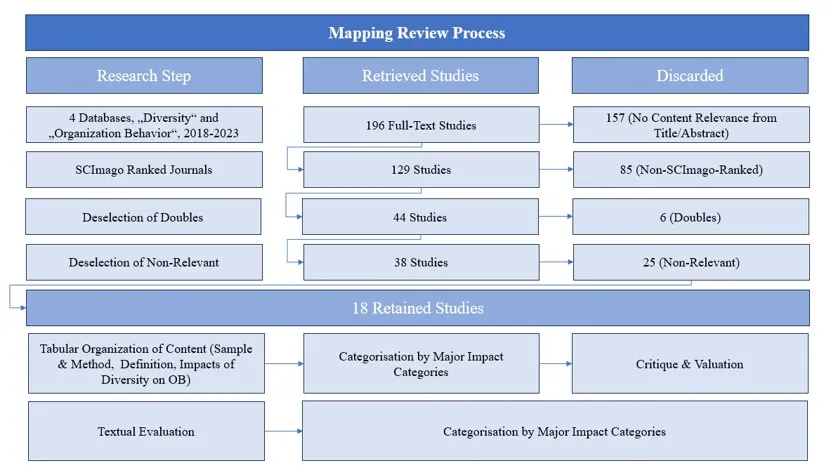
The following chart, in the style of a quorum statement (quality of reporting in meta-analyses) (Needleman, 2000; Panic et al., 2013), summarises the research process and indicates the number of eligible and retained studies by selection/research step.
Figure 1: Quorum statement of research process
(Source: Authors’ own Presentation)
Study Evaluation
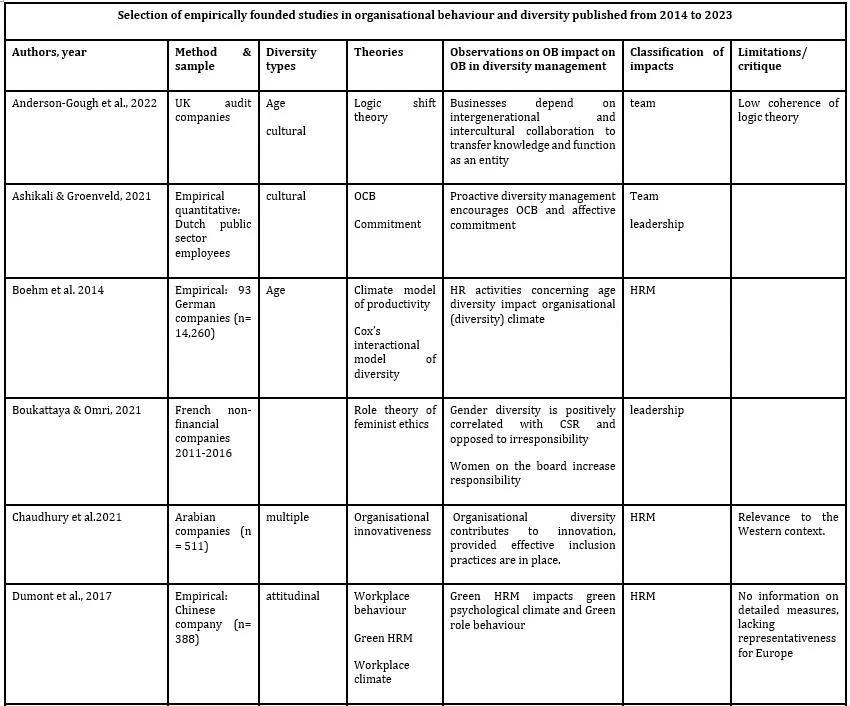
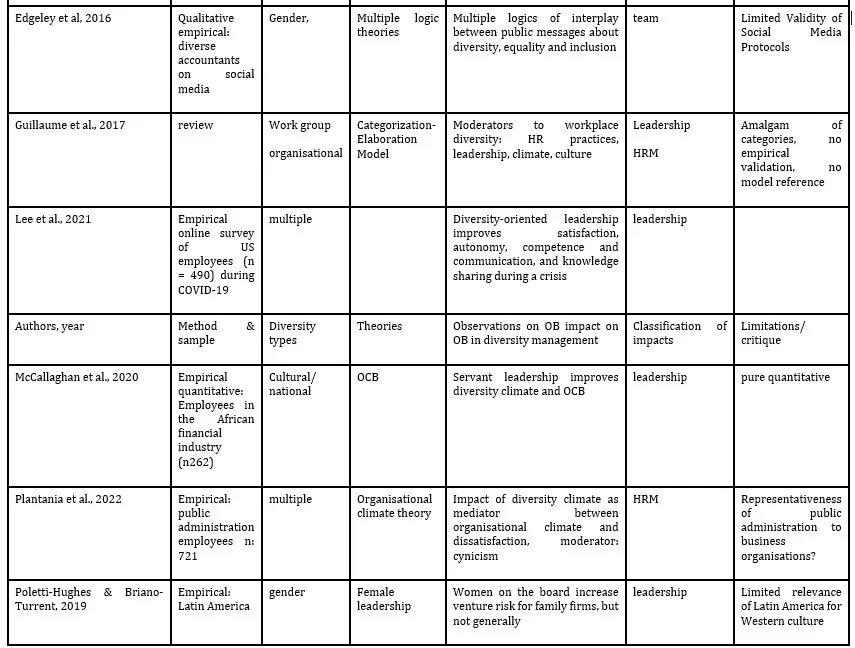
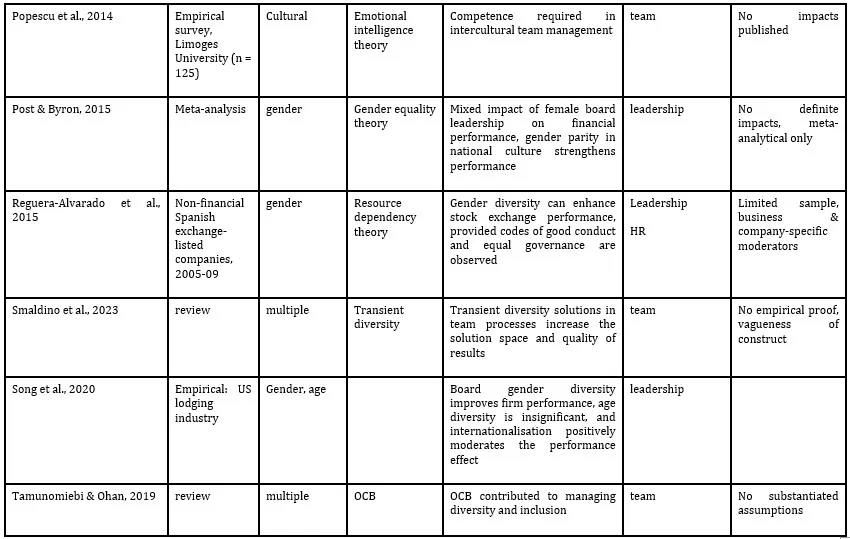
After the initial automated preselection process, the identified studies undergo a manual secondary selection to eliminate duplicate retrievals and studies that do not significantly contribute to the topic or fail to meet quality requirements. The final selection of studies retrieved in the primary research process (i.e. recent publications from 2014 to 2023 retrieved directly based on the keywork combination) is then categorised using an evaluation table, which encompasses the following aspects: authors and publication data, research methodology & sampling, availability of definitions of diversity and organisational behaviour, observations on diversity’s impact on organisational behaviour, and critical assessment of methods and insights. Subsequently, the results are classified according to the impact fields addressed, achieved through the completion of the initial tabular evaluation. A subsequent textual analysis of the results employs the identified categories, facilitating a comprehensive and meaningful discussion of the findings. By triangulating the results across sub-research fields and considering critiques and limitations identified in individual studies, this analysis evaluates the accomplishments of previous research, highlights areas for further investigation, and delineates opportunities for more in-depth exploration.
Nineteen eligible studies are evaluated for the review, and, beyond the retrieved basic definitions, three main fields of interaction between diversity and organisational behaviour are identified: diversity in the interaction of individuals and teams, leadership diversity, and diversity in Human resource management.
The three study fields are discussed based on a broad range of theories from different research directions, such as psychological research, gender theory, organisational climate theory, and motivation theories. Each of the identified research fields is contextualised in dominant theoretical subsets, which are addressed in the textual evaluation.
A total of 19 studies met the inclusion criteria. Of these, 10 (52.6%) applied quantitative research designs, 5 (26.3%) were qualitative case studies, and 4 (21.1%) represented theoretical or meta-analytical contributions. This distribution indicates a dominance of quantitative analyses and highlights the need for more interpretive and longitudinal research to capture complex dynamics of diversity in organisational contexts.
Table 1: Overview of review results
(Source: Authors’ own Presentation)
Mapping Review Results
The following chapter presents the results of the systematic mapping review and provides a structured synthesis of the empirical and theoretical findings identified in the analysed studies. Building upon the methodological framework outlined in the previous section, the results are organised according to the principal conceptual dimensions derived from the literature.
Diversity
The term ‘diversity’ originated in different scientific disciplines in the 20th century. In a publication on the statistical characteristics of social groups, Simpson (1949) describes diversity as a characteristic of populations which is opposed to concentration. Its conceptual migration into organisational research reflects an analogy between biological ecosystems and social systems. In both contexts, diversity denotes variation and interdependence as drivers of adaptability and resilience. The adoption of ecological metaphors in organisational theory highlights that heterogeneous social structures – such as ecosystems – are more robust and innovative due to the coexistence of multiple perspectives and complementarities. Consequently, workplace diversity represents not only demographic variation but also a strategic source of dynamic capability that enhances organisational learning and responsiveness.
Diversity refers to the extent to which members of a population differ in their multiple attributes. Diversity has thus been used as a measure of the constitution, variation, and hence the variety of ecological systems. Statistical definitions of diversity have been criticised for their inability to measure the diversity observed in nature, given the multiple forms and degrees of heterogeneity. According to Good (1953) and Hill (1973), the level of perceived diversity depends on the index selected and the type of difference being considered. Diversity, according to Peet (1974), originates in and increases with the probability and frequency of encounters among species of different types, and thus with population density. Although measurable by other indicators, diversity is therefore no neutral or objective concept; rather, the perception of diversity depends on the observer’s context, horizon, and intention (Gordon, 2021; Magurran, 2020).
The term “diversity” is relevant and applicable across various contexts, including social, cultural, educational, organisational, and political realms. In each context, diversity carries its own significance and implications (Hayden & Thompson, 2020). Diversity can be permanent, i.e., based on inherited characteristics (e.g., gender, ethnic origin), or transient. Transient diversity refers to the presence of diverse perspectives, ideas, or solutions that emerge and evolve over a short period of time within a group or collective setting. It signifies a temporary state arising during the process of problem-solving or decision-making and may not be sustained over the long term. Transient diversity can result from factors such as varying backgrounds, experiences, expertise, or cognitive styles of individuals involved in the collective task. In line with the title, the study focuses on research into permanent and transient diversity in a business environment and the workplace.
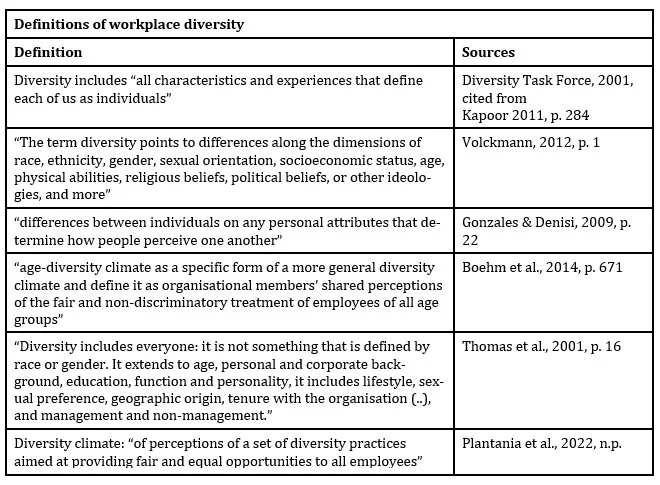
Table 2 summarises a series of definitions of diversity available in the academic literature, specifically in the context of business and the workplace.
Table 2: Definitions of diversity
(Source: Authors’ own Presentation)
A comparative analysis of the definitions presented reveals distinct conceptual orientations. Earlier perspectives, exemplified by the Diversity Task Force (2001) and Thomas et al. (2001), adopt a descriptive and inclusive approach that centres on a wide range of human distinctions. In contrast, recent definitions, as exemplified by Boehm et al. (2014) and Plantania et al. (2022), encompass perceptual and organisational aspects such as equity and workplace atmosphere. The former exhibits universality in scope, while the latter provides enhanced analytical precision suitable for organisational contexts. Nevertheless, none of these conceptualisations comprehensively integrates both individual and systemic levels of examination, highlighting the persistent absence of a cohesive theoretical framework for diversity in the workplace.
These definitions illustrate that diversity refers to differences among individuals and to social systems collaborating in a business context, and that it is both a characteristic of social groups and an attitude that can be adopted. Diversity as a characteristic of societies and social groups refers to the presence of a wide range of human attributes, identities, and backgrounds, including but not limited to race, ethnicity, gender, sexual orientation, age, religion, socioeconomic status, disability, and cultural heritage (Volckmann, 2012, S. 1) and even organisational experience and management style (Thomas, 2001). Diversity as an attitude encompasses the recognition, acceptance, and promotion of the unique characteristics, perspectives, and experiences of individuals, groups, or communities within a given context (Agcos & Burr, 1996). Diversity involves fostering an inclusive environment where these differences are respected, valued, and celebrated, thereby creating equitable opportunities for all individuals (Daya, 2014). This involves the development of sensitivity and the sensitive treatment of perceived difference (Bennett & Griffiths, 1984). Within organisations, diversity refers to the representation and inclusion of individuals from various backgrounds, experiences, and identities in the workforce (Konrad, 2005).
Organisation behaviour
Organisational behaviour is the systematic study of human behaviour within organisational contexts, encompassing all aspects of workplace behaviour. It focuses specifically on human behaviour within the organisational setting and does not analyse behaviours exhibited in individuals’ personal lives outside the organisational realm. Furthermore, organisational behaviour is not concerned with organisational or business matters unrelated to human beings, such as the automated control of production processes. Instead, organisational behaviour concentrates on the interface between individuals and organisations (Griffin et al., 2016).
In organisational settings, individuals typically work collaboratively and interact with other members of the organisation, as well as with external stakeholders such as suppliers, partners, and customers. The primary focus of organisational behaviour research is on understanding the interactions among individuals in workplace settings and how their behaviour influences organisational performance, effectiveness, and overall success (Eby & Dobbins, 1997). Organisational behaviour considers the interconnectedness between individuals and organisations, recognising the importance of these relationships in achieving organisational objectives (Moorman & Blakely, 1995). The field aims to understand and optimise how people operate within organisations, as well as how the interaction between individuals and organisations can be enhanced to effectively accomplish organisational goals (Ashford & Cummings, 1983).
By integrating concepts from psychology, sociology, anthropology, and management, organisational behaviour explores human behaviour in the workplace (Furnham, 2012). It encompasses both individual and collective behaviour, as well as the intricate relationships and dynamics among individuals, teams, and the broader organisational structure (Costa et al., 2018). Research in this field aims to address fundamental questions related to the drivers of individual workplace behaviour (Schermerhorn et al., 2011), the influence of attitudes and motivation on behaviour, the formation and functioning of groups and teams (Brooks, 2009), and the impact of organisational culture and leadership on employee behaviour and performance (Ozcan & Ozturk, 2020).
Diversity in employee interaction and team collaboration
Diversity in team interaction is addressed in seven recent studies (retrieved in the primary research process: Aggarwal et al., 2019; Anderson-Gough et al., 2022; Ashikali & Groenveld, 2021; Edgeley et al., 2016; Popescu et al., 2014; Smaldino et al., 2023; Tamanomiebi & Ohnan, 2019).
OCT is the primary theoretical framework across all six studies. Organisational citizenship behaviour is a widely researched concept in organisational behaviour (Podsakoff & MacKenzie, 1997; Brief & Motowidlo, 1986; Bateman & Organ, 1983). It refers to a range of supportive human behaviours that go beyond an individual’s formal hierarchical role, thereby strengthening social cohesion within organisations (Podsakoff & McKenzie, 1994; Organ, 1990). OCB encompasses virtues such as altruism, conscientiousness, courtesy, good sportsmanship, civic virtue, and cheerleading. These attributes have been found to have several positive effects, including enhancing managerial and co-worker productivity, freeing up resources, generating synergistic effects, and enabling organisations to effectively attract, integrate, and retain individuals from diverse backgrounds (Podsakoff & McKenzie, 2000).
Based on a multicultural personality questionnaire assessing characteristics such as social intelligence, open-mindedness, social initiative, and emotional stability and flexibility, Popescu et al. (2014) examine the impact of these virtues in intercultural team contexts and observe positive effects on diversity management, team integration, and productivity.
The significance of OCB in relation to diversity is noteworthy. By fostering team spirit and social cohesion, OCB can facilitate the integration and collaboration of individuals from diverse contexts. It helps overcome cultural barriers and fosters an inclusive work environment where diverse perspectives and talents can thrive (Tamunomiebi & Onah, 2019). Furthermore, OCB spreads positive energy throughout the organisation, creating an atmosphere that encourages and supports diversity and inclusion initiatives. Proactive diversity management in organisations enhances inclusion levels in a representative sample of Dutch organisations (Ashikali & Groeneveld, 2015). As a result, organisations that promote and encourage OCB are better equipped to leverage the benefits of diversity, leading to improved performance and a competitive advantage in an increasingly diverse and globalised business landscape.
The application of OCT in the examined literature showcases varied methodological and conceptual interpretations. In their work, Ashikali and Groeneveld (2021) employed quantitative survey tools to measure affective commitment and inclusion as indicators of Organisational Citizenship Behaviour (OCB), whereas Tamunomiebi and Onah (2019) adopted a conceptual approach to investigate the integrative role of OCB in heterogeneous organisational settings. Popescu et al. (2014) indirectly utilised Organisational Citizenship Theory (OCT) by establishing a connection between intercultural team behaviours and favourable prosocial performance outcomes. This array of operationalisations illustrates the flexibility and diversification of theoretical applications within the discipline. Subsequent research endeavours should thus prioritise the development of a more coherent conceptual and empirical structure for evaluating OCB within contexts pertaining to diversity.
Transient diversity is often studied to understand its impact on group performance, coordination, innovation, and the exploration of different problem-solving approaches. According to Joshi and Roh’s (2009) meta-analytic results, task-oriented diversity, defined as specialised functions within an organisation, consistently predicted better team performance, particularly on impending and time-restricted tasks. The relationship between diversity and real-world performance, however, may not be a linear one.
Smaldino et al. (2023) discuss the impacts of transient diversity on team processes and identify diverse mechanisms to enhance the quality of solutions reached by diverse teams when striving for consensus. These mechanisms augment the transient diversity of solutions during the group’s pursuit of consensus and can operate at different psychological and communicative levels. Transient diversity can be heightened by broadening the search space of potential solutions or by impeding information diffusion and delaying consensus. These mechanisms invariably enhance solution quality but incur additional time costs.
According to Aggarwal et al. (2019), teams with intermediate levels of cognitive style diversity outperformed those with both low and high levels of diversity. Teams with the highest levels of diversity performed the worst, possibly because they struggled to coordinate without direct communication. These findings align with models that suggest intermediate levels of network connectivity are optimal for group performance, analogous to “optimum mutation rates” in population biology. Transient diversity can be enhanced by expanding the range of potential solutions or by slowing down the diffusion of information and delaying consensus. These mechanisms improve solution quality but come at the cost of increased time required (Smaldino et al., 2023).
Across the reviewed studies, OCT is operationalised in varying degrees of empirical depth. Ashikali and Groeneveld (2021) apply OCT quantitatively, linking proactive diversity management to increased organisational commitment and citizenship behaviour, whereas Tamunomiebi and Onah (2019) employ OCT conceptually to frame inclusion as a behavioural outcome of diversity-driven collaboration. Popescu et al. (2014) extend this approach by associating multicultural competencies such as emotional stability and openness with prosocial performance indicators, thus empirically supporting key OCT assumptions. This variation in operationalisation highlights both the theoretical versatility and the methodological fragmentation of current diversity research. Future studies could benefit from testing unified OCT-based models that link diversity, behavioural antecedents, and performance outcomes.
In summary, these findings support the following initial hypothesis: Both permanent and transient forms of diversity enhance team collaboration and performance when embedded in a culture of mutual recognition and openness.
Diversity management and leadership
The issue of diversity has been intensively researched in the leadership context. Nine studies in the primary review sample are classified in the context of leadership research (Ashikali & Groenveld, 2021; Boukattaya & Omri, 2021; Guillaume et al, 2017; Lee et al., 2021; McCallaghan et al., 2020; Poletti-Hughes & Briano-Turren, 2019; Post & Byron, 2015; Reguera-Alvarado et al., 2015; Song et al., 2020).
The dominant underlying theories in this research subset are leadership and diversity management. Leadership theory is a field of study that explores different models, approaches, and perspectives on leadership (Middlehurst, 2008). It seeks to understand the nature of effective leadership, the traits and behaviours of successful leaders, and the factors that contribute to leadership effectiveness (Uhl-Bien, 2006), evaluate how leaders influence and inspire their followers (Teddie, 2005), the role of power and influence in leadership, and the importance of adapting leadership styles to different situations (Fairholm & Fairholm, 2009).
Diversity in the leadership team is found to be effective in increasing leadership performance. Analysing a sample of 10 French non-financial companies, Boukattaya & Omri (2021) find that diverse leading boards are more socially responsible and more engaged in demonstrating responsibility. Effective diverse leadership unfolds synergies by utilising the multiple orientations of the project partners, thereby advancing the project involving diverse individuals and groups (Gregory & Rafanti, 2010).
Leadership style refers to the approach a leader adopts to influence and guide subordinates’ behaviour and shape perceptions of this target group. Leadership style encompasses the methods a leader uses to influence, guide, motivate, and control individuals to achieve goals. It involves the ability to influence others to support the organisation’s objectives (Robbins et al., 2013).
Leadership styles impact the effective management of diversity. McCallaghan et al. (2020) analyse the impact of servant leadership style on inclusion in organisations characterised by high employee diversity and find that diversity improves employee perceptions of a diversity-sensitive climate and organisational citizenship behaviour. Servant leadership is a leadership style characterised by a high valuation of moral and ethical virtues and the leader’s primary interest in employees, while selfish power objectives are put aside (Avolio et al., 2009; Parris & Peachey, 2013).
Diversity orientation as an idiosyncratic leadership style originates in the increasing need to include people of different nationalities and genders in a comprehensive work environment (Agócs & Burr, 1996). Diversity Management is about successful leadership when differences between individuals and social groups are relevant to group processes (Jones et al., 2000), or when leading teams themselves are diverse (Boukattaya & Omri, 2021). A diversity-oriented leadership style is characterised by an encouragement of lived diversity in employees and in that process encourages knowledge sharing, creativity, commitment and openness to divergent ideas (Kalev, 2020)
Diversity management is directed at bridging clashes between and within ‘diverse’ groups and encouraging collaboration, tolerance, and integration in pursuit of the business aim (Agocs & Burr, 1996). This orientation is based on the understanding that all people share a common need to strive for health, creativity, and self-fulfilment, and can ideally pursue this desire by living and working together in mutual respect (Maslow, 1971). Embracing diversity involves promoting mutual recognition, understanding, and appreciation of these varied cultural expressions (Hicks, 2002). Diversity pertains to the inclusion and representation of diverse voices, interests, and perspectives in decision-making processes (Hunt, 1994).
Multiple positive impacts of a diversity-oriented leadership style are found in empirical research. According to social network theory (McPherson et al., 2001; Haythornthwaite et al., 2007), the relevance of diversity management in the workplace is that people tend to form social networks predominantly by peers they understand and trust and tend to aggregate to social in-groups of rather homogenous than different characteristics. Social ties between similar and familiar individuals develop more easily and quickly, which risks excluding people with comparatively different backgrounds, cultures, or levels of education or forming different subgroups (Simons & Rowland, 2011).
Organisations that manage diversity effectively recognise that diverse teams contribute to greater creativity, innovation, problem-solving, and overall performance (Carter et al., 2010). There is extensive research on the relationship between gender diversity on corporate boards and its impact on firm performance; results are uneven, and the effect of gender diversity seems to depend on the idiosyncratic management of gender equality, business or organisational culture (Reguera-Alvarado et al., 2015; Poletti-Hughes & Briano-Turrent, 2019). Arguments for the value of gender diversity include the diverse perspectives, skills, knowledge, and experiences brought by men and women on boards, leading to improved creativity, innovation, decision-making, and strategic direction (Miller & Tirana, 2009; Chen et al., 2005).
Gender diversity can enhance a company’s reputation, attract socially responsible investors, increase demand for its stock, and positively impact market value, provided a culture of inclusion in leadership is actively promoted. Additionally, the inherent differences between women and men, such as risk aversion and sustainable investment criteria, can provide valuable insights in male-dominated boardrooms, if women’s qualities are valued and used effectively (Joecks et al., 2013).
Based on the review results on leadership and diversity, a second hypothesis is suggested: Diversity-oriented leadership and the presence of heterogeneous leadership boards foster inclusion, knowledge sharing, and superior organisational performance.
Human Resource strategies to encourage diversity
A third strand of literature researches the design and impact of human resource strategies directed at improving organisational performance. Eight studies in the primary review refer to this subject (Anderson-Gough et al., 2022; Boehm et al., 014; Chaudhury et al., 2021; Dumont et al., 2017; Guillaume et al., 2017; Plantania et al., 2022; Reguera-Alvarado et al., 2015; Post & Byron, 2015). The use of specific human resource practices to promote and support diversity in an organisation has direct and indirect effects on performance and innovation.
Embracing diversity in the workplace involves implementing inclusive hiring practices, promoting equal opportunities for career advancement, and fostering a supportive, inclusive work culture (Reguera-Alvarado et al., 2015). It entails recognising and valuing differences in race, ethnicity, gender, sexual orientation, age, religion, socioeconomic status, disability, and cultural heritage, among other dimensions of diversity (Post & Byron, 2015).
Anderson-Gough et al. (2022) acknowledge the social, legal, and normative expectations for professions to address equality of opportunity and diversity. Given the complexity of enacting diversity alongside established logics of practice, understanding how diversity management is implemented becomes crucial (Edgley et al., 2016). The variable record of the professional accountancy field in accommodating gender and other diversities requires exploring the gender, ethnicity, and diversity assumptions embedded in professional and commercial logics, especially amid new pressures for institutional conformity (Anderson-Gough, 2005). Different logics of practice and the enactment of diversity promote the quality and performance outcome of audit firms (Anderson-Gough, 2022).
Faultlines, cross-categorisation, and status differences between demographic subgroups make diversity prominent. Cross-categorisation helps prevent bias and promotes social integration, performance, and well-being. The effects of faultlines and subgroup status differences on bias and integration depend on situational factors (Guillaume et al., 2017). Team size and diversity type don’t moderate the effects. Task characteristics influence the impact of demographic diversity on innovation and performance (van Dijk & van Engen, 2013). Contextual factors, such as cooperative interdependence and clear roles, can shape the effects of diversity (Chattopadhyay et al., 2011). Autonomy may exacerbate negative diversity effects, whereas decision-support systems and shared objectives mitigate them. Reducing uncertainty and promoting positive intergroup contact are crucial for effective diversity management (Guillaume et al., 2017).
Plantania et al. (2022) examine the mediating role of diversity climate and the moderating effect of cynicism on the relationship between organisational climate and fundamental aspects of organisational life (Exit, Voice, Loyalty, and Negligence) and identify a need for further clarification on the concept of organisational diversity and its impact on effectiveness. It emphasises the importance of fostering a tolerant culture within organisations where individuals are empowered to express their abilities without hindrance, regardless of their ethnicity, religion, gender, or other factors (Gonzalez & DeNisi, 2009). Proper management of cultural diversity leads to positive individual and organisational outcomes, such as increased involvement, improved well-being, enhanced job satisfaction, increased performance, and increased profit (Van Knippenberg et al., 2004). However, if diversity is poorly managed, it can become an obstacle and contribute to negative behaviours such as organisational cynicism. Organisational cynicism is characterised by distrust, hopelessness, and insecurity due to perceived lack of transparency, equity, and inclusion (Khan, 2014).
Referring to age-inclusive human resource (HR) practices, Boehm et al. (2014) hypothesise that age-inclusive HR practices positively influence employees’ perceptions of an age-diversity climate within the organisation. Employees can perceive measures aimed at developing a diverse and inclusive workforce as signals of their potential for advancement. These signals indicate the organisation’s intention to embrace age diversity and create equal opportunities for all age groups (Caspar & Harris, 2008). When employees witness colleagues from various age groups and observe equal promotion and training opportunities, they interpret these signals as a clear indication of the organisation’s commitment to maintaining an age-diverse workforce. Additionally, HR practices that educate executives about inclusive leadership behaviour and the appreciation of contributions from all age groups are seen as signals of an age-friendly climate (Bowen & Ostrof, 2004).
According to a Chinese single company survey assessing encouraging factors of green work place behaviour, the development of extra and in-role green behaviour depends on the psychological climate of green diversity in the workplace and individual green value moderates the impact of psychological green values on employee behaviour. Green human resource management improves the environment of psychological green-orientation and thus impacts green role behaviour directly and indirectly (Dumont, 2017).
Arabian organisations that embrace diversity and integrate diverse workforces experience higher levels of innovation and greater acceptance of change. Such organisations lead or adapt quickly to new business systems and develop innovative products or processes to thrive in a changing environment. Inherent or primary-level diversity, including attributes such as age, language, religious beliefs, and marital status, significantly contributes to creating an innovative work climate (Chaudhury et al., 2021). Age diversity and language variety positively impact creativity, while employees with diverse religious beliefs and marital status contribute to the organisation’s innovative culture. However, gender, ethnicity, abilities, work backgrounds, and caregiving responsibilities do not influence an employee’s contribution to organisational innovation (Boekhorst, 2015). Employee inclusion practices enhance organisational value by fostering innovation, fostering a sense of belonging, and allowing employees to be unique. Inclusion practices contribute to employee creativity and adaptability but do not moderate the relationship between organisational diversity and innovativeness. Overall, employee inclusion has a stronger impact on organisational adaptability and innovation compared to employee diversity.
Summarising prior results in the field of diversity in Human resource strategy and management, a third hypothesis is proposed: Human resource strategies promoting openness, civil courage, and inclusion cultivate a climate of lived diversity and contribute to organisational innovation and effectiveness.
Discussion
Based on the mapping review results, opportunities and risks associated with a diversity-oriented team climate, management style, and human resource practices become apparent, and the success conditions of lived diversity in organisational practice are identified. Summarising the insights from the above-reviewed studies, this section discusses the opportunities and potential risks of diversity in businesses and derives the preconditions for successful diversity management.
Opportunities for diversity-driven organisation behaviour change
The encouragement and openness to diversity offer ample development and performance opportunities for businesses, according to the reviewed studies:
All studies emphasise the positive effects of diversity on team collaboration and performance. Organisational citizenship behaviour, which encompasses altruism, conscientiousness, courtesy, and other positive attributes, fosters social cohesion and enhances team spirit (Ashikali & Groenveld, 2021; Aggarwal et al., 2019). Cultivating diversity in work teams and as a foundation of business culture facilitates the integration of individuals from different backgrounds, overcomes cultural barriers, and fosters an inclusive work environment (Tamunomiebi & Onah, 2019). Organisations that promote and encourage organisational citizenship behaviour are equipped to leverage the benefits of diversity, leading to improved performance and a competitive advantage. Openness to permanent and transient diversity, including supportive behaviours beyond formal roles, strengthens social cohesion and enhances productivity (Popescu et al., 2014; Smaldino et al., 2023).
Leadership strategies that aim for constructive, supportive diversity management support business development and performance; diverse leadership teams are found to contribute to increased leadership performance (Ashikali & Groenveld, 2021; Gregory & Rafanti, 2010). Diverse boards are associated with greater social responsibility and engagement, leading to improved project outcomes. Gender diversity on corporate boards can enhance decision-making, strategic direction, and market value, attract socially responsible investors, and improve the company’s reputation (Boukattaya & Omri, 2021).
Different leadership styles, such as servant leadership and diversity-oriented leadership, have a positive impact on diversity management and inclusion within organisations (Reguera-Alvarado et al., 2015; Poletti-Hughes & Briano-Turrent, 2019). Effective diversity management recognises that diverse teams contribute to enhanced creativity, innovation, and problem-solving, thereby bridging clashes between diverse groups, encouraging collaboration, tolerance, and integration, and promoting creativity, innovation, problem-solving, and overall performance (Robbins and Judge, 2013; McCallaghan et al., 2020).
Human resource strategies can proactively encourage diversity, thereby contributing to organisational creativity, open-mindedness and performance. Embracing diversity in the workplace involves implementing inclusive hiring practices, promoting equal opportunities for career advancement, and fostering a supportive, inclusive work culture (Reguera-Alvarado et al., 2015; Post & Byron, 2015). An inclusive attitude towards cultural diversity leads to positive individual and organisational outcomes, including increased involvement, improved well-being, enhanced job satisfaction, increased performance, and increased profit (Edgley et al., 2016; Anderson-Gough, 2022; Chaudhury et al., 2021). Age-inclusive human resource practices positively influence employees’ perceptions of an age-diversity climate within the organisation (Dumont, 207). Encouraging green diversity in the workplace improves green role behaviour, employee behaviour, and the psychological environment of green orientation. Embracing diverse workforces, including primary-level diversity attributes, fosters innovation, promotes change acceptance, and drives the development of innovative products and processes (Guillaume et al., 2017; Plantania et al., 2022).
In summary, business diversity offers advantages such as improved team collaboration, enhanced leadership performance, creativity, innovation, problem-solving, and overall organisational performance. Effective diversity management, inclusive HR practices, and the embracing of diverse perspectives and talents create a supportive and inclusive work environment, leading to a competitive advantage in the global business landscape.
Risks of diversity-driven organisation behaviour change for businesses
The text highlights several potential problems related to diversity in businesses.
Lack of coordination and communication: Aggarwal et al. (2019) found that teams with high cognitive style diversity performed poorly, possibly because they struggled to coordinate without direct communication. This suggests that diverse teams may struggle to collaborate and communicate effectively due to differences in perspectives and approaches.
Time costs and solution quality trade-off: Smaldino et al. (2023) discussed the impacts of transient diversities in team processes and found that enhancing transient diversity can improve solution quality but incurs additional time costs. This trade-off suggests that managing diversity in teams may require allocating more time to consensus-building and decision-making.
Bias and subgroup formation: According to social network theory, people tend to form social networks predominantly with peers they understand and Trust, which can lead to the formation of homogenous social in-groups (Simons & Rowland, 2011). This may result in exclusion or the formation of subgroups based on background, culture, or education, hindering the integration and collaboration of diverse individuals.
Negative behaviours and organisational cynicism: Poor management of diversity can contribute to negative behaviours, such as organisational cynicism, which is characterised by distrust, hopelessness, and insecurity due to a perceived lack of transparency, equity, and inclusion (Khan, 2014). This suggests that if diversity is not effectively managed, it can lead to negative attitudes and behaviours within the organisation.
Challenges in managing different dimensions of diversity: The impact of gender diversity on firm performance, for example, seems to depend on the idiosyncratic management of gender equality and organisational culture (Reguera-Alvarado et al., 2015; Poletti-Hughes & Briano-Turrent, 2019). Managing diversity requires recognising and valuing differences in various dimensions such as race, ethnicity, gender, sexual orientation, age, religion, socioeconomic status, disability, and cultural heritage (Post & Byron, 2015).
Limited impact of certain diversity dimensions on innovation: While age diversity, language variety, and certain attributes like religious beliefs and marital status can contribute to an innovative work climate, gender, ethnicity, abilities, work backgrounds, and caregiving responsibilities may not significantly influence an employee’s contribution to organisational innovation (Boekhorst, 2015). This suggests that the impact of diversity on innovation may vary depending on the specific dimensions of diversity considered.
From a theoretical standpoint, many of the recognised risks can be analysed through the perspective of Social Identity Theory (Tajfel & Turner, 1986) and Faultline Theory (Lau & Murnighan, 1998). These theoretical frameworks elucidate the reasons behind individuals’ inclination to associate with like-minded peers, which can lead to the formation of in-groups that may disrupt overall group cohesion. When demographic or cognitive distinctions coincide across multiple dimensions, faultlines exacerbate intergroup prejudices and impede collaborative efforts.
Likewise, challenges in communication and protracted decision-making processes within highly diverse teams can be attributed to heightened cognitive dissimilarity. This suggests that diversity in itself is neither inherently advantageous nor disadvantageous; rather, its effects are contingent upon the organisation’s capacity to leverage differences for productive discourse.
These potential problems highlight the complexities and challenges of managing diversity in businesses, including the need for effective communication, addressing biases, managing subgroup formation, promoting inclusion, and leveraging diversity dimensions that positively impact organisational performance.
Suggestions for the successful management of diversity in businesses
Based on the review, the preconditions to successfully manage diversity in businesses are derived in the form of management suggestions:
Businesses should establish a Climate of Mutual Recognition and Openness: It is crucial to create an inclusive work environment where individuals from diverse backgrounds feel recognised, valued, and respected. This climate of mutual recognition and openness facilitates the integration and collaboration of individuals from diverse contexts, helping overcome cultural barriers and foster diversity.
Management and employees should promote Organisational Citizenship Behaviour (OCB), which refers to supportive behaviours that go beyond an individual’s formal role, strengthening social cohesion within organisations. Encouraging OCB among employees contributes to team spirit, social cohesion, and positive energy throughout the organisation. OCB supports diversity and inclusion initiatives, enabling organisations to leverage the benefits of diversity and achieve improved performance and a competitive advantage.
There is a need to develop an understanding of transient diversity: Transient diversity refers to temporary differences in team composition, such as cognitive styles or problem-solving approaches. It is important to recognise that the relationship between diversity and performance may not be linear. Teams with intermediate levels of cognitive style diversity often outperform those with low or high levels. Enhancing transient diversity can be achieved by broadening the search space for potential solutions or by slowing the rate of information diffusion and delaying consensus.
Businesses should adopt a diversity-oriented leadership style, as leadership plays a significant role in effectively managing diversity. A diversity-oriented leadership style encourages knowledge sharing, creativity, commitment, and openness to divergent ideas. It involves embracing diversity, promoting inclusivity, and utilising team members’ diverse orientations to advance projects and achieve better performance outcomes.
Team and business leaders should implement Human Resource Practices that encourage diversity. Embracing diversity requires inclusive hiring practices, equal opportunities for career advancement, and a supportive and inclusive work culture. Proper management of cultural diversity leads to positive individual and organisational outcomes, including increased involvement, improved well-being, enhanced job satisfaction, increased performance, and increased profit. HR practices that signal an organisation’s intention to embrace diversity, such as age-inclusive practices or green HRM practices, help create a climate of diversity and inclusion.
By considering these preconditions, businesses can effectively manage diversity and harness its potential benefits, including enhanced collaboration, innovation, problem-solving, and improved overall performance. Overall, the reviewed studies reveal that diversity’s impact on organisational behaviour is contingent upon three interrelated mechanisms: (1) the presence of inclusive behavioural norms such as organisational citizenship behaviour, (2) the mediating role of leadership orientation that translates diversity into collaborative capability, and (3) the institutional embedding of diversity-oriented HR practices. The convergence of these factors suggests that diversity functions as a multilevel construct linking individual motivation, group dynamics, and organisational systems. Thus, diversity management should not be treated as an isolated HR measure but as a systemic capability embedded in organisational culture and strategic leadership.
In addition to general recommendations, several actionable strategies can be derived from the reviewed literature. First, organisations should implement diversity scorecards that operationalise inclusion goals through measurable KPIs such as representation ratios, promotion equity, and engagement indices (Kalev, 2020). Second, the introduction of bias-awareness and inclusive leadership training has proven effective in strengthening managers’ ability to translate diversity policies into daily practices (Ashikali & Groeneveld, 2021). Third, structured mentoring and sponsorship programs that connect underrepresented employees with senior leaders can enhance social integration and knowledge transfer (Guillaume et al., 2017). Finally, the establishment of feedback loops and employee resource groups can institutionalise continuous dialogue on diversity issues and anchor inclusion within organisational learning processes.
Conclusion
Accomplishment of academic research at the intersection of diversity and organisational behaviour
The review provides an overview of diversity discussions across different business contexts and emphasises the importance of lived diversity within social groups and attitudes, encouraging individuals with diverse traits and behaviours, whether permanent or temporary. Research available at the intersection of diversity and organisational behaviour research has so far mainly covered three issues:
The meanings and impacts of diversity in team interaction, particularly in relation to organisational citizenship behaviour (OCB) and transient diversity, have been explored. Conclusively, the significance of OCB – i.e., supportive behaviours that go beyond formal hierarchical roles and contribute to social cohesion within organisations – to effective inclusion has been emphasised. OCB can facilitate the integration of individuals from different contexts, overcome cultural barriers, and create an inclusive work environment where diverse perspectives and talents can thrive. Organisations that promote and encourage OCB are better positioned to leverage the benefits of diversity, thereby improving performance and gaining a competitive advantage. A permanent bus can also enhance group performance, coordination, innovation, and problem-solving. Diversity in cognitive styles enhances the quality of solutions of diverse teams, such as broadening the search space of potential solutions or delaying consensus to allow for more varied perspectives.
In the context of diversity management and leadership, the relationship between diverse boards, diversity-oriented leadership styles, and organisational performance has been explored based on a range of underlying theories, e.g., leadership style theory (Ashikali & Groenveld, 2021), feminist ethics (Boukattaya & Omri, 2021), and the resource-based view. The impact of diverse leadership teams on social responsibility, collaboration, and project advancement has been discussed. Embracing diversity in leadership has conclusively been found beneficial to organisational culture and performance (Lee et al., 2021)
A third group of research papers has evaluated human resource strategies aimed at encouraging diversity and improving organisational performance. Inclusive hiring practices, equal opportunities for career advancement, and the creation of a supportive work culture have been identified as important aspects of embracing diversity in the workplace (Plantania et al., 2022; Reguera-Alvarado et al., 2015). An encouraging diversity climate, age-inclusive HR practices, and green HRM in relation to employee behaviour, organisational innovation, and change acceptance have been found beneficial for fostering a culture of diversity. The significance of employee inclusion practices in promoting creativity, adaptability, and organisational value has been worked out (Tamunomiebi & Ohan, 2019).
Outlines for further research
Although academic research has gained some valuable insights into the impact of diversity on organisational behaviour, several areas could be further explored in future research, these include:
Construction of diversity: The concept of diversity is scattered and inconsistently defined due to its application across different disciplines and contexts; a unifying definition based on a meta-analytic study would be beneficial for interdisciplinary research.
Longitudinal Studies: Conducting longitudinal studies to examine the long-term effects of diversity on organisational behaviour would provide a deeper understanding of the relationship between diversity and outcomes such as employee satisfaction, productivity, and innovation. Longitudinal research can capture the dynamics and changes that occur over time, helping to identify the causal mechanisms underlying the observed effects.
Intersectionality refers to the interconnected nature of social categories, such as gender, race, ethnicity, and socioeconomic status, and how they interact to shape individuals’ experiences (Corus & Saatcioglu, 2015). Future research could focus on exploring the unique experiences and challenges faced by individuals who belong to multiple marginalised or underrepresented groups. Understanding the complex dynamics of intersectionality within organisations can inform the development of more inclusive policies and practices.
Organisational Culture and Climate: Investigating the influence of organisational culture and climate on the relationship between diversity and organisational behaviour is another important research area. How do cultural norms, values, and practices impact the acceptance and integration of diverse individuals? How does the climate for diversity affect employees’ attitudes, behaviours, and performance? Understanding these dynamics can help organisations create inclusive cultures that foster positive outcomes.
Team Dynamics: While the text briefly discusses the impact of diversity on team collaboration, further research can delve deeper into the specific mechanisms by which diversity influences team dynamics. How does diversity affect communication patterns, conflict resolution, decision-making processes, and team performance? Exploring these dynamics can help organisations optimise team composition and foster effective teamwork in diverse settings.
Leadership Development: Investigating the role of leadership development programs in promoting diversity and inclusion within organisations is another area that requires attention. How can leaders be equipped with the knowledge, skills, and competencies to effectively manage and leverage diversity? Examining the effectiveness of diversity-focused leadership development initiatives can provide insights into best practices and strategies for cultivating inclusive leadership.
Organisational Policies and Practices: Further research is needed to understand the impact of specific organisational policies and practices on diverse outcomes. This includes examining the effectiveness of diversity training programs, diversity recruitment and retention strategies, promotion and advancement practices, and employee resource groups. Understanding the effectiveness of these interventions can inform evidence-based strategies for creating diverse and inclusive organisations.
Several factors constrain this evaluation. Initially, the focus on materials published in English-language Q1 journals might have disregarded pertinent regional or field-specific investigations. Additionally, the constrained timeframe (2014–2023) hampers the comprehensive analysis of trends in diversity research over time. Furthermore, being a mapping review, this research emphasises inclusivity rather than in-depth analysis and refrains from conducting meta-analytical statistical amalgamation. Subsequent reviews could expand the temporal and linguistic scope, incorporating quantitative effect-size assessments to enhance the applicability of the findings.
By addressing these research requirements, scholars can deepen their understanding of the impact of diversity on organisational behaviour and contribute to the development of evidence-based practices that promote inclusivity and organisational success. Within the brevity of a twenty-page study, only a scattered glimpse into the broad realm of diversity research in the context of organisations could be provided; a more in-depth analysis of select topics addressed in this mapping review would be desirable to provide a more comprehensive view of the addressed issues of diversity in teamwork, leadership and human resource practice. Empirical confirmation of the derived propositions in further, so far unexplored contexts, such as German industrial companies, is desirable. The conclusions drawn from this analysis emphasise the importance of acknowledging diversity not solely as a fixed feature of institutions but as a fluid and advantageous resource that improves adaptability, innovation, and enduring effectiveness. Subsequent scholarly inquiries and practical applications should move beyond surface-level examinations and focus on developing and validating comprehensive diversity models that integrate behavioural, cultural, and strategic aspects. Through the integration of diversity within leadership cultivation, human resources frameworks, and organisational educational initiatives, establishments have the potential to elevate inclusivity from an abstract goal into a quantifiable catalyst for organisational distinction.
This review illustrates that diversity plays a multifaceted role in shaping organisational behaviour through three key mechanisms: promoting collaboration and cohesion by encouraging organisational citizenship behaviour, fostering innovation and inclusion through leadership that values diversity, and enhancing adaptability through inclusive human resource practices. Taken together, these mechanisms suggest that strategic management of diversity enhances organisational capabilities, thereby promoting performance, learning, and long-term viability. For professionals in the field, these results emphasise the importance of integrating diversity as a fundamental component of corporate strategy, underpinned by quantifiable key performance indicators, leadership responsibility, and ongoing organisational development.
Future research should be structured along four key dimensions: (1) Conceptual clarification: Developing an integrative, multidimensional definition of diversity applicable across disciplines. (2) Methodological innovation: Employing longitudinal and mixed methods designs to capture the temporal and contextual dynamics of diversity. (3) Theoretical integration: Combining perspectives from social psychology, organisational learning, and strategic management to construct unified explanatory models. (4) Practical implications: Evaluating the impact of targeted HR and leadership interventions on measurable organisational outcomes such as innovation, retention, and employee well-being. Such a systematic approach will not only consolidate the fragmented research landscape but also enhance the transferability of academic insights into actionable management strategies.
References
Acedo, C., Ferrer, F., & Pamies, J. (2009). Inclusive education: Open debates and the road ahead. Prospects, 39(3), 227-238.
Aggarwal, I., Woolley, A. W., Chabris, C. F., & Malone, T. W. (2019). The impact of cognitive style diversity on implicit learning in teams. Frontiers in Psychology, 10, Article 112.
Agócs, C., & Burr, C. (1996). Employment equity, affirmative action and managing diversity: assessing the differences. International journal of manpower, 17(4/5), 30-45.
Ahmad, F., & Karim, M. (2019). Impacts of knowledge sharing: a review and directions for future research. Journal of workplace learning, 31(3), 207-230.
Anderson-Gough, F., Edgley, C., Robson, K., & Sharma, N. (2022). Organisational responses to multiple logics: Diversity, identity and the professional service firm. Accounting, Organisations and Society, 103, 101336.
Andersson, L., Jackson, S. E., & Russell, S. V. (2013). Greening organisational behaviour: An introduction to the special issue. Journal of Organisational behaviour, 34(2), 151-155.
Arora, A. (2022). Gender diversity in boardroom and its impact on firm performance. Journal of Management and Governance, 26(3), 735-755.
Ashford, S. J., & Cummings, L. L. (1983). Feedback as an individual resource: Personal strategies of creating information. Organisational behaviour and human performance, 32(3), 370-398.
Ashikali, T., Groeneveld, S., & Kuipers, B. (2021). The role of inclusive leadership in supporting an inclusive climate in diverse public sector teams. Review of Public Personnel Administration, 41(3), 497-519.
Avolio, B J., Walumbwa, F O., & Weber, T J. (2009). Leadership: Current theories, research, and future Directions. Annual Review of Psychology, 60, 421–449.
Baron, R. A. (2002). OB and entrepreneurship: The reciprocal benefits of closer conceptual links. Research in organisational behaviour, 24, 225-269.
Bateman, T. S., & Organ, D. W. (1983). Job satisfaction and the good soldier: The relationship between affect and employee “citizenship”. Academy of Management Journal, 26(4), 587-595.
Bennett, B. A., & Griffiths, C. L. (1984). Factors affecting the distribution, abundance and diversity of rock-pool fishes on the Cape Peninsula, South Africa. African Zoology, 19(2), 97-104.
Boehm, S. A., Kunze, F., & Bruch, H. (2014). Spotlight on age‐diversity climate: The impact of age‐inclusive HR practices on firm‐level outcomes. Personnel Psychology, 67(3), 667-704.
Boekhorst, J. A. (2015). The role of authentic leadership in fostering workplace inclusion: A social information processing perspective. Human Resource Management, 54 (2), 241–264.
Boukattaya, S., & Omri, A. (2021). Impact of board gender diversity on corporate social responsibility and irresponsibility: Empirical evidence from France. Sustainability, 13(9), 4712.
Bowen DE & Ostroff C. (2004). Understanding HRM-firm performance linkages: The role of “strength” of the HRM system. Academy of Management Review, 29, 203–221.
Bragge, P., Clavisi, O., Turner, T., Tavender, E., Collie, A., & Gruen, R. L. (2011). The global evidence mapping initiative: scoping research in broad topic areas. BMC Medical Research Methodology, 11(1), 1-12.
Brief, A. P., & Motowidlo, S. J. (1986). Prosocial organisational behaviours. Academy of Management Review, 11(4), 710-725.
Brooks, I. (2009). Organisational behaviour: individuals, groups and organisation. Pearson Education.
Carter, D. A., D’Souza, F., Simkins, B. J., & Simon, W. G. (2010). The gender and ethnic diversity of US boards and board committees and firm financial performance. Corporate Governance: An International Review, 18(5), 396–414.
Casper WJ & Harris CM. (2008). Work–life benefits and organisational attachment: Self interest utility and signalling theory models. Journal of Vocational Behaviour, 72, 95–109.
Chattopadhyay, P., George, E., & Ng, C. K. (2011). An uncertainty reduction model of relational demography. In A. Joshi, H. Liao & J. J. Martocchio (Eds.), Research in personnel and human resource management (Vol. 30, pp. 219–251).
Chaudhry, I. S., Paquibut, R. Y., & Tunio, M. N. (2021). Do workforce diversity, inclusion practices, & organisational characteristics contribute to organisational innovation? Evidence from the UAE. Cogent Business & Management, 8(1), 1947549.
Chen, G., Liu, C., & Tjosvold, D. (2005). Conflict management for effective top management teams and innovation in China. Journal of Management Studies, 42, 277–300.
Chuang, Y. T., Church, R., & Zikic, J. (2004). Organisational culture, group diversity and intra‐group conflict. Team Performance Management: An International Journal, 10(1/2), 26-34.
Corus, C., & Saatcioglu, B. (2015). An intersectionality framework for transformative services research. The Service Industries Journal, 35(7-8), 415-429.
Costa, A. C., Fulmer, C. A., & Anderson, N. R. (2018). Trust in work teams: An integrative review, multilevel model, and future directions. Journal of Organisational behaviour, 39(2), 169-184.
Daya, P. (2014). Diversity and inclusion in an emerging market context. Equality, Diversity and Inclusion: An International Journal, 33(3), 293-308.
Dumont, J., Shen, J., & Deng, X. (2017). Effects of green HRM practices on employee workplace green behaviour: The role of psychological green climate and employee green values. Human resource management, 56(4), 613-627.
Eby, L. T., & Dobbins, G. H. (1997). Collectivistic orientation in teams: an individual and group‐level analysis. Journal of Organisational behaviour: The International Journal of Industrial, Occupational and Organizational Psychology and behaviour, 18(3), 275-295.
Edgley, C., Sharma, N., & Anderson-Gough, F. (2016). Diversity and professionalism in the big four firms: Expectation, celebration and weapon in the battle for talent. Critical Perspectives on Accounting, 35, 13e34.
Ely, R. J., & Thomas, D. A. (1996). Making differences matter: A new paradigm for managing diversity. Harvard Business Review, 74(5), 79-90.
Ely, R. J., & Thomas, D. A. (2020). Getting serious about diversity. Harvard Business Review, 98(6), 114-122.
Fairholm, M. R., & Fairholm, G. W. (2009). Understanding leadership perspectives: Theoretical and practical approaches. Springer Science & Business Media.
Furnham, A. (2012). The psychology of behaviour at work: The individual in the organisation. Psychology Press.
Gomez, L. E., & Bernet, P. (2019). Diversity improves performance and outcomes. Journal of the National Medical Association, 111(4), 383-392.
Gonzalez, J. A., & DeNisi, A. S. (2009). Cross‐level effects of demography and diversity climate on organisational attachment and firm effectiveness. Journal of Organisational behaviour: The International Journal of Industrial, Occupational and Organizational Psychology and behaviour, 30(1), 21-40.
Good, I. J. (1953). The population frequencies of species and the estimation of population parameters. Biometrika, 40(3-4), 237-264.
Gordon, S. R., Yough, M., Finney-Miller, E. A., Mathew, S., Haken-Hughes, A., & Ariati, J. (2021). Faculty perceptions of teaching diversity: Definitions, benefits, drawbacks, and barriers. Current Psychology, 1-10.
Gregory, T. and Rafanti, M. (2010). Leveraging diversity, R. Couto, Ed., Political and civic leadership. Los Angeles: Sage.
Griffin, R. W., Phillips, J. M., & Gully, S. M. (2016). Organisational behaviour: Managing people and organisations. Cengage Learning.
Guillaume, Y. R., Dawson, J. F., Otaye‐Ebede, L., Woods, S. A., & West, M. A. (2017). Harnessing demographic differences in organisations: What moderates the effects of workplace diversity?. Journal of Organisational behaviour, 38(2), 276-303.
Hayden, M., & Thompson, J. (2000). Quality in diversity. International Schools and International Education: improving teaching, management and quality, 1-14.
Haythornthwaite, C., Marin, A., Smith-Lovin, L., & Zinko, N. (2007). The network is personal: Introduction to a special issue of Social Networks. Social networks, 29, 349-356.
Hicks, D. (2002). Spiritual religious diversity in the workplace: Implications for leadership,Leadership Quarterly, 13, 379-396.
Hill, M. O. (1973). Diversity and evenness: a unifying notation and its consequences. Ecology, 54(2), 427-432.
Hunt, V., Layton, D. & Prince, S. (2015). Diversity matters. McKinsey Report of Feb 2, 2015.
Hunt, P. (1994). Leadership in diversity, Health Prog.75(10):26-9.
James, K. L., Randall, N. P., & Haddaway, N. R. (2016). A methodology for systematic mapping in environmental sciences. Environmental evidence, 5, 1-13.
Joecks, J., Pull, K., & Vetter, K. (2013). Gender Diversity in the Boardroom and Firm Performance: What exactly constitutes a ‘‘critical mass?’’. Journal of Business Ethics, 118(1), 61–72.
Jones, D., Pringle, J., & Shepherd, D. (2000). “Managing Diversity” meets Aotearoa/New Zealand. Personnel Review, 29(3), 364-380.
Joshi, A., & Roh, H. (2009). The role of context in work team diversity research: A meta-analytic review. Academy of Management Journal, 52(3), 599–627.
Kapoor, C. (2011). Defining diversity: the evolution of diversity. Worldwide Hospitality and Tourism Themes, 3(4), 284-293.
Khan, M. A. (2014). Organisational cynicism and employee turnover intention: Evidence from banking sector in Pakistan. Pakistan Journal of Commerce and Social Sciences (PJCSS), 8(1), 30-41.
Khatib, S. F., Abdullah, D. F., Elamer, A. A., & Abueid, R. (2021). Nudging toward diversity in the boardroom: A systematic literature review of board diversity of financial institutions. Business strategy and the environment, 30(2), 985-1002.
Kidder, D. L., Lankau, M. J., Chrobot‐Mason, D., Mollica, K. A., & Friedman, R. A. (2004). Backlash toward diversity initiatives: Examining the impact of diversity program justification, personal and group outcomes. International Journal of Conflict Management, 15(1), 77-102.
Konrad, A. M. (2005). Examining the Contours of Workplace Diversity. Handbook of Workplace Diversity, 1.
Lattimer, R. L. (1998). The case for diversity in global business, and the impact of diversity on team performance. Competitiveness Review: An International Business Journal, 8(2), 3-17.
Lee, Y., Tao, W., Li, J. Y. Q., & Sun, R. (2021). Enhancing employees’ knowledge sharing through diversity-oriented leadership and strategic internal communication during the COVID-19 outbreak. Journal of Knowledge Management, 25(6), 1526-1549.
Magurran, A. E., & Magurran, A. E. (1988). Why diversity? Ecological diversity and its measurement, 1-5.
Maslow, A. (1971). The Farther Reaches of Human Nature. New York: Viking Press.
McCallaghan, S., Jackson, L. T., & Heyns, M. M. (2020). Servant leadership, diversity climate, and organisational citizenship behaviour at a selection of South African companies. Journal of Psychology in Africa, 30(5), 379-383.
McPherson, M., Smith-Lovin, L., & Cook, J. M. (2001). Birds of a feather: Homophily in social networks. Annual review of sociology, 27(1), 415-444.
Middlehurst, R. (2008). Not enough science or not enough learning? Exploring the gaps between leadership theory and practice. Higher Education Quarterly, 62(4), 322-339.
Miller, T., & del Carmen Triana, M. (2009). Demographic diversity in the boardroom: Mediators of the board diversity–firm performance relationship. Journal of Management Studies, 46(5), 755-786.
Moorman, R. H., & Blakely, G. L. (1995). Individualism‐collectivism as an individual difference predictor of organisational citizenship behaviour. Journal of organisational behaviour, 16(2), 127-142.
Moss, G. (Ed.). (2009). Profiting from diversity: The business advantages and the obstacles to achieving diversity. Springer.
Needleman, I. (2000). Is this good research? Look for CONSORT and QUORUM. Evidence-Based Dentistry, 2(3), 61-62.
Ongori, H., & Agolla, J. E. (2007). Critical review of literature on workforce diversity. African journal of business management, 1(4).
Ozcan, O., & Ozturk, I. (2020). Impact of organisational culture and leadership styles on employee performance: A research study on the banking industry. Research Journal of Business and Management, 7(1), 45-55.
Panic, N., Leoncini, E., de Belvis, G., Ricciardi, W., & Boccia, S. (2013). Evaluation of the endorsement of the preferred reporting items for systematic reviews and meta-analysis (PRISMA) statement on the quality of published systematic review and meta-analyses. PloS one, 8(12), e83138.
Parris, D L, & Peachey, J W (2013). A systematic literature review of servant leadership theory in organisational contexts. Journal of Business Ethics, 113, 377–393. https:// doi .org/10 .1007/s10551-012-1322-6
Peet, R. K. (1974). The measurement of species diversity. Annual review of ecology and systematics, 5(1), 285-307.
Pitts, D., & Jarry, E. (2007). Ethnic diversity and organisational performance: Assessing diversity effects at the managerial and street levels. International Public Management Journal, 10(2), 233-254.
Platania, S., Morando, M., & Santisi, G. (2022). Organisational Climate, Diversity Climate and Job Dissatisfaction: A Multi-Group Analysis of High and Low Cynicism. Sustainability, 14(8), 4458.
Poletti-Hughes, J., & Briano-Turrent, G. C. (2019). Gender diversity on the board of directors and corporate risk: A behavioural agency theory perspective. International Review of Financial Analysis, 62, 80-90.
Podsakoff, P. M., & MacKenzie, S. B. (1997). Impact of organisational citizenship behaviour on organisational performance: A review and suggestion for future research. Human performance, 10(2), 133-151.
Podsakoff, P. M., MacKenzie, S. B., Paine, J. B., & Bachrach, D. G. (2000). Organisational citizenship behaviours: A critical review of the theoretical and empirical literature and suggestions for future research. Journal of Management, 26(3), 513-563.
Popescu, A. D., Borca, C., Fistis, G., & Draghici, A. (2014). Cultural diversity and differences in cross-cultural project teams. Procedia Technology, 16, 525-531.
Post, C., & Byron, K. (2015). Women on boards and firm financial performance: A meta-analysis. Academy of Management Journal, 58(5), 1546-1571.
Reguera-Alvarado, N., De Fuentes, P., & Laffarga, J. (2017). Does board gender diversity influence financial performance? Evidence from Spain. Journal of Business Ethics, 141, 337-350.
Richardson, D., & Monro, S. (2017). Sexuality, equality and diversity. Bloomsbury Publishing.
Robbins, S., Judge, T. A., Millett, B., & Boyle, M. (2013). Organisational behaviour. Pearson Higher Education AU.
Schermerhorn Jr, J. R., Osborn, R. N., Uhl-Bien, M., & Hunt, J. G. (2011). Organisational behaviour. john wiley & sons.
Simons, S. M., & Rowland, K. N. (2011). Diversity and its impact on organisational performance: The influence of diversity constructions on expectations and outcomes. Journal of technology management & innovation, 6(3), 171-183.
Smaldino, P. E., Moser, C., Pérez Velilla, A., & Werling, M. (2022). Maintaining transient diversity is a general principle for improving collective problem solving. Perspectives on Psychological Science, 17456916231180100.
Simpson, E. H. (1949). Measurement of diversity. nature, 163(4148), 688-688.
Song, H. J., Yoon, Y. N., & Kang, K. H. (2020). The relationship between board diversity and firm performance in the lodging industry: The moderating role of internationalisation. International Journal of Hospitality Management, 86, 102461.
Tamtik, M., & Guenter, M. (2019). Policy analysis of equity, diversity and inclusion strategies in Canadian universities–How far have we come? Canadian Journal of Higher Education, 49(3), 41-56.
Tamunomiebi, M. D., & Onah, G. O. (2019). Organisational citizenship behaviour: A critical review of its development in a diversity driven workplace. The Strategic Journal of Business & Change Management, 6(1), 41 – 60
Teddlie, C. (2005). Methodological issues related to causal studies of leadership: A mixed methods perspective from the USA. Educational Management Administration & Leadership, 33(2), 211-227.
Thomas Jr, R. R., Russell, J. S., & Schumacher, K. T. (2001). Beyond race and gender: unleashing the power of your total work force by managing diversity. Leadership and Management in Engineering, 1(3), 16-16.
Uhl-Bien, M. (2006). Relational leadership theory: Exploring the social processes of leadership and organising. The leadership quarterly, 17(6), 654-676.
van Dijk, H., van Engen, M. L., & van Knippenberg, D. (2012). Defying conventional wisdom: A meta-analytical examination of the differences between demographic and job-related diversity relationships with performance. Organisational behaviour and Human Decision Processes, 119, 38–53.
Van Knippenberg, D., De Dreu, C. K., & Homan, A. C. (2004). Work group diversity and group performance: an integrative model and research agenda. Journal of Applied Psychology, 89(6), 1008.
Volckmann, R. (2012). Integral leadership and diversity—definitions, distinctions and implications. Integral Leadership Review, 12(3), 1-21.
Wicherts, J. M. (2016). Peer review quality and transparency of the peer-review process in open access and subscription journals. PloS one, 11(1), e0147913.
Wilkins, S., Butt, M. M., Shams, F., & Pérez, A. (2019). The acceptance of halal food in non-Muslim countries: Effects of religious identity, national identification, consumer ethnocentrism and consumer cosmopolitanism. Journal of Islamic Marketing, 10(4), 1308-1331.
Zahid, M., Rahman, H. U., Ali, W., Khan, M., Alharthi, M., Qureshi, M. I., & Jan, A. (2020). Boardroom Gender Diversity: Implications for Corporate Sustainability Disclosures in Malaysia. Journal of Cleaner Production, 244, 118683