Saida ZAIDI1, António José Gonçalves FERNANDES2 and Maria Isabel Barreiro RIBEIRO2
1Université Libre de Tunis, Tunisia, Instituto Politécnico de Bragança, Portugal
2CIMO, LA SusTEC, Instituto Politécnico de Bragança, Portugal
Volume 2026,
Article ID 440978,
Journal of Marketing Research and Case Studies,
17 pages,
DOI: https://doi.org/10.5171/2026.440978
Received date: 23 September 2025; Accepted date: 7 January 2026; Published date: 16 February 2026
Academic Editor: Wasfi Yangui
Cite this Article as:
Saida ZAIDI, António José Gonçalves FERNANDES and Maria Isabel Barreiro RIBEIRO (2026), “Predictors of the Intention to Buy Organic Products: A Quantitative and Cross-sectional Study in Tunisia", Journal of Marketing Research and Case Studies, Vol. 2026 (2026), Article ID 440978, DOI: https://doi.org/10.5171/2026.440978
Organic farming plays a very important role in promoting sustainable agriculture by preserving ecosystems, enhancing biodiversity, and ensuring the production of healthier food. As the demand for organic products continues to rise globally, understanding the factors driving organic food consumption becomes essential for fostering sustainable consumer behavior. Tunisia, with its deep-rooted agricultural heritage and growing interest in organic and sustainable living, presents a unique case for examining these dynamics. Given the country’s ongoing economic development and urbanization, it is crucial to examine the factors influencing consumer choices regarding organic products. Thus, this study aims to analyze the factors influencing organic food consumption in Tunisia by assessing consumer attitudes, purchasing habits, and barriers to its implementation. Using a quantitative and cross-sectional approach, data were collected through a structured survey targeting a diverse sample of Tunisians that explored socio-demographic characteristics, economic constraints, motivations, and challenges of consuming organic food. Statistical analysis was applied to identify key trends and correlations. Findings reveal that 23% of respondents purchase no organic products, with supermarkets dominating distribution channels and limited availability through direct farmer sales or specialty stores. Consumer knowledge is notably deficient, with over 60% of participants demonstrating limited understanding of organic food. Regression analysis reveals that attitudes toward organic food are the strongest predictor of purchase intention, followed by health awareness, while perceived price has a negative impact on consumption. Interestingly, environmental concerns showed no significant association with purchase intention. These results underscore the need for strategies that foster positive attitudes and address price concerns to promote the implementation of organic food in Tunisia.
Organic farming in Tunisia is gaining attention as a sustainable agricultural approach that aligns with the country’s efforts to promote environmental conservation, economic resilience, and social equity. Tunisia, with its diverse climatic zones and rich agricultural heritage, is well-positioned to benefit from organic farming practices that reduce environmental impacts while enhancing rural livelihoods (Mtimet, Souissi, & Mhamdi, 2020).
In Tunisia, organic farming practices such as crop rotation, composting, and the use of organic fertilizers are vital for maintaining soil health and fertility, particularly in combating the challenges of soil degradation and desertification (El Ghmari et al., 2022). These methods improve soil water retention, which is especially important in the country’s arid and semi-arid regions, where water scarcity (the water demand exceeds the available supply) is a critical issue.
Tunisia’s organic sector plays a significant role in conserving biodiversity by avoiding harmful synthetic pesticides and herbicides, instead using integrated pest management and biological controls to maintain a balanced ecosystem that supports beneficial species, such as pollinators (animals or insects that transfer pollen from one flower to another) (El Bilali, 2018). Organic farming also contributes to climate change mitigation by reducing greenhouse gas emissions through practices like minimal tillage, cover cropping, and organic mulching, which enhance soil carbon sequestration. These techniques are crucial for building resilience to droughts and extreme weather events, which are becoming increasingly common in Tunisia (Mtimet, Souissi, & Mhamdi, 2020).
Tunisia has seen a rise in both domestic and international demand for organic products, primarily driven by increased consumer awareness of health and environmental concerns (FAO, 2024). Organic certification has allowed Tunisian farmers to access premium markets in Europe and North America, where organic products command higher prices compared to conventional goods. Furthermore, organic farming in Tunisia, with its diverse cropping systems and minimal reliance on external inputs, provides greater resilience to market fluctuations and environmental challenges. This diversity helps stabilize farmers’ incomes and reduces dependence on expensive imported agrochemicals, promoting long-term economic sustainability (El Bilali, 2018).
Organic farming in Tunisia plays a crucial role in rural development by fostering local economies and enhancing social cohesion. It promotes direct marketing through farmers’ markets and community-supported agriculture (CSA), thereby strengthening the connection between farmers and consumers and supporting local food systems (Mtimet, Souissi, & Mhamdi, 2020). The organic sector encourages fair labor practices, ensuring safe working conditions, fair wages, and the empowerment of women and youth, particularly on smaller, family-run farms that prioritize worker welfare over industrial-scale operations (El Ghmari et al., 2022). Organic farming also contributes to food security and public health by providing nutrient-rich crops and reducing exposure to harmful chemicals, aligning with national efforts to ensure access to safe and healthy food, particularly for vulnerable populations (FAO, 2024).
Organic farming in Tunisia, although beneficial, faces several challenges, including high certification costs, limited access to organic inputs, and inadequate infrastructure for storage and transportation. Moreover, many farmers lack familiarity with organic practices, creating a need for more technical support and training (Mtimet, Souissi, & Mhamdi, 2020). Despite these obstacles, Tunisia has significant opportunities for growth in its organic sector, thanks to its favorable climate and proximity to European markets. Expanding government support, promoting organic certification, offering subsidies, and investing in research and development could help drive the sector’s growth and sustainability (El Bilali, 2018).
In this context, this study aims to determine the factors influencing organic food consumption in Tunisia, assess economic constraints such as the frequency of organic food purchases and household size, and identify key consumers’ beliefs toward organic food, including attitudes, health awareness, environmental concerns, perceived price, and purchase intention. Additionally, the study aims to analyze market accessibility and distribution channels, evaluate barriers to organic adoption, including prices and consumers’ knowledge about organic food, and find correlations between consumer perceptions, motivations, and purchase intentions.
Literature Review
The sustainable determinants of organic food consumption encompass a range of environmental, health, and socio-economic factors. Environmentally, consumers are motivated by the desire to reduce their ecological footprint, as organic farming practices contribute to soil health, biodiversity, and reduced pollution from synthetic chemicals (Reganold & Wachter, 2016; Bengtsson et al., 2005). Health considerations also play a crucial role, as organic foods are perceived to minimize exposure to harmful inputs, which aligns with a growing preference for cleaner and safer food options (Britto et al., 2017). Socio-economically, increased awareness and education about the benefits of organic products, combined with supportive policies and incentives from governments and organizations, drive the shift towards organic consumption (USDA, 2025; IFOAM, 2020). These factors contribute to a broader commitment to sustainability and personal well-being.
Health awareness is a significant driver of organic food consumption. Consumers who prioritize their health often opt for organic foods to minimize exposure to pesticides and other chemicals commonly used in conventional agriculture (Britto et al., 2017). Studies have shown that organic foods frequently have higher nutritional value, including elevated levels of certain vitamins and antioxidants, which support health-conscious decisions (Baranski et al., 2014). This perceived health benefit is a key factor influencing the growing preference for organic products among health-conscious consumers.
Health concerns are a significant driver of organic food consumption. Consumers who prioritize their health tend to opt for organic foods to minimize exposure to pesticides and other chemicals. Studies have shown that organic food often has higher nutritional value, higher levels of certain nutrients like vitamin C, magnesium, and iron (Baranski et al., 2014; Smith-Spangler et al., 2012) and may contain higher levels of antioxidants compared to conventionally grown foods (Baranski et al., 2014), which further supports health-conscious decisions.
Environmental concerns play a crucial role in the decision to purchase organic foods. Consumers who are aware of the environmental impacts of conventional farming methods, such as soil degradation, water pollution, and biodiversity loss, are more likely to support organic farming practices that promote sustainability (Reganold & Wachter, 2016; Bengtsson et al., 2005).
Organic farming is usually perceived as a more environmentally friendly option because it avoids synthetic chemicals and fosters practices that enhance soil health and protect natural ecosystems (Pimentel et al., 2005). This awareness motivates many consumers to opt for organic products, thereby contributing to environmental conservation and promoting sustainable agricultural practices.
Economic development and urbanization have a significant impact on food consumption patterns. In fact, higher income levels can enhance purchasing power, enabling consumers to afford organic products, which are often priced higher than conventional (non-organic) ones (Abdallah et al., 2021). As economic development progresses, consumers have greater financial flexibility to choose organic options. Additionally, urbanization brings lifestyle changes and improves access to a variety of food markets, including those offering organic products (Zheng et al., 2015).
Urban areas typically have more supermarkets and specialized stores that stock organic foods, making these products more accessible to City residents (Lucan et al., 2015). These factors contribute to the growing trend of organic food consumption in economically developed and urbanized regions.
Culinary traditions and agricultural heritage play a significant role in shaping food preferences. Traditional dietary habits and cultural values can influence the acceptance and demand for organic foods. For instance, cultures with a strong emphasis on natural and fresh ingredients often align with the principles of organic farming, which prioritize using natural processes and avoiding synthetic additives (Ossowska et al, 2024).
Historical agricultural practices that emphasize sustainability and local food production also contribute to the acceptance of organic foods, as these practices align with contemporary organic principles (Kapelari et al., 2020). Thus, cultural attitudes towards food and agriculture can significantly impact the preference for and consumption of organic products.
Education and awareness among consumers about the benefits of organic foods can significantly affect their consumption patterns. As consumers become more informed about the health benefits (such as reduced exposure to harmful pesticides) and the environmental advantages (such as improved soil health and reduced pollution), they are more likely to make informed choices that favor organic products (Gracia & de Magistris, 2008; Lockie et al., 2002).
An increased understanding of organic farming practices and their contributions to sustainability can also enhance consumers’ willingness to pay a premium for organic goods (Schäufele & Hamm, 2017). Therefore, greater consumer education and awareness are crucial in driving demand for organic foods and supporting more sustainable consumption practices.
Individual values, ethical considerations, and lifestyle choices play a significant role in consuming organic food. Consumers who prioritize ethical values, such as animal welfare and environmental stewardship, are more likely to choose organic products associated with higher standards of farming practices and reduced environmental impact (Harrison et al., 2005; Thogersen, 2010). Additionally, personal lifestyle choices that emphasize health and sustainability further influence this decision, as organic foods are often perceived as aligning with a holistic approach to well-being and ecological responsibility (Chen, 2007; McEachern & McClean, 2002). Thus, the interplay of personal values and lifestyle considerations is crucial in shaping consumer preferences for organic food.
Tunisia is increasingly adopting organic farming to promote sustainable agriculture, leveraging its agricultural heritage and evolving market dynamics. Despite challenges such as limited awareness and higher costs, organic farming presents significant opportunities for growth through policy support and local initiatives (FAO, 2024).
Tunisia’s long history of agriculture, with diverse crops and traditional practices, is vital to its economy and culture. Integrating these practices with modern organic methods can enhance sustainability by improving soil health and productivity while preserving local traditions (El Bilali, 2018).
Economic growth and urbanization in Tunisia are changing consumer behavior, creating both opportunities and challenges for the organic market. As consumers demand healthier and safer food, understanding these shifts can help develop strategies to promote organic consumption (FAO, 2024).
Government policies play a crucial role in supporting organic farming in Tunisia. Incentives, certification standards, and the promotion of organic products can facilitate market growth and encourage farmers to adopt organic practices (Mtimet, Souissi, & Mhamdi, 2020).
Local initiatives, including associations and cooperatives, are raising awareness and providing support to farmers transitioning to organic farming. These groups help promote the benefits of organic agriculture through training and community engagement (El Ghmari et al., 2022).
Studies show a growing interest in organic products among Tunisian consumers, driven by concerns about health, food safety, and sustainability. Understanding consumer preferences and barriers, such as price and availability, is essential to promoting organic consumption (El Bilali, 2018).
Challenges for organic farming in Tunisia include higher costs, limited availability, and low consumer awareness. However, opportunities exist in educating consumers, improving distribution, and leveraging supportive policies to grow the market (Mtimet, Souissi, & Mhamdi, 2020).
Methodology
A quantitative, cross-sectional, observational, and analytical study was conducted, using a questionnaire in Google Forms. The study involves gathering and analyzing numerical data to identify trends and relationships within a population. It relies on structured methods, such as surveys and statistical analysis, to test hypotheses and draw conclusions (Creswell & Creswell, 2018). Being analytical, it examines connections between variables, while its observational nature means data were collected without interference, ensuring an objective view of consumer behaviors (Babbie, 2020). The cross-sectional design is well-suited for identifying patterns and trends within a population without requiring longitudinal data (a research design that involves repeated observations of the same variables), making it perfect for achieving research goals efficiently.
This study adopts a convenience sampling approach to recruit Tunisian customers through an online survey. Although this non-random method may limit the broader applicability of the results, steps will be taken to include participants from diverse demographic groups, such as varying ages, genders, educational levels, and income brackets (ranges), to enhance the representativeness of the sample (Etikan et al., 2016; Bornstein et al., 2013).
A non-probabilistic convenience sample of 400 individuals was collected from a population of approximately 12 million people (INS, 2024). The data were collected during the period from October 2024 to November 2024 using a structured questionnaire developed from a comprehensive literature review on organic food consumption (DeVellis, 2017). The questionnaire includes multiple sections, namely: 1) Demographic Information: includes variables like age, gender, income, education, and location, which help consumer backgrounds and how they affect organic food choices; 2) Organic Food Consumption Behavior: Questions regarding the frequency of organic food purchases, types of organic products consumed, and typical purchasing locations. Understanding these behaviors helps to identify trends and consumer preferences in organic food consumption; 3) Attitudes and Beliefs: provide insights into consumer perceptions, motivations, and values associated with organic products; items measuring attitudes toward organic food and the intention to purchase these products, including health awareness, environmental concerns, perceived price, and purchase intention (Bazhan et al., 2023), using a 5-point Likert scale (1 – Strongly disagree to 5 – Strongly agree); 4) Barriers to Organic Consumption: Assessing perceived barriers, such as cost, availability, and trust in organic labels; identifying these barriers is crucial for addressing concerns and improving access to organic food; 5) Knowledge about organic food. To evaluate this knowledge, 10 statements about organic food were used (Bazhan et al., 2023). Each respondent was given 1 point each time they responded correctly, and 0 otherwise; the response “I don’t know” was always given 0 points.
To ensure content validity, a pilot test was conducted with a small sample reflective of the study’s target population (Artino et al., 2014). Feedback from this pilot guided adjustments and refinements to the questionnaire, such as the inclusion of organic products consumed in Tunisia, to enhance clarity and relevance.
Tunisian customers participated in an online survey specifically designed for this study. Before starting, they received a clear explanation of the research objectives and were asked to provide informed consent. The process prioritized ethical transparency, ensuring participants understand their involvement is voluntary and that their responses remain confidential and anonymous. These procedures align with updated ethical standards for online research.
Analysis of the collected data was conducted using the IBM SPSS trial version 30, following a multi-step process that encompassed both descriptive and inferential statistics (Field, 2018). Descriptive analysis was used to provide a summary of the sample characteristics and main variables. Frequencies and percentages for categorical variables (e.g., gender, income, education level). Central tendency (mean) and dispersion measures (standard deviation, minimum, and maximum) for continuous and ordinal variables were calculated (Pallant, 2020). This analysis provides a general understanding of the socio-demographic characteristics of the respondents and organic food consumption behaviors and attitudes within the sample.
Factor analysis was used to identify patterns in complex data by grouping related variables (Hair et al., 2019), thereby reducing a large set of variables into fewer meaningful factors that reveal underlying associations between variables. The significance level (α) in factor analysis is crucial for assessing the reliability of factor extraction and associations. The Kaiser-Meyer-Olkin (KMO) test evaluates sampling adequacy, with values above 0.7 considered acceptable for conducting factor analysis (Kaiser, 1974). Bartlett’s test of sphericity determines whether correlations among variables are sufficient for analysis, with a p-value of less than 0.05 indicating statistical significance (Bartlett, 1950). Additionally, the significance of factor loadings is assessed, where loadings above 0.4 suggest meaningful associations between observed variables and underlying latent constructs (Hair et al., 2019).
Organic food purchase behaviors were analyzed using factor analysis to group multiple survey questions into five main dimensions: Attitudes (perceptions about organic products), Health Awareness (consumer health consciousness), Environmental Concerns (concerns about the environment and ecology), Perceived Price (perceptions of cost), and Purchase Intention (willingness to buy organic food) as defended by Bazhan et al. (2023).
Instead of analyzing each survey question separately, this method enables the observation of how questions naturally cluster together, revealing the primary factors that influence whether someone buys organic food (Johnson & Wichern, 2023). For example, several statements about health benefits clustered together, showing that health awareness is a single important factor in decision-making (Brown, 2015). This makes it easier to understand what really matters to consumers when they decide whether to buy organic products.
Cronbach’s Alpha was used to assess the internal consistency of the dimensions of the construct to measure attitudes and beliefs toward organic food. Cronbach’s Alpha value of 0.70 or above indicates acceptable reliability (Tavakol & Dennick, 2011). Items with low item-total correlations are reviewed and removed if necessary to improve the overall reliability of the scale.
A linear regression model is used to examine the relationship between purchase intention (the dependent variable) and several independent variables, including attitudes, health awareness, environmental concerns, and perceived price. This statistical approach helps estimate the influence of changes in these predictors on consumer decisions regarding organic food purchases. The forward method was selected after testing the other methods, adding independent variables one by one based on statistical significance to ensure that only the most relevant predictors are retained in the final model (Hair et al., 2019).
To assess multicollinearity, the Variance Inflation Factor (VIF) and Tolerance values are analyzed. Tolerance values close to 1 and VIF values below the threshold of 10 indicate minimal collinearity concerns, ensuring that predictor variables do not exhibit high interdependence (Field, 2018). The model’s explanatory power is evaluated using the coefficient of determination (R²), which measures the proportion of variance in purchase intention explained by the independent variables. Additionally, the adjusted R² value is considered to account for the number of predictors in the model, providing a more refined assessment of model fit (Montgomery et al., 2021).
The equation of the model used is as follows:
Y = β0 + β1.X1 +β2.X2 +β3.X3 + β4.X4+ ε
Y – Purchase intention
X1 – Attitudes
X2 – Health awareness
X3 – Perceived price
X4 – Environmental concerns
β0 – constant
β1, …, 4 – coefficients
ε – Random error
By implementing this regression analysis, the study identifies the key factors that shape consumer purchase intentions for organic food, thereby determining the predictors of organic food consumption in Tunisia.
This research adheres to ethical guidelines, ensuring that all participants provide their informed consent prior to data collection. Participation was voluntary, and all responses were kept confidential and anonymous.
Results and Discussion
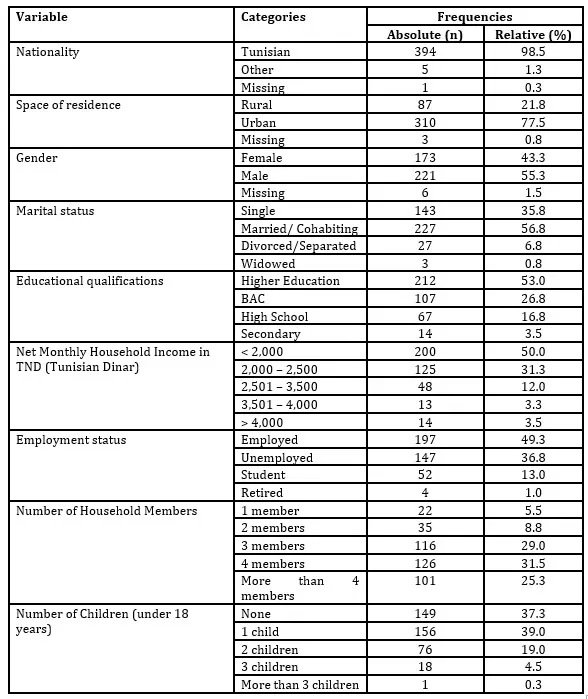
According to Table 1, of the 400 participants, the majority were Tunisian (98.5%), female (55.3%), and resided in urban areas (77.5%). Their ages ranged from 18 to 68, encompassing a wide span that includes multiple generations, with an average age of approximately 32 years (SD = 31.9), indicating a sample dominated by young adults.
Table 1: Consumer profile (N = 400)
Regarding marital status, most participants are in stable relationships, with more than half (56.8%) either married or living with a partner. Regarding educational qualifications, a significant number of participants (53.0%) have attained higher education, and 26.8% have completed their BAC (Baccalauréat is the final year of high school’s diploma). Nearly half of the survey’s respondents (49.3%) are employed, as shown in Table 1. This shows a notable level of economic engagement in the community, which is not far from Tunisia’s employment rate of 46.3% (AllAfrica, 2024). However, 36.8% of participants are unemployed, indicating a serious economic issue affecting the group. This rate is significantly higher than that of the Tunisian population, which had an unemployment rate of approximately 15.8% in 2024 (Statista, 2024). Around half of the participants reported that their household earnings were less than 2000 Tunisian Dinars (TND), suggesting that many are in the lower to middle-income range. This suggests that many people face economic challenges, which can impact their financial security and access to basic necessities, including organic food. Given the high unemployment rate and the young age of many individuals in this group, this income level may significantly affect their overall quality of life and organic food consumption. The data show that many respondents live in larger households, with 31.5% having four members and 29.0% having three members (Table 1). Together, these groups represent a significant portion of the surveyed sample, indicating that multi-member households are common in the sample studied. A considerable percentage of households (37.3%) do not have children under 18 years old, while the largest group (39.0%) has one child (Table 1). This suggests that many families may be in the early stages of child rearing, which could influence their spending habits and priorities, particularly related to organic food consumption. Overall, the demographics regarding household size and the presence of children can significantly influence family needs and preferences in food purchases.
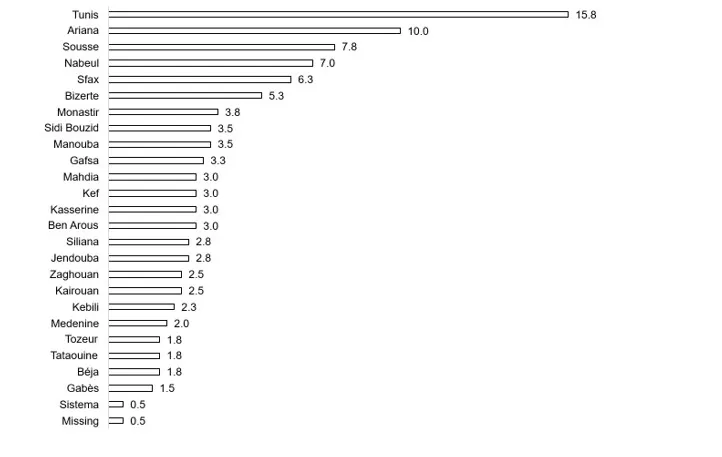
Fig 1. Distribution of respondents by district of residence (%)
Tunis has the highest percentage of respondents (15.8%), followed by Ariana (10%) and Sousse (7.8%). Other notable districts include Nabeul (7%), Sfax (6.3%), and Bizerte (5.3%). The lower percentages are observed in Monastir (3.8%), Sidi Bouzid (3.5%), Manouba (3.5%), and Gafsa (3.3%), and in the other 14 districts with lower percentages (Figure 1).
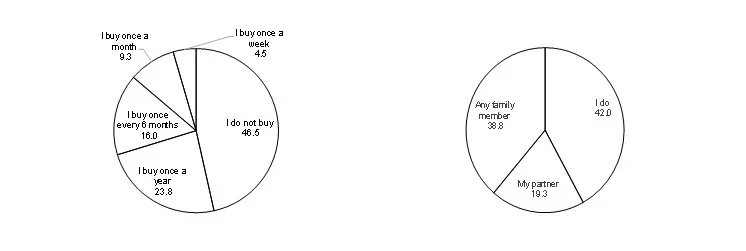
Approximately 46.5% of respondents do not purchase any organic products. Among those who do, most purchase them just once a year (23.8%), which may suggest that they are not fully aware of the benefits or simply cannot easily access these products. The number of people who regularly purchase organic items, such as once a month or every week, is relatively low (Figure 2). Most respondents decide to purchase organic products themselves (42.0%). However, it is also clear that family dynamics play a significant role in influencing people’s purchasing decisions. About 38.8% said that any family member could make their own choices. On the other hand, 9.3% rely on their partners to make decisions about organic purchases (Figure 3).
Fig 2. Frequency of organic food purchases (%) Fig 3. Decision to purchase organicproducts (%)
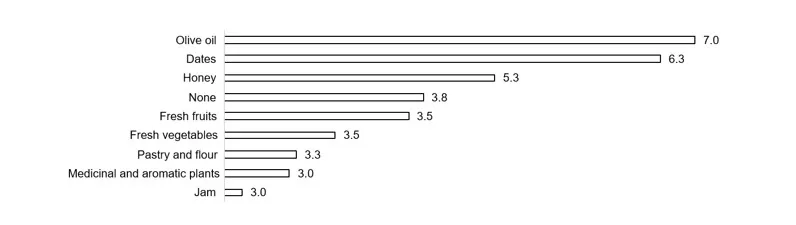
Olive oil is the most popular organic food purchase (54.5%), likely due to its health benefits and its appeal in Tunisia’s cuisine. Dates are also popular, with 50.5% of respondents buying them, reflecting their cultural significance in Tunisia and their high nutritional value. Organic honey is chosen by 31.3% of participants, indicating a preference for natural sweeteners. Interest in organic fresh fruits (21.3%) and vegetables (12.8%) is lower. Medicinal and aromatic plants have the least interest (7.5%), due to limited awareness of their benefits. Jam and pastry products are rarely purchased in organic forms, with very low percentages. 23% of respondents do not buy any of the listed organic products, highlighting a significant segment of the population that may be disengaged from organic consumption. Overall, while there is a clear preference for certain organic items, there is a need to address the barriers preventing the purchase of organic food.
Fig 4. Organic food purchased (%)
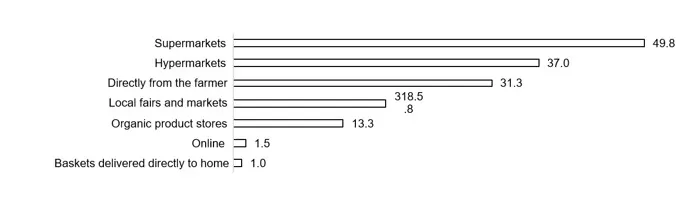
According to the results presented in Figure 5, the most popular places for purchasing organic products are supermarkets (49.8%) and hypermarkets (37.0%). Fewer people buy directly from farmers (31.3%). Local fairs or markets only attract 18.5% of the buyers. The least interesting place among them is the organic product store with 13.3%. Additionally, a small number of people rely on delivery services for baskets (1.0%) or purchase online (1.5%). This suggests that while many prefer shopping at supermarkets and hypermarkets, there may be less interest in specialized options for organic products, possibly due to these options being more accessible in larger cities and wealthier neighborhoods.
Fig 5. Purchase location (%)
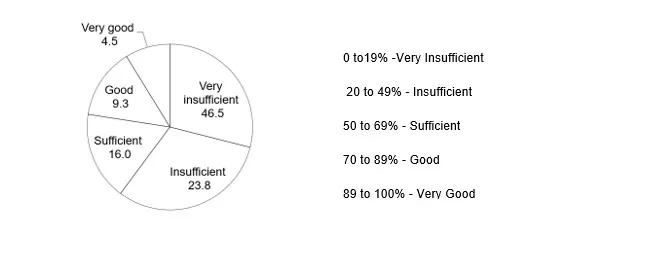
Figure 6 shows significant concentration in the lower categories, with 29% of participants rated as “Very Insufficient” and 31.3% as “Insufficient”, indicating that over 60% of respondents scored below the satisfactory level of 50%.
Fig 6. Classification of organic food knowledge (%)
These results reveal a significant lack of knowledge about organic food among most participants. Meanwhile, 17.3% achieved a “Sufficient” rating, indicating an average performance within the 50–69% range. Higher performance levels were less common, with only 13.8% of participants rated as “Good” and just 8.8% reaching the “Very Good” category by scoring above 89%. The cumulative percentages reveal that nearly 77.5% of participants fell short of the “Good” performance range.
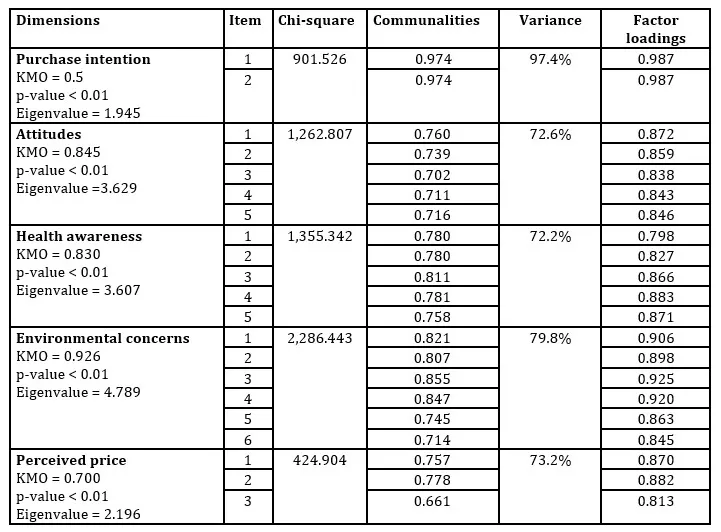
After assigning each item to its corresponding dimension of organic food purchase intention’s determinants, an exploratory factor analysis was conducted for five dimensions: Purchase Intention, Attitudes, Health Awareness, Environmental Concerns, and Perceived Price. This analysis examines the suitability of the data for Principal Component Analysis (PCA) and the variance explained by each factor.
The results in Table 2 indicate that each dimension is well-suited for factor analysis, as shown by the Kaiser-Meyer-Olkin (KMO) values and the significance of Bartlett’s test. The Purchase Intention dimension, for instance, has a KMO value of 0.500 and explains 97.4% of the variation, while the Attitudes dimension has a strong KMO value of 0.845, with a single factor explaining 72.6% of the variance. Similarly, Health Awareness, Environmental Concerns, and Perceived Price exhibit strong factor structures, with KMO values of 0.830, 0.926, and 0.700, respectively, indicating that the data are well-suited for factor extraction. The high factor loadings across all dimensions confirm that the variables within each construct effectively measure the intended concept.
Table 2: Results of the Exploratory Factorial Analysis
The factor analysis shows that each dimension, namely Purchase Intention, Attitudes, Health Awareness, Environmental Concerns, and Perceived Price, is clearly captured by a single factor with high loadings and strong reliability. This indicates that the measures used are consistent and effectively reflect consumers’ views on organic food. The factor analysis in the study aligns with findings from previous research conducted in Portugal (Santiago et al., 2024 and 2025); both studies highlight the importance of attitudes, health awareness, and environmental concerns in shaping purchase intentions.
In the current study, these dimensions are captured by single factors with high loadings and strong reliability, indicating consistent consumer views. Santiago et al. (2024, 2025) research emphasizes trust and cultural factors as determinants, while both studies underscore the role of health awareness in organic food choices.
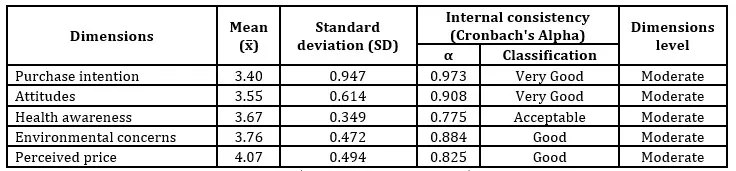
To ensure the consistency and reliability of the measured dimensions, mean scores, standard deviations, and Cronbach’s Alpha values were examined (Table 3). The findings indicate strong internal consistency across all dimensions, with Cronbach’s Alpha values ranging from 0.775 to 0.973. The Purchase Intention dimension had the highest reliability, with a Cronbach’s Alpha of 0.973 and a mean score of 3.40, indicating a highly stable measurement.
The Attitudes dimension also demonstrated strong reliability (Cronbach’s Alpha = 0.908) with an average score of 3.55, reflecting relatively consistent consumer perceptions. Although the Health Awareness dimension had the lowest Cronbach’s Alpha (0.775), it remained within an acceptable range, suggesting a reliable measure. Meanwhile, Environmental Concerns (Cronbach’s Alpha = 0.884; mean = 3.76) and Perceived Price (Cronbach’s Alpha = 0.825; mean = 4.07) also exhibited strong internal consistency. These results confirm that the items within each dimension reliably capture consumer perspectives on organic food.
Table 3: Characterization and internal consistency of the dimensions
Legend: from 1 to 3,44: Below moderate; from 3,45 to 4,44: Moderate; from 4,45 to 7: Above moderate
The regression analysis (Table 4) aimed to predict Purchase Intention using a forward selection method, where predictors are added one by one based on their statistical significance (p-value ≤ 0.05). In Model 1, Attitudes was the first variable included, yielding an R² of 0.644, meaning that 64.4% of the variance in purchase intention was explained by attitudes alone. Model 2 introduced Health Awareness, which slightly improved the model’s explanatory power (R² = 0.649), indicating that health consciousness contributes to purchase intention, albeit to a lesser extent than attitudes. Finally, Model 3 added Perceived Price, further increasing R² to 0.654, suggesting that price perception also plays a role in shaping consumer purchase intention. The Adjusted R² rose from 0.643 to 0.652, and the standard error decreased from 0.625 to 0.618, indicating improved model accuracy with each added variable.
Table 4: Models’ summary of regression analysis
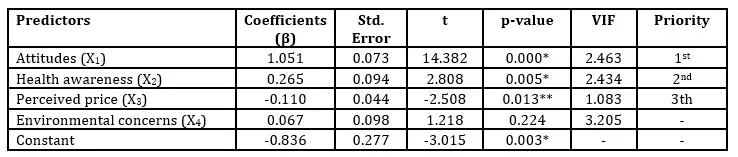
According to Table 5, Attitudes (X₁) emerged as the strongest predictor of organic food purchasing behavior, with the highest coefficient (β₁ = 1.051) and statistical significance (p-value < 0.001). This suggests that for each unit increase in a positive attitude toward organic food, purchase intention increases by approximately 1.05 units, holding other factors constant. Health awareness (X₂) is the second most influential factor (β₂ = 0.265; p-value = 0.005), indicating that more health-conscious consumers are significantly more likely to purchase organic foods, although its impact is substantially smaller than attitudes. Perceived price (X₃) has a significant negative effect (β₃ = -0.110; p-value = 0.013), confirming that higher perceived prices discourage organic food purchases, aligning with the economic barriers mentioned earlier. Meanwhile, environmental concerns (X₄) were not included in the final model due to non-significance (p-value = 0.224), reinforcing the fact that environmental concerns play a lesser role in Tunisian organic food consumption compared to health factors.
The final regression equation is: Y = -0.836 + 1.051X1 + 0.265X2-0.110X3
The model diagnostics reveal some multicollinearity among predictors, with Variance Inflation Factor (VIF) values indicating moderate multicollinearity for Attitudes (VIF = 2.463) and Health Awareness (VIF = 2.434). In contrast, Environmental Concerns exhibits the highest multicollinearity (VIF = 3.205), which may explain its non-significance in the model. Perceived Price, however, exhibits minimal correlation with other variables (VIF = 1.083). Although these VIF values are below the typical thresholds of concern (5 or 10), they highlight potential interactions among predictors. Practically, these findings suggest that marketing and policy initiatives should focus on changing consumer attitudes through education and positive messaging, as attitudes have the highest impact on organic food purchases. Additionally, emphasizing the health benefits of organic products can have a moderate influence, while addressing price concerns through subsidies, competitive pricing strategies, or communicating the value proposition can mitigate barriers to purchase decisions. The negative constant term (β = -0.836, p-value = 0.003) indicates a baseline tendency against organic food consumption when all predictors are at zero, underscoring the need for active interventions to promote organic food consumption in Tunisia.
Table 5: Estimated regression with purchase intention as the dependent variable
* Significant at the 1% significance level.
** Significant at the 5% significance level.
Compared to a study conducted in Portugal (Santiago et al., 2024, 2025), both studies found attitudes to be the strongest predictor of organic food purchase intention, emphasizing the role of positive perceptions in driving consumer behavior. However, notable differences emerge between the findings. In their study, Environmental Concerns ranked as the second most influential factor (β = 0.145, p-value < 0.05), whereas, in this study, it was excluded due to insignificance, suggesting that environmental motivations play a greater role among Portuguese consumers than Tunisian consumers. Health Awareness was significant in both studies, but its relative importance differed, being the second strongest predictor in this model, while, in Santiago et al. (2024 and 2025) study, it ranked third. Perceived Price also showed contrasting effects; while it had a negative influence in this study, indicating that higher prices discourage purchases, it was positively associated with purchase intention in the Portuguese study, implying that consumers in Portugal may view price as a quality indicator. Additionally, the model exhibited slightly stronger explanatory power (R² = 0.654) compared to Santiago et al. (2024 and 2025) (R² = 0.579), possibly due to regional differences in perceptions of organic food and market conditions. These variations underscore the impact of cultural, economic, and market-specific factors on the purchasing behavior of organic food.
Conclusion
Consumer purchasing choices, the availability of organic food purchasing locations, and knowledge about organic food are key determinants of organic food consumption in Tunisia. Notably, 23% of respondents reported that they do not purchase any organic products, highlighting a significant portion of the population that either remains disengaged from organic consumption or faces limited access to organic options. This lack of engagement may also reflect insufficient availability of organic products. As a result, supermarkets and hypermarkets dominate the organic food market, while direct sales by farmers and organic food stores remain limited. Moreover, over 60% of participants demonstrated limited knowledge about organic food; this significant knowledge gap likely affects consumer attitudes and purchase intentions, acting as a major barrier to the adoption of organic food.
By studying the factors that influence purchase intention, we can identify which ones play the most significant role in driving organic food consumption. The linear regression revealed that attitudes toward organic food is the strongest predictor of purchase behavior, with a highly significant and positive effect. This indicates that consumers with more favorable attitudes are substantially more likely to intend to purchase organic products. Health awareness also emerged as a meaningful factor, although its impact is notably smaller, suggesting that health-conscious individuals are more likely to explore organic food choices. On the other hand, perceived price negatively affects purchase intention, confirming that higher prices continue to act as a barrier to the consumption of organic food. Notably, environmental concerns had no reliable connection with the intention to buy organic food, reinforcing the idea that health and personal benefits carry more weight than environmental motivations. These findings highlight the importance of shaping positive consumer attitudes and addressing concerns related to price to encourage organic food consumption.
To increase organic food consumption in Tunisia, it is essential to raise awareness through education, enabling people to understand its benefits. Making organic products more affordable, either through subsidies or better production methods, can help more people buy them. Expanding where and how organic food is sold, along with offering a wider variety, will also encourage consumption. Highlighting the health benefits can make organic food more appealing. Additionally, creating a central marketplace for organic products and introducing simpler certification methods could make it easier for consumers to find and trust organic options.
While this study used a cross-sectional design to analyze the factors influencing organic food consumption at a specific moment in time, a longitudinal study could provide deeper insights by tracking possible changes in consumer behavior over time. A longitudinal study would help assess the long-term effects of awareness campaigns, pricing strategies, and policy interventions on organic food consumption. It would also capture shifts in consumer attitudes, economic conditions, and market trends, providing a more dynamic understanding of the factors that drive or hinder the adoption of organic food. Future research employing this method could more effectively evaluate the effectiveness of strategies aimed at increasing organic food consumption in Tunisia.
Further research should examine how educational campaigns influence consumer decisions. It would also be valuable to explore how certification labels affect trust and whether increased availability in retail stores could lead to higher sales of organic food. As online shopping continues to expand, studying the impact of digital marketing and e-commerce on organic food purchases could provide useful insights.
Acknowledgments
This work was supported by national funds through FCT/MCTES (PIDDAC): CIMO, UIDB/00690/2020 (DOI: 10.54499/UIDB/00690/2020) and UIDP/00690/2020 (DOI: 10.54499/UIDP/00690/2020); and SusTEC, LA/P/0007/2020 (DOI: 10.54499/LA/P/0007/2020).
References
Abdallah, A.-H., Abdul-Rahman, A., & Issahaku, G. (2021). Sustainable Agricultural Practices, Farm Income and Food Security among Rural Households in Africa, Environment, Development and Sustainability, 23, 17668–17701.
Artino, A.R., La Rochelle, J.S., Dezee, K.J., & Gehlbach, H. (2014). Developing questionnaires for educational research: AMEE Guide No. 87, Medical Teacher, 36 (6), 463-474.
Babbie, E.R. (2020). The practice of social research, Cengage Learning, Hampshire, United Kingdom.
Baranski, M., Srednicka-Tober, D., Volakakis, N., Seal, C., Sanderson, R., Stewart, G. B., Benbrook, C., Biavati, B., Markellou, E., Giotis, C., Gromadzka-Ostrowska, J., Rembiałkowska, E., Skwarło-Sońta, K., Tahvonen, R., Janovská, D., Niggli, U., Nicot, P., & Leifert, C. (2014). Higher antioxidant and lower cadmium concentrations and lower incidence of pesticide residues in organically grown crops: A systematic literature review and meta-analyses, British Journal of Nutrition, 112 (5), 794-811.
Bartlett, M.S. (1950). Tests of significance in factor analysis, British Journal of Psychology, 3 (2), 77-85.
Bazhan, M., Sabet, S., & Borumandnia, N. (2023). Development and validation of a questionnaire to examine determinants of consumer intentions to purchase organic food, BMC Nutrition, 9 (2023), 245-260.
Bengtsson, J., Ahnström, J., & Weibull, A. C. (2005). The effects of organic agriculture on biodiversity and abundance: A meta-analysis, Journal of Applied Ecology, 42 (2), 261-269.
Britto, R., Suriyan, J., Vijay, B., Thalha, N., Elango, S., Manivel, R., & Jeyasuresh, S. (2017). Organic food and health: A systematic review, Journal of Community Medicine & Health Education, 7 (3), 1000532.
Brown, T.A. (2015). Confirmatory factor analysis for applied research, Guilford Press, New York.
Chen, M. F. (2007). Consumer attitudes and purchase intentions in relation to organic foods in Taiwan: Moderating effects of food-related personality traits, Food Quality and Preference, 18 (7), 1008-1021.
Creswell, J.W., & Creswell, J.D. (2018). Research design: Qualitative, quantitative, and mixed methods approach, SAGE Publications, Singapore.
DeVellis, R.F. (2017). Scale development: Theory and applications, SAGE Publications, Thousand Oaks, California.
El Bilali H. (2018). Relation between innovation and sustainability in the agro-food syste, Italian Journal of Food Science, 30 (2), 200-225.
El Ghmari, H,, Harbouze, R., El Bilali, H. (2022). Pathways of Transition to Organic Agriculture in Morocco, World, 3, 718-735.
Etikan, I., Musa, S.A., & Alkassim, R.S. (2016). Comparison of convenience sampling and purposive sampling, American Journal of Theoretical and Applied Statistics, 5 (1), 1-4.
(2024). The Tunis food system in the face of crises: fragility or resilience? [Online], [Retrieved September 22, 2025], https://https://openknowledge.fao.org/server/api/core/bitstreams/6a4304aa-0372-48c3-9bf6-df848d24fe57/content.
Field, A. (2018). Discovering Statistics Using IBM SPSS Statistics, SAGE Publications, Newbury Park.
Gracia, A., & de Magistris, T. (2008). The demand for organic foods in the South of Italy: A discrete choice model, Food Policy, 33 (5), 386-396.
Hair, J.F., Black, W.C., Babin, B.J., & Anderson, R.E. (2019). Multivariate data analysis. Cengage Learning, Hampshire, United Kingdom.
Hair, J.F., Black, W.C., Babin, B.J., & Anderson, R.E. (2019). Multivariate data analysis, Cengage Learning, Hampshire, United Kingdom.
Harrison, R., Newholm, T., & Shaw, D. (2005). The ethical consumer, Sage Publications.
Institut National de la Statistique (INS) (2024). Tunisian population statistics. [Online], [Retrieved October 20, 2024] https://www.ins.tn
International Federation of Organic Agriculture Movements (IFOAM) – Organics International. (2020). Principles of organic agriculture. [Online], [Retrieved July 16, 2024], https://www.ifoam.bio/sites/default/files/2020-03/poa_english_web.pdf
Kaiser, H. F. (1974). An index of factorial simplicity, Psychometrika, 39 (1), 31–36.
Kapelari, S., Alexopoulos, G., Moussouri, T., Sagmeister, K.J., & Stampfer, F. (2020). Food Heritage Makes a Difference: The Importance of Cultural Knowledge for Improving Education for Sustainable Food Choices. Sustainability, 12, 1509.
Kapelari, S., Alexopoulos, G., Moussouri, T., Sagmeister, K.J., Stampfer, F. (2020). Food Heritage Makes a Difference: The Importance of Cultural Knowledge for Improving Education for Sustainable Food Choices. Sustainability, 12, 1509.
Lockie, S., Lyons, K., Lawrence, G., & Grice, J. (2002). Choosing organics: A path analysis of factors underlying the selection of organic food among Australian consumers, Appetite, 43 (2), 135-146.
Lucan, S.C., Maroko, A.R., Sanon, O., Frias, R., Schechter, C.B. (2015). Urban farmers’ markets: accessibility, offerings, and produce variety, quality, and price compared to nearby stores, Appetite, 90, 23-30.
McEachern, M.G., & McClean, P. (2002). Organic purchasing motivations and attitudes: Are they ethical? International Journal of Consumer Studies, 26 (2), 85-92.
Montgomery, D.C., Peck, E.A., & Vining, G.G. (2021). Introduction to linear regression analysis, Wiley, Hoboken, New Jersey.
Mtimet, N., Souissi, A., & Mhamdi, N. (2020). Tunisian consumers perception and behavior towards organic food products, Mediterranean Journal of Economics, Agriculture, Environment and Food, 1 (1), 3-18.
Ossowska, L., Janiszewska, D., Kwiatkowski, G, &; Oklevik, O. (2024). Local Food Production Based on Culinary Heritage: A Way to Local Sustainability. Sustainability, 16, 11310.
Pallant, J. (2020). SPSS survival manual: A step-by-step guide to data analysis using IBM SPSS, Routledge, London.
Pimentel, D., Hepperly, P., Hanson, J., Douds, D., & Seidel, R. (2005). Environmental, energetic, and economic comparisons of organic and conventional farming systems, Bioscience, 55 (7), 573-582.
Reganold, J. P., & Wachter, J. M. (2016). Organic agriculture in the twenty-first century. Nature Plants, 2, 15221.
Santiago, C.L.N., Fernandes, A.J.G., & Ribeiro, M.I.B. (2024). Impact of sustainable consumer attitudes and behaviors on the intention to purchase organic products in Portugal: A survey study, Proceedings of the 44th International Business Information Management Association (IBIMA) Conference, ISBN 979-8-9867719-4-6, 27–28 November 2024, 1947–1961, Granada, Spain.
Santiago, C.L.N., Fernandes, A.J.G., & Ribeiro, M.I.B. (2025). Determinants of the intention to purchase organic food products among Portuguese consumers, Journal of Marketing Research and Case Studies, 2025, 246894.
Schäufele, I., & Hamm, U. (2017). Consumers’ perceptions, preferences and willingness-to-pay for wine with sustainability characteristics: A review, Journal of Cleaner Production, 147, 379-394
Smith-Spangler, C., Brandeau, M. L., Hunter, G. E., Bavinger, J. C., Pearson, M., Eschbach, P. J., … & Bravata, D. M. (2012). Are organic foods safer or healthier than conventional alternatives? A systematic review, Annals of Internal Medicine, 157 (5), 348-366.
Tavakol, M., & Dennick, R. (2011). Making sense of Cronbach’s alpha, International Journal of Medical Education, 2, 53-55.
Thogersen, J. (2010. Country Differences in Sustainable Consumption: The Case of Organic Food, Journal of Macromarketing, 30 (2),171-185.
S. Department of Agriculture (USDA). (2025). Organic agriculture. [Online], [Retrieved September 22, 2025], https://www.ers.usda.gov/topics/natural-resources-environment/organic-agriculture
Zheng, Z., Henneberry, S.R., Zhao, Y., & Gao, Y. (2015). Income Growth, Urbanization, and Food Demand in China, 2015 AAEA & WAEA Joint Annual Meeting, July 26-28, San Francisco, California 205105, Agricultural and Applied Economics Association.