Information and Communications Technology (ICT) has been widely regarded as an enabler to boost the competitive level of SMEs in the business arena. Notwithstanding the many efforts undertaken by governments to promote ICT adoption among SMEs across different types of industries, many of them failed to reap this benefit evenly. This problem is prevalent among the SMEs in the Asia Pacific region and Malaysia is no exception. This paper therefore investigates industry types as a moderating factor that may exert significant effects on the adoption of ICT among SMEs in Malaysia. Based on the extended Diffusion of Technology Innovation model, a questionnaire-based survey was conducted on 406 managers/owners of SMEs in the southern region of Malaysia. The findings suggest that different type of SMEs do affect the strength relationship between some predictor variables and ICT adoption intention. The findings are discussed and interpreted to provide key implications to the policy makers in general and the SMEs in particular.
Keywords: ICT Adoption, UTAUT Model, Small and Medium Enterprises, Malaysia
Introduction
There appears to be general consensus that Internet-based Information and Communications Technology (ICT) adoption can bring enormous benefits to the small and medium enterprises (SMEs) either as producers and/or users of ICT. These advantages include supporting business transformation, closer working relationship among value chain partners, increased productivity, enhanced efficiency, greater access to market information and knowledge, and more importantly, the ability to reach new clients from either locally, regionally or globally (Abouzeedan and Busler, 2002; Kotelnikov, 2007; Tornatzky and Klein, 1982).
Therefore, their abilities to put in place the right processes and tools through making decisions on information technology (IT) adoption would place them in an advantageous position of executing and achieving their business strategies and targets as well as to respond effectively and efficiently to market changes.
As such, ICT adoption has been recognised as a key pillar of success of this segment, more so in view of the important role of SMEs as the economic backbone of many economies. In Malaysia, SMEs accounted for 99.2% or 518,996 of total business establishments, out of which 448,931 or 86.5% are service SMEs which include the ICT industry (NSDC, 2005). Large companies only comprise of 0.8% or 4,136 of all establishments in the country.
The SMEs, on an overall, are contributing to about 32% of the country’s annual gross domestic product (GDP) and employ 61.5% of the labour force, which translates to about 5.6 million job opportunities. Its importance is elevated when the government expects the contribution of the SMEs to increase to 37%, its share of total exports to 22% (Leong and Wong, 2007) and to provide job opportunities to 6.2 million people by 2010.
Realizing the importance of this segment towards the prosperity of the nation and the various benefits brought about by ICT adoption, the Malaysian government has rendered serious attention since the Seventh Economic Plan (1996-2000) on developing and strengthening its ICT infrastructure in order to create an environment conducive for the growth of SMEs and entrepreneurs. One of the grand initiatives undertaken was the establishment of the National IT Council (NITC) in 1994 primarily to formulate and implement the national IT agenda in order to expedite the transformation process from an industrial society to an advanced information and knowledge-based society by bypassing developed society, a vision that the country wishes to achieve in the year 2020. In addition, the Multimedia Super Corridor was conceptualised in 1996 to expedite the transformation process.
Soft loans, grants and incentives are channeled towards the SMEs through government, government agencies such as the Small and Medium Industries Development Corporation (SMIDEC) and financial institutions in order to enhance the growth of these enterprises. For example, the Finance Ministry has recently announced a RM1.2 billion financing facility for SMEs, out of which RM700 million is allocated for modernisation purpose, while the remaining is allocated for SMEs to upgrade their equipment and to modernise operations, including the use of ICT in their business operations. Another organisation, the MCA ICT Resource Centre (MIRC) was established to assist the SMEs to improve their businesses and leverage on the use of ICT solution and advanced business processes that enable them to remain competitive in this era of globalisation (Raj, 2007). The MIRC provides significant help to the SMEs in terms of technical assistance and ICT infrastructure setup. In summary, ICT adoption has been determined as the turning point for many innovative Malaysian SMEs to enhance their competitive level in the market.
However, notwithstanding the various benefits of ICT adoption and incentives provided by the government, its agencies and financial institutions, Malaysian SMEs might be apprehensive towards adopting ICT. They might face major constraints such as poor infrastructure, limited knowledge of ICT, high costs of investment, and probably ignorance on the usefulness of technology. These barriers are in fact found to be prevalent among the SMEs of developed countries as well (Duan et. al., 2002; Fink and Disterer, 2006; Gharavi et. al., 2004). At the same time, Kotelnikov (2007) observes that not all SMEs need to adopt ICT tools to the same degree of sophistication as different industries use ICT differently and thus will adopt it at different pace. For example, the SMEs involved in the manufacturing sector may adopt more complex tools than the service-based SMEs such as the enterprise resource planning or inventory management software. It is against this backdrop that this study aims to investigate industry types as the moderating effect influencing the diffusion of technological innovation and ICT adoption among the SMEs. The findings of this paper will help Malaysian government identify appropriate measures to assist SMEs from different industry types in adopting ICT. Thus, Malaysian government would achieve Vision 2020. The next section reviews literature pertinent to this study.
Literature Review
Diffusion of Technology Innovation (DOI)
Introduced by Rogers (1983), the Diffusion of Technology Innovation (DOI) is used to describe the patterns of technological innovation adoption, explain the mechanism and assist in predicting whether and how a new invention will be successful. In short, DOI is concerned with the manner in which new technological ideas migrate from creation to use [47].
Roger (1983) proposes five perceived characteristics of innovation in his DOI model which consists of relative advantage, compatibility, complexity, trialability and observability. As shown in Table 1, many researchers have adopted this model along with its characteristics to study the diffusion of innovation.
Table 1: Constructs and Examples of Research Conducted Using the DOI Mode
Tan and colleagues (Tan. et. al., 2009a, Tan. et. al., 2009b, Tan and Eze, 2008) provide interesting observations in their research concerning the constructs and applications of DOI. The DOI remains a popular model in investigating diffusion of innovation across different industries (Kendall et. al., 2001; Limthongchai and Speece, 2003). Many researchers tend to combine the constructs of various models to investigate the behaviour of users in adopting new technological innovation, particularly the Theory of Reasoned Action, Theory of Planned Behaviour and the Technology Acceptance Model (Benham & Raymond, 1996; Limthongchai and Speece, 2003, Tan and Teo, 2000). More interestingly, different results were derived at from the studies based upon the interests of the researchers. Tan and colleagues further observe that even studies using DOI alone yielded different results, particularly on the issues of interest to this research (Kendall et. al., 2001; Limthongchai and Speece, 2003) although the countries investigated share close geographical proximity with Malaysia.
In addition, many studies have adopted security (Aljitri et. al., 2003; Allan et. al., 2003; Beale, 1999; Bhimani, 1996; Kogilah et. al., 2008; Levy et. al., 2005; Light, 2001, Limthongchai and Speece, 2003 ; McCloskey, 2004; Mendo and Fitzgerald, 2005; Ratnasingam, 2001; Rose et. al., 1999; Tan et. al., 2009a; Tan et. al., 2009b; Tan and Eze, 2008; Yeung et. al, 2003) and/or costs (Allan et. al., 2003; Ernst and Young, 2001; Gharavi and Cheng, 2004; Hill and Jones, 2001; James, 2003; Levy and Worrall, 2005; OECD, 2000; Sambrook, 2003; Tan et. al., 2009a, Tan et. al., 2009b; Tan et. al., In Press; Tan et. al., 2008; Yeung etl al., 2003) as additional measures of evaluating new technological innovations. As such, these measures are incorporated into the study along with the five characteristics of the DOI model.
ICT Adoption
Rogers (1983) defines adoption as a decision to make full use of an innovation as the best course of action whereas rejection is a decision not to adopt an available innovation. In the context of this study, adoption is defined as the decision by the SMEs to use ICT to communicate and/or conduct businesses with stakeholders. In contrast, rejection means decision not to adopt ICT in business operations of the SMEs.
Industry Types
Industry types remain one of the popular constructs in examining technological adoption intention (Allan et. al., 2003; Rashid and Ai-Qirim, 2001; Yeung et. al., 2003). It has been identified that both the industry types (manufacturing and service) express intention to adopt ICT, with the service-based SMEs demonstrates greater intention (Tan et. al., In Press). However, the moderating effect of industry types on diffusion of technological innovation and ICT adoption remains to be discovered, which presents a significant gap in knowledge. This is the primary objective of this study.
Development of Research Model and Research Hypotheses
Research Framework Figure 1 illustrates the resulting research framework based on the extensive review of literature.
Fig 1. Research Framework
Previous scholars have investigated industry type on ICT adoption. Yeung et. al. (2003) conducted a survey among Hong Kong SMEs by separating SMEs into service and manufacturing companies and size of companies. They found that large enterprises have adopted e-commerce application for daily business activities but small and medium- sized enterprises still lag behind. Shiels et. al. (2003) studied the implications of ICT adoption from Europe SMEs by case study and highlighted that characteristics of firm and industry sector are contributory factors to the extent of adoption and exploitation of ICTs by SMEs to support business processes. Bradford and Florin (2003) studied innovation diffusion factors in enterprise resource planning system by considering organisational characteristics such as type of industry, experience with ERP, and size of employees.
Based upon the research framework and objective of this study, the following hypotheses are proposed:
H1: Industry type does not significantly moderate the relationship between relative advantage and ICT adoption
H2: Industry type does not significantly moderate the relationship between compatibility and ICT adoption
H3: Industry type does not significantly moderate the relationship between trialability and ICT adoption
H4: Industry type does not significantly moderate the relationship between observability and ICT adoption
H5: Industry type does not significantly moderate the relationship between complexity and ICT adoption
H6: Industry type does not significantly moderate the relationship between security and ICT adoption
H7: Industry type does not significantly moderate the relationship between cost and ICT adoption
The next section presents the methodology employed in this study.
Research Methodology
The study considers SMEs in the southern region of Peninsular Malaysia only, namely the states of Melaka and Johor. There are 75,735 or 14.6% of SMEs are located in this region (National SME Council, 2006).
The list of SMEs was obtained from the SMIDEC’s website and filtered to include only SMEs from these two states. Using cluster sampling, every third consecutive company in the list is contacted by phone to request for permission to participate in this study. This explanatory survey considers only owners and/or managers of these enterprises since they oversee the entire operations of their firms and therefore, they are in better positions to understand the future trend and strategies of their enterprises. Upon receiving their consents, questionnaires with self-stamped envelope are sent to them.
The questionnaire consists of three sections. Section one contains demographic information of the SMEs in which type of industry is one of the questions asked. Section two comprises of 42 items measuring the seven characteristics of diffusion of innovation, using a 6-point Likert scale ranging from 1 = strongly disagree to 6 = strongly agree which were drawn from literature reviews and prior surveys. Section three has a question on the timeframe of ICT adoption with responses ranging from 1 = More than 6 years, 2 = Next 5-6 years, 3 = Next 4-5 years, 4 = Next 2-3 years, 5 = Use within next 1 year and 6 = Current.
Following the advice by Cooper and Schindler (2003), the questionnaire was piloted on 25 owners and/or managers of SMEs in Melaka so as to establish face validity. The seven characteristics have Cronbach Alpha values of between 0.74 and 0.86 (Table 2), exhibiting a fairly high degree of consistency. Further, the factor analysis results (Table 3) explain 62% of the variances associated with the seven characteristics, implying an acceptable degree of construct validity. With eigenvalues greater than 1.0, none of the attributes are dropped and all of them loaded in their respective dimensions.
Table 2: Coefficient Alpha Values and Number of Items for Constructs
Table 3: Total Variance Explained
A total of 406 owners and/or managers agree to participate in the survey, out of which 237 or 58.4% of the SMEs are from the state of Johor and the remaining SMEs are from Melaka. The sample size is considered adequate since Sekaran (2003) opines that only 384 samples are required for a population of 1 million.
The next section presents the results of the study.
Data Analyses
Table 4 indicates that industry type does not moderate the relationship between relative advantage and ICT adoption, in view of the p-value of Model 3 which is greater than 0.05. Similarly, no significant association is found between relative advantage and ICT adoption. H1 is accepted.
Table 4: Industry Type with Relative Advantage Modelsa Predictors: (Constant), Relative advantage, b Predictors: (Constant), Relative advantage, Industry Type c Predictors: (Constant), Relative advantage, Industry Type, Interaction
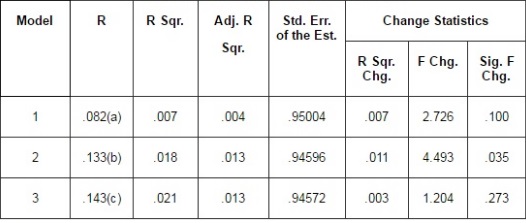
Table 5 shows that although no significant association was found between compatibility and ICT adoption, industry type does moderate the relationship between compatibility and ICT adoption. The p-value of Model 3 indicates that the interaction has contributed 1.1% of the variance in ICT adoption. The result is further supported by Model 3 in Table 6. H2 is rejected
Table 5: Industry Type with Compatibility Modelsa Predictors: (Constant), Compatibility b Predictors: (Constant), Compatibility, Industry Type c Predictors: (Constant), Compatibility, Industry Type, Interaction
Table 6: Coefficients(a) of Industry Type with Compatibility Modelsa Dependent Variable: ICT Adoption Intention
Table 7 indicates that industry type does not moderate trialability on ICT adoption although significant association was found between trialability and ICT adoption. H3 is accepted.
Table 7: Industry Type with Trialability Modelsa Predictors: (Constant), Trialability b Predictors: (Constant), Trialability, Industry Type c Predictors: (Constant), Trialability, Industry Type, Interaction
Table 8 indicates that industry type does not moderate observability on ICT adoption, neither does a significant association exists between observability and ICT adoption. H4 is accepted.
Table 8: Industry Type with Observability Models
a Predictors: (Constant), Observability b Predictors: (Constant), Observability, Industry Type c Predictors: (Constant), Observability, Industry Type, Interaction
As presented in Table 9, industry type does not moderate complexity on ICT adoption. However, a significant association exists between complexity and ICT adoption. Therefore, H5 is accepted.
Table 9: Industry Type with Complexity Modelsa Predictors: (Constant), Complexity b Predictors: (Constant), Complexity, Industry Type c Predictors: (Constant), Complexity, Industry Type, Interaction
Table 10 indicates that industry type does not moderate security on ICT adoption although a significant association is recorded between security and ICT adoption. Therefore, H6 is accepted.
Table 10: Industry Type with Security Models
a Predictors: (Constant), Security b Predictors: (Constant), Security, Industry Type c Predictors: (Constant), Security, Industry Type, Interaction
Table 11 indicates that industry type does not moderate costs on ICT adoption, neither does a significant association exists between the two variables. Therefore, H7 is accepted.
Table 11: Industry Type with Cost Modelsa Predictors: (Constant), Cost
b Predictors: (Constant), Cost, Industry Type c Predictors: (Constant), Cost, Industry Type, Interaction
Discussion and Implications
The study has achieved its objectives by examining the moderating effect of industry type on the seven characteristics of technological innovation and ICT adoption which is largely scarce to date. The findings are beneficial to the policy makers in terms of the identification of important factors to be addressed when promoting ICT adoption among the SMEs. As for the SMEs, it provides them with relevant and useful information so as to mitigate their worries and fears over adopting ICT.
This study found that compatibility is the only characteristic moderated by industry type. This is not difficult to understand as an innovation is likely to be adopted if it is compatible with the job responsibilities and value systems of individuals (Tornatzky and Klein, 1982). The SMEs in this case might perceive that ICT adoption interrupts with their existing business processes rather than increases their efficiency and effectiveness which are the primary goals of the enterprises. Despite the significant relationship, it explains only 1.1% of the variance in ICT adoption. A conclusion can be safely drawn that industry type is not a significant moderating factor. Referring to the literature on the benefits to be attained from adopting ICT which is well-documented, the findings imply that ICT adoption is beneficial to all SMEs regardless of sectors. The findings suggest that SMEs must be innovative enough in addressing the turbulent business issues by embracing ICT as a way to complement their market offerings and strengthening their market positions irregardless of which industry type they belong to (Tan et. al., 2009a; Tan et. al., 2009b).
Although industry type does not moderate other independent variables on ICT adoption, relative advantage, compatibility, observability, security and cost are found directly and significantly influencing SMEs in adopting ICT. This finding implies that most SMEs regardless of industry type are directly influenced by ICT factors in ICT adoption decisions. The finding is consistent with prior studies (Aljitri et. al., 2003; Hoi et. al., 2003; Ratnasingam, 2001; Rose et. al., 1999) where many SMEs lack of confidence over security confidentiality over the current e-commerce set-up. This implies that the use of ICT should warrant users the safety, privacy and confidentiality of transactions sent and received through digital lines (Tan et. al., 2009b).
Similarly, complexity is found as another significant reason that hinders ICT adoption. This is expected as many SMEs require technical knowledge and expertise, which are lacking, in order to overcome the complexity of ICT (Duan et. al., 2002; Fulantelli and Allgera, 2003; Hashim, 2007; Jones et. al., 2003; Khatibi et. al., 2003; Kogilah et. al., 2008; Tan et. al., 2009b). As such, this calls for the SMEs to hire the right technical personnel and to provide proper training to all staff to utilise ICT. Many of them are unaware that there are many training programmes offered by government agencies such as the National Productivity Corporation and various skills development centres. Many of these programmes are funded and therefore, cost of training is not a significant issue.
Finally, trialability has been identified as another major reason for the SMEs not to adopt ICT. This finding can be explained from the misconceptions that arise among the SMEs that trial software is not available in Malaysia and therefore, they will have to resort into using pirated software which is a major concern for these SMEs going online. It was reported that 50% of the companies raided in Malaysia in 2006 using pirated software were SMEs (Amis, 2007). Trialability is also a major concern for enterprises intending to use genuine software. The findings suggest that it is imperative to provide these enterprises with information on the availability of trial software. Many of the enterprises are not aware that many ICT firms, particularly the Multimedia Super Corridor status firms are actively offering trial versions of software which allow the SMEs to try them before making a purchase decision. As a matter of fact, many of these software programmes can be tailored towards meeting the specific requirements of the SMEs (Tan et. al., 2009b).
Limitations and Suggestions for Future Research
Even though the sample size obtained in this study is rather large, the study focuses only on SMEs located in the states of Melaka and Johor. This restricts the generalisability of the results obtained. Future studies should consider all the regions in Malaysia. It is also possible to conduct similar study on all the industry types in Malaysia. Cross-cultural studies are also possible to see whether the results are similar or otherwise.
Although this study extends the DOI model, it focuses only on one moderating effect, i.e. industry type. Other important moderating variables such as year of business start-up, individual characteristics of owners and/or managers, annual sales turnover and Internet experience are not covered. The inclusion of these variables in future studies is therefore warranted. It is also interesting to see more characteristics being incorporated in the DOI model, such as government policies and network infrastructure which may portray significant results. Conclusion
This study has built upon literature on the moderating effect of industry types on the characteristics of technological innovation and ICT adoption which is scarce to date. From the research perspectives, the use of extended DOI model has enhanced our understanding of the possibility of extending the currently available technology adoption and acceptance models although few significant relationships are observed. From the practical perspective, significant concerns faced by Malaysian SMEs are identified and discussed. It is therefore hoped that the recommendations shed some lights to the SMEs in allaying their worries and fears of adopting ICT. The government has played its role to promote ICT and it is imperative that the SMEs reciprocate in order to achieve their business goals.
Abouzeedan, A. & Busler, M. (2002). “Information Technology (IT) Impact on Performance of Small and Medium Enterprises (SMEs),” Proceedings of RENT XVI, Research in Entrepreneurship and Small Business, Barcelona, Spain, 127-156. Google Scholar
Ajzen, I. & Fishbein, M. (1980). Understanding Attitudes and Predicting Social Behavior, Englewood Cliffs, NJ: Prentice-Hall. Google Scholar
Allan, C., Annear, J., Beck, E. & Beneren, J. V. (2003). “A Framework for the Adoption of ICT and Security Technologies by SMEs”, Proceedings of the 16th Annual Conference of Small Enterprise Association of Australia and New Zealand, 1-10. Google Scholar
Jones, P., Davies, P. B., & Muir, E. (2003). “E-Business Barriers to Growth within the SME Sector,” Journal of Systems & Information Technology, 7(1), 1-25.
Kogilah, N., Santhapparaj, A. S. & Eze, U. C. (2008). “An empirical study of website adoption among small and medium enterprises in Malaysia”, Proceedings of the 10th IBIMA Conference on Innovation and Knowledge Management in Business Globalisation, 339-351. Google Scholar
Kotelnikov, V. (2007). ” Small and Medium Enterprises and ICT,” Thailand: United Nations Development Program-Asia Pacific Development Information Program and Asian and Pacific Training Centre for Information and Communication Technology for Development. Publisher – Google Scholar
Limthongchai, P. & Speece, M. W. (2003). “The Effect of Perceived Characteristics of Innovation on E-Commerce Adoption by SMEs in Thailand,” Proceedings of the Seventh International Conference on Global Business and Economic Development, 1573-1585. Google Scholar
McCloskey, D. (2004) “Evaluating Electronic Commerce Acceptance with the Technology Acceptance Model,” Journal of Computer Information Systems, 44(2), 49-57. Google Scholar
National SME Development Council (NSDC) (2005). SME Annual Report: Optimising Strategic Values. Malaysia: Bank Negara Malaysia. Google Scholar
National SME Development Council (2006). SME Annual Report: Progressive and Innovative. Malaysia: NSME. Google Scholar
Organisation for Economic Corporation and Development (OECD) (2000) Enhancing the Competitiveness of SMEs in the Global Economy: Strategies and Policies. Paris: OECD.
Ratnasingam, P. (2001). “Electronic Commerce Adoption in Australia and New Zealand,” Malaysia Journal of Computer Sciences, 14(1), 223-242. Google Scholar
Rogers, E. M. (1983). Diffusion of Innovations. New York: The Free Press.
Rogers, E.M. (1996). Communication Technology: The New Media Society. New York: Free Press.
Tan, K. S., Chong, S. C., Lin, B. & Eze, U. C. (2009b). “Internet-based ICT Adoption among Small and Medium Enterprises: Malaysia’s Perspective,” Industrial Management & Data Systems, 109(2), 224-244.