Richard AGUIRRE-CAMARENA1 and Julio Virginio CHIRINOS FERNANDE2
1Universidad Privada del Norte, Lima, Perú
2Universidad San Ignacio de Loyola, Lima, Perú
Volume 2025,
Article ID 846773,
IBIMA Business Review,
11 pages,
DOI: https://doi.org/10.5171/2025.846773
Received date: 4 April 2025; Accepted date: 23 September 2025; Published date: 30 October 2025
Academic Editor: Melva Linares Guerrero
Cite this Article as:
Richard AGUIRRE-CAMARENA and Julio Virginio CHIRINOS FERNANDE (2025)," The Impact of Innovation Management and Human Resource Leadership: A Systematic Review Based on the PRISMA Model “, IBIMA Business Review, Vol. 2025 (2025), Article ID 846773, https://doi.org/10.5171/2025.846773
Objective: To identify in the scientific literature from various authors the existing relationship between the variables of innovation management and human resource leadership within companies, highlighting the role of employee leadership as an important strategy to motivate creativity and innovation. On the other hand, innovation management is considered a key process for generating new and disruptive ideas, which are later materialized into new products for the company. Methodology: This systematic review follows a qualitative approach, using the documentary review technique and the PRISMA method, with 22 articles selected from the Scopus database published between 2019 and 2024. Discussion: Different author perspectives were identified that associate the variables of innovation management and employee leadership within companies. Conclusion: There is a relationship between innovation management and the leadership profile of human resources within the organization, emphasizing that transformational leadership style positively and directly influences the innovation capabilities of teams within an organization.
Nowadays, companies consider leadership as the key to generating business innovation, where all learning is related to the leader, who has a direct mediating effect on innovative performance (Costa et al., 2023; Cui et al., 2022); Thus, one aspect attributed to the study of innovation management is the climate that fosters innovation and creativity, where leadership is of vital importance for driving the creation of new innovative products within the company (Hoang et al., 2019).
In recent years, leadership has evolved according to the context of organizations, and its role refers to the process of influencing a group of people to achieve a specific goal (Alblooshi et al., 2021). Leadership is fundamental in innovation strategy, applied to the processes for creating new products. Depending on the leadership style, learning and creativity are stimulated (Costa et al., 2023; Kesting et al., 2015).
Among the main leadership styles are: autocratic, transactional, democratic, and transformational leadership (Costa et al., 2023); while other authors consider authentic, contingent, directive, empowering, instructive, and moral leadership to be relevant (Dedahanov et al., 2019; Zhou et al., 2023).
Literature Review
Leadership Styles
The autocratic leadership style is effective in complex scenarios that require quick decision-making, where the leader holds control and power over subordinates, which hinders flexibility in innovation processes. On the other hand, the transactional leadership style seeks mutual benefit for stakeholders through a system of rewards, which has a positive effect on innovation performance (Costa et al., 2023).
In Cui et al. (2022), Zhou et al. (2023) and Darwish et al. (2020), it is stated that transactional leaders primarily focus on efficiency and convergent thinking, which can have counterproductive effects on exploratory learning, leading to unsatisfactory innovation outcomes. The democratic leadership style, on the other hand, is based on team trust, fostering close relationships and encouraging initiative for the implementation of new creative and innovative projects (Costa et al., 2023).
The transformational style is the most researched in innovation management, as it creates an appropriate environment of trust and safety, inspires new knowledge, and fosters the development of new methodologies for problem-solving, leading to a high level of innovation (Cui et al., 2022; Darwish et al., 2020; Kuo et al., 2022); on the other hand, according to Kesting et al. (2015), transformational leadership is considered to cover only process innovation and not other types of innovation.
According to Uppathampracha and Anwar (2023), authentic leadership is considered a style that inspires the team’s attitude, personality, hope, and cognitive creativity, generating a positive impact on innovative behavior. Similarly, contingent leadership prepares the team to use alternative approaches suited to the specific context, fostering creativity (Kesting et al., 2015; Van Hemmen et al., 2015).
A leadership style that has no relation to innovation is directive leadership, which hinders team initiative in operational processes and follows a more autocratic profile (Hoang et al., 2019; Costa et al., 2023). In contrast, moral leadership seeks to introduce values, beliefs, and ethics, generating a balanced level of empowerment and trust, which has a positive effect on innovation (Costa et al., 2023; Dedahanov et al., 2019).
Innovation Management
In companies, innovation management can be defined as the generation of new ideas, products, and radical changes driven by creativity. Additionally, it reflects how companies develop, introduce, and commercialize their innovative products in pursuit of competitive advantage (Costa et al., 2023). Innovative behavior improves the management of new product innovation through creativity and the measured empowerment of the team influenced by leadership (Dedahanov et al., 2019).
In the business environment, not all organizations are clear about which type of leadership has the greatest influence on innovation management and how it, in turn, can affect company performance. In light of this, the objective of this research is to identify, review, and analyze existing information on the variables of leadership and innovation management in the business environment. This is carried out through a systematic literature review of scientific articles indexed in the Scopus database during the period from 2019 to 2024, based on the following research question: What are the theoretical aspects of the leadership variable that are associated with the innovation management variable in the business environment over the past six years in the scientific literature?
Methodology
The systematic literature review aligns with a qualitative research type at an exploratory-descriptive level (Siddaway et al., 2019). The systematic review was conducted based on an adaptation of the PRISMA method (Preferred Reporting Items for Systematic Reviews and Meta-Analyses) (Hutton et al., 2016).
The research question focuses on determining: What are the theoretical aspects of the leadership variable that are associated with innovation management in the business environment over the past six years in the scientific literature? Regarding the initial information sources, access was granted to the Scopus database repository (a database of journals with scientifically rigorous publications).
Eligibility Criteria and Information Sources
The criteria for data collection are based on articles from the 2019 to 2024 period in the Scopus database, considering articles written in English and Spanish. The source used as the search engine was the Scopus database.
Information Search Strategies
The descriptors used for the search process in the databases were primarily the following keywords: ‘Leadership’, ‘Innovation Management’, and ‘Innovation’. The search formula in Scopus was: TITLE-ABS-KEY (‘Leadership’ AND ‘Innovation Management’) AND PUBYEAR > 2018 AND PUBYEAR < 2025 AND (LIMIT-TO (SUBJAREA, 'BUSI') OR LIMIT-TO (SUBJAREA, 'SOCI')) AND (LIMIT-TO (DOCTYPE, 'ar')). Additionally, translations from one language to another were used during the search process.
Study Selection Process
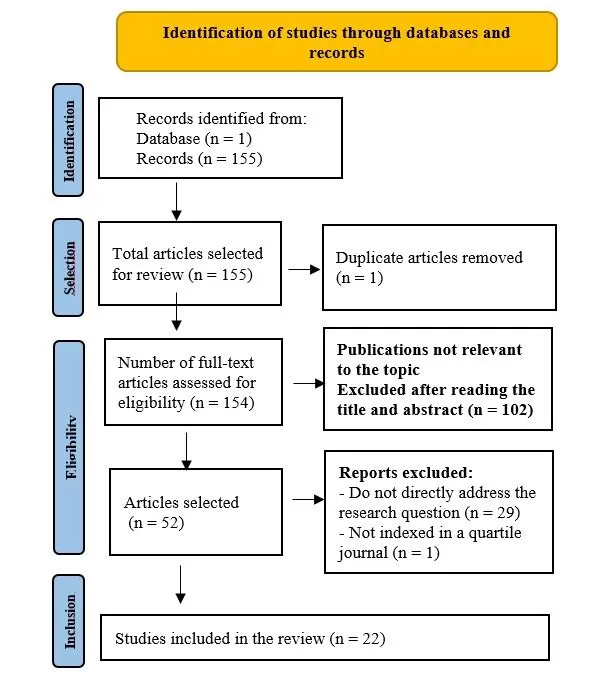
This process used the PRISMA method, covering the last six years from 2019 to 2024. (see Figure 1).
Fig.1 Scientific Literature Information Selection Process
Results and Discussion
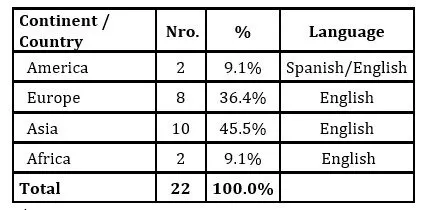
Following the analysis and selection of scientific articles from the Scopus database using the PRISMA model, a total of 22 scientific articles were gathered, all of which directly address the research question. Four continents are represented, with Asia being the continent with the highest number of articles (10 publications = 45.5%), followed by Europe (8 publications = 36.4%), then America (2 publications = 9.1%), and Africa (2 publications = 9.1%) (see Table I).
Table I: Number of Scientific Articles Found by Continent
Source: Authors’ own elaboration
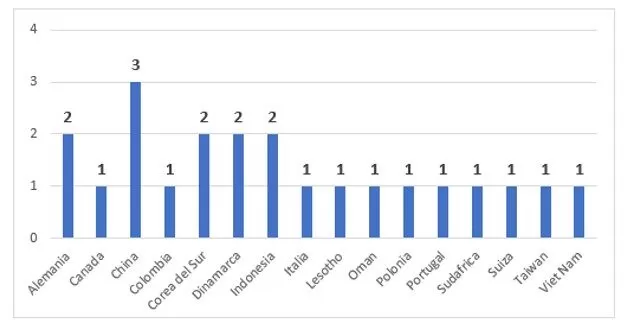
A total of 16 countries showed interest in the research topic, with China identified as the country with the highest interest (3 publications = 13.6%), followed by Germany, South Korea, Denmark, and Indonesia (each with 2 publications = 9.1%). Then, Canada, Colombia, Italy, Lesotho, Oman, Poland, Portugal, South Africa, Switzerland, Taiwan, and Vietnam (each with 1 publication = 4.5%) (see Figure 2).
Fig. 2 Number of scientific articles found by country
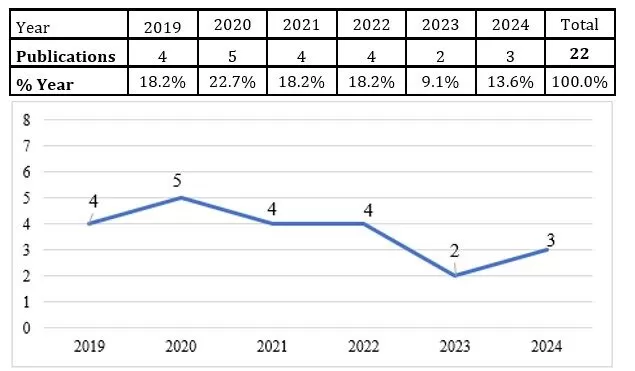
In the articles selected according to year of publication, we identified that the year 2020 has the highest number of publications (5 publications = 22.7%), followed by 2019, 2021, and 2022 (4 publications = 18.2% each), 2024 (3 publications = 13.6%), and 2023 (2 publications = 9.1%). (see Table II)
Table II: Number of scientific articles found by year of publication
Source: Authors’ own elaboration
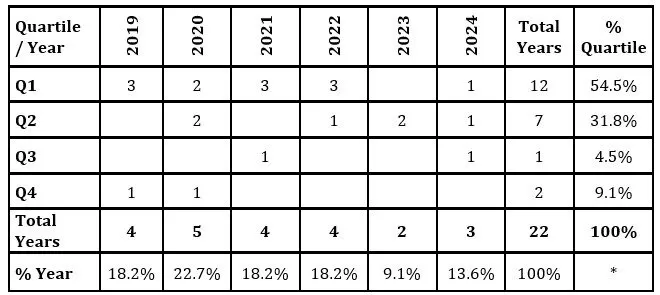
On the other hand, we observe that Quartile Q1 has the highest number of publications on the researched topic (12 publications = 54.5%), followed by Quartile Q2 (7 publications = 31.8%), Quartile Q4 (2 publications = 9.1%), and Quartile Q3 (1 publication = 4.5%). (see Table III).
Table III: Number of scientific articles found by publication quartile
Source: Authors’ own elaboration
According to Yang et al. (2024), their study states that the collectivist orientation of leaders in companies significantly affects employees’ innovative behavior. Another study reaffirms that an innovation-oriented culture, along with the alignment of strategy with the organizational objectives of the company, are key factors for the successful management of technology and innovation in modern enterprises (Yayha et al., 2024; Santoso, 2023; Siriram, 2022).
According to Dobni et al. (2024), their study states that fostering innovation in companies requires focusing on various aspects such as creativity, incentives, processes, leadership, knowledge management, and resources. Additionally, another study affirms that leadership and innovation management have an impact on organizational performance, as an innovative profile enhances a company’s agility and resilience (Liu et al., 2024).
According to Yang, J. et al. (2024), their study reports that excess capital hinders exploratory innovation due to resource overload. It also highlights the importance of innovative CEOs in companies, viewing innovation capability as crucial for strategic positions and emphasizing the role of the innovative leader as a key influencer in overcoming obstacles and improving organizational performance (Oliveira et al., 2024; Gonçalves, 2023; Uppathampracha, 2023; Kjellström, 2022).
According to Yang, Q. et al. (2024), their study focused on the importance of transformational leadership in the supply chain, identifying this leadership style as a critical driver of the process. Another study concluded that a data-driven culture promotes digital transformation and analytics, while internal barriers—such as “leadership without digital skills”—can hinder innovation within the company (Kowalski, M., 2024; Subramaniam, 2023; Giardino, 2022).
According to Cimino et al. (2024), it is stated that managers who exhibit a strong interest in innovation-oriented approaches and higher individual creativity are more likely to adopt an innovative profile by using tools such as generative AI in innovation management. On the other hand, another study revealed a positive impact of innovation implementation associated with increased financial resources for the project (Alhaqbani & Abdelwahed, 2024).
According to Porkodi (2024), their study highlights the importance of agile leadership in improving innovation efficiency, along with increased employee performance and team effectiveness. Another study emphasizes that entrepreneurial orientation and transformational leadership have a strong positive relationship with the development of innovation capabilities (Bedoya et al., 2024).
According to Piwowar-Sulej et al. (2024), their study revealed that sustainability-oriented leadership has an impact on environmentally friendly innovative behavior through environmental awareness. Another study affirmed that innovation and risk-taking have a significant impact on the operational performance of companies (Cimino, 2024; Bashynska, 2024; Hallinger, 2021).
A study on SMEs highlights the importance of an innovation management model accompanied by the presence of leadership profiles and the interdependence of innovation investments (Sinha K., 2023; Kim et al., 2024).
According to Costa et al. (2023), in their study analyzing the importance of leadership styles (autocratic, transactional, democratic, and transformational) and human capital as drivers of innovation, it was found that the most participative leadership styles are democratic and transformational. Another study suggests that organizations should focus on their members, strengthening individual capabilities rather than concentrating on organizational design (Schneider, 2023; Picolo, 2023; Suwangerd, 2021).
According to Thøgersen (2022), a study on innovation management in the public sector concluded that frontline managers play a crucial role in achieving objectives by promoting public innovation. The study identified three distinct approaches to innovation leadership: the receptive approach, the strategic approach, and the facilitative approach. Another study highlights strategies to stimulate employees’ innovative contributions through distributed leadership, managerial trust, and job autonomy (Schneider et al., 2020; Bolatan, 2022).
According to Mrusek et al. (2022), their study found that high-end chefs have a holistic view of sustainability and consider sustainable leadership and employee engagement as key elements in innovation decisions and success in haute cuisine. Another study, conducted in public organizations in Korea, concluded that leadership support for innovative action and the development of a self-learning organization were key to driving change in governmental institutions (Park, N. et al., 2021; Ponciano, 2021).
According to Palm & Lilja (2021), their study addressed cooperation between authorities and universities to enhance innovation capacity. Another study emphasized the importance of dynamic capabilities in the process of innovation exploitation (Cucino et al., 2021).
According to Zhang (2021), research conducted in China determined the positive influence of authoritarian leadership on innovative behavior within the context of its organizational culture. Another study explored how transformational leadership affects both radical and incremental innovation, revealing a significant and positive relationship between transformational leadership and both types of innovation (Le, P. et al., 2020; Kremer, 2019).
According to Kozioł-Nadolna (2020), their study affirms the importance of leadership as a driver of individual innovative behavior within a company. The research findings reinforce the leader’s role as a motivator of employee creativity and innovation. Another study revealed a significant relationship between ambidextrous leadership and employees’ innovative behaviors in public museums, highlighting the mediating role of organizational climate in innovation activities (Kung, 2020; Palm, 2020).
According to Utoyo et al. (2020), in a study conducted within the context of digital disruption in the telecommunications and banking industries in Indonesia, they underscore the essential role of corporate leadership in innovation strategy. Another study reveals the role of entrepreneurs in exercising distributed leadership, stimulating more proactive innovative behavior (Yang, 2020; Day, 2020).
According to Zheng (2019), a study in project-based companies in China evidenced the positive effect of leadership style (transactional and transformational) and organizational culture on the innovative behavior of project team members. Another study in companies in Lesotho found a significant effect of leadership on innovative work behavior (Khaola, 2019; Tao, 2020).
According to Vlok et al. (2019), their study identified statistically significant relationships between leadership and innovation management, affirming the importance of leadership behavior in generating applied technological innovation in companies. Another study in telecommunications firms in Indonesia concluded that digital leadership plays a critical role in innovation management and also highlighted the importance of dynamic capabilities (Mihardjo et al., 2019; Solaimani, 2019; Elidjen, 2019).
Conclusions
This systematic review concludes that leadership not only influences employee performance and team effectiveness, but is also directly related to factors such as organizational performance and team innovation management. One of the most consistent findings in the reviewed literature is the positive influence of transformational and entrepreneurial leadership on the development of innovation capabilities.
Regarding leadership styles, the studies highlight participative models such as transformational and democratic leadership, which have a positive impact on accelerating innovation, whereas more authoritarian styles may be counterproductive. Furthermore, the effectiveness of distributed leadership in fostering employee innovation has been evidenced through managerial trust and job autonomy.
Another relevant aspect is sustainable leadership, which has been identified as a driver of sustainable innovation in sectors such as haute cuisine and the public sector. The presence of leaders committed to sustainability and organizational learning has proven to be key in fostering an innovation culture in these contexts.
Moreover, business leadership in disruptive environments, such as the telecommunications and banking industries, has been recognized as a determining factor in seizing opportunities and improving innovative performance.
On the other hand, although transformational leadership has shown positive effects on both radical and incremental innovation, some studies have identified the mediating role of individual psychological capital and organizational culture in the relationship between leadership and innovative behavior. The literature also emphasizes the importance of ambidextrous leadership, especially in enabling employees to develop innovative behaviors.
Finally, the findings suggest that digital leadership is a key element in innovation management in the digital era, highlighting the importance of dynamic capabilities and market orientation as drivers of innovation in technological environments. In this regard, leadership behaviors remain a crucial factor in generating technological innovation and ensuring organizational adaptability across various sectors.
References
Alhaqbani, S. F., & Abdelwahed, N. A. A. (2024). Enablers of the successful implementation of the strategy of technological innovation in higher education. Corporate and Business Strategy Review, 5(2), 18-28.
Alblooshi, M., Shamsuzzaman, M., & Haridy, S. (2021). The relationship between leadership styles and organisational innovation: A systematic literature review and narrative synthesis. European Journal of Innovation Management, 24(2), 338-370. https://doi.org/10.1108/EJIM-11-2019-0339
Bashynska, I., Malynovska, Y., Kolinko, N., Bielialov, T., Järvis, M., Kovalska, K., & Saiensus, M. (2024). Performance assessment of sustainable leadership of enterprise’s circular economy-driven innovative activities. Sustainability, 16(2), 558.
Bedoya, M. A., Pérez, E. O., Zapata-Molina, C., Baier-Fuentes, H., & Hernández, B. Y. (2024). Entrepreneurial Orientation and Transformational Leadership for the Development of Innovation Capabilities. Quality Innovation Prosperity, 28(1), 174–192. https://doi.org/10.12776/qip.v28i1.1895
Bolatan, G. I. S., Giadedi, A., & Daim, T. (2022). Innovation leadership through technology transfer: Case of Turkish industry. Technology in Society, 68.
Costa, J., Pádua, M., & Moreira, A. C. (2023). Leadership Styles and Innovation Management: What Is the Role of Human Capital? Administrative Sciences, 13(2), 47. https://doi.org/10.3390/admsci13020047
Cimino, A., Felicetti, A. M., Corvello, V., Ndou, V., & Longo, F. (2024). Generative artificial intelligence (AI) tools in innovation management: a study on the appropriation of ChatGPT by innovation managers. Management Decision, 21-29.
Cui, F., Lim, H., & Song, J. (2022). The Influence of Leadership Style in China SMEs on Enterprise Innovation Performance: The Mediating Roles of Organizational Learning. SUSTAINABILITY, 14(6). https://doi.org/10.3390/su14063249
Cucino, V., Passarelli, M., Di Minin, A., & Cariola, A. (2021). Neuroscience approach for management and entrepreneurship: a bibliometric analysis. European Journal of Innovation Management, 25(6), 295–319. https://doi.org/10.1108/EJIM-01-2021-0015
Darwish, T. K., Zeng, J., Zadeh, M. R., & Haak-Saheem, W. (2020). Organizational Learning of Absorptive Capacity and Innovation: Does Leadership Matter? EUROPEAN MANAGEMENT REVIEW, 17(1), 83-100. https://doi.org/10.1111/emre.12320
Day, G. S., & Shea, G. (2020). Changing the work of innovation: A systems approach. California Management Review, 63(1), 41-60.
Dedahanov, A. T., Bozorov, F., & Sung, S. (2019). Paternalistic Leadership and Innovative Behavior: Psychological Empowerment as a Mediator. SUSTAINABILITY, 11(6). https://doi.org/10.3390/su11061770
Dobni, C. B., & Wilson, G. A. (2024). Measuring cultural readiness for innovation: six essential questions. Journal of Business Strategy, 45(1), 25-32.
Elidjen, M. L., & Rukmana, R. A. N. (2019). Intervening role of innovation management on relationship between digital leadership and dynamic capability accelerated by collaboration. Int J Innov Creat Chang, 11-19.
Giardino, P. L., Cristofaro, M., & Marullo, C. (2022). Managing open innovation projects: an evidence-based framework for SMEs and large companies cooperation. Management Research Review, 46(8), 1163-1183.
Gonçalves, A., Fernandes, C. I., & Veiga, P. M. (2023). Healthcare innovation and leadership in non-profit organisations: past, present and future trends. Innovation: The European Journal of Social Science Research, 1-25.
Hallinger, P. (2021). A meta-synthesis of bibliometric reviews of research on managing for sustainability, 1982–2019. Sustainability, 13(6), 3469.
Hoang, G., Wilson-Evered, E., & Lockstone-Binney, L. (2019). Leading innovation among tourism small and medium enterprises Examining the mediating role of climate for innovation. LEADERSHIP & ORGANIZATION DEVELOPMENT JOURNAL, 40(5), 647-666. https://doi.org/10.1108/LODJ-08-2018-0287
Hutton, B., Catalá-López, F., & Moher, D. (2016). The PRISMA statement extension for systematic reviews incorporating network meta-analysis: PRISMA-NMA. In Med Clin (Barc) (Vol. 147, Issue 6). http://annals.org/article.aspx?articleid=2299856.
Khaola, P., & Coldwell, D. (2019). Explaining how leadership and justice influence employee innovative behaviours. European Journal of Innovation Management, 22(1), 193-212.
Kesting, P., Ulhøi, J. P., Song, L. J., & Niu, H. (2015). The impact of leadership styles on innovation management—A review and a synthesis, 101-115.
Kjellström, S., Areskoug Josefsson, K., Fabisch, A., Forsberg, C., Schneider, T., & Avby, G. (2022). Fostering exploration and exploitation behavior in management teams to enhance organizational performance: the LearnOvation leadership development program. Leadership & Organization Development Journal, 43(3), 482-500.
Kim, D., Jung, S., & Kim, E. (2024). Distributed leadership in inter-organisational public research and development teams. European Journal of Innovation Management, 61-75.
Kremer, H., Villamor, I., & Aguinis, H. (2019). Innovation leadership: Best-practice recommendations for promoting employee creativity, voice, and knowledge sharing. Business horizons, 62(1), 65-74.
Kowalski, M., Bernardes, R. C., Gomes, L., & Borini, F. M. (2024). Microfoundations of dynamic capabilities for digital transformation. European Journal of Innovation Management, 20-28.
Kozioł-Nadolna, K. (2020). The role of a leader in stimulating innovation in an organization. Administrative Sciences, 10(3). https://doi.org/10.3390/admsci10030059
Kung, C. W., Uen, J. F., & Lin, S. C. (2020). Ambidextrous leadership and employee innovation in public museums. Chinese Management Studies, 14(4), 995-1014.
Kuo, C.-C., Ni, Y.-L., Wu, C.-H., Duh, R.-R., Chen, M.-Y., & Chang, C. (2022). When can felt accountability promote innovative work behavior? The role of transformational leadership. PERSONNEL REVIEW, 51(7), 1807-1822. https://doi.org/10.1108/PR-03-2021-0174
Le, P. B. (2020). How transformational leadership facilitates radical and incremental innovation: the mediating role of individual psychological capital. Asia-Pacific Journal of Business Administration, 12(3/4), 205-222.
Mrusek, N., Ottenbacher, M. C., & Harrington, R. J. (2022). The impact of sustainability and leadership on the innovation management of michelin-starred chefs. Sustainability (Switzerland), 14(1). https://doi.org/10.3390/su14010330
Oliveira, P. A. V. D., & Salerno, M. S. (2024). Taking innovators to the top. International Journal of Business Innovation and Research, 34(3), 370-394.
Suwangerd, R., Hareebin, Y., Aujirapongpan, S., & Pattanasing, K. (2021). Innovative Behaviour of Human Resources Executives: Empirical Study of Hotel Businesses on Phuket Island as a World-Class Tourist Attraction. TEM Journal, 10-20.
Palm, K., & Lilja, J. (2021). On the road to Agenda 2030 together in a complex alliance of Swedish public authorities. Environment, Development and Sustainability, 23(6), 9564–9580. https://doi.org/10.1007/s10668-020-01032-1
Park, N., Cho, M., & Lee, J. W. (2021). Building a culture of innovation: How do agency leadership and management systems promote innovative activities within the government?. Australian Journal of Public Administration, 80(3), 453-473.
Pengxuan, L. I. U., PHAWITPIRIYAKLITI, C., & TERASON, S. (2024). Leadership and Innovation Management: Driving Performance through Agility and Resilience in Automotive Enterprises. Journal of Ecohumanism, 3(6), 834-848.
Picolo, J. D., Giancarlo, G., TONTINI, G., & RODRIGUES, J. J. M. (2023). The effects of work-life balance, organisational learning capability, and transformational leadership on product innovation performance. International Journal of Innovation Management, 50-60.
Piwowar-Sulej, K., Iqbal, Q., Dagar, V., & Singh, S. (2024). Employees’ eco-friendly innovative behaviors: Examining the role of individual and situational factors. European Management Journal.
Ponciano, E. S., & Amaral, C. S. T. (2021). What influences the innovation environment in BPO companies?. Business Process Management Journal, 27(1), 106-123.
Porkodi, S. (2024). The effectiveness of agile leadership in practice: A comprehensive meta-analysis of empirical studies on organizational outcomes. Journal of Entrepreneurship, Management and Innovation, 20(2), 117–138. https://doi.org/10.7341/20242026
Santoso, R. S., Warsono, H., Astuti, R. S., & Dwimawanti, I. H. (2023). A comparative study of regional government in Central Java, Indonesia, public service innovation capacity management model for regional government. International Journal of Public Policy and Administration Research, 10(2), 70-86.
Schneider, M. H. G., Hofmeister, J., & Kanbach, D. K. (2022). Effective innovation implementation: a mixed method study. International Journal of Innovation Management, 26-28.
Siddaway, A. P., Wood, A. M., & Hedges, L. V. (2019). How to Do a Systematic Review: A Best Practice Guide for Conducting and Reporting Narrative Reviews, Meta-Analyses, and Meta-Syntheses. Annual Review of Psychology, 70(1), 747-770. https://doi.org/10.1146/annurev-psych-010418-102803
Sinha, K. K., Saunders, C., & Raby, S. O. (2023). Cooling off innovation hotspots: smaller businesses need to look wide and deep. Journal of Business Strategy, 44(6), 354-362.
Siriram, R. (2022). An innovative approach to overcoming technological challenges and improving firm performance in South Africa. Technology in Society, 68-70.
Solaimani, S., Talab, A. H., & van der Rhee, B. (2019). An integrative view on Lean innovation management. Journal of Business Research, 105, 109-120.
Subramaniam, S. A., Salamzadeh, Y., & Mujtaba, B. G. (2023). The mediating role of dynamic capability on the relationship between e-leadership qualities and innovation management: Insights from Malaysia’s medical device industry. Sustainability, 15-24.
Suwangerd, R., Hareebin, Y., Aujirapongpan, S., & Pattanasing, K. (2021). Innovative Behaviour of Human Resources Executives: Empirical Study of Hotel Businesses on Phuket Island as a World-Class Tourist Attraction. TEM Journal, 10-20.
Thøgersen, D. (2022). Managing innovation on the public frontline: three approaches to innovation leadership. International Journal of Public Sector Management, 35(2), 150–171. https://doi.org/10.1108/IJPSM-06-2021-0152
Uppathampracha, R., & Anwar, M. (2023). The mediating role of hope and cognitive crafting in the relationship between authentic leadership and innovative employee behavior. Banks and Bank Systems, 18(1), 163-173. https://doi.org/10.21511/bbs.18(1).2023.14
Utoyo, I., Fontana, A., & Satrya, A. (2020). The role of entrepreneurial leadership and configuring core innovation capabilities to enhance innovation performance in a disruptive environment. International Journal of Innovation Management, 24(06). https://doi.org/10.1142/S1363919620500607
Van Hemmen, S., Alvarez, C., Peris-Ortiz, M., & Urbano, D. (2015). Leadership Styles and Innovative Entrepreneurship: An International Study. CYBERNETICS AND SYSTEMS, 46(3-4), 271-286. https://doi.org/10.1080/01969722.2015.1012896
Vlok, A., Ungerer, M., & Malan, J. (2019). Integrative leadership for technology innovation. In Int. J. Technology Management (Vol. 79).
Yang, C., Jin, H., & Zhang, C. (2024). The influence of leaders’ collectivist orientation on employees’ innovative behavior. Leadership & Organization Development Journal, 45(5), 899-918.
Yang, J., Grove, S., & Li, M. (2024). Bonding versus bridging: disentangling effects of CEO social capital on firm exploratory innovation. R&D Management., 30-45
Yang, Q., Su, Q., Qiao, J., Fang, Y., & Zhang, Z. (2024). Exploring supply chain infrastructures for supply chain innovation: the roles of supply chain transformational leadership, supply chain collaboration and entrepreneurial emphasis. International Journal of Logistics Research and Applications, 1-26.
Yang, W. S., & Yang, S. L. (2020). Distributed leadership, organizational support, and new generation employees’ proactive-reactive innovation behavior: based on the moderate of supervisor-subordinate guanxi and values fit. J. Ind. Eng. Manag, 34, 10-19. (h)
Yao, J., Crupi, A., Di Minin, A., & Zhang, X. (2020). Knowledge sharing and technological innovation capabilities of Chinese software SMEs. Journal of knowledge management, 24(3), 607-634.
Yayha, M. A., Samoea, R. F., Abedah, M., Fahmi, A. M., & Temnikov, V. (2024). Innovation and Technology Management in Modern Enterprises. Journal of Ecohumanism, 3(5), 895-908.
Zhang, S., Liu, X., & Du, Y. (2021). When and how authoritarian leadership influences employee innovation behavior in the context of Chinese culture. Leadership & Organization Development Journal, 42(5), 722-734.
Zheng, J., Wu, G., Xie, H., & Li, H. (2019). Leadership, organizational culture, and innovative behavior in construction projects: The perspective of behavior-value congruence. International Journal of Managing Projects in Business, 12(4), 888-918.
Zhou, M., Wang, Y., Jiang, H., Li, M., & Li, G. (2023). How Leadership Influences Open Government Data (OGD)-Driven Innovation: The Mediating Role of Organizational Commitment. SUSTAINABILITY, 15(2). https://doi.org/10.3390/su15021219.