Rosmaini TASMIN, MF AHMAD, RZ RAJA MOHD RASI, Rohaizan RAMLAN And Rumaizah RUSLAN
Faculty of Technology Management and Business, Universiti Tun Hussein Onn Malaysia,
Parit Raja, Johor, Malaysia
Volume 2025,
Article ID 953270,
Journal of Southeast Asian Research,
12 pages,
DOI: https://doi.org/10.5171/2025.953270
Received date: 19 June 2025; Accepted date: 19 August 2025; Published date: 28 November 2025
Academic Editor: Mahdi Mohammed Abdullah Abkar
Cite this Article as:
Rosmaini TASMIN, MF AHMAD, RZ RAJA MOHD RASI, Rohaizan RAMLAN, And Rumaizah RUSLAN (2025), “IoT-Driven AgroTech Solutions for Sustainable Community Development: Case Study Integrating Solar Power and Rainwater Harvesting in Malaysia”, Journal of Southeast Asian Research, Vol. 2025 (2025), Article ID 953270, https://doi.org/10.5171/2025.953270
This paper presents the implementation and outcomes of the AgroTech Project under the Komuniti@UniMADANI initiative, spearheaded by Universiti Tun Hussein Onn Malaysia (UTHM). The project investigates the feasibility and practicality of integrating sustainable resources with Internet of Things (IoT) technology to cultivate reddish pandan coconut trees within a primary school compound in Kluang, Johor, Malaysia. The school’s landscape, particularly its field, suffers from minimal vegetation and elevated ambient temperatures. Addressing this, the initiative planted 100 coconut trees and deployed IoT-enabled systems for fertigation, solar-powered irrigation, and rainwater harvesting. The system utilizes sensors, solar panels, and automated controls to monitor climate conditions and nutrient delivery, exemplifying a smart agriculture model aligned with the United Nations Sustainable Development Goals (SDGs), notably Climate Action and Responsible Consumption and Production. The study demonstrates the viability of using solar energy to power water pumps, IoT-based Blynk systems for nutrient regulation, and fertilized rainwater as a sustainable irrigation source. Beyond technical implementation, the paper evaluates the project’s social, economic, and environmental impacts, highlighting its potential to enhance community resilience and ecological stewardship. It also addresses operational challenges and proposes the model as a scalable and replicable framework for green innovation in educational and community settings. This research contributes to the limited body of literature on IR4.0-enabled greening strategies in schools and underscores the transformative potential of integrating smart technologies with sustainable agriculture.
Smart agriculture, powered by Internet of Things (IoT) and renewable technologies, is reshaping community development through data-driven practices and sustainable resource management. In Malaysia, the AgroTech Project at SKARY school, Kluang, Johor represents a pioneering community-based initiative that integrates technological innovation with socio-economic upliftment. Implemented under the Komuniti@UniMADANI program by Universiti Tun Hussein Onn Malaysia (UTHM), with USD15,000 funding by Ministry of Finance Malaysia, this project aims to empower community, school and marginalized populations (retirees and people with autism) while aligning with the national Malaysia Madani Economy philosophy and the United Nations Sustainable Development Goals (SDGs). Leveraging IoT, solar power, and rainwater harvesting, the project introduces a holistic approach to local agricultural practices, fostering long-term resilience, skill development, and environmental stewardship (Jin, X., Wang, Y., & Jin, J., 2022). This technological and research project introduction is strongly bound to the current Malaysia Madani economic framework which emphasizes on empowering community with economic and social programs.
Background
The Malaysian government is actively pursuing a proactive economic approach to impart national wealth and disburse it to common people. This initiative must be wisely executed and can be felt by people at all levels. Hence, the Komuniti@UniMADANI initiative was established under the auspices of Malaysia’s Ministry of Finance, aiming to foster inclusive development by funding and supporting grassroots community projects. With UTHM serving as the driving academic institution, the AgroTech Project was developed in partnership with the residents of Kampung Dato’ Abd Rahman Yassin (KDARY) and Sekolah Kebangsaan Abd Rahman Yassin (SKARY) school, Kluang, Johor. The primary objective is to enhance community livelihood through the cultivation of Reddish Pandan Coconut using sustainable, smart-farming methods to partially address current issues on Sustainable Development program, spearheaded by the United Nations.
Problem
Currently, our world is experiencing significant climate change phenomenon. Globally, this is partly attributed to increasing global temperature, rising sea level, depleting rain forest, pollution and green house effects. Locally and positively, people could act by planting trees in their area and community as means of mitigating this climate change. In addition, by planting trees our environment looks greener, feels cooler and the air contains richer with oxygen. It is generally perceived and known that Malaysia has sacrificed her green forest to be converted and transformed into palm-oil plantations at industrial scale. At the vicinity of the SKARY Kluang school, it is also observed that the environmental temperature is rather not, especially during dry season. Students playing sports at the school field can feel pinching heat and often looking for shades during resting. There are limited shading trees and lacking of lush greenery plants in the surrounding area. Hence, this research project comes to the scene and is proposing to plant 100 coconut trees at the school’s surrounding area. It is intended to enhance the green landscape and at the same time this could generate economic and social benefits to the school and its community. To achieve this social and community objective, the finance ministry has granted funding through UTHM to collaborate with the local school at Kluang district, state of Johor, Malaysia.
Objectives
With the granted funding, there comes great responsibility on UTHM, SKARY school and the community. The university researchers are expected to transfer its IoT expertise, fertigation system skills, technological know-how and project management experience to school teachers and pupils. These are to attain the following objectives:
Deployment of IoT-based agricultural monitoring, enabling real-time tracking of soil moisture, pH levels, and nutrient concentrations (Nitrogen, Phosphorous, Potassium);
Implementation of solar-powered irrigation systems, reducing reliance on conventional energy sources; and
Use of rainwater harvesting systems, promoting water sustainability and climate-conscious farming.
In addition to these technical goals, the project’s objective is also seeking to build human capital and technological capability by involving retirees, individuals with autism, educators, and students in active roles. These efforts foster digital literacy, vocational training, and community resilience, creating a scalable model for agricultural empowerment. Hence, the stated objectives lead to how the research project has been implemented and its method of execution.
Project Implementation and Methodology
The AgroTech Project was operationalized through a collaborative model that connects Universiti Tun Hussein Onn Malaysia (UTHM) with grassroots partners including the residents of Kampung Dato’ Abd Rahman Yassin (KDARY) and Sekolah Kebangsaan Abd Rahman Yassin (SKARY) school, Kluang, Johore, Malaysia. A phased, multidisciplinary approach was adopted to integrate smart farming technologies with community education and local school participation.
Site Selection and Community Engagement
The project was launched in a rural setting with strong local engagement potential. Initial consultations were held with KDARY residents and SKARY school staff to identify local needs, build trust, and foster ownership. The site was chosen for its accessibility, educational reach, and potential as a pilot model. This primary school has been chosen primarily due to its limited greenery landscaping environment and good collaborative attitudes shown by the Head master and related teachers. There are also ample empty spaces at school fencing perimeter with good soil conditions (with pH 6.2 reading), which is deemed suitable for coconut cultivation (Schroeder, C., Lamprecht, J., & Grüner, S., 2023).
Technological Deployment
This project is a green, sustainable project and based on Industrial Revolution 4.0 technology, which is technically led by UTHM researchers, in collaboration with SKARY teachers and the KDARY community. A suite of Internet of Things (IoT) sensors and controllers was deployed to monitor agricultural variables, including:
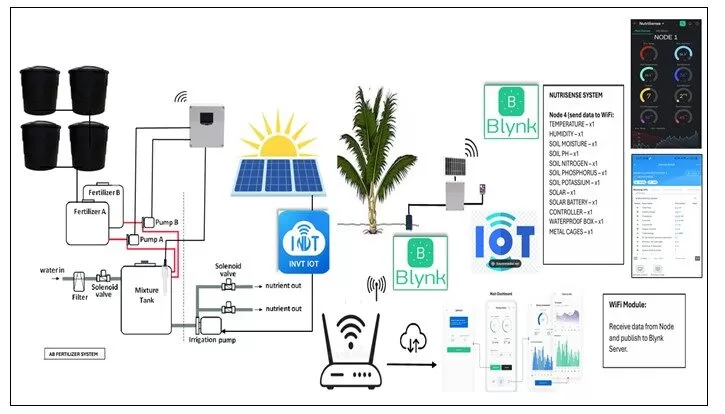
The schematic technological diagram of this AgroTech project is as shown in Figure 1, in which it integrates the solar panel to power-up the two motors for water pumping. These water pumps shall irrigate the fertilized water (A & B solutions) to the cultivated coconut trees, via the fertigation system (with compensated valve dripping method). The fertigation system applies PE black pipes (25 mm diameter size) which are laid in the ground connecting all the planted 100 coconut trees to the two water pumps. Each tree is irrigated with nutrient water via Netafim valve supplied through the 2 irrigation piping systems. Pipe 1 (pump A) supplies water to the front area of the school, while pipe 2 (pump B) supplies water to the backyard of the school (the school field area).
Fig 1. The schematic diagram of IoT-based system, solar and rain harvesting for fertigation.
SKARY teachers could control the nutrient water, its frequency of release, dispensing volumes and nutrient setting via their smart phones. This mechanism has been the technological core of this project due to its IoT features and capability. UTHM researchers have trained the school teachers in using the cloud-based apps (to monitor the level of nitrogen [N], phosphorus [P] and potassium [K]). In good farming method, N is for greening the coconut tree leaves, P is for empowering the tree roots and K is for the ability of trees to produce fruits (López-Ridaura, S., et al., 2021). Typically, NPK nutrients are released to trees at a range of 30-40 mg, however they are gradually increased over time and years.
Solar-Powered Irrigation System
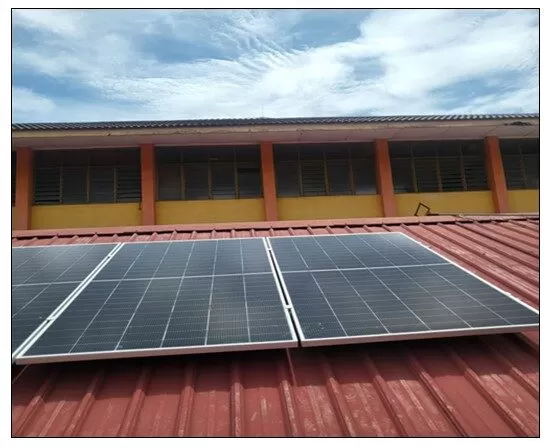
A 7,200-watt solar array was installed to power-up two 1-horsepower water pumps operating an automated compensating drip irrigation system. This environmentally friendly method reduced reliance on conventional energy sources while ensuring consistent fertilized water delivery to crops (Kang, J., Choi, S., & Kim, J., 2020). Six solar panels, with each 1200 watts power generating capacity, are installed at the school PK (special education) roof building, as shown in Figure 2. These solar panels are powering-up two motor water pumps for dripping irrigation system. Since this IoT-based farming project is applying sustainable and green concepts, all electrical energy required is not linked to the national grid, supplied by the Tenaga Nasional company.
The solar power system can be managed remotely by using the INVT IoT apps to activate its operation by the user. The INVT app is linking the solar inverter to a router, which is based on INVT cloud computing platform. The user could manage the operation of the two water pumps via programmed (scheduled) activation or by manual mode. Currently, the system user prefers to activate the fertigation water pumps via manual mode due to the fact that activating pumps requires user to observe few parameters:
local climatic condition (such raining time or dry weather)
the DC power has attained 50 Hz electric frequency level
level of supply for A and B fertilizer type
Fig 2. Six solar panels installed to generate 7,200-watt energy
Rainwater Harvesting and IoT Fertigation System
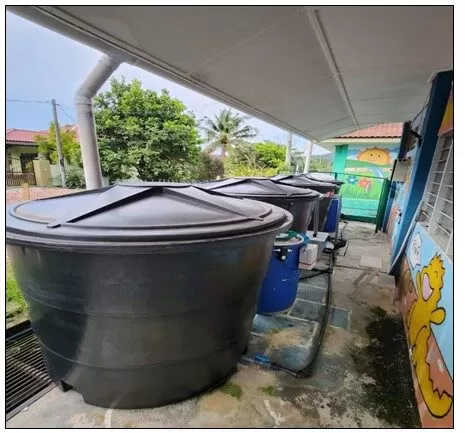
The site was outfitted with a rainwater catchment network that directed run-off into four 2,400-liter polyester storage tanks. Harvested rainwater was filtered and funnelled into the fertigation system, ensuring sustainability and optimizing natural water use. Four water tanks (each with a capacity of 600 litres) are installed and linked to each other, to leverage its overall capacity in harvesting rain water, as shown in Figure 3. These four PE tanks are one major component of sustainable elements as the nutrient fertigation system is using natural resource. Most of the time, the rain water is used for executing fertigation. However, during prolonged dry season the standard public water supply needed to be used for fertigating the plants. Out of these 4 PE water tanks, 3 tanks are used to cater for normal rainwater. There is one PE water tank which is used to mix fertilizer A and B (mixing tank with nutrient ppm sensor) while, at the same time, contains and mixes with rainwater.
Fig 3. Four linked water tanks to harvest rain water
Currently, water tank level is monitored weekly and manually by the school gardener, due to limited project budget for sensor and automation. In case of drought (scarce rain) season, the gardener shall top the water tanks up, by hosing-in the standard public tap water. However, rain water level could also be managed and monitored remotely by installing sensors and linking them to cloud apps (Zhang, Y., Wang, L., & Zhou, J., 2021), and valve connected to the Public Authority water supply piping system.
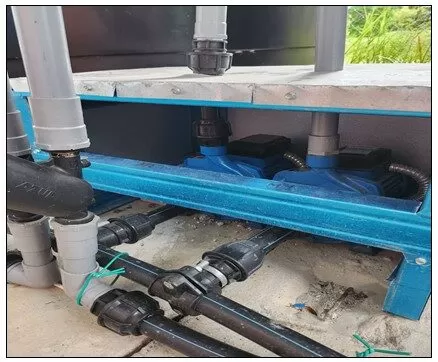
These 4 water tanks are connected to two water motors pumps (each 1 horse power) that subsequently pumps the nutrient water to the cultivated coconut trees, as shown in Figure 4
Fig 4. Two water pumps powered by 6 solar panels
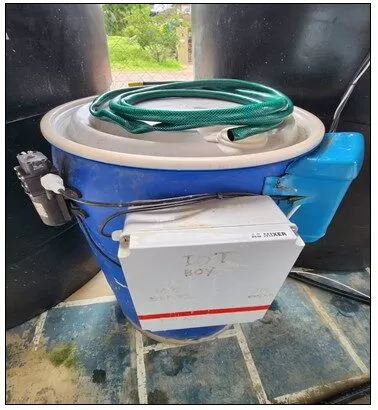
These 2 pumps and 4 water tanks are connected to the IoT system that mixes the solution fertilizer A & B, as shown in Figure 5. Fertilized and mixed solution is done at water tank #3, prior being pumped to coconut trees. Mixing of nutrient molarity by AB Mixer system is currently set at level of 1500 ppm, deemed as appropriate level for coconut growing trees (García, L., Parra, L., Jimenez, J. M., Lloret, J., & Lorenz, P., 2020). This nutrient molarity level may increase as the plants grow over time and years.
Fig 5. The IoT system control box
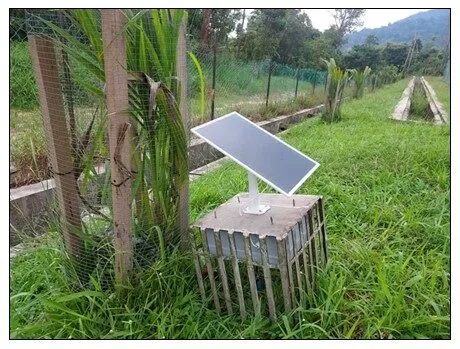
The delivered nutrient water from the mixed AB fertilizer water tank are measured their nutrient level readings by using Nutri-Sense system node, which is installed at the strategic location of the planted coconut tree, as shown in Figure 6. This node is equipped with NPK sensors, soil temperature sensor, humidity, surrounding environment temperature, soil moisture and soil pH probes.
Fig 6. Nutri-Sense sensor node, installed next to the plant
The IoT mixer sensors were connected to a central microcontroller (ESP32) for real-time data capture. Data were analyzed and visualized via dashboards and user smartphones, accessible to both project coordinators and community members.
Project Monitoring and Performance Evaluation
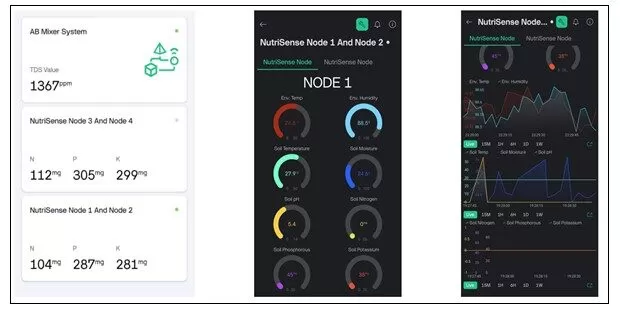
The project parameter monitoring is observed via cloud apps platform, namely Blynk software system, as shown in Figure 7. Blynk system is an American company, headquartered in Miami, Florida, USA. Blynk’s low-code platform is a subscription-based system that integrates the whole IoT sensors with cloud computing platform and get them connected with users. This cloud-based platform reduces development time and costs and makes it easy to master every aspect of the connected business; from managing users, apps, and devices to driving adoption and growth (Elijah, O., Rahman, T. A., Orikumhi, I., Leow, C. Y., & Hindia, M. N., 2018).
Fig 7. The Blynk apps for monitoring the NutriSense parameters
Throughout the implementation phase, the project team conducted data analysis, technical audits and community feedback sessions. The data generated and stored by Blynk platform are analysed by researchers to perform technical analysis, via big data analytics approach for data-driven project performance management (Wolfert, S., Ge, L., Verdouw, C., & Bogaardt, M.-J., 2017). Performance monitoring indicators included crop health, system uptime, water usage efficiency, and participant satisfaction.
Community Training and Capacity Building
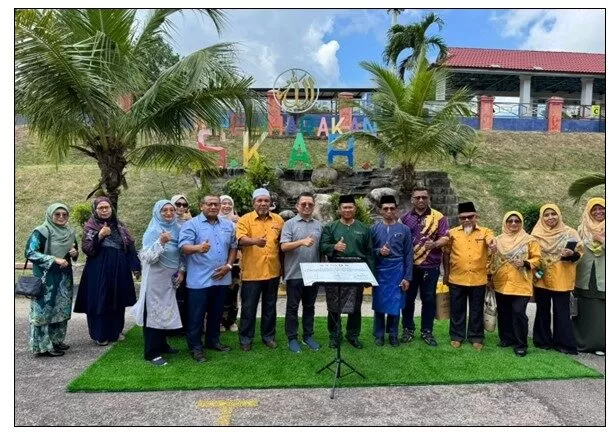
Technology transfer seminar on IoT system has been delivered for school teachers and community members on January 2025 at the SKARY school, as shown in Figure 8, which was attended by 10 university lecturers, 8 school teachers, 10 school students and 12 community members. In this IoT technology seminar session, UTHM researchers presented the basic components of IoT and why modern community agricultural project requires implementing the latest industrial revolution 4.0 tools and applications. The university researchers also share physical components of the IoT controller, such as RS485 communication block. This is one standard that defines the electrical characteristics of drivers and receivers for use in serial communications systems.
Another key component in the IoT system is the microprocessor, namely ESP32. This microcontroller board has dual core microprocessor with built in Wi-Fi and Bluetooth. ESP32 chip ESP32-D0WDQ6 is based on a Tensilica Xtensa LX6 dual core microprocessor with an operating frequency of up to 240 MHz. This processor achieves very low power consumption through power saving features including clock synchronization and multiple modes of operation. Nutrisense probes that could detect nutrients, (such as Nitrogen, Phosporous and Kalium), soil temperature, environmental humidity, soil temperature, soil moisture and soil pH are also exposed to the training participants.
Fig 8. At the completion of the IoT Hands-on Workshop
Outcomes and Discussion
The AgroTech Project demonstrated meaningful contributions across social, economic, and environmental dimensions, positioning it as a replicable model for sustainable community innovation. The integration of smart agricultural technologies, community training, and inclusive practices yielded a range of measurable and qualitative outcomes.
Social Impact
The project has actively involved retirees, persons with disability (autism), teachers, and students, fostering inclusivity and reinforcing social cohesion within the village of Dato’ Abd Rahman Yassin community. Engagement in crop cultivation and system maintenance provided participants not only with vocational exposure but also with improved mental and physical well-being. For individuals with autism, the structured yet nature-based activities offered therapeutic benefits and a sense of purpose.
Educators at SKARY benefited from hands-on exposure to IoT, artificial intelligence, and renewable energy systems, enhancing their capacity to integrate these technologies into teaching modules. Students gained early access to smart agriculture and farming tools, through experiences that promote STEM interest and prepare them for an increasingly digital economy environment (Li, L., Zhang, X., & Wang, M., 2020).
Economic Empowerment
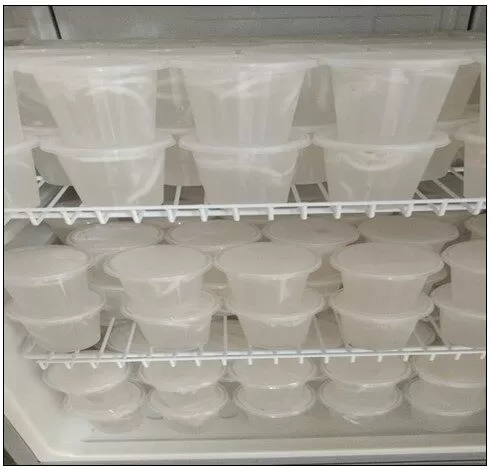
Initial projections indicate that revenue generation from coconut-based products, such as fresh coconut water and pandan jelly, could reach USD 700 per month once full yield capacity is achieved. Microenterprise opportunities have emerged for community members, particularly retirees, women, and youth, to engage in value-added agro-processing, digitalization transformation and new marketing mechanism in future (Rijswijk, K., Klerkx, L., & Turner, J. A., 2019). Fresh coconut jelly product is one potential value-added small and medium industry that could harness the lower stream product from fresh coconut fruit, as shown in Figure 9. These potential economic activities address local employment gaps and promote grassroots entrepreneurship.
Fig 9. Downstream product of coconut jelly
Additionally, the potential for Agro-Tourism has sparked interest, with site visits offering educational and recreational appeal for visitors keen on experiencing smart agriculture first-hand. This opens the door for future tourism partnerships and broader market exposure for local market economy.
Environmental Stewardship
The implementation of solar-powered systems and rainwater harvesting has significantly reduced reliance on municipal water and national grid electricity. Over time, this not only lowers operational costs but also aligns with the United Nation and Malaysia’s climate-resilience goals. The strategic planting of Reddish Pandan Coconut trees contributes to urban greening, improved air quality, and biodiversity support in the school vicinity. Moreover, by utilizing sustainable technologies, such as solar panels, the project reduces the overall carbon footprint of local farming practices and serves as an educational demonstration of climate-smart agriculture in action.
Challenges and Adaptive Strategies
Despite the successes, the project encountered several operational challenges and difficulties too, such as the recent planted trees destroyed by wild animals (monkeys and boars). To overcome this repeated destruction, steel mesh fencing has been erected to surround the planted seedlings. In addition, dripping system Netafim valve’s nipple also gets damaged by grass-cutting machine operation by school gardener. As a solution, PE piping system has been buried underground, and water dripping nipple angle is turned downward.
Maintenance costs for IoT components, such as ESP32 microcontrollers and 900-watt solar panels, proved significant. To mitigate this, local stakeholders were trained in basic troubleshooting and system upkeep. Educational sessions demystified smart farming tools and reduced initial hesitancy among community members unfamiliar with digital technologies. Lastly, cultural readiness and openness to change also posed barriers, which were addressed through interactive demonstrations, mentorship, and repeated engagement to reinforce trust and confidence in the project’s relevance.
Conclusion and Recommendations
The AgroTech project serves as a compelling example of how technological innovation and inclusive community engagement can coalesce to support sustainable agriculture and societal upliftment. Through the integration of IoT, solar energy, and rainwater harvesting, the project not only enhanced crop productivity but also fostered digital literacy, environmental awareness, and economic empowerment within the local community of Kluang, Johore, Malaysia.
By involving diverse stakeholders, particularly retirees, disabled individuals with autism, educators, and schoolchildren, the initiative demonstrated the potential of smart farming as a transformational tool for both education and development. The project’s alignment with national policy frameworks such as Malaysia Madani and global goals like the SDGs positions it as a replicable model for other regions and institutions aiming to balance innovation with equity.
To further expand the impact of such initiatives, the following recommendations are proposed:
Scale the model nationally through partnerships with other universities and community stakeholders, using AgroTech as a blueprint.
Develop modular curricula on smart farming for schools and community centers to sustain knowledge transfer.
Secure continued funding and technical support, particularly for sensor upgrades and system maintenance.
Establish an open-access knowledge platform to share real-time data, best practices, and outcomes from similar community-led AgroTech initiatives.
The AgroTech project experience underscores that empowering communities through smart agriculture is not only a technical endeavour but a cultural, educational, and economic mission, one that holds immense promise for a more technological advancement, plus a more equitable and sustainable future.
Acknowledgement
This research was supported by the Ministry of Finance, Malaysia (MoF) with reference MOF.SBM(S)600-41/39/131(36), through UniMadani Research Community Grant Scheme [UTHM/ICRC/600-5/24 (41) Vot A174] and partially sponsored by Universiti Tun Hussein Onn Malaysia (UTHM). Principal researcher would like to thank all fellow UTHM researchers, headmaster and teachers at Abdul Rahman Yassin Primary School, Kluang, KOMADA Cooperative friends who have supported me through all the challenges. Thanks to all of you, for being an integral part of this successful and interesting journey.
References
Elijah, O., Rahman, T. A., Orikumhi, I., Leow, C. Y., & Hindia, M. N. (2018), ‘An overview of Internet of Things (IoT) and data analytics in agriculture: Benefits and challenges,’ IEEE Internet of Things Journal, 5(5), 3758–3773. Available: https://doi.org/10.1109/JIOT.2018.2844296.
García, L., Parra, L., Jimenez, J. M., Lloret, J., & Lorenz, P. (2020), ‘IoT-based smart irrigation systems: An overview and open issues,’ International Journal of Distributed Sensor Networks, 16(10), 1550147720953335. Available: https://doi.org/10.1177/1550147720953335.
Jin, X., Wang, Y., & Jin, J. (2022), ‘Community-oriented smart farming initiatives for rural revitalization in developing countries,’ Smart Agricultural Technology, 2, 100042. Available: https://doi.org/10.1016/j.atech.2022.100042.
Kang, J., Choi, S., & Kim, J. (2020), ‘Design and implementation of solar-powered intelligent irrigation system using a wireless sensor network,’ Sustainability, 12(10), 4269. Available: https://doi.org/10.3390/su12104269.
Li, L., Zhang, X., & Wang, M. (2020), ‘A review of enabling technologies in smart agriculture,’ Journal of Industrial Information Integration, 17, 100123. Available: https://doi.org/10.1016/j.jii.2020.100123.
López-Ridaura, S., et al. (2021), ‘Sustainability of agricultural systems in the era of smart farming technologies,’ Agronomy for Sustainable Development, 41(3), 41. Available: https://doi.org/10.1007/s13593-021-00682-0.
Rijswijk, K., Klerkx, L., & Turner, J. A. (2019), ‘Digitalisation in agriculture: Scenarios for future transformation,’ NJAS – Wageningen Journal of Life Sciences, 90–91, 100303. Available: https://doi.org/10.1016/j.njas.2019.100303.
Schroeder, C., Lamprecht, J., & Grüner, S. (2023), ‘Educational impacts of digital farming projects in primary schools: A case study in Southeast Asia,’ Computers & Education Open, 4, 100084. Available: https://doi.org/10.1016/j.caeo.2023.100084.
Wolfert, S., Ge, L., Verdouw, C., & Bogaardt, M.-J. (2017), ‘Big data in smart farming – A review,’ Computers and Electronics in Agriculture, 153, 69–80. Available: https://doi.org/10.1016/j.compag.2017.01.039
Zhang, Y., Wang, L., & Zhou, J. (2021), ‘Development of a remote monitoring system for rainwater harvesting infrastructure based on IoT,’ Water, 13(7), 943. Available: https://doi.org/10.3390/w13070943.