Olga PARSKA1, Vita NEHORUI1, Tomasz BURATOWSKI2, Mateusz AMBROZKIEWICZ2,
Piotr MALKA3 and Mariusz GIERGIEL2
1Khmelnytskiy National University, Instytutska str, 11, Khmelnytskiy Oblast, Ukraine 2 AGH University of Krakow, Aleja Adama Mickiewicza 30, Kraków, Poland 3Cracow University of Technology, Warszawska 24, Kraków, Poland
Volume 2026,
Article ID 450334,
Communications of the IBIMA,
13 pages,
DOI: doi.org/10.5171/2026.450334
Received date: 27 March 2026; Accepted date: 28 August 2026; Published date: 28 October 2026
Academic Editor: Adam Krechowicz
Cite this Article as:
Olga PARSKA, Vita NEHORUI, Tomasz BURATOWSKI, Mateusz AMBROZKIEWICZ,Piotr MALKA and Mariusz GIERGIEL (2026)," Natural and Hybrid Antimicrobial Finishes for Textiles: Activity, Immobilization, and Wash Durability", Communications of the IBIMA, Vol. 2026 (2026), Article ID 450334, https://doi.org/10.5171/2026.450334
The effectiveness of antimicrobial textile finishes depends not only on the antimicrobial agent itself but also on how it is incorporated into the textile substrate. Focusing on textiles for protective and civil applications, this review compares natural antimicrobial agents and hybrid textile finishes with respect to their mechanisms of action, immobilization methods, activity against bacterial and fungal pathogens, wash durability, and technological feasibility. Chitosan can provide antimicrobial activity and can also serve as a film-forming, binding, or carrier component in textile finishes, whereas alginate is used mainly as a matrix or carrier for other active compounds and lignin as an antimicrobial additive. Plant-derived agents, including Aloe vera constituents, curcumin, juglone, and essential oils, show antimicrobial activity, although the evidence for their stability and durability varies between compounds and application methods. Hybrid formulations combine active agents with polymeric carriers or binders, while grafting and crosslinking can improve their retention on textile substrates and preserve antimicrobial activity during use. The best-documented wash durability was reported for chitosan-based finishes stabilized by grafting or crosslinking, which retained their antibacterial effect after 50-75 washing cycles, whereas plant extracts and essential oils still require better stabilization and fixation before industrial use.
Keywords: natural polymers, antimicrobial treatment, textile materials, military purposes
Introduction
The need to ensure the microbiological safety of textile materials has led to growing interest in antimicrobial treatments in various sectors, from medical and military applications to household and sports textiles. Growing concerns about the negative impact of traditional synthetic antimicrobial agents on the environment, as well as the resistance of pathogenic microorganisms to some chemical preparations, have prompted an active search for environmentally safe, effective, and renewable alternatives.
One promising direction is the application of natural antimicrobial agents, particularly biologically active substances of plant origin, which offer advantages such as a broad spectrum of antimicrobial action, low toxicity, good biocompatibility, and biodegradability. Such compounds include flavonoids, phenolic acids, terpenoids, alkaloids, tannins, and other metabolites contained in plant tissues. Plant extracts and essential oils are known to inhibit the growth of both Gram-positive and Gram-negative bacteria, as well as fungi that cause the degradation of textile fibers and pose a threat to human health.
Of particular interest is the use of natural antimicrobial agents in the finishing of textiles intended for military and civil applications. The requirements for such materials include not only protective properties but also environmental safety, hypoallergenicity, resistance to operational factors, and wearing comfort. Recent research (S. Hossain et al., 2024; M.M. Hossain et al., 2024; Bibi et al., 2024; Ke et al., 2021) confirms the effectiveness of extracts from plants such as Mimusops elengi, Aloe vera, Curcuma longa, and Juglans regia, as well as of natural polymers such as hydrolyzed collagen and chitosan, as components of antimicrobial finishes for textiles.
However, despite the significant potential of natural antimicrobial agents, their stability, compatibility with fibrous substrates, duration of action, and technological feasibility remain the subject of scientific debate. A systematic review of the research results in this field can therefore support the further implementation of environmentally safe solutions in textile manufacturing.
Scope and Methodology
With the ongoing development of industry and increasing demands on the functional properties of materials, the development of textile products with antimicrobial properties has become an important research direction. Textile materials used in the medical field, in sportswear, personal protective equipment, household items, as well as in equipment and clothing for military personnel, can serve as an environment for the accumulation and proliferation of pathogenic microflora. The presence of bacteria, fungi, or viruses on the fabric surface poses a threat to human health and necessitates the implementation of effective antimicrobial treatment technologies. Research aimed at developing durable, environmentally safe methods for the finishing of textile materials is therefore particularly relevant. Antimicrobial agents of natural origin are a promising solution, as they can provide long-lasting protection without harming humans or the environment.
Current developments in textile materials science are increasingly oriented toward multifunctional products for military and civil applications with improved operational properties. According to a number of researchers (Paraska et al., 2025; Kachuk et al., 2022; Vladu et al., 2023; Mirmohammadsadeghi et al., 2024), the structure and composition of textile materials undergo significant changes under the influence of novel finishing technologies. Particular attention is paid to long-lasting antimicrobial action, achieved with active components fixed in the fibrous substrate by physicochemical methods.
Recent research (Mondal, 2021; Lobo et al., 2021; Wang et al., 2022) confirms the effectiveness of new approaches to modifying the surface of textile materials, which keep the antimicrobial action stable after repeated washing and mechanical stress. In particular, emphasis is placed on the use of environmentally safe agents with antibacterial properties that do not negatively affect the physical and mechanical characteristics of materials, specifically their strength, air permeability, and wear resistance.
Such technologies are particularly relevant for military clothing and for the civilian population, as they provide an enhanced level of hygiene, comfort, and protection under challenging operating conditions.
The aim of this study is to investigate the activity of natural antimicrobial agents and to evaluate their ability to provide effective antimicrobial protection for textile materials intended for military and everyday civil applications.
The following objectives were defined:
to systematize scientific data on natural antimicrobial polymers;
to analyze the mechanisms of antimicrobial action of natural agents;
to assess the potential of natural antimicrobial compounds for use in technologies of functionalization of textile materials for military and civil purposes.
The study is based on a review of recent publications on natural antimicrobial agents of plant and animal origin. Special attention is given to biopolymers such as chitosan, alginate, and lignin, as well as to plant extracts and essential oils.
To evaluate the potential of green agents for application in the textile industry, a comparative analysis of their chemical structure, mechanisms of antimicrobial action, methods of immobilization on textile fibers, and effectiveness in suppressing pathogenic microorganisms was carried out based on experimental data reported in the recent literature.
The key methodological approach was to systematize information on the advantages and limitations of using natural polymers in the functionalization of textile materials for military and civil applications.
The materials analyzed include the structural formulas of the main natural antimicrobial compounds and summarized data on their stability, biocompatibility, and environmental safety.
Assessment of natural polymer properties for the processing of textile materials for protective and civil purposes
In recent decades, the scientific community has shown increasing interest in plant components as a source of antimicrobial substances capable of replacing traditional synthetic biocides. This interest is driven by several factors: the growing resistance of microorganisms to antibiotics, the accumulation of synthetic antiseptics in the environment, and increased demands for the environmental friendliness and safety of textile products. Owing to their natural origin, biological activity, low toxicity to humans, and biodegradability, plant extracts and essential oils are promising for use in the textile industry.
The main sources of antimicrobial activity in plant extracts are flavonoids, phenolic acids, tannins, terpenoids, alkaloids, and saponins, which exhibit bactericidal action against a wide range of microorganisms. For example, S. Hossain et al. (2024) demonstrated the effectiveness of Mimusops elengi leaf extract in suppressing the growth of Staphylococcus aureus. The authors noted that the presence of phenolic compounds, particularly catechins and gallic acid, contributes to the disruption of the bacterial cell wall and inhibition of enzymatic activity.
M.M. Hossain et al. (2024) and Paraska et al. (2025) evaluated the antimicrobial potential of Aloe vera for treating knitted fabrics. Aloe vera extract exhibited pronounced antibacterial and antifungal properties, which supports its use in medical and functional textiles, particularly in the production of wound dressings and medical clothing. Furthermore, fabric treatment using Aloe vera provides a high level of protection against ultraviolet radiation, confirming the effectiveness of this natural compound as an environmentally safe protective agent.
Paraska et al. (2025) investigated the formation of antimicrobial polymer films based on the acrylic dispersion Neoprint NPO with the addition of phytic and citric acids in various ratios, as well as polyhexamethylene guanidine chloride as an additional antimicrobial agent. It was found that the introduction of biologically active components contributes to an increase in the degree of crosslinking of the polymer matrix and a reduction in the ash content, indicating the formation of a denser three-dimensional network. Thermal fixation enhances the structural stability of the film. Antimicrobial testing on fabrics confirmed the effectiveness of the obtained compositions in suppressing the growth of Streptococcus pyogenes, allowing the studied systems to be considered promising for creating functional textile materials with antibacterial properties.
The use of synthetic antimicrobial agents in the textile industry is accompanied by a number of serious risks to human health and the environment. Triclosan, a common antiseptic, can cause skin irritation, undergo photochemical transformation into toxic derivatives in the aquatic environment, and contribute to the formation of resistance in microorganisms (Bibi et al., 2024). The use of silver, copper, and zinc nanoparticles is associated with contact allergic reactions, irritation of mucous membranes, and the development of bacterial resistance through adaptation mechanisms. Furthermore, quaternary ammonium compounds (QACs) are highly toxic to aquatic organisms and also promote the selection of resistant bacterial strains, creating potentially dangerous conditions for ecosystems and consumer health.
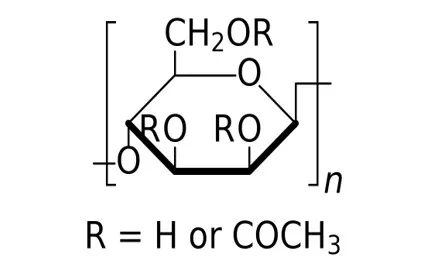
In the context of the search for environmentally acceptable alternatives for the functionalization of textile materials, interest in natural antimicrobial agents of plant and animal origin is growing (Bibi et al., 2024). Among plant compounds, particular attention is paid to acemannan, the main polysaccharide of Aloe vera, whose structural formula is shown in Fig. 1.
Figure 1: Structural formula of acemannan
Acemannan, the main bioactive component of the inner gel of Aloe vera leaves, is a complex heteropolysaccharide composed of β-(1,4)-linked mannose residues with a high degree of acetylation, with minor amounts of β-(1,4)-linked glucose and α-(1,6)-linked galactose (Liu et al., 2019). The acetylated mannose units are responsible for the unique biological properties of acemannan, including antimicrobial, antiviral, immunomodulatory, and antioxidant activity.
Owing to its structure, this polysaccharide can interact with the cell membranes of pathogens, disrupting their integrity and reducing their viability.
Although direct data on the global production volumes of acemannan are currently unavailable, market indicators for Aloe vera illustrate the prospects of this field (IMARC Group, 2025a). The global Aloe vera market in 2024 was estimated at approximately USD 890 million, and by 2033, it is projected to grow to USD 1.53 billion, with an average annual growth rate of about 6.3% during the period 2025–2033.
These data indicate stable demand for Aloe vera products and their constituents, such as acemannan, in various industries. Market growth is driven by the increasing popularity of natural ingredients, innovative extraction technologies, and heightened attention to quality certifications.
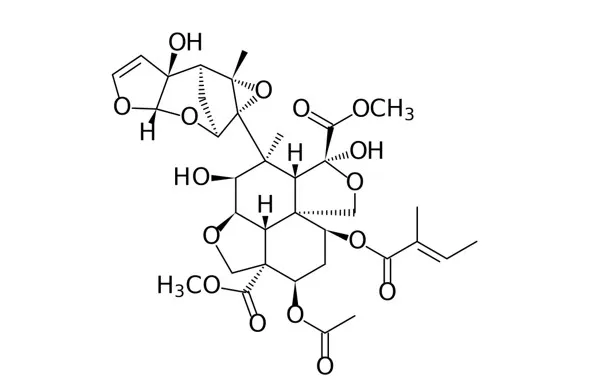
Another promising agent is azadirachtin, a tetranortriterpenoid (limonoid) extracted from the seeds of Azadirachta indica; its structural formula is shown in Fig. 2. Azadirachtin contains epoxide, ester, and hydroxyl groups, which are associated with its high biological activity (Ghosh et al., 2024). Its antimicrobial activity has been attributed, among other mechanisms, to the inhibition of bacterial DNA gyrase, a key enzyme in DNA replication, which disrupts the replication, transcription, and supercoiling of bacterial DNA.
Figure 2: Structural formula of azadirachtin
In addition, these compounds disrupt the integrity of cell membranes and inhibit enzyme systems of microorganisms, resulting in a broad spectrum of antibacterial activity.
According to a report by Intellectual Market Insights Research, the global azadirachtin market was valued at USD 200 million in 2023 and, by 2032, is projected to reach USD 356.7 million, corresponding to an average annual growth rate of about 7.5% during the period from 2023 to 2032 (Intellectual Market Insights, 2025). Market growth is driven by increasing demand for biopesticides and natural antimicrobial agents, especially in agriculture and pharmaceuticals, contributing to the spread of azadirachtin use in various regions worldwide.
North America held the leading position in the azadirachtin market in terms of revenue, owing to the widespread use of biopesticides in agriculture and a high level of regulatory support for natural plant protection products. During the forecast period, further growth of this segment is expected due to the introduction of azadirachtin into new application areas. Meanwhile, the Asia-Pacific market is demonstrating dynamic expansion, which is associated with the presence of leading manufacturing enterprises in the region, particularly in Japan and China, as well as growing demand for environmentally safe plant protection products.
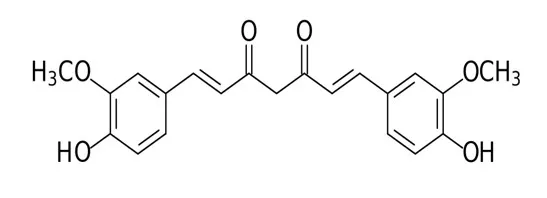
Curcumin, a polyphenolic component of turmeric (Curcuma longa), has high antioxidant and anti-inflammatory activity; its structural formula is shown in Fig. 3.
Figure 3: Structural formula of curcumin
The mechanism of action includes effects on cell membranes, cell walls, proteins, DNA, and other key bacterial structures (Zheng et al., 2021). In addition to direct cell damage, curcumin is capable of inhibiting bacterial growth by affecting the quorum-sensing system, which regulates bacterial communication and biofilm formation. An important feature is also the photosensitizing ability of curcumin: under blue light, it becomes phototoxic that enhance its bactericidal activity. Furthermore, curcumin demonstrates synergistic effects when used together with other bacteriostatic agents, which may contribute to increased application efficacy.
The global curcumin market was valued at USD 93.01 million in 2024. According to forecasts by IMARC Group, by 2033 it will grow to USD 168.28 million, corresponding to an average annual growth rate of 6.47% during the period 2025–2033 (IMARC Group, 2025b). Currently, North America is the market leader, holding a share of about 37.6%.
The growth in demand for curcumin is driven by increased consumer awareness of its health benefits, particularly as a natural antimicrobial agent, as well as active scientific research confirming its potential in treating various diseases.
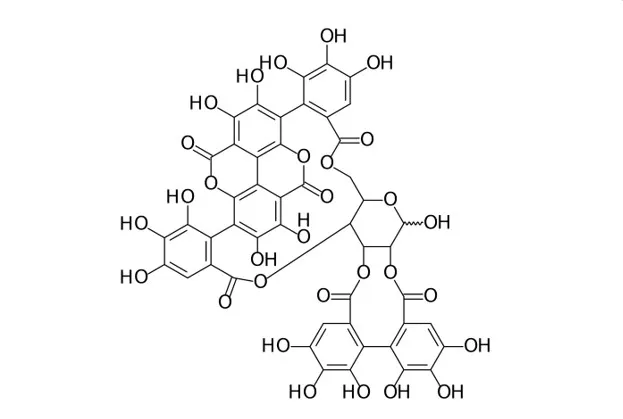
Punicalagin, an ellagitannin found in the peels of Punica granatum, exhibits a broad spectrum of antimicrobial action, particularly against Staphylococcus aureus, Escherichia coli, Pseudomonas aeruginosa, and Candida albicans; its structural formula is shown in Fig. 4.
Figure 4: Structural formula of punicalagin
Its mechanism of action is associated with the ability to form complexes with cell membrane proteins, which is accompanied by disruption of membrane permeability, potassium ion leakage, and inhibition of biofilm formation (Gosset-Erard et al., 2021). Due to the combination of antimicrobial, antioxidant, and anti-inflammatory activity, punicalagin is considered a promising natural agent for creating functional materials in the textile, food, and pharmaceutical industries.
The global pomegranate extract market, including punicalagin, demonstrates stable growth, driven by increasing demand for natural antimicrobial agents, especially in the textile, food, and pharmaceutical industries. According to Spherical Insights, the global pomegranate extract market was estimated at USD 176.11 million in 2023 and is expected to reach USD 470.46 million by 2033, with an average annual growth rate of about 10.3% from 2023 to 2033 (Spherical Insights, 2025).
The main factor contributing to market growth is increased consumer awareness of the health benefits of pomegranate extract, particularly its antimicrobial and antioxidant properties. These properties make punicalagin a promising candidate for use in the functionalization of textile materials, imparting an antimicrobial effect to them. The growing demand for natural and organic ingredients in the cosmetic and pharmaceutical industries also contributes to the expansion of the pomegranate extract market.
Regionally, the pomegranate extract market is most developed in North America, where a high level of consumer awareness and demand for natural products is observed. However, the growing interest in natural ingredients in the cosmetic and pharmaceutical industries in the Asia-Pacific region also contributes to market expansion in this region.
In the future, the pomegranate extract market is expected to continue growing, particularly due to the development of new extraction technologies, such as supercritical fluid extraction, which yield high-quality extracts with a high concentration of active components. This opens up new opportunities for the use of pomegranate extract in various industries, including the functionalization of textile materials.
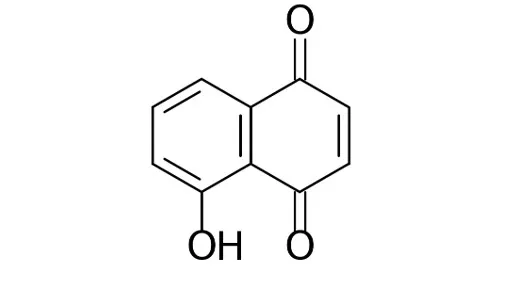
Methanolic extracts of walnut (Juglans regia) are rich in juglone (5-hydroxy-1,4-naphthoquinone), which exhibits fungicidal and bacteriostatic properties (Liu et al., 2022; Han et al., 2021). The structural formula is shown in Fig. 5.
Figure 5: Structural formula of juglone
In methanolic walnut extracts, juglone shows antimicrobial and anti-biofilm activity: it inhibits the formation of Pseudomonas aeruginosa biofilms, disrupts the cell membrane, causes leakage of ions and cell contents, and also induces oxidative stress, which significantly suppresses pathogen viability in vitro.
Although official data on global juglone production are lacking, its potential is determined by walnut production, which amounted to about 3.7 million tons in 2023 (IndexBox, 2023). Considering that green walnut husks constitute a significant portion of waste and contain juglone in sufficient concentration, this raw material is a promising source for large-scale extraction of this naphthoquinone.
The production of juglone from walnut waste also has environmental significance, as it contributes to reducing industrial waste and developing a circular economy. The development of effective and environmentally safe technologies for juglone extraction is a relevant research direction that can stimulate the development of the corresponding market.
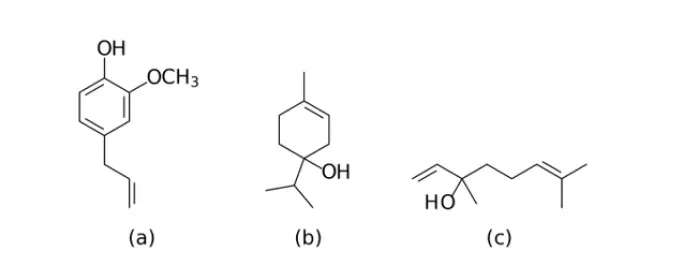
Essential oils (e.g., from tea tree, clove, or lavender) contain components such as eugenol (C₁₀H₁₂O₂), terpinen-4-ol (C₁₀H₁₈O), and linalool (C₁₀H₁₈O), which destabilize the lipid layer of the bacterial membrane; their structural formulas are shown in Fig. 6.
These compounds act on the cytoplasmic membrane and increase its permeability, which leads to leakage of ions, amino acids, and ATP, disruption of homeostasis and, ultimately, cell death. Furthermore, they can induce the formation of reactive oxygen species (ROS), causing oxidative stress in pathogenic microorganisms (Kowalewska and Majewska-Smolarek, 2023).
Figure 6: Structural formulas: a – eugenol, b – terpinen-4-ol, c – linalool
The global essential oils market shows a stable upward trend. In 2024, it was valued at USD 13.2 billion, with Europe holding the leading position and accounting for over 49.4% of the market. According to IMARC Group forecasts, the market will reach USD 25.2 billion by 2033, corresponding to an average annual growth rate of 8.4% during the period 2025–2033 (IMARC Group, 2025c).
This growth is driven by the growing demand for natural and organic ingredients in personal hygiene, food products, beverages, aromatherapy, and antimicrobial agents. This is especially true of the European market, where consumer awareness of natural components is steadily increasing.
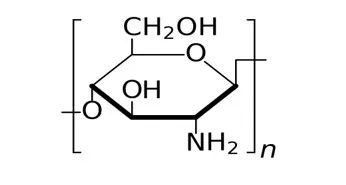
Among antimicrobial agents of animal origin, chitosan (poly[β-(1→4)-2-amino-2-deoxy-D-glucopyranose]) is a cationic polysaccharide that binds to anionic groups of bacterial cell walls, disrupting their integrity (Ke et al., 2021). The structural formula of chitosan is shown in Fig. 7.
Figure 7: Structural formula of chitosan
Chitosan, a natural polymer obtained by deacetylation of chitin, has pronounced antibacterial activity against both Gram-positive and Gram-negative bacteria. The mechanism of its antimicrobial action is based on electrostatic interaction between the positively charged amino groups of chitosan and the negatively charged components of the microorganism’s cell wall. This leads to disruption of membrane potential, leakage of cell contents, and, as a result, bacterial death.
Driven by growing environmental requirements and the need for microbiological safety, the antimicrobial textile market is developing rapidly. According to analytical data, the global chitosan market was estimated at USD 7.8 billion in 2023 and is projected to reach USD 42.8 billion, with an average annual growth rate of 18.7% in 2024–2033 (Allied Market Research, 2025). Such dynamics are driven by the active implementation of biopolymers in the field of functional and medical textiles, particularly for creating protective clothing, wound dressings, and antimicrobial coatings.
Alginate is a copolymer of mannuronic (M) and guluronic (G) acids, capable of forming hydrogels that can serve as transport matrices for biocides (Bibi et al., 2024; Abka-Khajouei et al., 2022). Alginate is a naturally occurring polyanionic polysaccharide extracted from brown algae. It forms gels in the presence of divalent cations (e.g., Ca²⁺), which allows the formation of protective matrices for the immobilization of antimicrobial agents. Bibi et al. (2024) consider alginate a promising carrier for essential oils and plant extracts, as it not only fixes active substances on the fiber but also gradually releases them under the influence of moisture or temperature, ensuring prolonged action.
Hydrolyzed collagen, rich in peptides containing glycine, proline, and hydroxyproline residues, exhibits bacteriostatic action, especially when combined with other natural substances. In the study by Berechet et al. (2023), hydrolyzed collagen obtained from cattle by-products was loaded with ginger essential oil and electrospun into bioactive nanofibers. Such fibers, collected on textile or leather substrates, demonstrated antibacterial activity against Staphylococcus aureus and Escherichia coli, as well as antifungal action against Candida albicans, allowing them to be considered promising materials for processing textile products and use in various fields, including medical, pharmaceutical, and cosmetic applications.
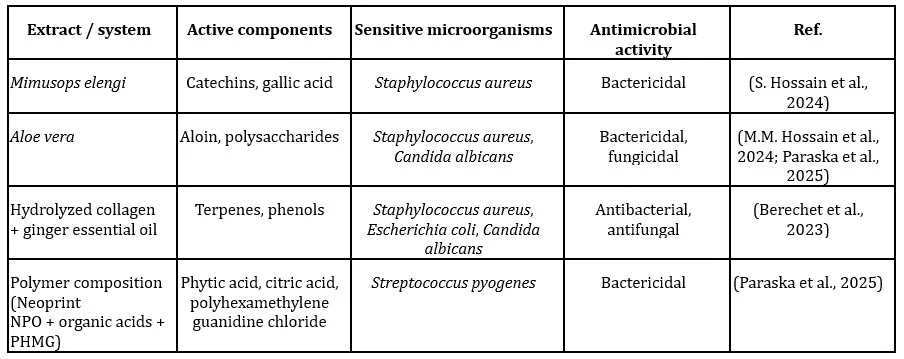
Table 1 summarizes the bioactivity of various extracts and composite systems. The data indicate the high antimicrobial effectiveness of both individual plant extracts and combined systems containing biologically active substances. For example, Mimusops elengi extract, containing catechins and gallic acid, demonstrated bactericidal action against Staphylococcus aureus by disrupting cell wall integrity and inhibiting enzymatic activity.
Table 1: Bioactivity of selected plant extracts and hybrid antimicrobial systems
Aloe vera extract, rich in aloin and polysaccharides, exhibited both bactericidal and fungicidal activity against Staphylococcus aureus and Candida albicans, making it a promising component for functional and medical textiles.
Combined systems also have significant potential, particularly hydrolyzed collagen in combination with ginger essential oil. Such nanofibers showed antibacterial activity against Staphylococcus aureus and Escherichia coli and a pronounced antifungal effect against Candida albicans. Using electrospinning, bioactive nanofibers with antimicrobial activity were obtained. Of particular interest are polymer systems based on the acrylic dispersion Neoprint NPO with the addition of phytic and citric acids, as well as polyhexamethylene guanidine chloride. Such compositions were found to be effective in suppressing the growth of Streptococcus pyogenes, allowing their use for creating functional textile materials with prolonged antibacterial effect.
Despite the numerous advantages of natural antimicrobial agents, such as biodegradability, environmental safety, and a broad spectrum of biological action, there are also certain limitations regarding their use in textile technologies. In particular, the active components of plant extracts are chemically unstable, as they are sensitive to light, temperature, and oxygen, which can lead to a decrease in antimicrobial activity during storage or material processing. Furthermore, the biocidal effect is of limited duration – the effectiveness of such agents significantly decreases after multiple washings or mechanical impact. The chemical composition of extracts also varies with natural factors (plant species, growing conditions, extraction methods), which complicates the standardization of technologies. In some cases, natural components can cause allergic or irritating reactions, requiring preliminary toxicological evaluation.
Thus, natural antimicrobial agents have significant potential in creating environmentally safe functional textile materials but require optimization of stabilization and fixation methods on fibrous substrates to ensure long-lasting action and reproducible effectiveness.
Particular attention should be paid to natural biopolymers, in particular chitosan, alginates, and lignin, which not only exhibit their own antimicrobial activity but can also serve as carriers or stabilizers for other agents. Research (M.M. Hossain et al., 2024; Mondal, 2021; Lobo et al., 2021) indicates the broad applicability of chitosan in textile finishing owing to its biocompatibility, its capacity for chemical modification, and its interaction with fibrous materials. Alginates are used as film formers and stabilizers for antiseptic extracts. Lignin and its derivatives are also gaining popularity as antimicrobial additives due to their phenolic structure.
Among natural antimicrobial agents, biopolymers occupy a special place due to their unique physicochemical properties, biocompatibility, and ability to form stable films on the surface of textile fibers. The most widely studied among them are chitosan, alginate, and lignin, each of which has a specific mechanism of action and area of application.
Wang et al. (2022) used chitosan in the form of carboxymethyl chitosan as a surface modifier for cotton fibers. Such treatment improved the adhesion of the antimicrobial polymer (poly(DMCco-MA)) to the fabric due to the formation of functional amino groups, which, in turn, ensured stable grafting of the polymer layer. The resulting materials demonstrated high effectiveness against Escherichia coli and Staphylococcus aureus, which was retained after 50 washing cycles.
Lignin, a component of the cell wall of woody plants, also exhibits antimicrobial properties, although its mechanism of action is less studied compared to chitosan. Lobo et al. (2021) showed that lignin, due to the presence of phenolic hydroxyl groups, is capable of affecting the cell membranes of microorganisms, inhibiting enzymatic activity. Lignocellulosic materials, due to their biodegradability, low cost, renewability, and environmental friendliness, are widely used in the construction, furniture, packaging, automotive, and textile industries, demonstrating significant potential as antimicrobial agents in polymer-matrix systems. The antimicrobial activity of these materials is determined both by their own natural bioactivity and by combination with organic or inorganic antimicrobial components. Despite existing examples of industrial use, the field still requires further experimental research, especially in the context of healthcare, ecology, textiles, and bioengineering, to fully realize the potential of lignocellulosic polymers.
In the studies by Kachuk et al. (2022), Vladu et al. (2023), and Ferro de Oliveira and Tavaria (2023), the use of chitosan as a natural polymer with biological activity was proposed. Chitosan is one of the most studied natural polymers with pronounced antimicrobial properties, widely used for the functionalization of textile materials. This polysaccharide is capable of exhibiting bactericidal and fungicidal action without the need for additional fixing agents, making it particularly attractive for processing natural fibers. In particular, it has been established that the antimicrobial effect of chitosan can be enhanced by introducing zinc oxide into the composition of finishing agents, which also allows obtaining ultra-dispersed chitosan-zinc compositions. Furthermore, chitosan is widely used as a carrier for the immobilization of medicinal substances on textile materials, which ensures the creation of medical-purpose products with prolonged therapeutic action. It is worth noting that leading manufacturers of biocidal agents for the textile industry, particularly the Swiss company Sanitized AG, offer preparations based on both organic and inorganic biocides, among which chitosan occupies an important place due to its biocompatibility and effectiveness.
Mirmohammadsadeghi et al. (2024) present the Silver Shell® antibacterial coating based on chitosan and silver microparticles, which
provides long-lasting protection of fabrics against Staphylococcus aureus and Escherichia coli. The coating demonstrates effectiveness up to 99.99% even after 75 washes, especially in the presence of a cross-linking agent, which improves fixation on the cotton substrate and reduces leaching of active components.
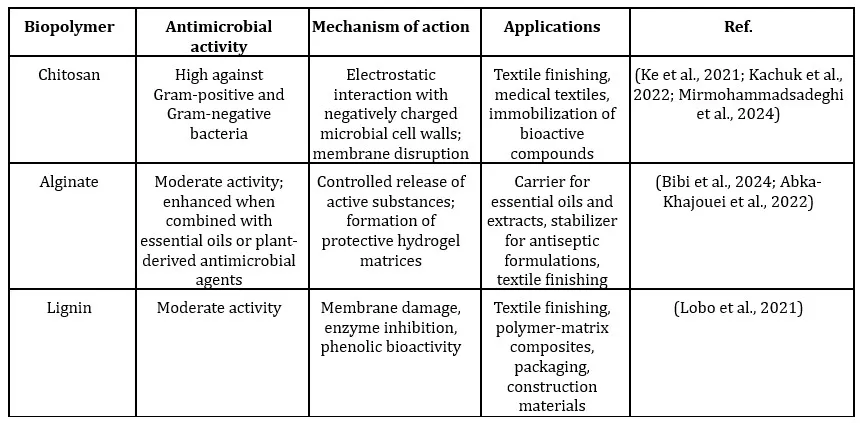
Table 2 summarizes the antimicrobial properties of selected biopolymers, their mechanisms of action, and their possible applications.
Table 2: Antimicrobial activity, mechanisms, and applications of selected biopolymers
Despite numerous advantages, the use of biopolymers also has a number of limitations. First, chitosan requires an acidic environment for dissolution, which complicates its use in standard technological processes. Second, biopolymers are prone to hydrolysis when stored in a humid environment, which reduces the long-term antimicrobial effect. Third, the natural color of lignin can affect the aesthetic properties of textiles. To overcome these problems, research is being conducted on modifying the structure of biopolymers, introducing functional groups, as well as combining with inert carriers.
Conclusion
Given the growing environmental and hygiene requirements for textile products, research on natural antimicrobial agents is becoming increasingly relevant. Plant extracts and essential oils, due to their biological activity, biodegradability, and low toxicity, represent a promising alternative to traditional synthetic biocidal agents, which have a number of negative environmental and medical effects. The combined action of compounds such as flavonoids, phenolic acids, polysaccharides (acemannan, chitosan), and bioactive polymers (hydrolyzed collagen) can effectively suppress the growth of a wide range of pathogenic microorganisms, as shown in experimental studies.
At the same time, there are certain technological limitations due to chemical instability and reduced activity during use and repeated washing. Methods for stabilizing and effectively fixing natural antimicrobial substances on textile materials therefore require further development. Promising directions include combined composite systems and innovative technologies, such as electrospinning of nanofibers and immobilization in polymer matrices, which can provide a long-lasting antimicrobial effect. Further research will focus on improving the durability of antimicrobial effects, compatibility with different textile fibers, and optimization of technological parameters.
In summary, biopolymers have significant potential for creating functional textile materials that meet modern requirements of safety, green chemistry, and environmental sustainability. The use of biopolymers in the processing technologies of textile products for military and civil applications contributes to reducing dependence on synthetic antimicrobial agents, which positively affects the ecological balance and reduces risks associated with the toxicity of traditional chemical compounds. Furthermore, the integration of biopolymers into technological processes stimulates the development of circular models of production and consumption, which involve efficient resource use, material reuse, and waste minimization. Biopolymers are thus key components of a new generation of textile products with enhanced functional characteristics, developed in line with the principles of sustainable development and green chemistry.
Such innovative approaches are particularly important for textile materials intended for military and civil applications, where enhanced antimicrobial properties and environmental safety are critical for reliable health protection under extreme operating conditions.
References
Abka-Khajouei, R., Tounsi, L., Shahabi, N., Patel, A.K., Abdelkafi, S. and Michaud, P. (2022) ‘Structures, properties and applications of alginates,’ Marine Drugs, 20(6), article 364. Available: https://doi.org/10.3390/md20060364.
Allied Market Research. (2025) ‘Chitosan market by source (shrimp, squid, crab, krill, others), by application (water treatment, biomedical and pharmaceutical, cosmetics, food and beverage, others): Global opportunity analysis and industry forecast, 2024–2033.’ [Online]. Available: https://www.alliedmarketresearch.com/chitosan-market.
Berechet, M.D., Gaidau, C., Nešić, A., Constantinescu, R.R., Simion, D., Niculescu, O., Stelescu, M.D., Sandulache, I. and Râpă, M. (2023) ‘Antioxidant and antimicrobial properties of hydrolysed collagen nanofibers loaded with ginger essential oil,’ Materials, 16(4), article 1438. Available: https://doi.org/10.3390/ma16041438.
Bibi, A., Afza, G., Afzal, Z., Farid, M., Sumrra, S.H. and Hanif, M.A. et al. (2024) ‘Synthetic vs. natural antimicrobial agents for safer textiles: a comparative review,’ RSC Advances, 14(42), pp. 30688–30706.
Ferro de Oliveira, S.C. and Tavaria, K.F. (2023) ‘The impact of bioactive textiles on human skin microbiota,’ European Journal of Pharmaceutics and Biopharmaceutics, 188, pp. 66–77. Available: https://doi.org/10.1016/j.ejpb.2023.05.004.
Ghosh, D., Mahapatra, B. and Mukhopadhyay, R. (2024) ‘Azadirachta indica: a source of potential antibacterial activity against various bacterial strains,’ International Journal of Advanced Biochemistry Research, 8(4), pp. 48–50. Available: https://doi.org/10.33545/26174693.2024.v8.i4Sa.929.
Gosset-Erard, C., Zhao, M., Lordel-Madeleine, S. and Ennahar, S. (2021) ‘Identification of punicalagin as the bioactive compound behind the antimicrobial activity of pomegranate (Punica granatum) peels,’ Food Chemistry, 352, article 129396. Available: https://doi.org/10.1016/j.foodchem.2021.129396.
Han, Q. et al. (2021) ‘Juglone inactivates Pseudomonas aeruginosa through cell membrane damage, biofilm blockage, and inhibition of gene expression,’ Molecules, 26(19). Available: https://doi.org/10.3390/molecules26195854.
Hossain, M.M., Islam, T., Jalil, M.A., Rakibuzzaman, S.M., Surid, S.M. and Zabed, M.R.I. et al. (2024) ‘Advancements of eco-friendly natural antimicrobial agents and their transformative role in sustainable textiles,’ SPE Polymers, 5(3), pp. 241–276.
Hossain, S., Jalil, M.A., Islam, T., Mahmud, R.U., Kader, A. and Islam, M.K. (2024) ‘Enhancement of antibacterial and UV protection properties of blended wool/acrylic and silk fabrics by dyeing with the extract of Mimusops elengi leaves and metal salts,’ Heliyon, 10(3). Available: https://doi.org/10.1016/j.heliyon.2024.e25273.
IMARC Group. (2025a) ‘Aloe vera market: global industry trends, share, size, growth, opportunity and forecast 2024–2033.’ [Online]. Available: https://www.imarcgroup.com/aloe-vera-market-statistics.
IMARC Group. (2025b) ‘Curcumin market: global industry trends, share, size, growth, opportunity and forecast 2024–2033.’ [Online]. Available: https://www.imarcgroup.com/curcumin-market.
(2023) ‘Walnut world market overview, 2023.’ [Online]. Available: https://www.indexbox.io/blog/walnut-world-market-overview-2023.
Intellectual Market Insights. (2025) ‘Azadirachtin market size and share analysis: global industry outlook to 2032.’ [Online]. Available: https://www.intellectualmarketinsights.com/report/azadirachtin-market-size-and-simi-007420.
Kachuk, D.S., Mishchenko, Ye.V., Venger, Ye.A. and Popovych, T.A. (2022) ‘Biocidal protection of textile materials,’ Journal of Chemistry and Technologies, 30(2), pp. 240–252.
Ke, C.-L., Deng, F.-S., Chuang, C.-Y. and Lin, C.-H. (2021) ‘Antimicrobial actions and applications of chitosan,’ Polymers, 13(6), article 904. Available: https://doi.org/10.3390/polym13060904.
Kowalewska, A. and Majewska-Smolarek, K. (2023) ‘Eugenol-based polymeric materials – antibacterial activity and applications,’ Antibiotics, 12(11). Available: https://doi.org/10.3390/antibiotics12111570.
Liu, C., Cui, Y., Pi, F., Cheng, Y., Guo, Y. and Qian, H. (2019) ‘Extraction, purification, structural characteristics, biological activities and pharmacological applications of acemannan, a polysaccharide from Aloe vera: a review,’ Molecules, 24(8), article 1554. Available: https://doi.org/10.3390/molecules24081554.
Liu, S., Cheng, S., Jia, J. and Cui, J. (2022) ‘Resource efficiency and environmental impact of juglone in Pericarpium Juglandis: A review,’ Frontiers in Environmental Science, 10, article 999059. Available: https://doi.org/10.3389/fenvs.2022.999059.
Lobo, F., Franco, A.R., Fernandes, E.M. and Reis, R.L. (2021) ‘An overview of the antimicrobial properties of lignocellulosic materials,’ Molecules, 26(6), article 1749. Available: https://doi.org/10.3390/molecules26061749.
Mirmohammadsadeghi, S., Juhas, D., Parker, M., Peranidze, K., Horn, D.A.V. and Sharma, A. et al. (2024) ‘The highly durable antibacterial gel-like coatings for textiles,’ Gels, 10(6), article 398. Available: https://doi.org/10.3390/gels10060398.
Mondal, M.I.H. (2021) Antimicrobial Textiles from Natural Resources. Woodhead Publishing.
Paraska, O., Nehorui, V., Gorban, A. and Buratowski, T. (2025) ‘Determining the effectiveness of using a composition of biosurfactants in technologies for antimicrobial treatment of fleece materials for military and civil purposes,’ Eastern-European Journal of Enterprise Technologies, 4(6,136), pp. 23–34. Available: https://doi.org/10.15587/1729-4061.2025.337901.
Spherical Insights. (2025) ‘Global pomegranate extract market size, share, and forecasts to 2033.’ [Online]. Available: https://www.sphericalinsights.com/reports/pomegranate-extract-market.
Vladu, A., Visileanu, E., Popescu, A. and Constantinescu, R. (2023) ‘Antimicrobial treatments of undergarments designed for the combat-protective clothing of soldiers,’ in Artificial Intelligence, Social Computing and Wearable Technologies. Available: https://doi.org/10.54941/ahfe1004210.
Wang, P., Zhang, M., Qu, J., Wang, L., Geng, J., Fu, F. and Liu, X. (2022) ‘Antibacterial cotton fabric prepared by a “grafting to” strategy using a QAC copolymer,’ Cellulose, 29(6), pp. 3569–3581. Available: https://doi.org/10.1007/s10570-022-04469-x.
Zheng, D., Huang, C., Huang, H., Zhao, Y., Khan, M.R.U., Zhao, H. and Huang, L. (2021) ‘Antibacterial mechanism of curcumin: a review,’ Chemistry & Biodiversity, 18(9). Available: https://doi.org/10.1002/cbdv.202000171.