Kauno Kolegija Higher Education Institution, Kaunas, Lithuania
Volume 2026,
Article ID 152768,
IBIMA Business Review,
14 pages,
DOI: https://doi.org/10.5171/2026.152768
Published date: 8 September 2026
Cite this Article as:
Ioseb GABELAIA and Sopiko GABELAIA (2026)," “The Relevance of Content Authenticity And Consumer perceptions of User-generated and Brand-generated Content: Mixed-Methods Approach “, IBIMA Business Review, Vol. 2026 (2026), Article ID 152768, https://doi.org/10.5171/2026.152768
The purpose of this research was to explore how user-generated content (UGC) and brand-generated content (BGC) shape and influence consumer impressions. A mixed-methods approach was used, incorporating data from an online survey (n = 171) and semi-structured interviews (n = 5). This research was grounded in the authenticity framework. The results revealed that UGC was perceived as more authentic, leading to higher levels of trust and stronger consumer–brand associations. Relatable peer experiences were also found to be more persuasive than polished brand messaging. In contrast, BGC was more effective in strengthening brand identity and maintaining consistent brand narratives, especially when aligned with user feedback. The interview results further emphasized the importance of balancing brand-controlled content with authentic user voices to maximize positive consumer impressions. The results emphasize the need for brands to nurture and strategically develop UGC by leveraging its perceived authenticity. At the same time, BGC should establish transparency and genuinely serve consumer interests. This research delivers practical insights for marketing and brand practitioners aiming to integrate UGC and BGC to strengthen consumer impressions.
Keywords: Marketing, Content Marketing, User and Brand-generated Content, Brand Authenticity, Digital Marketing
Introduction
In the digital marketing ecosystem, authenticity is fundamental to delivering a credible message to the customer and creating trust and loyalty (Bart et al., 2005). Recent findings reveal that 86% of consumers regard authenticity as a critical determinant in choosing which brands to support (Stackla, 2019), and under 70% depend on online reviews or recommendations to form their brand perceptions (SocialMediaToday, 2020). Furthermore, there is limited knowledge of the collective impact of user-generated and brand-generated content on consumer impressions. Instead, previous research treats UGC and BGC independently, ignoring their probable intersection and power (Dwivedi et al., 2021; Gabelaia & McElroy, 2024). Moreover, around 83% of consumers note that peer-driven content often feels more trustworthy than smooth brand messaging (HubSpot, 2022). This highlights the need to understand how jointly UGC and BGC impact brand evaluations, purchase intentions, and more.
Moreover, UGC is created by customers, while the brand creates BGC. Furthermore, UGC is oftentimes more authentic and relatable than BGC, which is more strategic. While UGC creates trust through authentic customer experiences, BGC focuses on brand messaging consistency. Notably, an important difference for marketers is cost. UGC lowers content creation costs and has better scalability, as it is created voluntarily without needing a financial exchange. Additionally, UGC is developed by an everyday user (customers) rather than from a brand and is more relatable.
This research integrates the authenticity framework. Authenticity is the basis of brand perception and trust in consumer research (Gilmore & Pine, 2007). Grounded in the idea that modern consumers desire sincere and transparent user experiences, the authenticity framework affirms that individuals evaluate brands based on how “real” or true-to-self the perceived message seems (Gabelaia, 2022; Beverland, 2009). Moreover, at its core, this view stresses two essential dimensions, first, the precise description of organizational values and, second, the alignment of these values with consumer expectations (Napoli et al., 2014). Furthermore, UGC and BGC, in the authenticity framework, show how trust and consistency across communication channels can encourage consumer impressions, especially when user-generated content connects with brand-generated messages, reinforcing the perception that a brand is consistent and committed to the consumer. Hence, this synergy indicates the significance of marketers’ strategic content planning.
This research used quantitative and qualitative methods to explore the extent to which UGC and BGC synergistically form and impact consumer impressions. Data were collected with Qualtrics software. Interviews were conducted and transcribed using Zoom and Otter software. The results demonstrated that an integrated content strategy that balances UGC with consistent brand messaging can promote further psychological ownership, improve brand trust, and create strong consumer impressions and behaviors. Thus, this research contributes new empirical and managerial knowledge, emphasizing the need for marketers to embrace holistic strategies that use both UGC and BGC in a sustainable, unified, and authentic way.
Literature Review
Research has shown that authenticity is a significant driver for consumer impressions based on the impact of UGC and BGC. Authenticity promotes emotional and cognitive engagement between brands and consumers (Campagna et al., 2023) and strengthens consumer attachment, trust, and long-term brand loyalty (Pittman et al., 2022; Nunes et al., 2021). Furthermore, the effective integration of relatable storytelling from UGC with consistent and credible messaging from BGC has been demonstrated to be beneficial for consumer–brand relationships, as it offers social proof through real consumer testimonials (Arya et al., 2022; Chu et al., 2024). Moreover, authenticity helps to improve consumer engagement rates, drives word-of-mouth referrals, and promotes content virality across digital channels (Safeer et al., 2023; Khan & Fatma, 2021).
Digital marketing research has increasingly stressed the key role of authenticity in driving positive consumer impressions. Therefore, user-generated content created by everyday consumers often resonates well with audiences (Yang et al., 2021). Besides, brands have become an inevitable part of consumers’ daily lives (Kumar & Kaushik, 2022). Viral behaviors have been recognized as the focal activities in social media as consumers can engage with user-generated content through liking, sharing, commenting, and updating a status (Chu et al., 2024). Besides, brand-generated content is important for communicating consistent messages, strengthening brand values, and developing credibility (Santos, 2022; Chen et al., 2022). Scholars agree that combining UGC and BGC can improve brand trust, nurture emotional connections, and promote long-term loyalty (Pittman et al., 2022; Nunes et al., 2021).
The research on brand authenticity since the early 2000s makes intuitive sense from a cultural, consumer, and market perspective, as the level of focus on authenticity is closely correlated with the rise in popularity of social media platforms and web-based online review forums (Campagna et al., 2023). The literature mainly discusses how perceived authenticity creates consumer–brand relationships, especially when users can see the similarity between peer-driven and company-driven messages (Kapitan et al., 2022; Castillo‐Abdul et al., 2022).
Some empirical studies indicate that high-quality UGC can strengthen brand credibility, primarily when it aligns with BGC contents (Yang & Battoccio, 2021). By including real consumer testimonials, brands benefit from social proof, deliver a clear motivation for trust, and engage with brand content (Chu et al., 2024; Arya et al., 2022). These results overlap with the concept that authenticity acts as a signaling instrument, allowing consumers to assess a brand’s legitimacy (Kumar & Kaushik, 2022; Santos, 2022; Gabelaia & McElroy, 2024).
However, authenticity management offers significant challenges. First, brands must balance the authenticity of UGC against strict brand guidelines to ensure message consistency, avoid misinformation, and sustain consumer trust (Eigenraam et al., 2021; Santos, 2022). Thus, misalignment between UGC and BGC can negatively impact perceived authenticity, reducing brand credibility and consumer confidence (Le & Eastin, 2021; Zhuang et al., 2023). Thus, careful moderation and strategic integration of UGC and BGC are fundamental for brands aiming to use authenticity effectively and reach marketing effectiveness in today’s digital consumer ecosystem (Kim & Baek, 2024; Mirzaei et al., 2022).
Mobile and voice-based technologies have significantly changed consumer behavior and marketing strategies in the digital marketing landscape. Available data reveal that 63% of consumers prefer to find information about brands and products with their mobile devices (HubSpot State of Consumer Trends, 2024). This is critical when creating UGC and BGC, as marketers must recognize trends and pillars to invest in. Moreover, 13% of marketers are using voice search optimization. This is a growing trend, with 41% of adults in the U.S. using voice search daily, and 90% consider it easier and faster than traditional search (HubSpot Marketing Trends Report, 2024; TechReport, 2023). This indicates the role of sensory developments with AI algorithms. Furthermore, over one in three Americans own smart speakers at 67% (Edison Research, 2023; Statista, 2023). Besides, social media and email marketing maintain a robust impact with 63% and 43%, suggesting the highest drivers of ROI (HubSpot State of Marketing Report, 2024).
It is contradictory that there is a high demand for authenticity in today’s virtual space (Balaban & Sambolics, 2022). Further evidence points to the extent of emotional resonance in forming consumer impressions. Scholars state that effective UGC begins cognitive evaluations and affective responses, improving brand attachment (Campagna et al., 2023). While BGC usually supplies structured information, UGC emphasizes peer experiences, user feedback, and relatable storytelling (Pittman et al., 2022). When incorporated, these two types of content can make a more holistic brand that appeals to consumers (Ballester et al., 2021; Arya et al., 2022).
Businesses have begun to use user-generated content to help build brand awareness and loyalty on social media platforms. Thus, it is necessary to explore what makes UGC more valuable in the new social media environment (Zhuang et al., 2023). However, authenticity in UGC and BGC is not without challenges. Some studies highlight the need for strict quality control to guarantee that user-generated material remains aligned with brand guidelines with an organic feel (Södergren, 2021; Cheung et al., 2022). Brands must balance user freedom of expression against the potential risk of misleading messages (Eigenraam et al., 2021; Santos, 2022). Misalignment between UGC and BGC can damage perceived authenticity and reduce consumer trust, meaning that effective coordination and processes are required (Le & Eastin, 2021; Zhuang et al., 2023).
Beyond trust-building, authenticity enables broader marketing results, such as higher engagement rates and excellent click-through ratios (De Brito Silva et al., 2022; Nadzri et al., 2023). Research indicates that consumers who perceive content as authentic are more likely to share it on social media, develop word-of-mouth referrals, and contribute further user-generated posts, boosting the brand’s reach (Safeer et al., 2023; Khan & Fatma, 2021). With consumers increasingly depending on social platforms and digital channels for purchasing decisions, maximizing UGC’s and BGC’s authenticity becomes highly important (Balaban & Sambolics, 2022; Luoma-Aho et al., 2021; Arya et al., 2022).
The current literature highlights the value of content authenticity as a unifying power that forms consumer impressions. An integrative approach has repeatedly been shown to strengthen brand trust, improve emotional engagement, and force profitable consumer behaviors (Lou et al., 2023; Markovic et al., 2022). However, this synergy demands that brands address moderation challenges and ensure alignment between UGC and BGC (Kim & Baek, 2024; Mirzaei et al., 2022).
Research Methodology
A mixed methodology was used for this research. The author used quantitative and qualitative methods to explore the synergistic impact of UGC and BGC on consumer impressions. At first, a systematic literature review was performed to recognize the knowledge gap in the existing research. Scientific journal articles, book chapters, and more were screened from 2021 to 2024 through Scopus, Web of Science, and Google Scholar. The author used “user-generated content,” “brand-generated content,” “consumer perception,” “authenticity,” and “integrated marketing” as keywords to locate and screen available data. The articles addressing authenticity in digital marketing, consumer behavior, and branding were selected and used for the conceptual framework and research design.
Second, to capture consumer impressions toward UGC and BGC, the author performed quantitative research using an online survey study. A questionnaire comprised 44 questions with multiple choice and Likert Scale questions. A survey was administered using Qualtrics Software. Respondents were recruited using non-probability sampling methods such as snowball and convenience sampling. This ensured broad and diverse demographic representation. A Qualtrics link was shared on LinkedIn and distributed within a professional marketing network. The data were collected between June 11th – November 27th, 2025. Furthermore, descriptive and inferential statistics were conducted after the data were cleaned and checked on normality.
Furthermore, the author conducted semi-structured interviews with marketing managers from the hospitality and IT industries. Seven questions were asked, and the interviews lasted approximately 20-25 minutes. The interviews were performed in September 2025 through Zoom. They were recorded and transcribed for accuracy using Otter software, after which thematic analysis was performed to identify recurring patterns and themes. This method showed practical approaches for balancing UGC and BGC.
Authenticity Framework
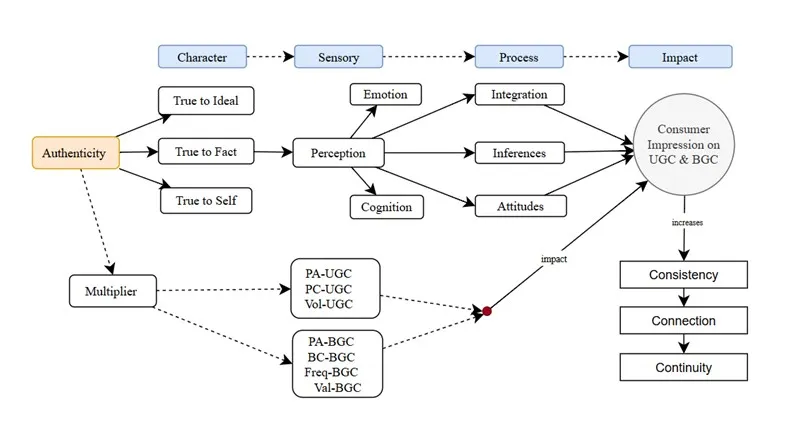
The author introduces the authenticity framework for UGC and BGC integration, illustrated in Figure 1. This model demonstrates how “authenticity” (being true to an ideal, to the facts, and to oneself) impacts consumer impressions of the content. The impressions happen through two fundamental filters: emotion and cognition. These filters create an overall sense of character and sensory response. Furthermore, it transforms into a “process” phase where consumers express their feelings and thoughts.
Further, once integrated, consumers develop inferences and form attitudes, ultimately shaping consumers’ overall impressions of user-generated and brand-generated content. In other words, impressions rooted in authenticity trigger an emotional and cognitive route, showing how consumers interpret, judge, and feel about mixed messages, ultimately impacting whether the content is authentic or persuasive.
Fig 1. The Authenticity Framework (Developed by the author using Drawio tool)
Research Findings
Literature Review Results
A systematic literature review was conducted to evaluate the existing knowledge of user-generated content, brand-generated content, and authenticity within digital marketing. As illustrated in Table 1, 347 articles were initially retrieved from 2021 to 2024, using Scopus, Web of Science, and Google Scholar as databases. These articles included peer-reviewed journal articles and conference proceedings to appropriate book chapters. The search was focused on digital marketing, consumer perception, and branding.
Furthermore, the systematic literature review was conducted in two phases. First, the author used a set of keywords such as “user-generated content,” “brand-generated content,” “consumer perception,” “authenticity,” and “integrated marketing” to screen the available literature. Consequently, only articles related to the conceptual and theoretical foundations of UGC, BGC, and authenticity were selected for the screening phase. Therefore, 129 articles were eliminated. During the second phase, abstracts and conclusions of the shortlisted articles were assessed for relevance and methodological rigor, further narrowing the sample to 88 articles.
Further, articles explicitly focusing on the role of authenticity in forming consumer behavior and brand impressions were considered most appropriate. Finally, 27 articles were used for a conceptual framework, illustrating the complex linkages between authenticity-driven content strategies and consumer responses. This SLR delivered strong theoretical support for the following empirical research design by underlining the significance of both forms of content in supporting authenticity.
Table 1: Systematic Literature Review (Developed by the author)
Survey Results
Data screening was conducted before the correlation analyses to confirm the quality and reliability of the dataset. Five of the 176 cases were excluded due to missing data. This resulted in a final sample size of n = 171. The remaining cases were examined for univariate outliers using z-scores and multivariate outliers using Mahalanobis distance at a conservative p < .001 threshold. No cases surpassed these criteria, so no further omissions were necessary.
Furthermore, after data cleaning, normality checks were conducted. Shapiro-Wilk yielded non-significant results (p > .05), suggesting no significant deviations from normality. Skewness and kurtosis values stayed within the commonly accepted range. Histograms and Q – Q plots further supported the normality assumption; consequently, these results allowed for Pearson’s correlation analysis. To explore the extent to which UGC and BGC synergistically form and impact consumer impressions, the author studies seven independent variables related to UGC and BGC, along with two dependent variables. Each variable is analyzed below for its relevance to the authenticity, which creates consumer impressions.
Perceived Authenticity of UGC (PA-UGC) – the extent to which consumers view content produced by other users as genuine and honest. Higher perceived authenticity can increase trust and foster positive brand impressions.
Perceived Credibility of UGC (PC-UGC) – consumers’ judgments regarding the reliability and expertise of peer-generated content. Credible UGC can serve as social proof, reinforcing brand perceptions.
Volume of UGC (Vol-UGC) – frequency of user-created posts, reviews, or media. A higher volume can strengthen consumer awareness and engagement but may also increase questions about quality and relevance.
Perceived Authenticity of BGC (PA-BGC) – how “real” or transparent consumers find a brand’s own content. Authentic BGC can enhance brand trust if it aligns with consumer expectations.
Brand Consistency in BGC (BC-BGC) – the uniformity of message, tone, and visual elements across different brand touchpoints. Consistent content helps consumers form a coherent mental image of the brand, strengthening brand recognition and trust.
Frequency of BGC (Freq-BGC) – how often a brand publishes or updates its content. Adequate frequency can keep the brand at the forefront of the brand’s mind and encourage ongoing engagement.
Perceived Value of BGC (Val-BGC) – the extent consumers find a brand’s content informative, entertaining, or otherwise worthwhile. High-value BGC can stimulate consumer interest and loyalty over time.
Brand Trust (BT) – consumers’ confidence in a brand’s reliability and integrity. Trust is critical for long-term consumer relationships and is influenced by perceptions of authenticity and credibility in both UGC and BGC.
Purchase Intention (PI) – the likelihood that consumers will buy a brand’s products or services. Elevated trust and positive brand evaluations, driven by synergistic UGC and BGC, often lead to stronger purchase intentions.
These variables collectively form the overall consumer impression. Consumers develop significant trust and stronger purchase intentions when perceived authenticity and credibility are increased in user-generated and brand-generated content. Further, consistent and frequent brand-created content strengthens positive consumer attitudes, reinforcing the route to brand loyalty.
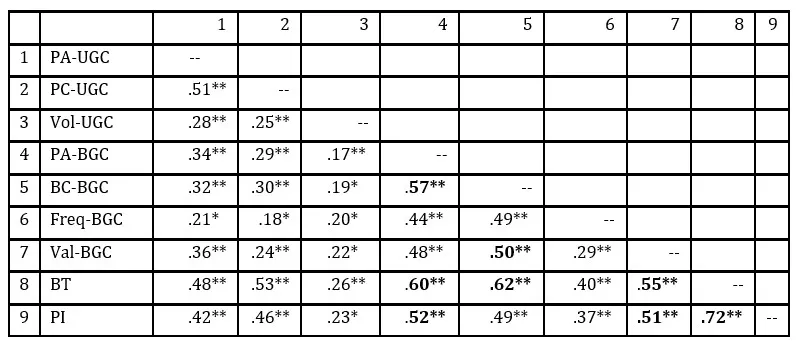
Table 2 demonstrates three significant findings. Perceived Authenticity of UGC (PA-UGC) and Perceived Credibility of UGC (PC-UGC) offer a relatively strong positive correlation (r = 0.51, p < .01), indicating that when consumers view user-generated content as more sincere, they also tend to perceive it as more credible. Moreover, the Perceived Authenticity of BGC (PA_BGC) strongly correlates with Brand Consistency in BGC (BC-BGC) (r = 0.57, p < .01), suggesting that consistent messaging could demonstrate that a brand’s content is authentic.
Furthermore, Brand Trust (BT) and Purchase Intention (PI) demonstrate strong positive correlations with multiple independent variables. Notably, Brand Trust (BT) is significantly correlated with Brand Consistency in BGC (BCBGC) (r = 0.62, p < .01) and Perceived Authenticity of BGC (PA-BGC) (r = 0.60, p < .01). Further, Purchase Intention (PI) reveals high correlation with Brand Trust (BT) (r = 0.72, p < .01), suggesting that, as consumers’ trust in the brand increases, so does their probability of making a purchase.
However, the Perceived Authenticity of UGC (PA_UGC) and Perceived Authenticity of BGC (PA-BGC) both correlate positively with Brand Trust (BT) (r = 0.48 and r = 0.60, respectively), supporting the concept that authenticity, whether from users or the brand, plays a critical role in shaping trust. Besides, the volume of UGC (Vol-UGC) shows weaker but still significantly positive correlations with most variables, meaning that, while the quantity of UGC matters, quality aspects like credibility and authenticity tend to exercise stronger impacts on brand outcomes.
Based on these results, Brand Trust and Purchase Intention should concentrate on strategic alignment and consistency between UGC and BGC. Authenticity and credibility are key drivers in enabling consumer impressions. The results highlight the value of balancing high-quality user content (PA-UGC, PC-UGC) with a consistent and authentic brand voice (PA-BGC, BC-BGC), supporting the synergy.
Table 2: Correlation Matrix (n = 171)
Note: * p < .05 Bonferroni adjustment for multiple correlations to minimize chances of a Type 1 error
Interview Results
The author conducted a semi-structured interview with marketing managers in the hospitality (n = 3) and IT (n = 2) sectors to gain more insights into the research problem. The questions were strategically designed to address the implementation and execution of user-generated content and brand-generated content strategies. The respondents were asked the following questions:
Q1. How does your organization currently integrate user-generated content into its marketing strategies?
Q2. What role do you believe brand-generated content plays alongside UGC in communicating authenticity to consumers?
Q3. What challenges do you face in maintaining consistency between UGC and BGC?
Q4. From your perspective, how important is perceived authenticity in influencing brand trust?
Q5. Have you noticed any measurable impacts on purchase intentions or customer loyalty when UGC is combined with BGC?
Q6. What metrics or indicators do you use to evaluate the effectiveness of UGC and BGC synergy?
Q7. Would you share a specific example or case study illustrating your approach to UGC and BGC?
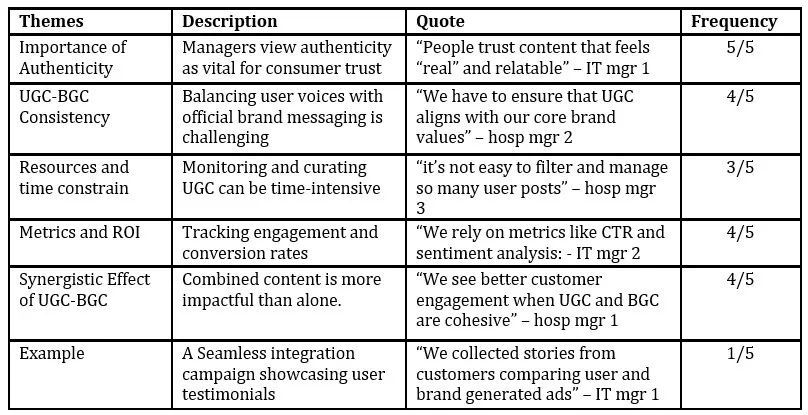
The interview results indicated a firm agreement on the critical role of authenticity in creating brand trust and consumer impressions. Table 3 shows that interviewees frequently commented that content coming directly from customers (UGC) resonates more with audiences, who tend to view peer content as unbiased and natural. Nevertheless, several managers stressed that UGC must align with brand values to avoid confusion. This highlights the ongoing tension between promoting organic user expression and carrying a legible brand identity. These results are not only reflected in one or two industries but could be generally accepted.
Furthermore, a systematic challenge underscored is the resource-intensive nature of integrating UGC. While managers acknowledge the potential for improved consumer engagement, they mention the logistical complexities of filtering through large volumes of user input and guarantee that all content yields to established guidelines. From a strategic perspective, most interviewees depend on KPIs such as engagement metrics, sentiment analysis, and click-through rates to measure the effectiveness of UGC–BGC synergy. Only one manager provided an example, illustrating a case study in which a real customer story was mixed into an official ad campaign. This practice reportedly boosted engagement and conversion rates, showing the power of mixing user authenticity with brand messaging. Overall, the interview results indicate that a balanced and timed approach significantly creates a pathway for UGC and BGC to develop consumer impressions.
Table 3: Patterns and Themes based on interviews
Discussions
The survey results showed that strategic alignment and consistency between UGC and BGC are fundamental for brand trust and purchase intention, eventually tracking marketers to consumer impressions. The correlation analysis shows that high-quality UGC is reflected in perceived authenticity (PA-UGC) and credibility (PC-UGC). It reinforces a brand’s reliability when it is supported by a transparent brand voice (PA-BGC, BC-BGC). This synergy ensures that consumers respond favorably to relatable content. These results support a balanced approach, showing that while UGC effectively humanizes the brand, consistent BGC provides coherence with the brand’s core values across touchpoints.
Website performance metrics also emphasize the significance of effective digital strategies. The average website bounce rate is 37%, with an SEO click-through rate of 13% (HubSpot State of Marketing Report, 2023). To enhance these metrics, 70% of marketers believe A/B testing is essential for increasing conversion rates (Statistics, 2023). However, the average conversion rate across all e-commerce sites stays under 2% (Statista, 2023), highlighting the need for continuous optimization. Furthermore, the interviews mirrored the survey results, showing the practical realities of integrating UGC into brand strategies. Marketing managers in the hospitality and IT sectors agreed that authenticity is critical to forming consumer impressions, stressing that consumer-generated content resonates strongly because it is primarily organic and unbiased.
Moreover, marketing managers mentioned resource-intensive processes as a principal barrier, although they acknowledged the measurable impact on engagement metrics and sentiment analysis. These interviews indicate the importance of a balanced, timely, and careful process for UGC and BGC. Besides, these statistics demonstrate that marketing managers may invest in the synergy of UGC and BGC to maximize engagement, conversion, and overall return on investment.
Table 3, with authenticity types (true-to-ideal, true-to-fact, and true-to-self), relates closely with the correlation matrix provided in Table 2. True-to-ideal authenticity, which primarily impacts consumer perceptions, aligns well with content characteristics that create positive affect (PA-UGC and PA-BGC), credibility (PC-UGC, BC-BGC), and perceived value (Val-BGC). High correlations between these variables (PA-BGC correlated strongly at .57 with BC-BGC) demonstrate that idealized, emotionally appealing brand content significantly impacts consumer trust (BT) and purchase intentions (PI).
Meanwhile, true-to-fact authenticity, predominantly changing consumer attitudes, closely compares with perceived credibility variables (PC-UGC, BC-BGC) and brand trust (BT), as shown by strong correlations (PC-UGC and BT at .53, BC-BGC and BT at .62). Lastly, true-to-self authenticity, primarily impacting consumer behavior, aligns with volume and frequency characteristics (Vol-UGC and Freq-BGC), both displaying consistent, though relatively weaker, correlations with purchase intentions (PI). Overall, the correlation matrix empirically validates the theoretical relation between types of authenticity and their distinct impacts on perception, attitude, and consumer behavior outcomes.
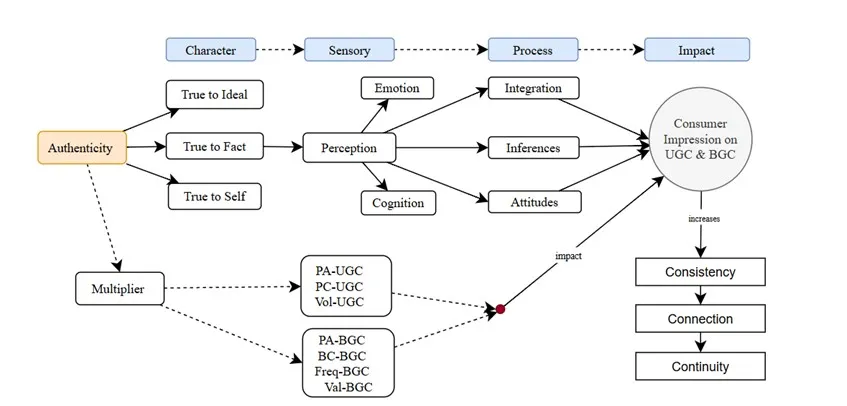
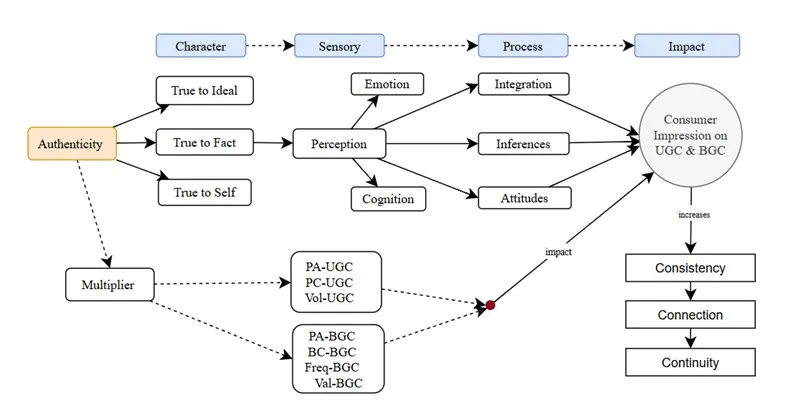
Figure 2 shows a new authenticity framework model based on data generated by new primary research. The multiplier is a conceptual amplifier that shows authenticity’s impact on UGC’s and BGC’s distinctive features. Rather than regarding authenticity as a static trait, the multiplier reflects how “being true to fact, self, and ideal” can intensify or magnify the impact of each content dimension, be it Perceived Authenticity or Credibility of UGC, or Brand Consistency or Perceived Value in BGC. Consequently, by doing so, the multiplier captures the notion that high levels of authenticity can scale up or “multiply” the positive outcomes, consistency, connection, and continuity across all consumer and brand touchpoints where user- and brand-created content combine.
Furthermore, figure 2 offers an authenticity framework describing how authenticity impacts consumer impressions, especially within User-Generated Content and Brand-Generated Content. The framework is broken down into the following steps.
Core Concept
Authenticity is the central construct, broken down into three components. These three authenticity elements impact consumer Perception.
True to Ideal – this represents an ideal standard
True to Fact – this represents factual accuracy and transparency
True to Self – this represents self-consistency
Processes
Perception splits into two pathways such as motion which is linked to sensory and character aspects, emphasizing emotional responses, and cognition, reflecting rational or thoughtful processing. Furthermore, emotion and cognition further influence two critical processes: integration – how consumers incorporate various pieces of information. Second, inferences and attitudes – Reflect how perceptions lead consumers to form judgments and attitudes toward the content.
Moderating Role: Multiplier
Authenticity influences content-related variables through a Multiplier. For example, UGC (User-Generated Content) impacts PA-UGC (Positive Affect), PC-UGC (Perceived Credibility), and Vol-UGC (Volume or Quantity of Content). Furthermore, for BGC (Brand-Generated Content), it impacts PA-BGC (Positive Affect), BC-BGC (Brand Credibility), Freq-BGC (Frequency of Content), and Val-BGC (Perceived Value). These UGC and BGC elements directly impact consumer impressions.
Outcomes: Consumer Impression on UGC & BGC
The result is a Consumer Impression of both types of content, UGC and BGC. The impression created leads to three primary outcomes: consistency with reliable and predictable interactions, connection with emotional or psychological engagement with content, and continuity with strong engagement or loyalty over time.
The Multiplier moderates the impact of authenticity on specific content characteristics (UGC & BGC) that enhance consumer impressions. Eventually, improved consumer impressions foster consistency, connection, and continuity in consumer relationships.
Fig 2. New Authenticity Framework (Developed by the author using Drawio tool)
This research delivers significant insights into how today’s marketing practitioners can strategically use different extents of authenticity, true-to-ideal, true-to-fact, and true-to-self, to improve brand performance. Today’s consumer continues to be more sophisticated and tech-savvy. Given the strong correlations between positive affect and perceived credibility (PA-UGC, PA-BGC, PC-UGC, and BC-BGC) with brand trust and purchase intentions, marketing practitioners should thoroughly design emotionally engaging and reliable content. In practice, blending user-generated content such as testimonials and peer reviews with transparent brand messages can increase consumer trust. Besides, this type of integration leads to consistency, consumer connection, and continuity with engagement and brand resonance.
Additionally, acknowledging that true-to-self authenticity primarily impacts consumer behavior highlights the extent of using genuine consumer voices in brand interactions. Marketing practitioners should actively promote and foster high volumes of authentic user-generated content and regularly interact through credible and frequent brand-generated posts. Moreover, marketing practitioners must keep strict quality control to avoid misalignment between these two forms of content, as authenticity-related differences can damage brand credibility and reduce consumer trust. Finally, this research offers a valid and valuable blueprint for strategic brand management. It guides marketing practitioners to be efficient and effective in authenticity management as it encourages trust-building consumer engagement and results in profitable consumer behaviors.
Conclusion
This research offered extensive evidence of the impact of content authenticity on consumer impressions. The results emphasize the essential role of incorporating user-generated and brand-generated content within an evolving digital marketing landscape formed by mobile and voice-based technologies.
Practically, marketers benefit from prioritizing authentic, credible UGC while maintaining a consistent brand voice through BGC to boost trust, improve purchase intention, and drive higher ROI. Strategically, aligning these dual sources of content guarantees that brands can effectively use platforms to expand consumer engagement channels rapidly.
Theoretically, this research improves current authenticity and source credibility frameworks by indicating how UGC–BGC synergy can strengthen consumer-brand relationships. The combination of perceived authenticity, consistency, and technological advancements offers new avenues for conceptual exploration.
Consequently, future research might extend these results to explore sector-specific differences. Such efforts would further explain how brands can optimize content strategies in an increasingly dynamic digital marketplace. Moreover, future research may concentrate on product or brand type. Ultimately, this research emphasized the need for authentic engagement strategies in the digital marketing ecosystem, where consumers increasingly lean on social proof to recommend brands.
References
Arya, V., Paul, J., & Sethi, D. (2022). Like it or not! Brand communication on social networking sites triggers consumer‐based brand equity. International Journal of Consumer Studies, 46(4), 1381-1398.https://doi.org/10.1111/ijcs.12763Balaban, D. C., & Sambolics, J. (2022). A proposed model of self-perceived authenticity of social media influencers. Media and Communication, 10(1), 235-246. https://doi.org/10.17645/mac.v1 i1.4765
Ballester, E., Ruiz, C., & Rubio, N. (2021). Engaging consumers through firm-generated content on Instagram. Spanish Journal of Marketing-ESIC, 25(3), 355-373. https://doi.org/10.1108/SJME-11-2020-0189
Bart, Y., Shankar, V., Sultan, F., & Urban, G. L. (2005). Are the drivers and role of online trust the same for all websites and consumers? Journal of Marketing, 69(4), 133–152. https://doi.org/10.1509/jmkg.2005.69.4.133
Beverland, M. B. (2009). Building Brand Authenticity: 7 Habits of Iconic Brands. Palgrave Macmillan. https://doi.org/10.1057/9780230250802
Campagna, C. L., Donthu, N., & Yoo, B. (2023). Brand authenticity: literature review, comprehensive definition, and an amalgamated scale. Journal of Marketing Theory and Practice, 31(2), 129-145. https://doi.org/10.1080/10696679.2021.2018937
Castillo‐Abdul, B., Pérez‐Escoda, A., & Núñez‐Barriop dro, E. (2022). Promoting social media engagement via branded content communication: A fashion brands study on Instagram. doi: https://doi.org/10.17645/mac.v10i1.4728
Chen, X., Hyun, S. S., & Lee, T. J. (2022). The effects of parasocial interaction, authenticity, and self‐congruity on the formation of consumer trust in online travel agencies. International Journal of Tourism Research, 24(4), 563-576. https://doi.org/10.1002/jtr.252
Cheung, M. L., Leung, W. K., Cheah, J. H., & Ting, H. (2022). Exploring the effectiveness of emotional and rational user-generated contents in digital tourism platforms. Journal of Vacation Marketing, 28(2), 152-170. 2 https://doi.org/10.1177/135676672110306
Chu, S. C., Deng, T., & Mundel, J. (2024). The impact of personalization on viral behavior intentions on TikTok: The role of perceived creativity, authenticity, and need for uniqueness. Journal of Marketing Communications, 30(1, 1-20. https://doi.org/10.1080/13527266.2022.2098364
De Brito Silva, M. J., de Oliveira Ramos Delfino, L., Alves Cerqueira, K., & de Oliveira Campos, P. (2022). Avatar marketing: a study on the engagement and authenticity of virtual influencers on Instagram. Social Network Analysis and Mining, 12(1), 130. https://doi.org/10.1007/s13278-022-00966-w
Dwivedi, Y. K., Ismagilova, E., Hughes, D. L., Carlson, J., Filieri, R., & Jacobson, J. (2021). Setting the future of digital and social media marketing research: Perspectives and research propositions. International Journal of Information Management, 59, https://doi.org/10.1016/j.ijinfomgt.2020.102168
Edison Research. (2023). Edison Research Smart Speaker Consumer Adoption Report.
Eigenraam, A. W., Eelen, J., & erlegh, P. W. (2021). Let me entert in you? The importance of authenticity in online customer engagement. Journal of Interactive Marketing, 54(1), 53-68. https://doi org/10.1016/j.intmar.2020.11.001
Gabelaia, I. (2022). The impact of user-generated content on customer purchase intentions of online shoppers. In International Conference on Reliability and Statistics in Transportation and Communication(pp. 437-449). Cham: Springer International Publishing. https://doi.org/10.1007/978-3-031-26655-3_40
Gabelaia, I., McElroy, J.W. (2024). The Impact of User-Generated Marketing on Creating Greater Audience Connections and Brand Loyalty. In: Kabashkin, I., Yatskiv, I., Prentkovskis, O. (eds) Reliability and Statistics in Transportation and Communication. RelStat 2023. Lecture Notes in Networks and Systems, vol 913. Springer, Cham. https://doi.org/10.1007/978-3-031-53598-7_35
Gilmore, J. H., & Pine, B. J. (2007). Authenticity: What consumers really want. Harvard Business Press.
(2022). Consumer Trust in Online Content: Global Survey Report. https://www.hubspot.com/
(2024). State of Consumer Trends. https://www.hubspot.com/marketing-statistics
(2024). State of Marketing Report. https://www.hubspot.com/marketing-statistics
(2023). State of Marketing Report. https://www.hubspot.com/marketing-statistics
Kapitan, S., Van Esch, P., Soma, V., & Kiezmann, J. (2022). Influencer marketing and authenticity in content creation. Australasian Marketing Journal, 30(4), 342-351.https://doi.org/10.1177/183933492110111
Khan, I., & Fatma, M. (2021). Online destination brand experience and authenticity: Does individualism-collectivism orientation matter? Journal of Destination Marketing & Management, 20, 100597. https://doi.org/10.1016/j jdmm.2021.100597
Kim, M., & Baek, T. H. (2024). Are virtual influencers friends or foes? Uncovering the perceived creepiness and authentic ty of virtual influencers in social media marketing in the United States. International Journal of Hum n–Computer Interaction, 40(18), 5042-5055. https://doi.org/10.1080/10447318.2023. 233125
Kumar, V., & Kaushik, A. K. (2022). Engaging customers through brand authenticity perceptions: The moderating role of self-congruence. Journal of Business Research, 138, 26-37. https://doi.org/10.1016/j.jbusres.2021.08.065
Le, J. A., & Eastin, M. S. (2021). Perceived authenticity of social media influencers: scale development and validation. Journal of Research in Interactive Marketing, 15(4), 822-841. http s://doi.org/10.1108/JRIM-12-2020-02 3
Lou, C., Kiew, S. T. J., Chen, T., Lee, T. Y. M., Ong, J. E. C., & Phua, Z. (2023). Authentically fake? How consumers respond to the influence of virtual influencers. Journal of Advertising, 52(4), 540-557. https://doi.org/10.1080/00913367.2022.2149641
Luoma-Aho, V., Pirttimäki, T., Maity, D., Munnukka, J., & Reinikainen, H. (2021). Primed authenticity: How priming impacts authenticity perception of social media influencers. In Social Media Influencers in Strategic Communicating (pp. 119-132). Routledge.
Markovic, S., Iglesias, O., Qiu, Y, & Bagherzadeh, M. (2022). The CSR imperative: How CSR influences word-of-mouth considering the roles of authenticity and alternative attractiveness. Business & Society, 61(7), 1773-1803 https://doi.org/10.1177/0007650321105302
Mirzaei, A., Wilkie, D. C., & Siuki, H. (2022). Woke brand activism authenticity or the lack of it. Journal of Business Research, 139, 1-12. https://doi.org/10.1016/j.jbusres.2021.09.044
Nadzri, W. N. M. Hashim, A. J. C., Majid, M., Jalil, N. A. A., Alzoubi, H. M., & Alshurideh, M. T. (2023). Share Your Beautiful Journey: Investigating User Generated Content (UGC) and Webrooming Among Malaysian Online Shoppers. In The Effect of Information Technology on Business and Marketing Intelligence Systems (pp. 2265-2285). Cham: Springer International Publishing. HTTPs //doi.org/10.1007/978-3-031-12382-5_124
Napoli, J., Dickinson, S. J., Beverland, M. B., & Farrelly, F. (2014). Measuring consumer-based brand authenticity. Journal of Business Research, 67(6), 1090–1098. https://doi.org/10.1016/j.jbusres.2013.06.001
Nunes, J. C., Ordanini, A., & Giambastiani, G. (2021). The concept of authenticity: What it means to consumers. Journal of Marketing, 85(4), 1-20. https://doi.org/10.1177/0022242921997081
Pittman, M., Oeldorf-Hirsch, A., & Brannan, A. (2022). Green advertising on social media: Brand authenticity mediates the effect of different appeals on purchase intent and digital engagement. Journal of Current Issues & Research in Advertising, 43(1), 106-121. /10.1080/10641734.2021.1964655
Safeer, A. A., He, Y., Lin, Y., Abrar, M., & Nawaz, Z. (2023). Impact of perceived brand authenticity on consumer behavior: evidence from generation Y in Asian perspective. International journal of Emerging Markets, 18(3), 85-704. https://doi.org/10.1108/IJOEM-09-2020-1128
Santos, M. L. B. D. (2022). The “so-called” UGC: an updated definition of user-generated content in the age of social media. On ine Information Review, 46(1), 95-1 3.ttps://doi.org/10.1108/OIR-06-2020-0258
(2020). The Impact of Authentic Content on Brand Perception. https://www.socialmediatoday.com/
(2019). Consumer Content Report: Influence in the Digital Age. https://stackla.com/
(2023). Smart Speaker Market Share.
Södergren, J. (2021). Brand authenticity: 25 Years of research. International Journal of Consumer Studies, 45(4), 645-663. https://doi.org/10.1111/ijcs.12651
Yang, J., & Battoccio, A. F. (2021). Effects of transparent brand communication on perceived brand authenticity and consumer responses. Journal of Product & Brand Management, 30(8), 1176-1193. https://doi.org/10.1108/JPBM-03-2020-2803
Yang, J., Teran, C., Battocchio, A. F., Bertellotti, E., & Wrzesinski, S. (2021). Building brand authenticity on social media: The impact of Instagram ad model genuineness and trustworthiness on perceived brand authenticity and consumer responses. Journal of Interactive Advertising, 21(1), 34-48. https://doi.org/10.1080/15252019.2020.1860168
Zhuang, W., Zeng, Q., Zhang, Y., Liu, C., & Fan, W. (2023). What makes user-gen rated content more helpful on social media platforms? Insights from creator interactivity perspective. information processing & management, 60(2), 103201. https://doi.org/10.1016/j.ipm.2022.103201