Joberth VARGAS-FIGUEROA1, Talita Noemi HERRERA-SAENZ1 and Jorge Alejandro Tejada-Carrera2
1 Business School, Universidad Privada del Norte, Peru
2 Business School, Universidad Autónoma de Chota, Perú
Volume 2026,
Article ID 507229,
IBIMA Business Review,
12 pages,
DOI: https://doi.org/10.5171/2026.507229
Received date: 20 April 2026; Accepted date: 16 June 2026; Published date: 22 July 2026
Academic Editor: Nelly Rosario Moreno- Leyva
Cite this Article as:
Joberth VARGAS-FIGUEROA, Talita Noemi HERRERA-SAENZ and Jorge Alejandro TEJADA-CARRERA (2026)," Access to Public Financing for Peruvian Hardware SMEs: The Role of Legal Formalization “, IBIMA Business Review, Vol. 2026 (2026), Article ID 507229, https://doi.org/10.5171/2026.507229
This study examines the relationship between legal formalization and access to public financing among SMEs in Peru’s hardware sector. A quantitative approach with a non-experimental design and correlational scope was employed, using a Likert-scale survey administered to 125 companies. The results show that 74% of the SMEs were formally incorporated, indicating a positive trend toward formalization in this sector. High positive correlations were identified between business formalization and access to financing (Rho=0.673; p=0.000), as well as between registration and tax formalization and financing (Rho=0.716; p=0.000). Likewise, a positive relationship (Rho=0.497; p=0.000) was found between labor formalization and access to financial resources, and a moderate positive relationship (Rho=0.317; p=0.000) in the case of municipal formalization. It is concluded that legal formalization in its various dimensions (registration, tax, labor, and municipal) constitutes a determining factor in improving access to public and private financing, thereby enhancing the growth capacity and sustainability of hardware SMEs.
Keywords: Access to financing, Business formalization, Tax obligations, Legal compliance, Small business.
Introduction
Currently, one of the main challenges facing small and medium-sized enterprises (SMEs) is the difficulty in accessing formal sources of financing due to a lack of credit history, adequate collateral, and poor financial management (Zhang et al., 2023). This is further complicated in sectors with high levels of informality, including legal, accounting, and tax noncompliance (Hino et al., 2024). Therefore, the lack of formalization is one of the factors that hinders access to financing, reduces competitiveness, and limits these companies’ ability to participate in broader, formal markets, perpetuating a cycle of economic and operational constraints.
According to the World Bank (2023), more than 50% of SMEs in developing countries lack access to financing due to variations in banking policies and global macroeconomic conditions. Financial institutions often perceive small businesses as high-risk, resulting in high interest rates and strict requirements; furthermore, the lack of standardization in the regulation and supervision of financial markets across countries creates additional barriers for SMEs seeking international financing; Likewise, Li et al. (2023) noted that informality in the business sector is a global concern, limiting the ability of SMEs to operate in regulated markets and access government incentives.
In Latin America, 90% of micro and small enterprises (MSEs) operate informally, outside the legal and tax framework, due to the complexity and cost of formalization. This informality limits their access to bank loans and government support programs, and contributes to a lack of social and labor protections for workers, thereby hindering their growth and development (Feria, 2024). Accordingly, the Development Bank of Latin America (2021) noted that 51.6% of SMEs in Latin America lack access to financing, primarily due to high interest rates (44%), the complexity of the process (16%), and the expectation of being denied approval (4%).
Peru is no exception; the financial system presents significant barriers for small businesses, such as high borrowing costs and a lack of financial products tailored to their needs. According to the Peruvian Superintendency of Banking and Insurance (2024), BBVA offers an interest rate of 16.89% for small businesses, 12.04% for medium-sized businesses, and 8.55% for large businesses; Similarly, BCP has an interest rate of 21.24% for small businesses, 13.9% for medium-sized businesses, and 8.82% for large businesses. Furthermore, this business sector operates in the informal economy due to bureaucratic factors and formalization costs, which limit access to financing (Ramos, 2023).
Regarding the background supporting this study, Urdaneta and Zambrano (2024) note that SMEs’ demand for credit is closely related to financing conditions, with a statistically significant correlation coefficient of 0.538 and a p-value of 0.000, with the term and interest rate being key factors in these companies’ demand for credit. Similarly, in Argentina, Solari (2022) found that 50.55% of the SMEs evaluated faced restrictions on bank financing, and also noted that audited organizations with greater financial capacity had more financing opportunities. This provides evidence that there is a need to implement policies and improvements in financial conditions to support SMEs in enhancing their growth and sustainability.
Another study conducted in Colombia by Acevedo and Ángel (2022) found that 72% of SMEs are informal and 73% did not have access to bank financing, revealing a correlation coefficient of 0.285 between formalization and access to credit, with a p-value of 0.000. This demonstrates that as long as formalization does not exist, it is more difficult for SMEs to obtain formal financing. Therefore, companies operating in the informal sector have fewer opportunities to access financing and government support programs, which hinders their development (Paz-Pére, 2025). Another relevant point is the importance of good financial education, which helps mitigate the impact of limited access to financing (Segura & Sarmiento, 2020).
In the Peruvian context, the issue is similar: Gonzales (2023) found that formalization has a direct relationship with financing, with a correlation coefficient of 0.825 and a significance level of less than 0.05; the factors involved are labor registration, tax registration, and municipal registration. Meanwhile, Venegas (2022) found that informality was high in 72% of the cases studied, generating a correlation of 0.778 with financing. Consequently, according to Chunga (2021), financing is linked to formalization, with findings showing that 48% of the population studied was informal.
Cultural factors also play a role, as do the different perspectives on SMEs, with tax issues being a key factor in their formalization. Bravo (2023) found that 56% of the companies in the study were informal, highlighting a critical problem in labor compliance (92%) and municipal registration (44.6%). Similarly, Ortiz (2022) conducted a study of 218 SMEs, of which 79% were informal and 21% were partially formal. Abufhele and Angelcos (2025) also note that informality arises due to the lack of well-structured public policies. Finally, Delgado (2021) found that of the 100 SMEs studied, 53% did not have access to the financial system because they were informal, highlighting the importance of formalizing SMEs to generate greater access to financial resources that allow them to continue operating.
Business Formalization
Business formalization is defined as the set of procedures an organization must follow to comply with the legal and regulatory requirements established by the government, enabling it to operate officially and legitimately (Ramírez et al., 2020). This process involves registration and tax formalization, labor formalization, and municipal formalization (Chacaltana, 2017).
Registration and tax formalization consists of several steps, ranging from the selection and verification of the business name or corporate name in public records to the reservation of the name if necessary (Roy and Khan, 2021). Registration with SUNARP is the process by which a company registers its incorporation and other acts related to its legal existence in Peru’s public registries (SUNARP, 2018). Registration with SUNAT is the process by which a company or individual registers with the Tax Administration to obtain a tax identification number in Peru (SUNAT, 2021).
Formal employment is the process by which labor relations between employers and workers are formalized, ensuring compliance with current labor laws and regulations (Robles et al., 2022). Beginning with payroll registration, this is the process by which companies formally register and document their employees in an organized system, complying with the legal and labor obligations established by law (Perez and Unocc, 2024). Employee benefits are additional perks provided by employers to their employees as part of their compensation package, in compliance with current legal regulations (Rodríguez et al., 2021).
Municipal registration is the process by which a business or economic entity complies with the requirements and procedures established by local authorities to operate legally within a municipal jurisdiction. This process begins with the operating license, a permit issued by municipal authorities that authorizes a company or establishment to operate legally within a specific jurisdiction; compliance with municipal regulations means that a company or economic entity adheres to all regulations and provisions established by local authorities within their jurisdiction (Ministry of Labor and Employment Promotion, 2017).
Financing
Financing involves providing temporary financial resources through various means, such as loans, lines of credit, equity investments, or grants, with the aim of enabling small business owners to obtain the capital necessary to maximize their business operations in terms of infrastructure, technology, inventory, and personnel. (Nuño, 2012).
Equity and debt. Equity refers to the funds a company or entity obtains from its own resources without resorting to external financing; these resources include capital contributed by owners or shareholders, retained and reinvested earnings, and the sale of company assets (Longenecker and Petty, 2012). Regarding contributions from partners, these are the financial resources of a company’s owners or shareholders that they invest in the company (Lopera et al., 2014). Retained earnings capitalization is the process by which a company reinvests its retained earnings rather than distributing them as dividends to shareholders (Haderspok, 2016).
External financial resources are funds that a company or entity obtains from external sources, generally through borrowing; these resources may come from bank loans, lines of credit, supplier financing, or capital contributed by external investors (Longenecker and Petty, 2012). Commercial credit is a form of short-term financing that suppliers provide to their customers (Ortega, 2020). A bank loan is a financing alternative in which a financial institution grants a sum of money to a borrower, with the obligation to repay the principal amount along with interest within a specified period (Groisman and Camacho, 2021).
Taking the above into account, and given the importance of SMEs for the improvement and development of economic growth and the country, the objective is to determine the relationship between business formalization and financing among new taxpayers in Peru’s hardware sector. The specific objectives are: to determine the relationship between registration and tax formalization and financing among new taxpayers in Peru’s hardware sector; to determine the relationship between labor formalization and financing among new taxpayers in Peru’s hardware sector; and to determine the relationship between municipal formalization and financing among new taxpayers in Peru’s hardware sector.
Furthermore, the general hypothesis is as follows: There is a relationship between business formalization and financing among new taxpayers in Peru’s hardware sector. The specific hypotheses are as follows: There is a relationship between registration and tax formalization and financing among new taxpayers in Peru’s hardware sector; There is a relationship between labor formalization and financing among new taxpayers in Peru’s hardware sector; There is a relationship between municipal formalization and financing among new taxpayers in Peru’s hardware sector.
At the theoretical level, this research study is justified because it contributes to the understanding of the benefits and advantages of business formalization in obtaining credit for new taxpayers in Peru’s hardware sector; it also serves as an incentive for other informal businesses to enter the formal market to obtain financing, do business with large suppliers, and improve their economic situation and quality of life. In practical terms, it highlights the benefits of business formalization for obtaining business financing. Methodologically, the research developed instruments that underwent rigorous validation processes and reliability tests, ensuring the accuracy and consistency of the data obtained in this study.
Materials and Methods
This study employs a quantitative approach, which involves collecting and analyzing numerical data to test pre-established hypotheses (Hernández-Sampieri and Mendoza, 2018). In this regard, the variables were tested using statistical methods to present numerical data, which served to corroborate the research hypothesis. As for the type of study, it was based on existing knowledge to improve processes or provide a solution to a particular problem (CONCYTEC, 2018); in this way, it contributed to the theoretical body of knowledge on the subject of study, providing alternative solutions to the phenomena investigated.
The design was non-experimental with a correlational scope; no experiments or manipulation of variables were conducted here, but the study sought to identify the link or association between the constructs under investigation (Hernández-Sampieri and Mendoza, 2018). In addition, the deductive method was employed, which involves a process of logical reasoning that begins with general premises or aspects to arrive at specific conclusions (Espinoza, 2023). The sample consisted of 125 new taxpayers in the hardware sector, selected through non-probabilistic convenience sampling, who met the requirements of accessibility, availability, and willingness to participate in the study.
A survey was used as a technique to collect data on the subject under study regarding attitudes or characteristics (Gamarra and Rivera, 2018). The instrument used was a questionnaire previously validated by experts in business formalization as well as experts in the financial system; in addition to conducting a pilot test to ensure the clarity and coherence of the questions, reliability was assessed using Cronbach’s alpha, which allowed for determining the consistency of the questions, of which 9 questions pertained to the Business Formalization variable and 10 questions to the Financing variable, with responses based on a five-point Likert scale: 1 (strongly disagree), 2 (disagree), 3 (neutral), 4 (agree), and 5 (strongly agree). Once the data were collected, they were cleaned and classified in Microsoft Excel 2019, and subsequently processed using the IBM SPSS statistical software, version 27. The data analysis process included two main stages. In the first stage, a descriptive analysis was performed using tables to summarize and visualize the results clearly and concisely. In the second stage, an inferential analysis was conducted, beginning with the determination of the normality of the data. The study adhered to ethical standards at all times, ensuring a high level of reliability.
Results
After presenting the background, theoretical framework, and methodology, the following results are presented, beginning with the reliability analysis, which assessed the consistency and reliability of the questionnaire.
Table 1: Reliability of the Variables
According to Table 1, the “formalization” variable achieved a reliability coefficient of 0.870 and the “financing” variable 0.817, indicating that both variables have an acceptable level of internal consistency as they are close to one. This coefficient suggests that the items comprising each of these variables are consistent with one another and reliably measure the same construct, making the instrument generally applicable.
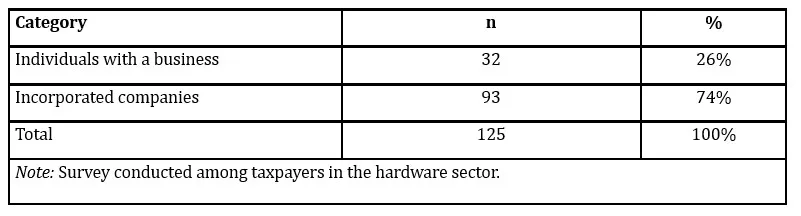
Table 2: Distribution of Taxpayers Surveyed
Table 2 shows the data on the categories of taxpayers; of a total of 125 respondents, 26% are self-employed individuals (32 people), while 74% are incorporated businesses (93 entities). These figures reflect a predominance of formally established businesses in the district’s hardware sector.
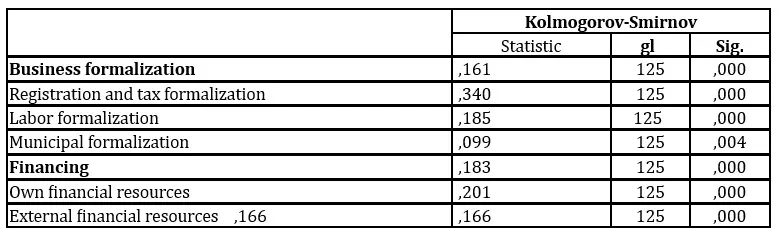
Table 3: Normality Test for the Variables
Note: Lilliefors’ significance test
Table 3 presents the Kolmogorov-Smirnov normality test, which shows that the variables “business formalization” and “financing” do not follow a normal distribution, with a p-value of <.05 (0.000). Consequently, Spearman’s rho statistic is used to determine the correlation between the variables.
Testing the General Hypothesis
H1: There is a relationship between business formalization and financing among new taxpayers in Peru’s hardware sector.
H0: There is no relationship between business formalization and financing among new taxpayers in Peru’s hardware sector.
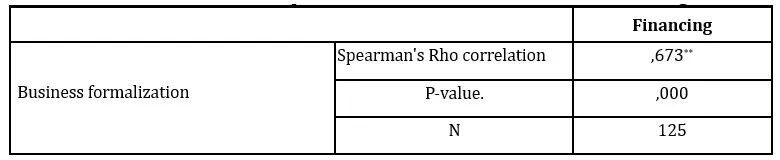
Table 4: The Relationship between Business Formalization and Financing
Note. Sig: Significance; N: Sample size
Table 4 shows a high Spearman correlation (r = 0.673) between business formalization and financing, with a significance level of (Sig. = 0.000 < 0.05), confirming that this correlation is statistically significant. Consequently, the research hypothesis is accepted and the null hypothesis is rejected. These findings indicate that, as firms progress in their formalization process, their opportunities to access better financing increase, reinforcing the importance of formalization as a key factor in sustainable business growth.
Testing a Specific Hypothesis 1
H1: There is a relationship between registration and tax compliance and financing among new taxpayers in Peru’s hardware sector.
H0: There is no relationship between registration and tax compliance and financing among new taxpayers in Peru’s hardware sector.
Table5: Relationship between Legal and Tax Registration and Financing
Note. Sig.: Significance; N: Sample size
Table 5 shows a high Spearman correlation (rs = 0.716) between registration and tax compliance and access to financing, with a significance level of (Sig. = 0.000 < 0.05), confirming that this association is statistically significant; therefore, specific hypothesis 1 of the study is accepted and the null hypothesis is rejected. These results indicate that as firms achieve higher levels of registration and tax compliance, their chances of accessing sources of financing improve, demonstrating the importance of formalization as a key factor in business consolidation and sustainability.
Testing of Specific Hypothesis 2
H2: There is a relationship between labor formalization and financing among new taxpayers in Peru’s hardware sector.
H0: There is no relationship between labor formalization and financing among new taxpayers in Peru’s hardware sector.
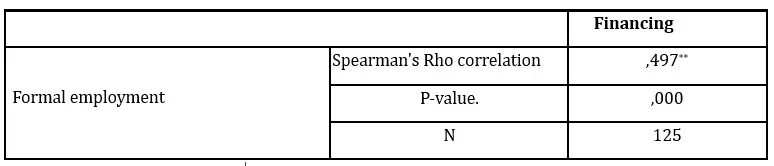
Table 6: Relationship between Formal Employment and Financing
Note. Sig: Significance; N: Sample size
Table 6 shows a moderate Spearman correlation (r = 0.497) between labor formalization and access to financing, with a significance level of (Sig. = 0.000 < 0.05), thus confirming that this association is statistically significant; therefore, specific research hypothesis 2 is accepted and the null hypothesis is rejected. These results indicate that as firms achieve higher levels of labor formalization, their chances of having better access to financing increase; this highlights the importance of formalization as a strategic pillar of consolidation in a competitive market.
Testing Specific Hypothesis 3
H3: There is a relationship between municipal formalization and financing among new taxpayers in Peru’s hardware sector.
H0: There is no relationship between municipal formalization and financing among new taxpayers in Peru’s hardware sector.
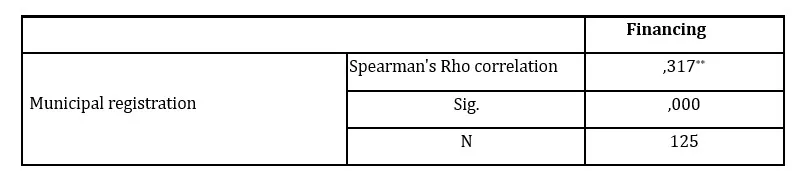
Table 7: Relationship Between Municipal Formalization and Funding
Note. Sig: Significance; N: Sample size
Table 7 shows a moderate Spearman correlation (r_s = 0.317) between municipal formalization and access to financing. With a significance value of (p = 0.000 < 0.05), this relationship is confirmed to be statistically significant. Thus, specific hypothesis 3 of the study is accepted, and the null hypothesis is rejected. These results suggest that firms that complete municipal formalization processes tend to improve their chances of accessing financing mechanisms, highlighting the importance of municipal formalization in consolidating their formalization and its impact on financial inclusion.
Discussion and Conclusions
In line with the stated overall objective, the results show that 74% of the companies studied in the hardware sector are formally registered; revealing a high correlation (Rho=0.673) between business formalization and financing, with a significance level of (Sig.=0.000), <.05. This explains that, as companies become formalized, they are more likely to meet the necessary requirements to access various sources of financing, such as bank loans, equity investments, and government programs. This access to financing not only allows them to secure capital to operate and expand but also provides them with a solid foundation for their growth and sustainable development in the market. These results are consistent with the study by Gonzales (2023), who found a correlation of 0.825; Venegas (2022) also found a correlation of 0.778; Chunga (2021) found 0.596; and Acevedo and Ángel (2022) reported a correlation of 0.285. This highlights the importance of hardware SMEs operating in full compliance with legal regulations, thereby improving competitiveness, strengthening trust, and achieving business growth. Various studies thus demonstrate that as long as SMEs are legally formalized, they have greater access to financing sources that allow them to operate and expand their operations, gaining a competitive advantage over other informal businesses.
On the other hand, regarding the first specific objective, a strong correlation (Rho=0.716) was found between registration and tax compliance and access to financing. Furthermore, the association was significant (Sig.=0.000), p<0.05. This finding demonstrates that when firms comply with registration requirements and fulfill their tax obligations, they increase their credibility and transparency in the eyes of financial institutions. This result is similar to that of Gonzales (2023), who notes that formalization not only facilitates access to financial resources but also contributes to business sustainability and stability by complying with labor, tax, and municipal regulations. This compliance not only reduces the risk perceived by lenders and investors but also facilitates access to various sources of financing, including bank loans or lines of credit. Furthermore, formal registration and tax compliance can open doors to additional benefits, such as tax incentives, government support programs, and business opportunities with large companies and public entities—such as “Cómprale al Perú”—that require working with formalized suppliers. This access to financing and other resources is essential for companies to invest and increase their competitiveness in the competitive market.
Furthermore, regarding the second specific objective, a moderate correlation (Rho = 0.497) was found between formal employment and financing; this correlation was also statistically significant (Sig. = 0.000, p < 0.05), indicating that as companies comply with labor laws, they are more likely to obtain financing. Compliance with these regulations not only improves labor relations and working conditions for employees but also projects an image of responsibility and stability to the outside world. When evaluating financing applications, financial institutions consider this aspect an indicator of responsible and sustainable business management, since a company that demonstrates a commitment to labor formalization is viewed as more stable and less likely to face unforeseen legal or financial problems, which facilitates its access to various sources of financing. Therefore, the moderate and significant correlation between labor formalization and access to financing underscores the importance of companies fulfilling their labor obligations, thereby enhancing their credibility and trustworthiness in the eyes of financial institutions and making it easier for them to access external financial resources to support their sustainable development.
Finally, regarding the third specific objective, a moderate correlation (Rho = 0.317) was found between municipal formalization and financing, with a significance level of (Sig. = 0.000), <.05. This demonstrates that businesses that have completed municipal formalization processes tend to have better access to financing. In this regard, Chunga (2021) conducted a study indicating that the lack of formalization can act as a barrier that limits these firms’ ability to obtain the financial resources necessary for their growth and development. Therefore, this indicates that, although this form of formalization is not the sole determining factor, it does play an important role in firms’ ability to obtain financial resources, as it demonstrates that the firm meets all the requirements for securing financing. Financial institutions value compliance with local regulations, as this reduces the risk associated with companies operating illegally or irregularly with respect to their legal and tax domicile; thus, municipal formalization can be seen as an indicator of stability and responsibility, which improves lenders’ perception of the companies and increases their chances of receiving financing.
Thus, based on these findings, the importance of formalizing SMEs is highlighted, as it is a key factor in accessing sources of financing; however, this does not guarantee business growth without financial literacy and strategic management skills, which are necessary to ensure that the resources obtained generate revenue rather than becoming a financial burden for SMEs. Simply becoming formalized does not guarantee solvency or success; it is essential that businesses have solid knowledge of financial planning, cost control, and investment strategies. Furthermore, public policies must offer not only incentives for formalization but also ongoing support programs that ensure the long-term sustainability and growth of formalized businesses.
One of the main limitations of this study is the lack of detailed information on the correlation between the various dimensions of the variables analyzed, due to the scarcity of empirical studies on this business sector—such as the relationships between registration, tax, labor, and municipal formalization and access to financing. This gap limits a more in-depth discussion and understanding of how each specific dimension of business formalization contributes differently to access to financing. However, it has a direct impact on the ability to analyze public policies aimed at improving access to formalization, including training in financial literacy and business management; in this way, SMEs can clearly see the benefits of operating in a competitive market while complying with legal regulations, which allows them access to various sources of external financing.
Conclusions
This study found a strong and significant relationship between business formalization and access to financing among new taxpayers in Peru’s hardware sector. Most importantly, it identified how formalization helps improve financing opportunities by enabling businesses to comply with legal and tax requirements, thereby enhancing their credibility with financial institutions. What helped establish this correlation was the analysis of specific statistical data, as it provided quantitative evidence of the relationship between the level of formalization and access to financial resources. The challenge was accessing detailed and reliable information on companies’ formalization practices, as many are still in the early stages of formalization or do not fully report their financial statements, which limited the depth of the analysis.
With regard to the first specific objective, it was determined that there is a significant relationship between compliance with registration and tax obligations and access to financing among new taxpayers in Peru’s hardware sector. Most importantly, the study demonstrated how compliance with registration and tax obligations enhances companies’ credibility and transparency in the eyes of financial institutions, thereby increasing their chances of accessing various sources of financing. This correlation was established through a rigorous statistical analysis of the collected data, which enabled the quantification of the relationship between legal compliance and companies’ ability to secure financial resources. The challenge was obtaining accurate and complete information on companies’ registration and tax practices, as many of them lack digital or printed documentation and/or are in the early stages of formalization, which hindered a more detailed analysis.
The second specific objective found that there is a moderate and significant relationship between formal employment and access to financing among new taxpayers in Peru’s hardware sector. The significance of this study was to demonstrate how compliance with labor regulations improves financial institutions’ perception of a company’s stability and responsibility, as this increases its likelihood of accessing financing. What helped establish this correlation was the collection and analysis of specific data on labor practices and their impact on securing financial resources, as it provided a quantitative basis supporting the importance of labor formalization. The challenge was obtaining complete and accurate data on companies’ labor practices, as most are unaware of their payroll records and employee benefits, which limited the possibility of a more in-depth analysis.
Finally, regarding the third specific objective, it was determined that there is a moderate and significant relationship between municipal formalization and financing for new taxpayers in Peru’s hardware sector. A key finding of the research was that compliance with municipal regulations improves financial institutions’ perception of a company’s stability and legitimacy, which in turn increases its access to financing and strengthens its market position. What helped determine this correlation was the collection and analysis of data on municipal formalization and its impact on companies’ ability to obtain financial resources, as it provided clear evidence of the role that local legality plays in access to financing. The challenge was obtaining detailed and up-to-date information on the status of companies’ municipal formalization, as many are still in the process of regularization or do not properly register their status, which complicated a comprehensive analysis.
References
Abufhele Milad, V and Angelcos Gutiérrez, N (2025) “Social Production in the Peripheries: (In)formality, the Role of the State, and the Participation of Popular Sectors,” Revista INVI, 40(115), pp. 63–86. Available at: https://dx.doi.org/10.5354/0718-8358.2025.78541
Acevedo Martelo, M and Ángel Correa, A (2022) Relationship between microenterprise formalization and access to formal financial markets in Colombia. Bachelor’s thesis, EAFIT University. Available at: https://repository.eafit.edu.co/.
World Bank (2023) Financial sector. Available at: https://www.bancomundial.org/es/topic/financialsector/overview#2
Bravo Ayay, M. A. (2023) Tax culture and business formalization in the San Antonio market in the city of Cajamarca, 2023. Thesis, Universidad Privada del Norte. Available at: https://repositorio.upn.edu.pe/bitstream/handle/11537/33920/Bravo%20Ayay%20Mirely%20Anali.pdf?sequence=6&isAllowed=y.
Campomanes, R. and Rosilene, C. (2023) “Tax Policy and the Formalization of Micro and Small Businesses in Metropolitan Lima,” Quipukamayoc, 31(65), pp. 53–60. Available at: http://dx.doi.org/10.15381/quipu.v31i65.24842
Chacaltana, J (2017) ‘Formalization in Peru? Recent trends and policy implications’, in ILO, On informality and productivity: brief reflections on the case of Peru, pp. 18–33. Available at: https://www.researchgate.net/profile/Juan-Chacaltana/publication/331569506_Formalizacion_en_Peru/links/5c81308492851c69505d6ea2/Formalizacion-en-Peru.pdf.
Chunga Calle, L E (2021) Financing of the Reactiva Perú Program and its relationship with the formalization process in MSMEs in the commercial sector of the Modelo Market in Piura 2020. Undergraduate thesis, César Vallejo University. Available at: https://repositorio.ucv.edu.pe/bitstream/handle/20.500.12692/87037/Chunga_CLE-SD.pdf?sequence=1&isAllowed=y.
CONCYTEC (2018) Basic Research. Available at: https://conocimiento.concytec.gob.pe/termino/investigacion-basica/
Delgado Idrogo, L. Y. (2021) Financing and Profitability of Micro and Small Enterprises in the City of Chota-Cajamarca, 2021. Undergraduate thesis, César Vallejo University. Available at: https://repositorio.ucv.edu.pe/bitstream/handle/20.500.12692/82250/Delgado_ILY-SD.pdf?sequence=1&isAllowed=y.
Espinoza, E (2023) ‘Teaching social sciences using the deductive method’, Mexican Journal of Educational Research and Intervention, 2(2), pp. 34–41. Available at: https://doi.org/10.62697/rmiie.v2i2.50
Feria, A (2024) “Economic System and the Development of Small and Medium-Sized Enterprises in Latin America,” Latin American Journal of Research on Organizational Competitiveness, 6(22), pp. 2659–5494. Available at: https://doi.org/10.51896/rilco.v6i22.517
Gamarra, G and Rivera, T (2018) Statistics and Research Using SPSS. 1st ed. Peru: Editorial San Marcos.
Gómez, G, Navarro Barranzuela, J A, and Marchena Ojeda, L M (2022) ‘Crowdlending as a Financing Alternative for MSMEs in Peru,’ RETOS. Journal of Management and Economics, 12(23), pp. 161–177. Available at: https://doi.org/10.17163/ret.n23.2022.10
Gonzales, A (2023) Formalization and its influence on the financing of micro and small cocoa bean trading enterprises in the city of Tingo María, 2021. Bachelor’s thesis, University of Huanuco. Available at: http://200.37.135.58/bitstream/handle/20.500.14257/4515/Gonzales%20Bail%c3%b3n%2c%20Andrea%20Perla.pdf?sequence=1&isAllowed=y.
Groisman, C and Camacho, R M (2021) “Conversion to Condominium Ownership. Mortgage. Bank Loan,” Journal of the Association of Notaries of Uruguay, 107(1), pp. 394–403. Available at: https://revista.aeu.org.uy/index.php/raeu/article/view/91.
Haderspok, B (2016) ‘Retained earnings: a barrier to cash dividend payments’, Actualidad Jurídica Iberoamericana, 4(1), pp. 358–365. Available at: https://rodrigo.uv.es/bitstream/handle/10550/52733/358-365.pdf?sequence=1.
Hernández-Sampieri, R and Mendoza, C (2018) Research Methodology: Quantitative, Qualitative, and Mixed Methods. Mexico: McGraw Hill Education.
Hino, H, Hamaguchi, N, Piot, C, and Yin, J (2024) “Informality and dynamism of microbusinesses in Africa: Possible causalities,” Duke Global Working Paper Series, 56(1), p. 17. Available at: https://dx.doi.org/10.2139/ssrn.4841044.
Li, C., Wang, Y., Zhou, Z., Wang, Z., and Mardani, A. (2023). “Digital finance and enterprise financing constraints: Structural characteristics and mechanism identification.” Journal of Business Research, 165(1), p. 114074. Available at: https://doi.org/10.1016/j.jbusres.2023.114074
Lopera, J K, Velez, V M, and Ocampo, L J (2014) ‘Financing Alternatives for MSMEs in Colombia’, Adversia, 14(1), p. 17. Available at: https://revistas.udea.edu.co/index.php/adversia/article/view/20900.
Ministry of Labor and Employment Promotion (2017) Guide to Formalization and Employment. Available at: https://cdn.www.gob.pe/uploads/document/file/289280/Gui%CC%81a_de_la_formalizacio%CC%81n_21-11.pdf
Ortega, E. E. L. (2020) “Commercial Credit, Financial Policies, and Sales in Business Development,” Dictamen Libre, 26(1), pp. 137–149. Available at: https://doi.org/10.18041/2619-4244/dl.26.6192
Ortiz, N (2022) Tax culture in the formalization of construction sector companies in the district of Cajamarca, 2020. Undergraduate thesis, National University of Cajamarca. Available at: https://repositorio.unc.edu.pe/bitstream/handle/20.500.14074/5326/Tesis%20N%c3%a9rida%20Ortiz.pdf?sequence=1&isAllowed=y
Paz-Pére, D E (2025) ‘Analysis of tax risk and the financial advantages of the simplified trust regime in Mexico’, Biolex, 17, e406. Available at: https://doi.org/10.36796/biolex.v17i28.406
Perez, J and Unocc, C (2024) Electronic Payroll Forms and Labor Obligations in Hardware Companies in the Province of Huancayo—2022. Undergraduate thesis, Universidad Peruana Los Andes. Available at: https://repositorio.upla.edu.pe/handle/20.500.12848/6957
Ramírez, P M J, Pérez, A N, Andrade, C R P, and Rodríguez, W J V (2020) ‘Comprehensive Formalization for Microentrepreneurs in Girardot and La Mesa’, Journal of Business and Entrepreneurial Studies, 4(2). Available at: https://journalbusinesses.com/index.php/revista/article/view/93
Ramos, M J (2023) ‘The Phenomenon of Informality in Peru: Challenges and Opportunities for National Security’, Cuadernos de Trabajo Journal, 25(1). Available at: https://doi.org/10.58211/cdt.vi25.62
Robles Ortiz, D, Beltrán Jaimes, L D, and Delgado López, M D (2022) ‘Economic and Social Impact of Labor Formalization in Mexico,’ Cuadernos de Economía, 41(86), pp. 185–212. Available at: https://doi.org/10.15446/cuad.econ.v41n86.85067
Rodríguez Limachi, O. M., Ticona Carrizales, L., Ferro Gonzales, P. F., and Inquilla Mamani, J. (2021). “Quantification of Social Benefits in an Education Sector Investment Project Using the INVIERTE.PE Approach: A Peruvian Case Study.” Revista Estudios del Desarrollo Social: Cuba y América Latina, 9(3), p. 17. Available at: http://scielo.sld.cu/scielo.php?pid=S2308-01322021000300025&script=sci_arttext&tlng=en
Roy, P and Khan, M H (2021) ‘Digitizing taxation and premature formalization in developing countries’, Development and Change, 52(4), pp. 855–877. Available at: https://doi.org/10.1111/dech.12662
Segura, J A and Sarmiento, V J (2020) ‘Effects of financial crises on Latin American economies – The case of Colombia and SMEs’, Journal of Economics Studies and Research, Vol. 2020, Article ID 808445. Available at: https://doi.org/10.5171/2020.808445
Segura, J A. And Victor J. Sarmiento (2020), “Effects of Financial Crises on Latin American Economies-Colombia Case and the SMEs”, Journal of Economics Studies and Research, Vol. 2020 (2020), Article ID 808445, DOI: 10.5171/2020.808445
Superintendence of Banking and Insurance of Peru (2024) Average interest rate of the banking system. Available at: https://www.sbs.gob.pe/app/pp/EstadisticasSAEEPortal/Paginas/TIActivaTipoCreditoEmpresa.aspx?tip=B
National Superintendency of Customs and Tax Administration (2021) What is the RUC? Available at: https://e-consulta.sunat.gob.pe/ol-ti-itinsrucsol/iruc001Alias#:~:text=El%20Registro%20%C3%9Anico%20de%20Contribuyentes,relevante%20de%20los%20sujetos%20inscritos
National Superintendency of Public Registries (2018) Incorporate your company in six steps. Available at: https://www.sunarp.gob.pe/PRENSA/inicio/post/2018/08/03/constituye-tu-empresa-en-seis-pasos
Urdaneta-Montiel, A J and Zambrano-Morales, Á A (2024) ‘Banking regulatory framework in Ecuador and its impact on financing for SMEs’, RETOS. Journal of Administrative and Economic Sciences, 14(27), pp. 147–163. Available at: https://doi.org/10.17163/ret.n27.2024.10
Venegas, E (2022) The informality of MSMEs and access to business financing in the district of Paita, 2021. Undergraduate thesis, César Vallejo University. Available at: https://repositorio.ucv.edu.pe/bitstream/handle/20.500.12692/108275/Venegas_MEE-SD.pdf?sequence=1&isAllowed=y
Zhang, Y, Xing, C and Guo, X (2023) ‘The shielding effect of access to finance on small and medium-sized enterprises during the COVID-19 crisis: Comparing fintech and traditional finance’, Emerging Markets Finance and Trade, 59(8), pp. 2383–2397. Available at: https://doi.org/10.1080/1540496X.2022.2072201