Vladimír BOLEK1, Ján HOLÝ1, Jana FILANOVÁ1and Nora GRISÁKOVÁ2
1Department of Information Management, Faculty of Business Management,
Bratislava University of Economics and Business, Bratislava, Slovak Republic
2Department of Business Economy, Faculty of Business Management,
Bratislava University of Economics and Business, Bratislava, Slovak Republic
Volume 2026,
Article ID 526853,
IBIMA Business Review,
15 pages,
DOI: https://doi.org/10.5171/2026.526853
Received date: 31 March 2026; Accepted date: 24 June 2026; Published date: 24 July 2026
Academic Editor: Marta Bieganska
Cite this Article as:
Vladimír BOLEK, Ján HOLÝ, Jana FILANOVÁ and Nora GRISÁKOVÁ (2026)," From Perceived Need to Implementation: Multidimensional Barriers and Organizational Readiness in Industry 5.0 “, IBIMA Business Review, Vol. 2026 (2026), Article ID 526853, https://doi.org/10.5171/2026.526853
Industry 5.0 is increasingly understood as a human-centric, resilient, and sustainable extension of digital industrial transformation, yet empirical evidence on its implementation at firm level remains limited. Existing studies have relied largely on conceptual discussion or expert-based prioritisation techniques, while the structural relationships among implementation barriers, organisational readiness, and implementation outcomes remain insufficiently examined. This study addresses that gap by identifying and empirically validating the multidimensional structure of Industry 5.0 implementation barriers and by examining their relationships with perceived need, organisational readiness, and the level of implementation. The study is based on a quantitative cross-sectional survey of 286 firms operating in Slovakia. Exploratory factor analysis, confirmatory factor analysis, and structural equation modelling were employed to validate the barrier structure and test the proposed process-oriented framework. The findings confirm that Industry 5.0 implementation barriers form a higher-order multidimensional construct comprising organisational change, strategic and resource, people and skills, and technological and governance dimensions. Perceived need for Industry 5.0 emerged as a strong positive antecedent of organisational readiness, whereas implementation barriers significantly reduced readiness. Organisational readiness, in turn, exerted a substantial positive effect on the level of Industry 5.0 implementation and partially mediated the relationship between barriers and implementation. The study contributes to the emerging empirical literature on Industry 5.0 by demonstrating that implementation is shaped less by barriers alone than by the organisation’s capacity to convert strategic awareness into readiness for transformation. The findings support a process-oriented view of Industry 5.0 implementation as a socio-technical organisational transition.
Keywords: Industry 5.0; organisational readiness; implementation barriers; digital transformation
Introduction
The ongoing digital transformation of industrial systems has evolved from the automation-driven paradigm of Industry 4.0 toward a broader socio-technical framework commonly referred to as Industry 5.0. While Industry 4.0 primarily focused on the integration of cyber-physical systems, advanced analytics, and smart manufacturing technologies, the emerging Industry 5.0 paradigm emphasizes the integration of technological innovation with human-centric values, environmental sustainability, and systemic resilience. This perspective has been strongly promoted by the European Commission, which positions Industry 5.0 as a strategic framework for balancing technological progress with broader societal and ecological objectives.
Slovakia’s transition toward advanced digital and human-centric industrial systems is embedded within broader European policy frameworks, particularly those articulated by the European Commission under the Industry 5.0 agenda. At the national level, this transition is supported by strategic initiatives such as the Digital Transformation Strategy of Slovakia 2030 and the Smart Industry Concept for Slovakia, which aim to enhance industrial competitiveness through innovation, digitalization, and workforce development.
However, despite these strategic efforts, empirical evidence indicates that Slovakia’s progress in digital transformation remains uneven and, in several respects, below the EU average. Analyses of digital performance indicators, including composite indices such as the Digital Economy and Society Index (DESI), reveal structural gaps in areas such as digital skills, the integration of digital technologies, and innovation capacity. These macro-level findings are consistent with firm-level studies identifying limited digital maturity, constrained investment capacity, and shortages of qualified human capital as key barriers to technology adoption (Bednarčíková & Romanová, 2022; Bolek et al., 2021). Moreover, research on industrial enterprises in Central and Eastern Europe suggests that Slovak SMEs face persistent organizational and technological constraints in implementing Industry 4.0 solutions, particularly in system integration and process digitalization (Bednarčíková & Repiská, 2021).
Together, these findings point to a structural imbalance between strategic policy ambitions and actual implementation capacity at the firm level. This misalignment becomes even more critical under the Industry 5.0 mandate, which introduces additional, non-technological requirements related to human-centricity, circular economy principles, and supply chain resilience. While the literature on Industry 4.0 adoption provides an extensive empirical foundation regarding financial or technical constraints, empirical research examining the practical operationalization of Industry 5.0 remains remarkably limited. Existing studies frequently focus on normative definitions or abstract conceptual frameworks, rather than exploring the concrete, interrelated forces that organizations encounter in real-world business environments.
To address these shortcomings, this study targets three distinct research gaps in the current literature:
First, while existing studies identify fragmented technological, organizational, or financial obstacles, Industry 5.0 implementation barriers have rarely been operationalized as complex, multidimensional latent constructs.
Second, little empirical evidence exists regarding how these combined structural barriers actively influence or attenuate organizational readiness for change.
Third, the exact behavioural and operational mechanisms through which organizational readiness translates strategic intentions into actual implementation outcomes remain insufficiently understood.
Consequently, contemporary literature lacks an empirically validated framework capable of linking perceived strategic need, multidimensional implementation barriers, organizational readiness, and final Industry 5.0 implementation outcomes into a cohesive structural pathway.
To fill these gaps, this study aims to identify and empirically validate the multidimensional structure of Industry 5.0 implementation barriers at the firm level, and to examine their structural relationships within a process-oriented framework (perceived need → readiness → implementation). Building on prior digital transformation research, the proposed framework incorporates and measures economic, technological, socio-technical, and operational constraints affecting Slovak industrial organizations.
In sharp contrast to prior Industry 5.0 research, which has relied predominantly on conceptual approaches or expert-based prioritization techniques (such as AHP or DEMATEL), this paper tests and validates these relationships empirically using structural equation modelling (SEM) based on data from 286 Slovak industrial enterprises. By doing so, this study provides a systematic, data-driven explanation of the organizational mechanisms, direct paths, and mediating forces shaping the contemporary transition toward human-centric, resilient, and sustainable industrial systems.
Literature Review and Hypotheses Development
Industry 5.0 as a Socio-Technical Transformation
The paradigm of Industry 5.0 represents a fundamental shift from the purely technology-driven focus of Industry 4.0 toward a balanced, socio-technical transformation. As outlined by the European Commission (2021), Industry 5.0 does not replace its predecessor but rather reorients industrial production around three core pillars: human-centricity, sustainability, and resilience. This evolution recognizes that modern industrial organizations operate within wider, interconnected ecological and societal frameworks (Ivanov, 2023).
From a strategic perspective, this shift cannot be achieved through isolated technological upgrades. Instead, it constitutes a macro-level digital transformation that alters organizational structures, operational routines, and value creation mechanisms (Vial, 2019). Within the Central and Eastern European (CEE) context, and specifically in the Slovak Republic, firms face unique structural conditions. While digital technologies are increasingly deployed as tools for corporate sustainability (Bednarčíková & Repiská, 2021), comparative regional data indicates varying speeds of adoption and utilization across enterprise sizes (Bednarčíková & Romanová, 2022). Consequently, understanding Industry 5.0 requires analyzing how internal organizational capabilities adapt to these broad institutional and technological mandates.
Multidimensional Barriers to Industry 5.0 Implementation
The transition to a human-centric and sustainable manufacturing environment is hindered by a complex web of multidimensional barriers. In traditional literature, these challenges are often cataloged as isolated technical or financial constraints. However, contemporary empirical research confirms that Industry 5.0 implementation barriers are fundamentally systemic and interdependent (Bernhard et al., 2025; Laddha & Agrawal, 2024).
These barriers span across multiple distinct dimensions:
Economic and Financial Constraints: High initial capital investment requirements and uncertain returns on investment (ROI) represent persistent obstacles, particularly for small and medium-sized enterprises (Moeuf et al., 2018; Orzes et al., 2018).
Technical and Infrastructure Challenges: Issues related to technological legacy systems, lack of interoperability standards (Burns et al., 2020), and severe cybersecurity vulnerabilities (Manner, 2019) create severe deployment bottlenecks.
Socio-Technical and Human Factors: Unlike Industry 4.0, the human-centric focus of Industry 5.0 places extreme demands on human-robot collaboration, requiring safe, intuitive interfaces (Villani et al., 2018) and a massive upskilling of the workforce.
Supply Chain and Operational Incompatibilities: Integrating emerging technologies like blockchain within a circular economy framework introduces traceability and strategic prioritization difficulties across supply networks (Kannan et al., 2024; Majiwala & Kant, 2025; Sarkar et al., 2025).
As emphasized by Saniuk et al. (2022), the transition within European enterprises is heavily constrained by these multifaceted socio-economic barriers. These dynamics are further complicated when firms attempt to integrate digital tools with existing operational methodologies, such as Lean Six Sigma, where structural and cultural alignment gaps often emerge (Ibrahim, 2026; Zulfiqar et al., 2024).
Organizational Readiness as a Dynamic Transformational Mechanism
Rather than viewing organizational readiness as a static control variable or a baseline inventory of resources, this study operationalizes it as a dynamic, psychological, and behavioral transformational mechanism. Grounded in the foundational theory established by Weiner (2009), organizational readiness for change is defined as a multi-level, multifaceted construct representing organization members’ shared resolve to implement a change (change commitment) and their shared belief in their collective capability to do so (change efficacy).
When facing dense implementation barriers, a firm’s structural maturity (Mittal et al., 2018) is insufficient if it lacks the collective capability to mobilize resources under pressure. Organizational readiness acts as a critical mediator that translates latent organizational capacity into active execution. It involves overcoming deep-seated employee resistance to change (Oreg, 2003) and effectively converting technological potential into realized business benefits. Empirical evidence from Slovak enterprises demonstrates that this conversion process is highly dependent on internal strategic alignment (Bolek et al., 2021). Therefore, higher organizational readiness enables a firm to neutralize or bypass external and internal barriers by fostering collective efficacy and structural flexibility (Tanjung et al., 2025).
Perceived Need as the Impulse for Organizational Transformation
The primary catalyst that triggers organizational readiness is the “Perceived Need” for transformation. Organizational change does not occur in a vacuum; it requires a strategic impulse driven by either external pressures or internal performance deficits. In the context of Industry 5.0, this impulse is increasingly shaped by the urgent requirement to achieve supply chain viability, economic resilience, and long-term sustainability (Gupta & Jamwal, 2026).
Managers must recognize that traditional operational models are no longer sufficient to meet evolving regulatory, environmental, and market demands. As Gajdzik (2024) demonstrates, the transition to Industry 5.0 forces a complete reconfiguration of the enterprise business model to align with human-centric and sustainable value creation. This strategic recognition, that the current business model is reaching obsolescence, creates the baseline “Perceived Need”. This perception serves as the vital psychological and operational antecedent: without a strong, shared sense of urgency regarding the necessity of Industry 5.0, the organization cannot generate the mobilization, commitment, and resource allocation that define organizational readiness.
Synthesis of the Literature and Research Framework
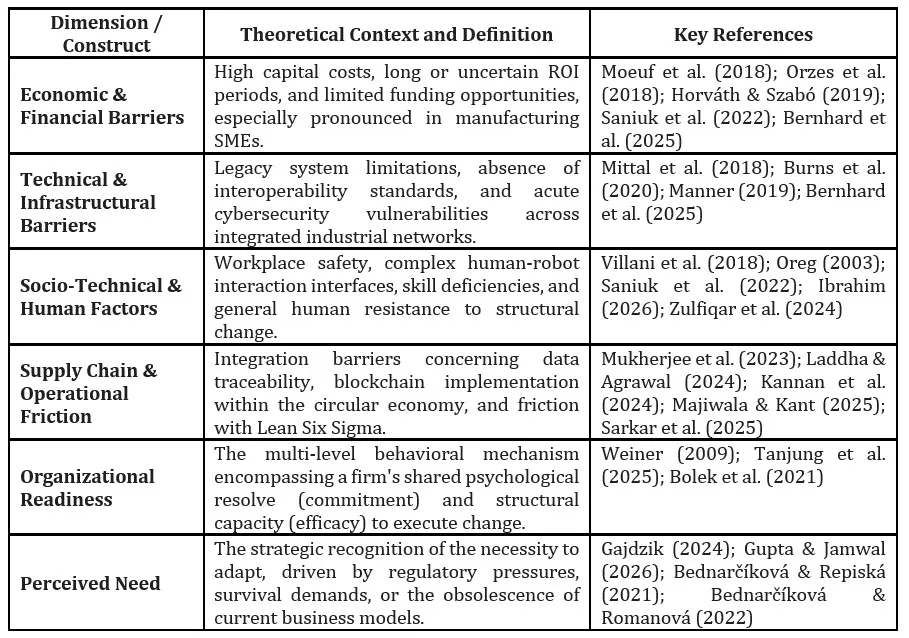
To anchor the empirical phase of this study, Table 1 provides a systematic synthesis of the operational constructs, their theoretical contextualization, and the foundational literature used to build the measurement scales.
Historically, industrial studies examining barriers and readiness have leaned heavily on exploratory or expert-based methods, such as the Analytic Hierarchy Process (AHP) or decision-making trial and evaluation laboratory (DEMATEL) approaches (e.g., Laddha & Agrawal, 2024; Ibrahim, 2026). While valuable for ranking priority items, these methods do not allow for the statistical testing of structural relationships, direct-indirect paths, or data-driven generalizability across a large sample of enterprises.
By mapping these dimensions into a clear structural framework, this paper transitions from these prescriptive “checklist” views to an empirical validation. The constructs synthesized in Table 1 are converted into multi-item reflective latent variables, establishing the theoretical basis for the Structural Equation Modeling (SEM) analysis applied to the 286 Slovak industrial enterprises.
Table 1: Conceptualization of Industry 5.0 barriers, readiness, and needs within the structural framework
Conceptual Model and Hypotheses Development
Based on the synthesized process model (perceived need → readiness → implementation), this study positions multidimensional implementation barriers as disruptive forces that attenuate readiness and direct outcomes. To evaluate this mechanism empirically within the Slovak industrial context using Structural Equation Modeling (SEM) under the rigorous criteria of Fornell and Larcker (1981), we propose five core research hypotheses:
H1: Implementation barriers negatively influence organizational readiness for Industry 5.0.
H2: Organizational readiness positively influences Industry 5.0 implementation.
H3: Perceived need for Industry 5.0 positively influences organizational readiness.
H4: Implementation barriers directly influence Industry 5.0 implementation.
H5: Organizational readiness mediates the relationship between implementation barriers and Industry 5.0 implementation.
Methodology
Research design and data collection
This study employed a quantitative cross-sectional research design based on a questionnaire survey administered to business organizations operating in Slovakia. The empirical part of the study was based on non-probability convenience sampling, which was selected due to the exploratory character of the research and the still limited empirical evidence on firm-level Industry 5.0 implementation. Data were collected from organizational respondents representing enterprises of different sizes, ownership structures, and sectors of economic activity. Because the study focused on organizational perceptions of implementation barriers, readiness, and actual implementation status, the firm was treated as the primary unit of analysis.
Sample characteristics
After data screening, 286 usable organizational responses were retained for analysis. The analytical dataset contained complete observations for all variables used in the structural model. The sample was heterogeneous in terms of firm size: 21.0% of organizations were micro-enterprises with fewer than 10 employees, 29.7% were small enterprises with 10–49 employees, 23.8% were medium-sized enterprises with 50–249 employees, and 25.5% were large organizations with 250 or more employees. In ownership terms, the sample was dominated by privately owned firms (71.0%), followed by private firms with foreign capital participation (11.2%), foreign-owned firms (9.4%), and state-owned organizations (5.9%). The sectoral composition was also diverse, with the largest shares coming from manufacturing (13.6%), other service activities (12.9%), wholesale and retail trade (11.2%), and information and communication activities (8.0%). Although this structure increases the analytical relevance of the data, the use of convenience sampling means that the results should be interpreted as analytically informative rather than statistically representative of all firms operating in Slovakia.
Questionnaire and measurement of constructs
The questionnaire contained multiple thematic blocks; for the purposes of this study, only the items directly linked to the proposed conceptual model were retained for statistical analysis. Perceived need for Industry 5.0 was measured using one global item asking respondents to assess how important the adoption of Industry 5.0 technologies is for their organization on a seven-point scale ranging from 0 (not needed) to 6 (very needed/desirable). Organizational readiness was also measured using one global item capturing the organization’s perceived preparedness to integrate Industry 5.0 technologies, using a seven-point scale from 0 (not prepared) to 6 (prepared; implementation is beginning).
Implementation barriers were operationalized through 20 questionnaire items evaluating the perceived importance of barriers encountered in the Industry 5.0 implementation process. The items covered organizational change barriers, strategic and resource constraints, people and skills limitations, and technological and governance-related obstacles. Each barrier item was assessed on a seven-point scale ranging from 0 (no importance) to 6 (highest importance). The item pool was developed from the literature review and adapted to the Industry 5.0 context in order to capture both the technological legacy of Industry 4.0 adoption and the newer requirements associated with human-centricity, resilience, and sustainability. The level of Industry 5.0 implementation was measured through 18 indicators reflecting the extent to which organizations had begun implementing selected Industry 5.0 elements. These indicators were rated on a staged seven-point scale ranging from 0 (not feasible) to 6 (strategically implemented).
Statistical Analysis
The statistical analysis was designed to correspond to the sequential logic of the research model and to ensure both measurement validation and structural testing. Because the study sought to identify the latent structure of implementation barriers, validate their multidimensionality, and subsequently examine their effects on Industry 5.0 implementation, a three-step analytical strategy was adopted.
In the first step, exploratory factor analysis (EFA) was applied to the barrier items in order to identify their underlying dimensionality and reduce the item set into interpretable latent factors. Given the theoretical assumption that different categories of implementation barriers are conceptually related rather than orthogonal, an oblique rotation method was used. The suitability of the data for factor analysis was assessed using the Kaiser–Meyer–Olkin measure of sampling adequacy and Bartlett’s test of sphericity.
In the second step, confirmatory factor analysis (CFA) was employed to verify the factor structure suggested by the exploratory analysis and to assess whether the identified first-order dimensions could be represented by a second-order latent construct of overall implementation barriers. Reliability and convergent validity were evaluated using standardized factor loadings, composite reliability, average variance extracted, and model fit indices.
In the third step, structural equation modelling (SEM) was used to test the hypothesized relationships among perceived need for Industry 5.0, organizational readiness, implementation barriers, and the level of Industry 5.0 implementation. SEM was selected because it enables the simultaneous estimation of direct and indirect relationships among latent and observed constructs within a single theoretically grounded model. The mediating role of organizational readiness in the relationship between implementation barriers and Industry 5.0 implementation was further assessed using bootstrap estimation of indirect effects.
Model adequacy was evaluated using standard goodness-of-fit indicators, including the Comparative Fit Index (CFI), Tucker–Lewis Index (TLI), Standardized Root Mean Square Residual (SRMR), and Root Mean Square Error of Approximation (RMSEA). All analyses were conducted using maximum likelihood estimation. Given the seven-point response format and the sample size, the variables were treated as approximately continuous.
Results
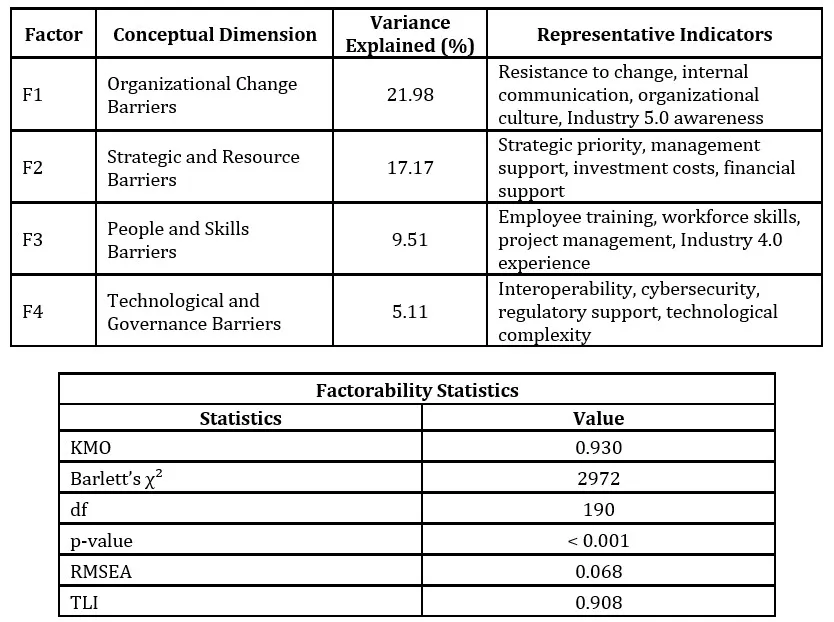
The suitability of the data for factor analysis was confirmed by an excellent Kaiser–Meyer–Olkin value (KMO = 0.930) and a significant Bartlett’s test of sphericity (χ² = 2972, df = 190, p < 0.001), indicating that the correlation matrix was appropriate for factor extraction. In addition, the four-factor solution demonstrated acceptable fit (RMSEA = 0.068; TLI = 0.908), further supporting the retention of four correlated dimensions of implementation barriers. The extracted solution explained 53.8% of the total variance.
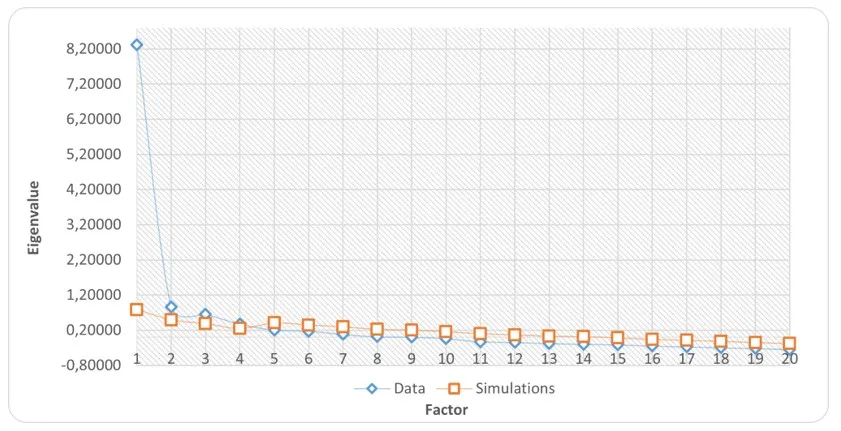
Fig 1. Scree plot and parallel analysis for factor retention in the Industry 5.0 barrier items[1]
(Source: Authors’ elaboration based on EFA results)
The extracted factors correspond to four conceptually meaningful dimensions of Industry 5.0 implementation barriers: organizational change barriers, strategic and resource barriers, people and skills barriers, and technological and governance barriers.
The results of the exploratory factor analysis confirm the multidimensional nature of Industry 5.0 implementation barriers. The four-factor solution jointly explained 53.77% of the total variance, with organizational change barriers representing the most influential dimension, followed by strategic and resource barriers, people and skills barriers, and technological and governance barriers. The prominence of organizational and strategic dimensions suggests that successful Industry 5.0 implementation depends not only on technological readiness but also on organizational alignment, managerial commitment, and the availability of resources to support transformation initiatives.
The factorability statistics reported in Table 2 further support the robustness of the extracted structure. The excellent KMO value (0.930) and highly significant Bartlett’s test of sphericity (χ² = 2972, p < 0.001) indicate that the observed variables share sufficient common variance to justify factor extraction.
Table 2: Exploratory Factor Analysis of Industry 5.0 Implementation Barriers
(Source: Authors’ elaboration)
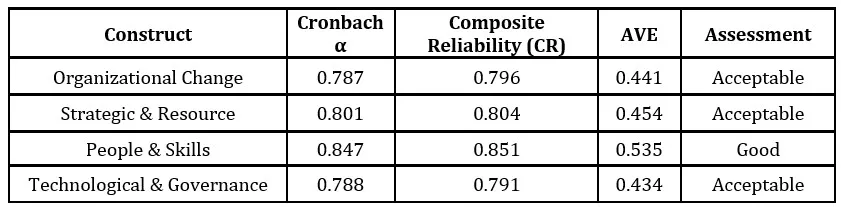
Table 3 presents the reliability and convergent validity statistics for the four barrier dimensions.
The results provide partial support for convergent validity. Composite reliability exceeded the recommended threshold of 0.70 for all dimensions, ranging from 0.791 to 0.851. The People and Skills dimension demonstrated the strongest measurement properties, achieving both the highest reliability coefficients and an AVE value above the recommended threshold (AVE = 0.535).
The remaining dimensions exhibited AVE values slightly below the commonly recommended threshold of 0.50 (ranging from 0.434 to 0.454). Nevertheless, following Fornell and Larcker (1981), convergent validity can still be regarded as adequate because all corresponding composite reliability values exceeded 0.70. These findings indicate satisfactory reliability and acceptable convergent validity of the proposed barrier dimensions.
Table 3: Reliability and Convergent Validity of the Barrier Dimensions
(Source: Authors’ elaboration)
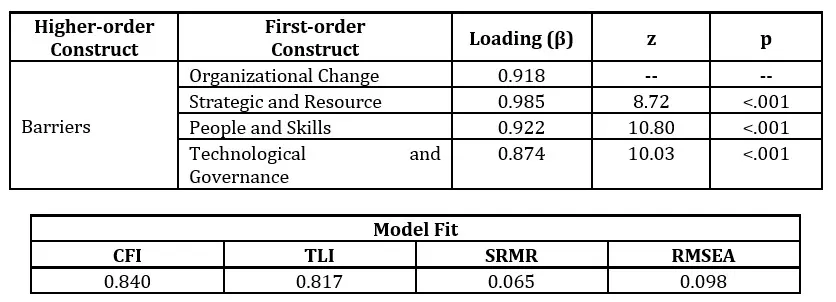
The confirmatory factor analysis provided support for the proposed second-order structure of Industry 5.0 implementation barriers. As shown in Table 4, all four first-order dimensions loaded strongly on the higher-order barrier construct, with standardized loadings ranging from 0.874 to 0.985, indicating that the identified dimensions represent closely related manifestations of a broader implementation barrier framework rather than independent categories of constraints.
Among the dimensions, strategic and resource barriers exhibited the strongest loading (β = 0.985), highlighting the importance of managerial commitment, strategic prioritization, and resource availability in shaping Industry 5.0 implementation challenges. Organizational change barriers (β = 0.918), people and skills barriers (β = 0.922), and technological and governance barriers (β = 0.874) also demonstrated substantial contributions to the higher-order construct.
Collectively, these findings support the conceptualization of implementation barriers as a multidimensional phenomenon encompassing organizational, human, strategic, and technological aspects of transformation. The measurement model exhibited mixed fit characteristics. Although the incremental fit indices remained below conventional thresholds (CFI = 0.840; TLI = 0.817), the residual-based fit index indicated acceptable fit (SRMR = 0.065), while the RMSEA value (0.098) suggests that some degree of model misspecification may remain. Given the complexity of the higher-order measurement structure and the exploratory nature of the study, the results provide moderate support for the multidimensional conceptualization of Industry 5.0 implementation barriers and justify its use in the subsequent structural analysis.
Table 4: Standardized Loadings of the Second-Order Barrier Model
All standardized loadings were statistically significant at p < 0.001.
(Source: Authors’ elaboration)
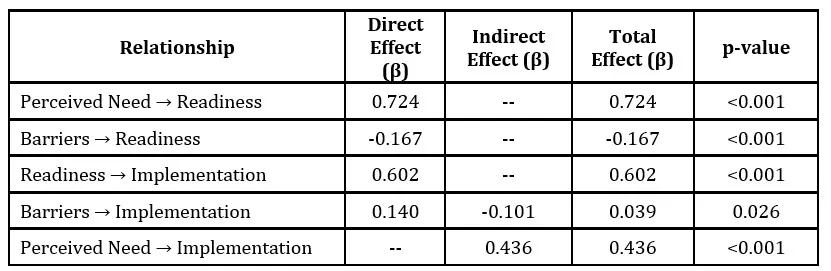
The structural model revealed several significant direct and indirect relationships among the studied constructs. As presented in Table 5, perceived need exerted a strong positive effect on organizational readiness (β = 0.724, p < 0.001), indicating that organizations recognizing the strategic importance of Industry 5.0 are more likely to develop the capabilities and preparedness required for implementation. In contrast, implementation barriers negatively affected organizational readiness (β = –0.167, p < 0.001), suggesting that organizational, technological, and resource-related constraints reduce firms’ capacity to prepare effectively for transformation initiatives.
Organizational readiness emerged as the strongest predictor of Industry 5.0 implementation (β = 0.602, p < 0.001), highlighting its central role in translating strategic intentions into actual implementation activities. This finding suggests that successful Industry 5.0 transformation depends not only on recognizing its importance but also on developing the organizational conditions necessary to support implementation.
The mediation analysis further revealed that implementation barriers exerted a significant negative indirect effect on implementation through organizational readiness (β = –0.101, p = 0.002). At the same time, barriers retained a small positive direct effect on implementation (β = 0.140, p = 0.002), resulting in a modest positive total effect (β = 0.039). This pattern indicates the presence of partial mediation and suggests that the influence of implementation barriers is more complex than a simple inhibitory mechanism. While barriers reduce organizational preparedness, they may also become more visible in firms that are actively engaged in transformation processes.
In addition, perceived need demonstrated a substantial indirect effect on Industry 5.0 implementation through organizational readiness (β = 0.436, p < 0.001). This result further emphasizes the importance of strategic awareness as an antecedent of organizational preparedness and ultimately of implementation success.
Table 5: Direct, Indirect and Total Effects in the Structural Model
(Source: Authors’ elaboration)
The explanatory power of the structural model was assessed using the coefficient of determination (R²), which indicates the proportion of variance explained by the predictor variables. As shown in Table 6, the model explained 55.2% of the variance in organizational readiness, suggesting that perceived need and implementation barriers jointly account for a substantial share of firms’ preparedness for Industry 5.0 transformation.
The model explained 55.2% of the variance in organizational readiness, indicating substantial explanatory power for this key mediating construct. The structural relationships also demonstrated moderate explanatory power for Industry 5.0 implementation.
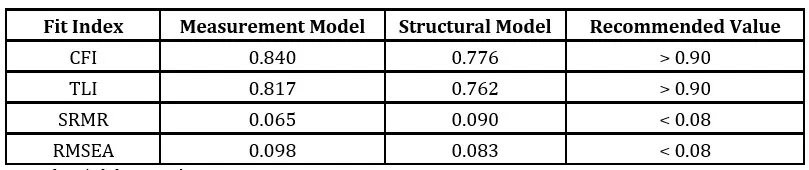
Table 6 presents the goodness-of-fit statistics for both the measurement and structural models. As expected, the structural model exhibited weaker fit than the measurement model due to the inclusion of additional latent constructs and structural relationships. Neither model achieved conventional benchmarks for incremental fit indices (CFI and TLI), indicating that the proposed framework should be interpreted as exploratory rather than confirmatory. Nevertheless, the SRMR values suggest a reasonable correspondence between the observed and model-implied covariance structures. Taken together, the fit statistics indicate moderate model adequacy and provide sufficient support for theory-building and hypothesis testing in the context of an emerging research domain.
Table 6: Comparison of Measurement and Structural Model Fit
(Source: Authors’ elaboration)
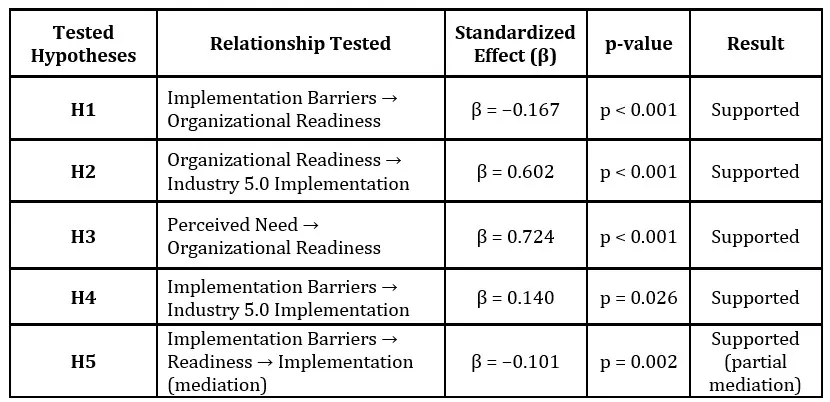
The hypothesis-testing results provide empirical support for all proposed relationships within the conceptual framework. As shown in Table 7, implementation barriers were found to reduce organizational readiness (H1), while organizational readiness exerted a strong positive influence on Industry 5.0 implementation (H2). These findings highlight the critical role of organizational preparedness as a mechanism through which firms translate strategic intentions into implementation outcomes.
The results further indicate that perceived need represents a significant antecedent of organizational readiness (H3), suggesting that organizations recognizing the strategic relevance of Industry 5.0 are more likely to develop the capabilities required for successful transformation. In addition, implementation barriers exhibited a statistically significant direct effect on Industry 5.0 implementation (H4), indicating that the relationship between barriers and implementation is more nuanced than a purely inhibitory perspective would suggest.
Finally, the mediation analysis confirmed that organizational readiness partially mediates the relationship between implementation barriers and Industry 5.0 implementation (H5). This finding suggests that barriers influence implementation not only directly but also indirectly through their impact on organizational preparedness. Collectively, the results support the proposed conceptual model and reinforce the view that successful Industry 5.0 transformation depends on the interplay between strategic awareness, organizational readiness, and multidimensional implementation barriers.
Table 7: Research Relationships and Empirical Results
(Data source: SEM results based on 286 observations.)
Discussion
The results demonstrate that organizational readiness plays a central role in enabling Industry 5.0 implementation. The structural relationships reveal a clear hierarchy of influences within the proposed framework. Perceived need demonstrated the strongest effect on organizational readiness (β = 0.724), while readiness emerged as the strongest determinant of Industry 5.0 implementation (β = 0.602). By comparison, the effect of implementation barriers on readiness was considerably weaker in magnitude (β = –0.167). These findings suggest that Industry 5.0 transformation is primarily readiness-driven rather than barrier-driven. Although barriers remain relevant, organizational preparedness appears to be substantially more important for explaining implementation outcomes than the mere presence of organizational, technological, or resource constraints.
The explanatory power of the structural model further reinforces the importance of readiness as a transformation mechanism. The model explained 55.2% of the variance in organizational readiness and approximately 35.4% of the variance in Industry 5.0 implementation. These values indicate that readiness serves as a critical intermediate organizational capability linking strategic intentions and implementation outcomes. The relatively high explanatory power for readiness suggests that managerial perceptions of Industry 5.0 relevance and the presence of implementation barriers capture a substantial portion of the factors influencing preparedness for transformation.
Overall, the findings suggest that Industry 5.0 implementation is primarily readiness-driven rather than barrier-driven. This observation is particularly relevant to Industry 5.0 because the paradigm extends beyond technological adoption toward human-centricity, resilience, and sustainability. Consequently, implementation success depends not only on technological resources but also on organizational capabilities that support strategic adaptation and workforce engagement. Organizations that develop sufficient readiness—through strategic planning, skill development, and technological capability—are more likely to overcome existing barriers and successfully adopt Industry 5.0 technologies.
This result contributes to the emerging Industry 5.0 literature by empirically validating organizational readiness as a central mechanism through which implementation barriers influence transformation outcomes. While previous studies have largely focused on identifying and prioritizing barriers (Mukherjee et al., 2023; Laddha & Agrawal, 2024), the present findings demonstrate that the effects of these barriers are not purely direct. Instead, their influence is largely transmitted through organizational preparedness, suggesting that readiness should be considered a strategic capability rather than merely a transitional implementation stage.
An important finding of this study is that implementation barriers exhibited a small but statistically significant positive direct effect on Industry 5.0 implementation, while simultaneously exerting a negative indirect effect through organizational readiness. This result differs from the traditional assumption that implementation barriers operate exclusively as obstacles to transformation. However, the positive direct effect should not be interpreted as evidence that barriers facilitate implementation. Rather, it may reflect a visibility or exposure effect whereby firms actively engaged in Industry 5.0 initiatives become more aware of organizational, technological, and governance-related challenges. Organizations with limited implementation activity may simply have fewer opportunities to identify such barriers. Consequently, the positive direct association is likely to reflect greater exposure to implementation complexity rather than a beneficial role of barriers.
At the same time, the negative relationship between barriers and organizational readiness confirms that implementation barriers continue to constrain transformation capacity. This suggests that barriers operate through two complementary mechanisms. First, they reduce organizational preparedness by limiting resources, skills, managerial support, and organizational alignment. Second, they become increasingly visible as firms progress from strategic intentions toward actual implementation. The findings therefore indicate that barriers function both as constraints on readiness and as indicators of implementation exposure within organizations undertaking Industry 5.0 transformation.
The strong positive effect of perceived need on organizational readiness also deserves particular attention. This finding suggests that Industry 5.0 implementation begins with strategic awareness rather than technological investment alone. Organizations that recognize the importance of human-centricity, sustainability, and resilience appear more willing to mobilize resources, develop competencies, and prepare internal structures for transformation. This observation supports the view that digital transformation is fundamentally a managerial and organizational process rather than merely a technological one (Vial, 2019).
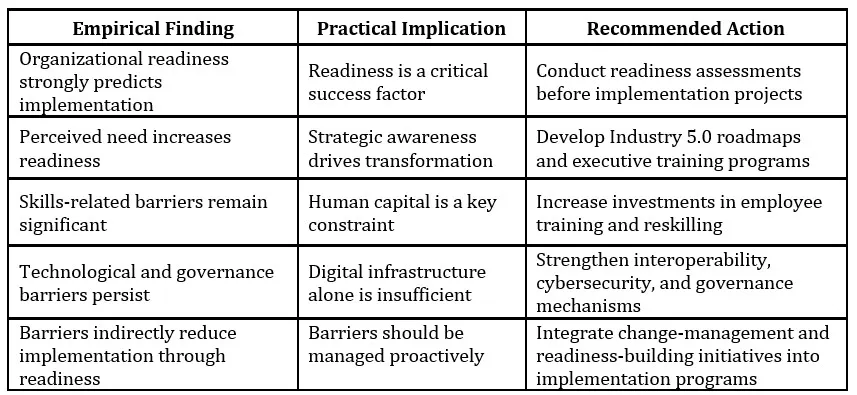
Overall, the findings suggest that implementation barriers should not be conceptualized as a purely inhibitory construct with only direct negative consequences. Instead, they seem to operate in a dual manner: as constraints that undermine readiness and, at the same time, as signals of implementation exposure in firms already confronting the practical demands of Industry 5.0 transformation. The direct positive effect should therefore be interpreted cautiously, not as a beneficial role of barriers, but as an indication that more advanced adopters may also be more aware of the difficulties associated with human-centric, resilient, and sustainability-oriented transformation. The practical implications of the findings for managers and organizational decision-makers are summarized in Table 8.
Table 8: Managerial Implications for Industry 5.0 Transformation
(Source: Authors’ elaboration)
Conclusion
This study contributes to the emerging empirical literature on Industry 5.0 by examining implementation barriers at the firm level within a structural framework linking perceived need, organizational readiness, and implementation. The findings confirm that Industry 5.0 barriers form a multidimensional higher-order construct and show that organizational readiness plays a central role in translating strategic awareness into actual implementation.
The structural results indicate that Industry 5.0 implementation is primarily driven by organizational readiness. Perceived need emerged as the strongest antecedent of readiness, while readiness itself was the strongest predictor of implementation. Although implementation barriers negatively affected organizational preparedness, their influence was considerably weaker than that of strategic awareness. These findings suggest that successful Industry 5.0 transformation depends less on the mere presence of barriers and more on an organization’s ability to develop readiness through strategic commitment, capability development, and resource mobilization.
Several limitations should be acknowledged. First, the cross-sectional design does not allow causal relationships to be assessed over time. Second, the use of self-reported organizational assessments may introduce common method bias. Third, the convenience sampling approach limits the statistical generalizability of the findings. Finally, the study focuses exclusively on firms operating in Slovakia, which may limit the transferability of the results to other institutional and economic environments.
Future research could address these limitations by employing longitudinal research designs, probability-based sampling approaches, and cross-country comparisons. Additional studies may also incorporate objective measures of Industry 5.0 implementation and examine how organizational readiness evolves throughout different stages of digital transformation.
Overall, the study supports a process-oriented view of Industry 5.0 as a socio-technical transformation shaped by organizational preparedness, strategic intent, and multidimensional constraints. Although the findings are limited by the cross-sectional design, self-reported data, and moderate model fit, the study provides an empirical basis for future research on how firms navigate the transition toward human-centric, resilient, and sustainable industrial transformation.
Acknowledgments
The paper was elaborated within VEGA No. 1/0520/24 – Aspects of building an ambient enterprise ecosystem – proportion 100 %.
References
Bednarčíková, D., & Repiská, R. (2021). Digital transformation in the context of the European Union and the use of digital technologies as a tool for business sustainability. SHS Web of Conferences, 115, 01001. https://doi.org/10.1051/shsconf/202111501001
Bednarčíková, D., & Romanová, A. (2022). Digital technologies in companies: Comparison of their use in the Slovak Republic and in selected countries. Journal of Software & Systems Development, 2022, 1–22, Article ID 336494. https://doi.org/10.5171/2022.336494
Bernhard, O., Wegmann, M., Wagner, S., Nigg, V., Cochran, D., Rauch, E., & Zaeh, M. F. (2025). Industry 5.0 implementation barriers for manufacturing companies. Procedia CIRP, 134, 723-728. https://doi.org/10.1016/j.procir.2025.02.217
Bolek, V., Romanová, A., Zelina, M., & Januška, M. (2021). Factors determining the achievement of IS/IT benefits: An empirical study in the Slovak Republic. European Journal of International Management, 15(1), 27–45. https://doi.org/10.1504/EJIM.2021.111900
Burns, T., Cosgrove, J., & Doyle, F. (2020). A review of interoperability standards for Industry 4.0. Procedia Manufacturing, 38, 646–653. https://doi.org/10.1016/j.promfg.2020.01.083
European Commission: Directorate-General for Research and Innovation. (2021). Industry 5.0: towards a sustainable, human-centric and resilient European industry. Publications Office of theEuropean Union. https://data.europa.eu/doi/10.2777/308407
Fornell, C., & Larcker, D. F. (1981). Evaluating structural equation models with unobservable variables and measurement error. Journal of Marketing Research, 18(1), 39–50. https://doi.org/10.2307/3151312
Gajdzik, B. (2024). The concept of a business model for Industry 5.0. In Digital Transformation in Manufacturing and Industry 5.0 (pp. 35–52). CRC Press. https://doi.org/10.1201/9781032628783-3
Gupta, S., & Jamwal, A. (2026). Enabling supply chain viability through digital transformation: Analysis of barriers in Industry 4.0 context. Journal of Digital Economy. https://doi.org/10.1016/j.jdec.2026.01.001
Horváth, D., & Szabó, R. Z. (2019). Driving forces and barriers of Industry 4.0: Do multinational and small and medium-sized companies have equal opportunities? Technological Forecasting and Social Change, 146, 119–132. https://doi.org/10.1016/j.techfore.2019.05.021
Ibrahim, A. (2026). Barriers and enablers of Industry 5.0 integration with Lean Six Sigma: a Fuzzy DEMATEL approach. International Journal of Lean Six Sigma, 1-32. https://doi.org/10.1108/IJLSS-07-2025-0206
Ivanov, D. (2023). The Industry 5.0 framework: viability-based integration of the resilience, sustainability, and human-centricity perspectives. International Journal of Production Research, 61(5), 1683-1695. https://doi.org/10.1080/00207543.2022.2118892
Kannan, D., Amiri, A. S., Shaayesteh, M. T., Nasr, A. K., & Mina, H. (2024). Unveiling barriers to the integration of blockchain‐based circular economy and Industry 5.0 in manufacturing industries: A strategic prioritization approach. Business Strategy and the Environment, 33(8), 7855-7886. https://doi.org/10.1002/bse.3886
Laddha, S., & Agrawal, A. (2024). Unveiling barriers to Industry 5.0 adoption in supply chains: a DEMATEL approach. RAUSP Management Journal, 59(2), 123-137. https://doi.org/10.1108/RAUSP-08-2023-014
Majiwala, H., & Kant, R. (2025). Industry 5.0–Enabled Circular Supply Chain: Evaluating Barriers and Its Solutions. Business Strategy & Development, 8(3), e70151. https://doi.org/10.1002/bsd2.70151
Manner, I. I. A. S. (2019). Industry 4.0 cybersecurity: Challenges & recommendations. The EU Agency Cybersecur.
Mittal, S., Khan, M. A., Romero, D., & Wuest, T. (2018). A critical review of smart manufacturing & Industry 4.0 maturity models: Implications for small and medium-sized enterprises. Journal of Manufacturing Systems, 49, 194–214. https://doi.org/10.1016/j.jmsy.2018.10.005
Moeuf, A., Pellerin, R., Lamouri, S., Tamayo-Giraldo, S., & Barbaray, R. (2018). The industrial management of SMEs in the era of Industry 4.0. International Journal of Production Research, 56(3), 1118–1136. https://doi.org/10.1080/00207543.2017.1372647
Mukherjee, A. A., Raj, A., & Aggarwal, S. (2023). Identification of barriers and their mitigation strategies for Industry 5.0 implementation in emerging economies. International Journal of Production Economics, 257, 108770. https://doi.org/10.1016/j.ijpe.2023.108770
Oreg, S. (2003). Resistance to change: Developing an individual differences measure. Journal of Applied Psychology, 88(4), 680–693. https://doi.org/10.1037/0021-9010.88.4.680
Orzes, G., Rauch, E., Bednar, S., & Poklemba, R. (2018). Industry 4.0 implementation barriers in small and medium sized enterprises: a focus group study. In 2018 IEEE international conference on industrial engineering and engineering management (IEEM)(pp. 1348-1352). https://doi.org/10.1109/IEEM.2018.8607477
Sarkar, B. D., Sharma, I., & Shardeo, V. (2025). A multi-method examination of barriers to traceability in Industry 5.0-enabled digital food supply chains. The international journal of logistics management, 36(2), 354-380. https://doi.org/10.1108/IJLM-01-2024-0010
Tanjung, T., Ghazali, I., Mahmood, W. H. W., & Herawan, S. G. (2025). Drivers and barriers to Industrial Revolution 5.0 readiness: A comprehensive review of key factors. Green Technologies and Sustainability, 3(4), 100217. https://doi.org/10.1016/j.grets.2025.100217
Vial, G. (2019). Understanding digital transformation: A review and a research agenda. The Journal of Strategic Information Systems, 28(2), 118-144. https://doi.org/10.1016/j.jsis.2019.01.003
Villani, V., Pini, F., Leali, F., & Secchi, C. (2018). Survey on human–robot collaboration in industrial settings: Safety, intuitive interfaces and applications. Mechatronics, 55, 248–266. https://doi.org/10.1016/j.mechatronics.2018.02.009
Weiner, B. J. (2009). A theory of organizational readiness for change. Implementation Science, 4(67), 1–9. https://doi.org/10.1186/1748-5908-4-67
Zulfiqar, M., Sony, M., Bhat, S., Antony, J., Salentijn, W., & McDermott, O. (2024). Unlocking the potential: empirical analysis of enablers, barriers, benefits and technologies for integrating Industry 4.0 and Lean Six Sigma in manufacturing organisations. The TQM Journal, 36(8), 2360-2382. https://doi.org/10.1108/TQM-05-2023-0130
[1] Although only the first eigenvalue exceeded 1, the four-factor solution was retained because it was theoretically meaningful and showed acceptable model fit (RMSEA = 0.068; TLI = 0.908).