Department of Business Management, North Eastern Mindanao State University, Rosario Tandag City 8300, Surigao del Sur, Philippines
Volume 2026,
Article ID 864371,
IBIMA Business Review,
16 pages,
DOI: https://doi.org/10.5171/2026.864371
Received date: 30 April 2026; Accepted date: 12 June 2026; Published date: 30 June 2026
Cite this Article as:
Gretchen Yarra L. ERNO (2026)," Linking Sustainability-Oriented Entrepreneurial Behaviors to SME Performance: A Survey of SMEs in Surigao del Sur, Philippines “, IBIMA Business Review, Vol. 2026 (2026), Article ID 864371, https://doi.org/10.5171/2026.864371
Sustainability-oriented entrepreneurship has gained increasing attention as small and medium enterprises (SMEs) seek to balance economic performance with environmental and social responsibilities. Despite its growing relevance, limited evidence exists regarding the relationship between sustainability-oriented entrepreneurial behaviors and SME performance within localized and resource-constrained contexts. This study examined the relationship between sustainability-oriented entrepreneurial behaviors and SME performance among SMEs in Surigao del Sur, Philippines. Specifically, the study focused on sustainability-oriented initiative behavior, sustainability-oriented risk engagement behavior, and environmental innovation and sustainable practices, and their association with enterprise performance in terms of profitability and owners’ personal goal attainment. A quantitative survey design was employed involving 250 SME owners and managers selected through purposive sampling. Data were gathered using a structured Likert-scale questionnaire and analyzed using descriptive statistics and Pearson correlation analysis. The findings revealed high levels of sustainability-oriented initiative behavior, environmental innovation, and sustainable practices, while sustainability-oriented risk engagement behavior was moderately high. Results further indicated that sustainability-oriented entrepreneurial behaviors were positively associated with SME performance, particularly in relation to profitability and personal goal attainment. These findings suggest that sustainability-oriented entrepreneurial actions can enhance enterprise competitiveness, support financial performance, and contribute to the personal fulfillment of business owners. The study provides empirical evidence from a developing regional context and highlights sustainability-oriented entrepreneurship as a strategic pathway toward long-term business success and resilience among SMEs.
Keywords: Sustainability-Oriented Entrepreneurial Behaviors; SME Performance; Environmental Innovation; Sustainability-Oriented Entrepreneurship;
Introduction
Entrepreneurial activity among small and medium enterprises remains a central force in sustaining local economies while responding to evolving environmental and social conditions. In regional settings where resources are often constrained, business owners are compelled to align economic pursuits with broader considerations that extend beyond immediate financial returns. This alignment reflects a growing awareness that enterprise survival and growth are closely tied to ecological responsibility and community engagement. As enterprises operate within interconnected economic and social systems, their decisions increasingly reflect an integration of financial objectives with environmentally and socially informed practices (Prokopenko et al. (2025)).
In parallel, the adoption of environmentally conscious innovation reflects a deliberate effort to embed ecological considerations into business processes and offerings. This approach extends beyond conventional innovation by prioritizing solutions that reduce environmental impact while maintaining efficiency and competitiveness. Enterprises that pursue such innovations often engage in practices that optimize resource use, minimize waste, and respond to increasing demand for responsible products and services. This aligns with findings that businesses increasingly integrate compliance-based sustainability practices into operations (Chavez & Vicente, 2024). These efforts not only enhance operational effectiveness but also strengthen credibility among stakeholders, positioning enterprises within a broader movement toward sustainable development (Singh, 2024).
Social ecology shapes how enterprises align their actions with the expectations of their communities, stakeholders, and the broader environment. It explores the dynamic interactions between social systems and environmental considerations (Nelson et al., 2025). Entrepreneurs must consider not only economic returns but also the social impact of their business activities. Community engagement, ethical decision-making, and social responsibility are variables that drive businesses to adopt practices which reflect both ecological sustainability and social well-being. This approach helps in building stronger relationships with stakeholders and ensures that enterprises contribute positively to the local environment, promoting long-term success and sustainability. As highlighted by Alkhodary (2023), integrating social ecology into business strategies reinforces both organizational legitimacy and long-term viability.
Economic and business sustainability are central to the long-term viability of small and medium enterprises, as they require businesses to maintain profitability while adapting to dynamic market conditions and environmental challenges (Hernita et al., 2021). Economic sustainability emphasizes the ability of enterprises to operate profitably over time, ensuring their capacity to generate value, create jobs, and contribute to local economic development. Business sustainability extends this idea by integrating practices that reduce environmental impacts, foster innovation, and promote operational efficiency. Sustainable businesses are not only focused on immediate financial success but also on ensuring their resilience and growth in the face of external challenges such as market volatility, regulatory changes, and evolving customer demands (Zahra et al., 2025). Businesses that strategically adopt sustainable practices can achieve greater competitive advantage and enhance their long-term prospects in increasingly competitive markets.
Entrepreneurial behavior also encompasses the willingness to engage with uncertainty through calculated decision-making and strategic risk consideration. This behavior is reinforced by evolving consumer expectations, where branding, communication, and service strategies significantly influence business sustainability and customer engagement (Bangahan et al., 2025). Business owners frequently encounter situations that require balancing potential opportunities with possible constraints, particularly when adopting new approaches that involve environmental or operational adjustments. This dimension reflects the cognitive and behavioral processes involved in evaluating alternatives and committing to actions that may influence long-term outcomes. When managed effectively, such orientation enables enterprises to pursue innovation while maintaining stability, thereby contributing to overall business performance.
The performance of small and medium enterprises is commonly understood through both financial outcomes and the personal achievements of business owners. Indicators such as profitability provide measurable evidence of operational success, while personal goal attainment reflects improvements in financial security, social standing, and quality of life. These dimensions highlight that enterprise success extends beyond organizational metrics to include individual fulfillment and perceived accomplishment. The interaction between entrepreneurial orientation, environmentally informed practices, and enterprise outcomes underscores the importance of behavioral and strategic factors in shaping both economic results and personal satisfaction. Recent discussions in sustainability and entrepreneurship increasingly suggest that environmentally responsible business practices are not merely ethical obligations but strategic mechanisms that can enhance enterprise competitiveness and long-term performance. For SMEs, sustainability-oriented entrepreneurial behaviors may create value not only through improved profitability but also through the fulfillment of personal and professional aspirations of business owners. This perspective highlights the potential of sustainability to function as a source of competitive advantage rather than a constraint on business growth.
Despite the growing body of literature on sustainability and entrepreneurial behavior, a critical gap remains in understanding how sustainability-oriented entrepreneurial behaviors operate within localized socio-ecological contexts and how these behaviors translate into both economic and personal performance outcomes among small and medium enterprises. Existing studies largely examine sustainability practices or entrepreneurial orientation independently, often focusing on financial indicators while overlooking the integrated effects of environmental innovation, initiative-taking behavior, and risk engagement within a social-ecological sustainability framework. Furthermore, limited empirical evidence is available in developing regional contexts such as Surigao del Sur, where SMEs operate under resource constraints and socially embedded environments. In particular, the linkage between sustainability-oriented behaviors and dual performance dimensions’ profitability and owner’s personal goal attainment remains underexplored. Addressing this gap is essential to provide a more comprehensive understanding of how sustainability-driven entrepreneurial actions contribute not only to enterprise continuity but also to the holistic success of business owners within dynamic economic and ecological conditions.
Research motivation for this study stems from the increasing need for SMEs to balance economic objectives with environmental and social responsibilities in highly dynamic business environments. While previous studies have examined sustainability practices or entrepreneurial orientation independently, limited empirical evidence explains how sustainability-oriented entrepreneurial behaviors collectively influence enterprise performance, particularly within localized socio-ecological settings in developing regions. Furthermore, studies rarely examine both financial outcomes and owners’ personal goal attainment as dimensions of SME performance. Given the growing importance of sustainability for business resilience and competitiveness, it is necessary to investigate how sustainability-oriented initiative behavior, sustainability-oriented risk engagement behavior, and environmental innovation and sustainable practices contribute to SME success. Therefore, this study examines the relationship between sustainability-oriented entrepreneurial behaviors and SME performance among SMEs in Surigao del Sur, Philippines.
Literature Review
Entrepreneurial Orientation
Entrepreneurial orientation within small and medium enterprises reflects a pattern of behavior shaped by initiative-taking, opportunity recognition, and adaptive decision-making in response to changing market conditions. Rather than being limited to conventional marketing functions, this perspective emphasizes how business owners interpret environmental signals and translate them into strategic actions. Enterprises that adopt a market-driven approach grounded in entrepreneurial thinking demonstrate a stronger capacity to manage uncertainty and respond effectively to evolving consumer demands. This behavioral capability enhances their ability to function in complex environments where flexibility and responsiveness are essential. Empirical findings indicate that firms demonstrating entrepreneurial characteristics tend to achieve more favorable outcomes in digital and market-oriented settings, reinforcing the relationship between behavioral orientation and enterprise outcomes (Adinata et al., 2023).
Beyond strategic responsiveness, entrepreneurial orientation supports the development of innovation and sustained engagement with stakeholders. Through continuous learning and creative problem-solving, enterprises enhance both their offerings and their interactions with customers and partners. These engagements contribute to the development of social capital, strengthening market positioning and long-term viability. As emphasized by Zaini and Poernamawati (2023), integrating innovation with relational practices improves the effectiveness of enterprise engagement in competitive environments.
Furthermore, competencies associated with awareness, creativity, and innovation significantly shape enterprise outcomes. These competencies are rooted in psychological attributes such as cognitive flexibility, persistence, and problem-solving ability, enabling entrepreneurs to navigate uncertainty and complexity. Entrepreneurial behavior is also evident in digital and market-oriented environments, where persuasive communication and adaptive selling strategies influence enterprise competitiveness and customer engagement (Cuilan et al., 2024). When consistently applied, these behaviors become observable expressions of entrepreneurial intent, linking internal dispositions to measurable outcomes such as growth and expansion. Prior studies confirm that these competencies contribute to improvements in sales performance, market share, and employment generation (Yahaya & Nadarajah, 2023; Gieure et al., 2020).
Enterprise Performance Dimensions
The performance of small and medium enterprises is influenced by a combination of external conditions and internal capabilities. While institutional support and access to resources remain essential, the role of individual competencies and behavioral attributes is equally significant in shaping outcomes. Financial literacy enhances the ability of business owners to evaluate risks, allocate resources efficiently, and make informed financial decisions. These cognitive skills contribute to more strategic planning and improved financial outcomes (Amoah & Mungai, 2020; Barno et al., 2021). In addition, effective resource management reflects behavioral traits such as discipline, foresight, and strategic thinking. These attributes enable entrepreneurs to optimize available resources, maintain operational efficiency, and respond to changing market conditions. Empirical evidence suggests that such managerial capabilities are closely associated with improved income generation and overall organizational effectiveness (Cahyono et al., 2023; Oktasavira & Ismanto, 2022).
From a broader perspective, small and medium enterprises contribute significantly to economic development through employment generation and value creation. Their participation in export activities supports entry into international markets, while their role in supply chains strengthens the operations of larger industries. These contributions underscore their importance in sustaining economic systems and promoting inclusive growth (Di Bella et al., 2022; Haddoud et al., 2021; Tassabehji et al., 2019). Contemporary perspectives view enterprise performance as a multidimensional construct extending beyond financial indicators. Measures such as efficiency, growth, and profitability are complemented by subjective dimensions, including reputation and personal goal attainment. Beyond financial indicators, enterprise performance is also shaped by organizational reputation and perceived credibility, which are closely linked to brand equity and stakeholder confidence (Gregorio & Chavez, 2025). These aspects capture both organizational success and individual fulfillment, offering a more comprehensive understanding of performance and its outcomes.
Sustainability-Driven Innovation
Innovation within enterprises has increasingly incorporated environmental considerations, reflecting a transition toward more responsible business practices. This approach emphasizes the development of solutions that reduce ecological impact while maintaining efficiency and competitiveness. The direction of such innovation is shaped by how entrepreneurs perceive environmental challenges and opportunities, influencing the integration of sustainability into strategic decisions (Paiva et al., 2024). This form of innovation is grounded in the values and cognitive orientations of business owners, guiding how environmental responsibility is embedded into products, services, and operational processes. Customers and communities play a significant role by expressing preferences for ethical and environmentally responsible offerings, encouraging enterprises to refine their strategies. Collaboration within organizations further supports innovation through shared learning and collective problem-solving, reinforcing its behavioral and socially embedded nature.
Through continuous adaptation and learning, enterprises align sustainability with innovation, strengthening credibility and long-term viability. These efforts enhance stakeholder relationships and contribute to improved reputation, ultimately supporting sustained enterprise outcomes. Rong et al. (2024) and Javed et al. (2026) indicate that environmentally oriented innovation serves as a pathway through which entrepreneurial actions translate into long-term success. More broadly, innovation remains a fundamental driver of enterprise performance, encompassing advancements in products, processes, and marketing approaches. These developments enable firms to achieve competitive advantage and expand market reach while addressing evolving customer expectations. A substantial portion of performance improvement is attributed to creative and innovative thinking, highlighting the importance of behavioral contributions to organizational success (Amin, 2021).
Furthermore, innovativeness is closely associated with entrepreneurial orientation and the development of capabilities that support opportunity recognition and strategic adaptation. These capabilities reflect readiness to respond to uncertainty and leverage emerging opportunities. The integration of innovation into digital platforms has also enhanced customer engagement and brand positioning through interactive strategies (Octasylva et al., 2022; Ghobadi Saki et al., 2023). Innovation is therefore best understood as a continuous process of refinement rather than a single occurrence. Sustained improvements in operational and marketing practices contribute to efficiency, competitiveness, and long-term growth. Consistent innovative behavior enables enterprises to remain resilient in rapidly evolving environments, reinforcing its significance in achieving sustained success (Suherlan & Okombo, 2023).
Economic Sustainability Perspectives
According to Mohd Saman et al. (2025), economic sustainability within small and medium enterprises reflects the capacity to maintain financial stability while adapting to evolving market and environmental conditions. It encompasses not only profitability but also the efficient allocation of resources, resilience to external disruptions, and the ability to sustain operations over time. Enterprises that demonstrate strong economic sustainability often integrate strategic planning with adaptive decision-making, allowing them to respond effectively to fluctuations in demand and resource availability. Financial literacy plays a significant role in strengthening this capacity, as it equips business owners with the knowledge required to evaluate risks and optimize financial outcomes. In addition, access to financial knowledge enhances decision quality and supports long-term planning, which is essential for sustaining enterprise growth, as emphasized by Urefe et al. (2024). Resource management further contributes to economic sustainability by ensuring that available inputs are utilized efficiently and aligned with organizational goals. Strategic allocation of resources reflects the entrepreneur’s ability to balance short-term operational needs with long-term objectives. At a broader level, enterprises contribute to economic systems through employment generation and value creation, reinforcing their role in sustaining local and national economies (Khiawnoi et al., 2025). Participation in international trade also enhances competitiveness and expands market opportunities, strengthening economic resilience. These interconnected elements illustrate that economic sustainability is shaped by both internal competencies and external engagements that influence enterprise performance.
Beyond financial outcomes, economic sustainability is closely linked to the entrepreneur’s capacity to align business objectives with evolving environmental and societal expectations. Enterprises increasingly operate where economic decisions are influenced by broader considerations, including environmental responsibility and stakeholder expectations (Hasanuddin et al., 2023). This alignment requires business owners to adopt a forward-looking perspective that integrates financial goals with responsible practices. Innovation contributes to this process by enabling enterprises to develop cost-efficient solutions that enhance productivity while reducing environmental impact. Creative thinking supports the identification of new opportunities that improve competitiveness and operational efficiency, reinforcing the relationship between innovation and economic outcomes. Entrepreneurial orientation further strengthens economic sustainability by fostering adaptability and responsiveness to change, enabling enterprises to remain competitive in uncertain environments (Fatkhurahman & Waldelmi, 2026). As enterprises continue to evolve, their ability to sustain economic outcomes depends on the interaction between internal competencies and external market dynamic.
Social-Ecological Integration
The interaction between social systems and ecological conditions shapes how enterprises operate within their surrounding environments. Business activities are increasingly influenced by the expectations of communities, stakeholders, and regulatory frameworks that emphasize responsible and sustainable practices (Etikan, 2024). This interaction encourages enterprises to consider not only financial outcomes but also their impact on society and the environment. Entrepreneurs’ perceptions of environmental challenges influence how they design and implement practices that align with ecological considerations. These practices are often reinforced by stakeholder expectations, particularly as consumers demonstrate a growing preference for ethically produced goods and environmentally responsible services. Engagement with communities further strengthens this alignment by providing feedback that shapes business decisions and innovation processes. Through such interactions, enterprises develop practices that reflect both social awareness and environmental responsibility. This alignment contributes to stronger relationships with stakeholders and enhances organizational legitimacy within the community (Walecka-Jankowska et al., 2025). As highlighted by Sonawane (2025), integrating environmental considerations into business strategies supports long-term viability and strengthens enterprise performance. These illustrate how social and ecological factors are interconnected in shaping enterprise behavior and outcomes.
Collaboration and shared learning play an essential role in integrating social and ecological considerations into enterprise practices. Within organizations, teamwork facilitates the exchange of knowledge and ideas that support the development of sustainable solutions. This collaborative environment encourages innovation that is responsive to both environmental challenges and social expectations. Entrepreneurial behavior is influenced by these interactions, as business owners rely on both internal insights and external feedback to guide decision-making. The ability to adapt to changing social and ecological conditions reflects cognitive flexibility and a willingness to engage with complex challenges. Innovation emerging from such contexts often addresses both operational efficiency and environmental responsibility, contributing to improved enterprise outcomes (Cakmak, 2023).
Methodology
Survey participants consisted of owners or managers of small and medium enterprises drawn from various industries in Surigao del Sur. These individuals were selected based on their active involvement in both daily business operations and long-term strategic decision-making. Such roles enabled them to provide informed and experience-based insights into entrepreneurial behaviors, marketing practices, and performance outcomes within their respective enterprises. Their positions also allowed them to evaluate how environmental conditions, market dynamics, and sustainability-related considerations influence decision-making processes and organizational performance. A purposive sampling approach was employed to ensure that participants possessed the necessary competencies, dispositions, and managerial experience to generate valid and meaningful responses aligned with the objectives of the study. This approach was deemed appropriate as it captures behaviorally grounded practices within enterprises operating in economically and socially embedded environments.
The survey aimed to examine the relationships between key sustainability-oriented entrepreneurial behaviors, specifically sustainability-oriented initiative behavior, sustainability-oriented risk engagement behavior, and environmental innovation and sustainable practices, and the performance indicators of small and medium enterprises. These behavioral dimensions were treated as expressions of how business owners respond strategically to uncertainty, environmental pressures, and evolving customer expectations. A structured questionnaire utilizing Likert-scale items was employed to measure respondents’ perceptions of their marketing strategies, behavioral tendencies, and performance outcomes. The instrument was designed to capture how entrepreneurial actions, including environmentally informed and sustainability-oriented practices, are associated with enterprise performance. Performance was measured using multiple indicators to reflect both objective outcomes, such as financial returns, and subjective evaluations, including the attainment of personal goals. This approach provided a more comprehensive representation of enterprise performance within contexts influenced by economic conditions and social and environmental considerations.
The collected data were analyzed using both descriptive and correlational statistical techniques. Descriptive statistics, including mean, standard deviation, frequency, and percentage distributions, were utilized to summarize the profile of respondents and identify patterns in entrepreneurial behaviors and performance indicators. To examine the relationships between variables, Pearson correlation coefficients were applied to determine the strength and direction of associations between entrepreneurial orientation, risk-taking, creativity, customer orientation, and enterprise performance. This analytical procedure enabled the study to capture how behavioral tendencies relate to performance outcomes within settings characterized by environmental uncertainty and sustainability-related demands. Focusing on relational analysis, the methodology provides a clearer understanding of how enterprise outcomes emerge from the interaction between entrepreneurial behavior and the surrounding economic and social environment. The overall design supports the examination of behaviorally driven influences on enterprise performance while remaining grounded in real-world business conditions.
Results
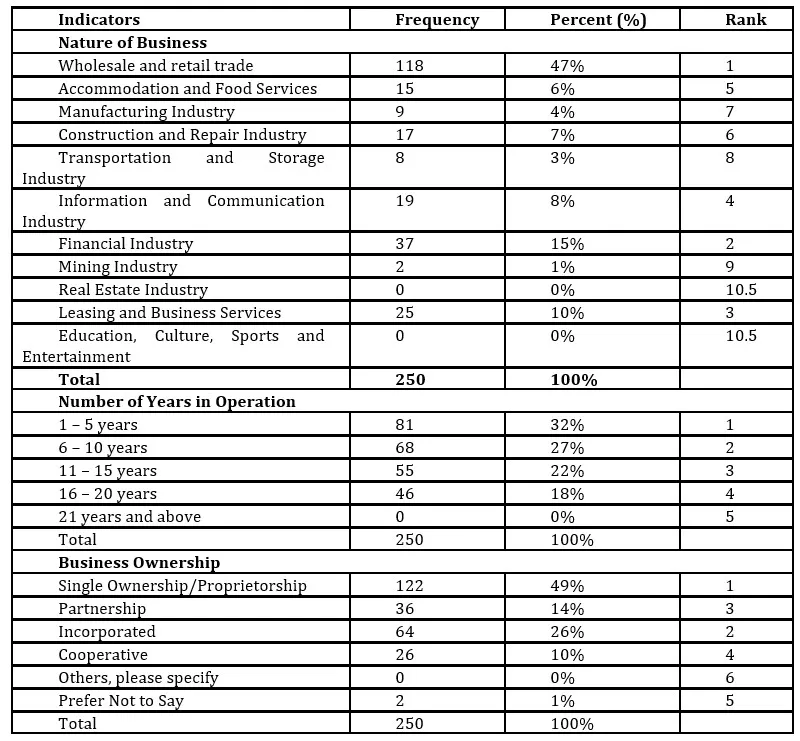
The profile of the businessmen is shown in Table 1. This profile includes business nature, number of years in operation, and business ownership.
Table 1. The Business Profile of the Respondents
As shown in Table 1, the distribution of enterprises according to nature of business indicates that wholesale and retail trade comprises the largest proportion of SMEs, accounting for 47 percent of the total respondents. This is followed by financial activities (15%) and leasing and business services (10%), while sectors such as manufacturing (4%), transportation (3%), and mining (1%) represent a smaller share. The presence of diverse industries reflects varying levels of resource utilization, market engagement, and operational complexity among enterprises.
In terms of years of operation, most SMEs fall within the early stages of business development, with 32 percent operating for 1–5 years and 27 percent for 6–10 years. A decreasing trend is observed as years increase, with no firms operating beyond 21 years. This distribution suggests that a large proportion of enterprises are still in their growth and stabilization phases, indicating ongoing efforts to establish continuity and maintain operations over time. With respect to ownership structure, single proprietorships dominate the sample at 49 percent, followed by incorporated businesses at 26 percent, partnerships at 14 percent, and cooperatives at 10 percent. The predominance of individually owned enterprises suggests a strong reliance on owner-managed decision-making, which may influence how resources are allocated, risks are managed, and business strategies are implemented. These indicators collectively describe the structural and operational conditions of SMEs, highlighting their capacity to sustain business activities, adapt to market demands, and maintain organizational continuity.
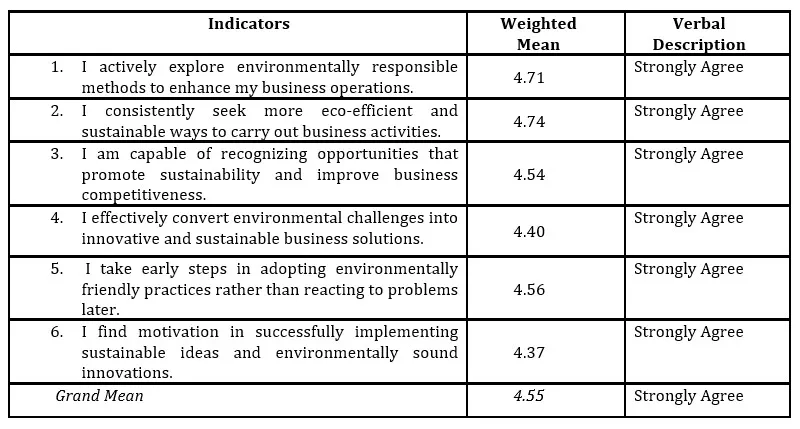
Table 2 shows the level of sustainability-oriented initiative behavior among SMEs. The overall grand mean of 4.55, interpreted as Strongly Agree, indicates that respondents demonstrate a strong tendency to initiate and integrate environmentally responsible actions within their business operations. The highest-rated indicator (4.74) reflects a consistent effort among respondents to pursue eco-efficient and sustainable approaches in carrying out business activities, followed closely by actively exploring environmentally responsible methods to improve operations (4.71). These results suggest that enterprises are actively engaged in enhancing efficiency while considering environmental responsibility.
Respondents also show strong agreement in their ability to identify sustainability-related opportunities that contribute to competitiveness (4.54) and in taking early action in adopting environmentally friendly practices (4.56). This indicates a forward-looking approach in addressing environmental concerns within business processes. Furthermore, the ability to transform environmental challenges into innovative solutions (4.40) and the motivation derived from implementing sustainable initiatives (4.37) highlight the integration of environmental awareness with practical business actions. It shows that SMEs exhibit a strong inclination toward initiating environmentally responsible practices, reflecting adaptive behavior and continuous improvement in business operations.
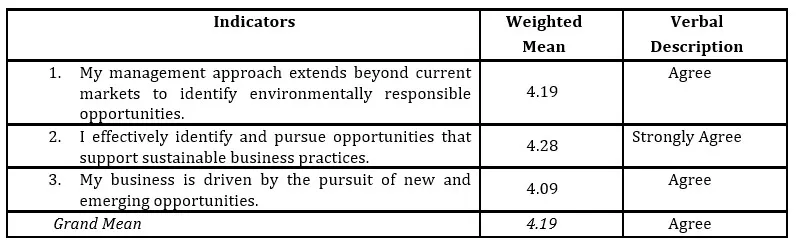
Table 3 presents the level of sustainability-oriented risk engagement behavior among SMEs. The grand mean of 4.19, interpreted as Agree, indicates that respondents demonstrate a moderate to high tendency to engage in opportunity-driven actions that involve calculated decision-making under conditions of uncertainty. The highest-rated indicator (4.28) shows that respondents are confident in identifying and pursuing opportunities that support sustainable business practices. This suggests that business owners are capable of aligning opportunity recognition with environmentally responsible initiatives. Meanwhile, extending management approaches beyond current markets (4.19) and maintaining an opportunity-driven orientation (4.09) indicate that respondents are willing to explore new directions, although with a slightly more cautious stance compared to other behavioral dimensions. The findings suggest that SMEs are reasonably inclined to engage in opportunity-seeking behaviors that involve risk, supporting adaptive decision-making and strategic exploration of sustainability-related initiatives.
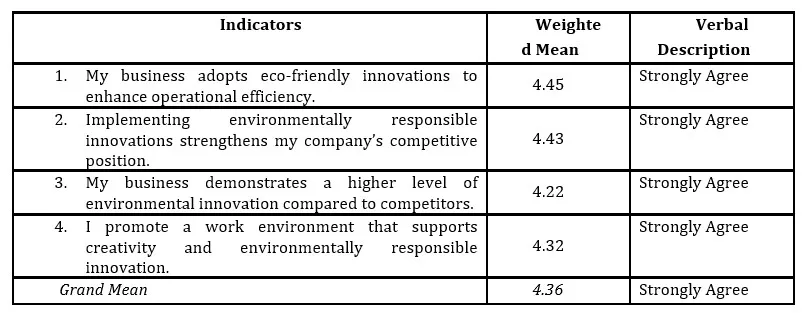
Table 4. Environmental Innovation and Sustainable Practices
Table 4 shows the level of environmental innovation and sustainable practices among SMEs. The grand mean of 4.36, interpreted as Strongly Agree, indicates that respondents actively integrate innovation with environmentally responsible business practices. The highest mean (4.45) reflects the adoption of eco-friendly innovations to improve efficiency, followed closely by the recognition that such innovations enhance competitive advantage (4.43). These results suggest that environmental considerations are embedded in operational and strategic decisions. Respondents also strongly agree that their businesses demonstrate a higher level of environmental innovation relative to competitors (4.22) and that they foster a supportive environment for creativity and sustainability (4.32). This indicates that innovation is both practiced and encouraged within the organization. It reveals that SMEs place strong emphasis on integrating innovation with environmental responsibility, contributing to improved efficiency and competitive positioning.
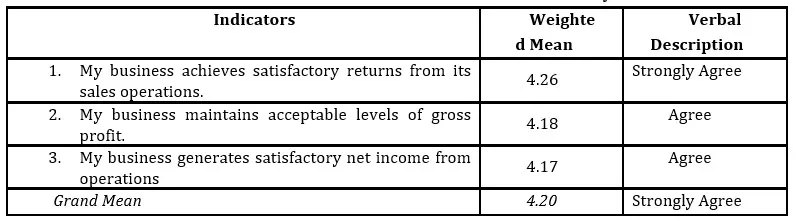
Table 5. Financial Performance in Terms of Profitability
Table 5 presents the financial performance of SMEs in terms of profitability. The grand mean of 4.20, interpreted as Strongly Agree, indicates that respondents generally perceive their businesses as financially performing well. The highest-rated indicator (4.26) shows satisfaction with returns from sales, suggesting that revenue-generating activities are yielding favorable outcomes. Meanwhile, satisfaction with gross profit (4.18) and net income (4.17) indicates that profitability is maintained at a consistent level, although slightly lower than sales performance. The results suggest that SMEs are achieving positive financial outcomes, reflecting stable income generation and effective management of operational performance.
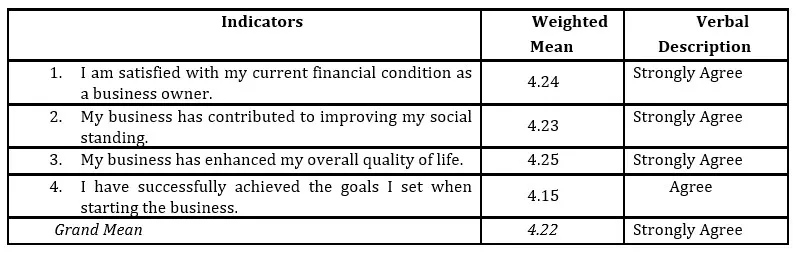
Table 6. Owner’s Personal Goal Attainment
Table 6 shows the level of personal goal attainment among SME owners. The grand mean of 4.22, interpreted as Strongly Agree, indicates that respondents generally experience a high level of personal fulfillment from their business activities. The highest mean (4.25) reflects improvements in quality of life, followed closely by satisfaction with financial condition (4.24) and enhanced social standing (4.23). These findings suggest that business ownership contributes positively to both economic well-being and personal development. Although slightly lower, the achievement of initial business goals (4.15) still falls within the Agree range, indicating that most respondents have met their expectations to a considerable extent. The table shows that SMEs not only generate financial benefits but also contribute to the personal success and satisfaction of business owners.
Discussion
The profile of SMEs in Surigao del Sur reveals that most enterprises operate within wholesale and retail trade, with a large proportion functioning between one to ten years and predominantly under single proprietorship structures. This distribution reflects a business environment characterized by emerging enterprises that rely heavily on owner-centered decision-making and flexible operational structures. Such structural characteristics are consistent with the view that SMEs commonly develop through incremental growth stages influenced by resource constraints and market accessibility. The prevalence of individually managed enterprises suggests that entrepreneurial behavior significantly shapes strategic direction and performance outcomes. Khan et al. (2024) emphasize that SME structures often influence adaptability and decision speed, particularly in dynamic environments where entrepreneurial orientation supports responsiveness to market opportunities Furthermore, resource limitations typical among small enterprises encourage reliance on owner competencies, reinforcing the importance of behavioral and cognitive attributes in sustaining business operations. Economic and business engagement has been shown to influence personal beliefs, decision-making, and life outcomes, highlighting the broader impact of entrepreneurial activity on individual well-being (Fernandez et al., 2025).
The high level of sustainability-oriented initiative behavior demonstrates that SMEs exhibit strong tendencies toward integrating environmentally responsible actions into business activities. The findings indicate that entrepreneurs actively seek eco-efficient approaches and identify opportunities that align environmental responsibility with competitiveness. This pattern suggests that sustainability considerations are no longer perceived as external obligations but are increasingly embedded within strategic business processes. Entrepreneurial orientation that emphasizes initiative-taking behavior enhances the capacity of firms to interpret environmental signals and transform them into operational improvements (Shahrahmani et al., 2025). Ercantan et al. (2024) support the idea that entrepreneurial behavior contributes to innovation capability and strengthens competitive advantage in evolving market environments. Moreover, integrating sustainability into decision-making processes reflects adaptive learning behavior that strengthens enterprise resilience and long-term viability.
Results on sustainability-oriented risk engagement behavior indicate that SMEs demonstrate a positive yet slightly cautious approach toward opportunity-driven decisions involving uncertainty. While respondents show willingness to pursue emerging opportunities that support sustainability, the moderate level of agreement suggests careful evaluation of potential risks before committing resources. This tendency reflects the practical reality faced by SMEs, where limited financial and operational capacity often requires balanced decision-making between innovation and stability. Entrepreneurial risk-taking has been widely recognized as an essential dimension of enterprise growth, particularly when aligned with calculated strategic actions that minimize uncertainty while maximizing opportunity recognition (Adim, 2023).
Environmental innovation and sustainable practices were strongly manifested among SMEs, indicating that business owners actively integrate ecological considerations into operational and strategic processes. The findings suggest that innovation is perceived not only as a tool for efficiency improvement but also as a mechanism for strengthening competitive positioning. The ability to implement eco-friendly innovations reflects the growing relevance of sustainability-driven innovation as a determinant of enterprise success. Businesses adopt strategic marketing and behavioral adjustments in response to evolving consumer patterns and environmental conditions (Reamico et al., 2025). Innovation capability enables SMEs to improve productivity, enhance product value, and strengthen customer engagement in competitive markets (Ceptureanu et al., 2020; Heenkenda et al., 2022). Furthermore, innovation processes often emerge from collaborative learning and organizational support systems that encourage creativity and problem-solving behavior. It indicates that SMEs recognize the strategic importance of integrating innovation with environmental responsibility to achieve sustained performance outcomes.
Financial performance of SMEs in terms of profitability indicates that most enterprises experience satisfactory returns from operations, suggesting stable income generation and effective resource utilization. Profitability reflects the capacity of enterprises to align operational strategies with market demands while maintaining financial sustainability. Financial literacy and resource management capabilities contribute significantly to such outcomes by enabling entrepreneurs to allocate resources efficiently and evaluate investment decisions more effectively. Ibitomi et al. (2024)) indicate that financial knowledge enhances strategic planning and strengthens enterprise stability, particularly among small businesses operating under uncertain conditions. In addition, innovation and entrepreneurial orientation contribute to improved financial performance by enabling firms to develop competitive offerings and optimize operational processes. These insights support the argument that profitability outcomes are influenced by both managerial competencies and behavioral orientations.
Findings on owner’s personal goal attainment highlight that SME performance extends beyond financial outcomes to include improvements in quality of life, social standing, and personal satisfaction. The results suggest that entrepreneurial activities contribute positively to individual well-being, reinforcing the multidimensional nature of enterprise performance. Personal fulfillment reflects the alignment between business objectives and individual aspirations, emphasizing that entrepreneurial success encompasses both economic and psychological outcomes. Market-driven behavior, particularly in tourism and service-related sectors, further demonstrates how consumer preferences shape branding strategies and contribute to enterprise performance outcomes (Fernandez et al., 2025). SMEs contribute not only to economic development but also to the personal empowerment of business owners through income generation and social mobility (Anggie & Werdanyaningsih, 2024). Entrepreneurial competencies such as creativity, persistence, and adaptive thinking further influence the ability to achieve both financial and personal goals (Maravilla & Flores, 2025). Therefore, the results demonstrate that sustainability-oriented entrepreneurial behaviors contribute to holistic performance outcomes that integrate financial stability with personal achievement.
Sustainability-oriented entrepreneurial behaviors, including sustainability-oriented initiative behavior, environmental innovation and sustainable practices, and calculated risk engagement, are positively associated with SME performance outcomes. These behaviors reflect a strategic alignment between economic objectives and ecological considerations, demonstrating that sustainability practices contribute to both financial stability and personal fulfillment. The findings suggest that sustainability is not merely an ethical responsibility for SMEs but also a practical business strategy that enhances profitability, strengthens owner satisfaction, and supports long-term enterprise viability. Rather than representing a tradeoff between economic and environmental goals, sustainability-oriented entrepreneurship appears to function as a source of competitive advantage by enabling firms to improve operational effectiveness, respond to stakeholder expectations, and strengthen resilience in dynamic business environments. The interaction between entrepreneurial orientation and innovation capability supports adaptive performance under conditions of uncertainty, reinforcing the strategic value of sustainability-driven entrepreneurial behavior.
Conclusion
The findings further suggest that sustainability-oriented entrepreneurship should not be viewed solely as a compliance requirement or ethical undertaking. Instead, environmentally conscious entrepreneurial behaviors appear to generate tangible business benefits through improved profitability, enhanced owner well-being, and stronger enterprise resilience. This reinforces the view that sustainability can serve as a practical competitive advantage for SMEs operating within increasingly dynamic and environmentally sensitive business environments. This behavioral orientation implies that sustainability considerations are internalized as part of value creation rather than treated as external compliance requirements. Environmental innovation emerged as an interpretive expression of how enterprises translated ecological awareness into practical organizational routines. The integration of eco-efficient processes demonstrated that innovation extended beyond technical improvement toward reinforcing legitimacy within socially embedded markets. Such patterns suggested that enterprise adaptability was influenced by the ability to align innovation with contextual environmental expectations, indicating a form of strategic responsiveness shaped by both internal competencies and external pressures. Risk engagement behavior revealed that decision-making processes reflected careful negotiation between opportunity exploration and organizational continuity. Rather than indicating resistance to uncertainty, the findings implied that entrepreneurs exercised selective engagement with sustainability-oriented opportunities, demonstrating a reflective balance between ambition and stability. This interpretive pattern suggested that entrepreneurial judgment played a significant role in shaping how sustainability initiatives were adopted without compromising operational viability. Performance outcomes related to profitability and personal goal attainment illustrated that entrepreneurial activities functioned as mechanisms for achieving both economic stability and individual fulfillment. The interaction between behavioral orientation and enterprise outcomes indicated that sustainability-informed practices influenced not only financial trajectories but also perceptions of personal accomplishment and social positioning. Such interpretations suggested that enterprise success was experienced as both an economic condition and a socially embedded achievement. Therefore, the findings imply that sustainability-oriented entrepreneurial behavior represents more than an environmentally responsible approach to business management. It serves as a strategic mechanism through which SMEs can simultaneously pursue economic performance, enterprise resilience, and personal fulfillment. The results indicate that sustainability-oriented entrepreneurship can function as a practical competitive advantage rather than a tradeoff between profitability and environmental responsibility. As SMEs operate within increasingly complex socio-ecological environments, integrating sustainability into entrepreneurial decision-making may strengthen long-term business success while creating value for both enterprises and their owners.
Acknowledgements
The author affirms that this study is an original work developed through independent academic effort and scholarly analysis. Any assistance received was limited to general academic guidance and technical support in formatting and organization. Language refinement tools were used solely to improve grammar, clarity, and coherence; however, all conceptualization, analysis, interpretation, and written content were entirely produced by the author. No part of the intellectual content was generated by artificial intelligence or external sources without proper attribution. The author maintains full responsibility for the integrity, originality, and accuracy of the study.
References
Adim, V. (2023) ‘The influence of entrepreneurial risk-taking propensity on sales growth of SMEs in Bayelsa State, Nigeria’, 13, pp. 73–91.
Adinata, A., Sholahuddin, M., Kuswati, R. and Wiyadi (2023) ‘The influence of innovation capability and entrepreneurship capability on e-marketing performance, mediated by competitive advantage, to enhance culinary SMEs in Ponorogo’, Journal of Humanities and Social Sciences Studies, 5(12), pp. 130–139. Doi:10.32996/jhsss.2023.5.12.15.
Alkhodary, D. (2023) ‘Integrating sustainability into strategic management: a path towards long-term business success’, International Journal of Professional Business Review, 8, e01627. Doi:10.26668/businessreview/2023.v8i4.1627.
Amin, H.J. (2021) ‘Effect of entrepreneurial marketing dimensions on small and medium enterprises performance in Nasarawa State’, Journal of Economics and Business, 4(2). Doi:10.31014/aior.1992.04.02.356.
Amoah, C. and Mungai, J.N. (2020) ‘Financial literacy training and micro insurance on the financial performance of SMEs in the Sekondi-Takoradi Metropolis, Ghana’, International Journal of Research in Business and Social Science, 9(7), pp. 247–256. Doi:10.20525/ijrbs.v9i7.939.
Anggie, M. and Werdanyaningsih, S. (2024) ‘Empowering communities through SME development: a qualitative study on management approaches’, Golden Ratio of Community Services and Dedication, 4, pp. 81–89. Doi:10.52970/grcsd.v4i2.590.
Bangahan, S., Daguplo, M.G.L., Hayudini, M.A.A. et al. (2025) ‘Role of tourism branding communication in shaping destination perceptions and visitor behavior engagement’, Environment and Social Psychology, 10(6), 3272. Doi:10.59429/esp.v10i6.3272.
Barno, L.J., Cheboi, J. and Muganda, C. (2021) ‘Moderating effect of financial literacy on relationship between anchoring and investment decision among SMEs in Nairobi County’, East African Journal of Business and Economics, 3(1), pp. 65–81. Doi:10.37284/eajbe.3.1.305.
Cahyono, T., Herdinata, C., Harianto, E. and Olasode, T. (2023) ‘Implementation of resource-based theory on the relationship of intellectual capital and SMEs performance with innovation ability as a medium’, Jurnal Aplikasi Manajemen, 21(1). Doi:10.21776/ub.jam.2023.021.1.09.
Cakmak, Z. (2023) ‘Adapting to environmental change: the importance of organizational agility in the business landscape’, Florya Chronicles of Political Economy, 9, pp. 42–53. Doi:10.17932/IAU.FCPE.2015.010/fcpe_v09i1004.
Ceptureanu, S., Ceptureanu, E., Popescu, D. and Orzan, O. (2020) ‘Eco-innovation capability and sustainability driven innovation practices in Romanian SMEs’, Sustainability, 12, 7106. Doi:10.3390/su12177106.
Chavez, J.V. and Vicente, M.B. (2024) ‘Halal compliance behaviors of food and accommodation businesses in the Zamboanga Peninsula, Philippines’, Multidisciplinary Science Journal, 7(5), 2025259. Doi:10.31893/multiscience.2025259.
Cuilan, J.T., Chavez, J.V., Soliva, K.J.G. et al. (2024) ‘Verbal and non-verbal communication patterns of persuasive selling among live online sellers’, Environment and Social Psychology, 9(8), 2519. Doi:10.59429/esp.v9i8.2519.
Di Bella, L., Katsinis, A., Lagüera-González, J. et al. (2023) Annual Report on European SMEs 2022/2023. Luxembourg: Publications Office of the European Union.
Ercantan, K., Eyupoglu, S. and Ercantan, O. (2024) ‘The entrepreneurial leadership, innovative behaviour, and competitive advantage relationship in manufacturing companies: a key to manufactural development and sustainable business’, Sustainability, 16, 2407. Doi:10.3390/su16062407.
Etikan, J. (2024) ‘Corporate social responsibility (CSR) and its influence on organizational reputation’, Journal of Public Relations, 2, pp. 1–12. Doi:10.47941/jpr.1694.
Fatkhurahman, Waldelmi, I. and Novita (2026) ‘Creative entrepreneurship model: the relationship between innovation, competitiveness, and business success among the younger generation’, Jurnal Manajemen Universitas Bung Hatta, 21, pp. 60–73. Doi:10.37301/jmubh.v21i1.29107.
Fernandez, C.M.B., Chavez, J.V., Jr., B.F.C. et al. (2025) ‘Assessing the utilitarian value of economics and business on personal beliefs and practices among working students’, Environment and Social Psychology, 10(5), 3228. Doi:10.59429/esp.v10i5.3228.
Ghobadi Saki, E., Khodadad Hosseini, S.H., Mansourimoayyed, F. and Rajabzadeh Ghatari, A. (2023) ‘A qualitative investigation of entrepreneurial marketing dimensions and their effect on brand image on the Instagram platform’, The International Journal of Entrepreneurship and Innovation. Doi:10.1177/14657503231202664.
Gieure, C., Benavides-Espinosa, M.M. and Roig-Dobón, S. (2020) ‘The entrepreneurial process: the link between intentions and behavior’, Journal of Business Research, 112. Doi:10.1016/j.jbusres.2019.11.088.
Gregorio, M.W. and Chavez, J.V. (2025) ‘Building confidence, building brand: understanding institutional confidence and brand equity in higher education through university quality and strategic branding’, Environment and Social Psychology, 10(11), 4253. Doi:10.59429/esp.v10i11.4253.
Haddoud, M.Y., Onjewu, A.K.E., Nowiński, W. et al. (2021) ‘The determinants of SMEs’ export entry: a systematic review of the literature’, Journal of Business Research, 125, pp. 262–278.
Hasanuddin, Bakri, Ramadhani, H., Perdana, R., Syamsuddin and Judijanto, L. (2023) ‘Sustainable business practices: integrating environmental and social responsibility into management strategies’, Global International Journal of Innovative Research, 1, pp. 220–226. Doi:10.59613/global.v1i3.36.
Heenkenda, H., Xu, F., Kulathunga, K. and Senevirathne, W. (2022) ‘The role of innovation capability in enhancing sustainability in SMEs: an emerging economy perspective’, Sustainability, 14(17), 10832. Doi:10.3390/su141710832.
Hernita, H., Surya, B., Perwira, I., Abubakar, H. and Idris, M. (2021) ‘Economic business sustainability and strengthening human resource capacity based on increasing the productivity of small and medium enterprises (SMEs) in Makassar City, Indonesia’, Sustainability, 13(6), 3177. Doi:10.3390/su13063177.
Ibitomi, T., Dada, D., Aderotimi, B. and Gaude-Jiwul, P. (2024) ‘Financial literacy and performance of small and medium scale enterprises’, European Journal of Business and Innovation Research, Doi:10.37745/ejbir.2013/vol12n36891.
Javed, H., Goncalves, M. and Salotra, G. (2026) ‘Linking green strategy and innovation to environmental performance: the mediating role of green innovation and the moderating role of environmental strategy in Chinese manufacturing SMEs’, Cogent Business & Management, 13(1). Doi:10.1080/23311975.2025.2597716.
Khan, S., Afridi, F. and Amin, M. (2024) ‘Impact of entrepreneurial orientation on small and medium enterprises performance’, Journal of Asian Development Studies, 13, pp. 686–698. Doi:10.62345/jads.2024.13.1.57.
Khiawnoi, P., Nakudom, S.S., Noobutr, P. and Kaewzang, U. (2025) ‘Empowering communities: the strategic role of community enterprise entrepreneurs in sustainable development’, Sustainability, 17(12), 5483. Doi:10.3390/su17125483.
Maravilla, V.J. and Flores, G. (2025) ‘Entrepreneurial competency, resilience, and financial literacy: drivers of sustainable performance in SMEs for societal welfare’, Journal of Sustainability, Society, and Eco-Welfare, 2. Doi:10.61511/jssew.v2i2.2025.1374.
Mohd Saman, N.R., Mahmud, N., Nor, N. and Kamaludin, M. (2025) ‘Sustainability performance of small and medium enterprises (SMEs) within the service sector: a comprehensive review’, INSIGHT Journal, 12, pp. 13–29. Doi:10.24191/ij.v12i1.3817.
Nanda Oktasavira, N.O. and Ismanto, H. (2022) ‘Technological literacy and resource management in SME income’, EKUITAS (Jurnal Ekonomi dan Keuangan), 6(4), pp. 437–455. Doi:10.24034/j25485024.y2022.v6.i4.5165.
Nelson, J., Jay, A. and Fredrick, V. (2025) Understanding the Social Enterprise Ecosystem.
Octasylva, A.R.P., Yuliati, L.N., Hartoyo, H. and Soehadi, A.W. (2022) ‘Innovativeness as the key to MSMEs’ performances’, Sustainability, 14(11), 6429. Doi:10.3390/su14116429.
Paiva, L., Muñoz-Pascual, L. and Galende, J. (2024) ‘Innovation and sustainability from the perspective of entrepreneurial intention: a cross-cultural approach’, Education + Training, 66, pp. 831–850. Doi:10.1108/ET-07-2023-0279.
Prokopenko, O., Sitenko, D., Zhanybayeva, Z., Lomachynska, I. and Rakhmetova, A. (2025) ‘Financial systems and their influence on entrepreneurial development: insights for building sustainable and inclusive ecosystems’, Journal of Risk and Financial Management, 18(3), 131. Doi:10.3390/jrfm18030131.
Reamico, D.M.D., Bangahan, S., Hayudini, M.A.A. et al. (2025) ‘Strategizing marketing initiatives from tourism-seeking behaviors among travelers’, Environment and Social Psychology, 10(7), 3880. Doi:10.59429/esp.v10i7.3880.
Rong, C., Espinosa-Cristia, J., Matac, L., Alzuman, A. and Comite, U. (2024) ‘Does green entrepreneurial orientation impact entrepreneurial success through green innovation capability in the manufacturing and services sector of emerging economies?’, International Entrepreneurship and Management Journal, Doi:10.1007/s11365-024-01059-0.
Shahrahmani, M., Aflatoonian, B., Mirzaei, H. et al. (2025) ‘Sustainable entrepreneurship models dynamics and key drivers of societal and environmental impact’, Discover Sustainability, 6, 1019. Doi:10.1007/s43621-025-01945-9.
Singh, A. (2024) ‘Sustainability practices in business operations’, International Journal for Research Publication and Seminar, 15, pp. 18–34. Doi:10.36676/jrps.v15.i3.1424.
Sonawane, A. (2025) Integrating Sustainability into Business Strategies: Emerging Trends in Sustainable Development for Competitive Advantage, pp. 1–11.
Suherlan and Okombo, M. (2023) ‘Technological innovation in marketing and its effect on consumer behaviour’, Technology and Society Perspectives (TACIT), 1, pp. 94–103. Doi:10.61100/tacit.v1i2.57.
Tassabehji, R., Mishra, J.L. and Dominguez-Péry, C. (2019) ‘Knowledge sharing for innovation performance improvement in micro/SMEs: an insight from the creative sector’, Production Planning and Control, 30, pp. 935–950.
Urefe, O., Odonkor, T., Njideka, C. and Agu, E. (2024) ‘Enhancing small business success through financial literacy and education’, Magna Scientia Advanced Research and Reviews, 11, pp. 297–315. Doi:10.30574/msarr.2024.11.1.0123.
Walecka-Jankowska, K., Wasilewska, B. and Wasilewski, A. (2025) ‘The role of social initiatives in shaping sustainable business outcomes—insights from organizations operating in Poland’, Sustainability, 17(20), 9357. Doi:10.3390/su17209357.
Yahaya, H.D. and Nadarajah, G. (2023) ‘Determining key factors influencing SMEs’ performance: a systematic literature review and experts’ verification’, Cogent Business and Management, 10(3). Doi:10.1080/23311975.2023.2251195.
Zahra, S.A., Handoyo, S. and Amrania, G.K.P. (2025) ‘Sustainable business practices and firm performance: a systematic literature review’, Cogent Business and Management, 12(1). Doi:10.1080/23311975.2025.2597715.
Zaini, A. and Poernamawati, D.E. (2023) ‘The role of entrepreneurship orientation in mediation of social capital and innovation to augment marketing performance of small medium enterprises (SMEs)’, pp. 11–23. Doi:10.2991/978-94-6463-026-8_3.