Melva, LINARES-GUERRERO, Nancy Milagros, GARCIA-SAUCEDO and Rosa Isela, RUIZ-MELÉNDEZ DE BOBADILLA
Business School, Universidad Privada del Norte, Perú
Volume 2026,
Article ID 946891,
IBIMA Business Review,
14 pages,
DOI: doi.org/10.5171/2026.946891
Received date: 1 June 2026; Accepted date: 10 July 2026; Published date: 10 September 2026
Academic Editor: Roberto MACHA HUAMAN
Cite this Article as:
Melva, LINARES-GUERRERO, Nancy Milagros, GARCIA-SAUCEDO and Rosa Isela, RUIZ-MELÉNDEZ DE BOBADILLA (2026)," “Environmental Accounting as a Strategic Tool for Corporate Sustainability: A Quantitative Study of Construction Firms “, IBIMA Business Review, Vol. 2026 (2026), Article ID 946891, https://doi.org/10.5171/2026.946891
Construction companies require strategic tools to integrate sustainability into their management; therefore, this study sought to analyze how environmental accounting serves as a strategic tool for corporate sustainability in small businesses in the construction sector, using a quantitative, basic-research study that involved experimentation with variables and a cross-sectional design. The population consists of business entities in the construction sector in the city of Cajamarca, duly registered with the National Superintendency of Tax Administration. The sample consists of 51 companies in the same sector, identified through convenience sampling. The research method employed was a survey, and the instrument was a well-structured questionnaire with Likert-scale responses, which was validated with expert opinions for greater reliability; Cronbach’s alpha coefficient was calculated. The collected data were processed using IBM SPSS Statistics 27; a scatterplot with boxplots was also generated. The findings confirm that environmental accounting provides useful information for business management and is significantly associated with corporate sustainability. It is concluded that environmental accounting enables the generation of valid reports that provide useful information for strengthening sustainability in companies in the construction sector; it also allows companies to align themselves with the principles of social responsibility and environmental protection.
Keywords: environmental accounting, corporate sustainability, construction, social responsibility.
Introduction
Currently, the construction sector is a driver of economic and social development and, at the same time reflects high levels of industrial activity with a meaningful environmental impact. Thus, by 2021, all activities related to this sector were responsible for 37% of global carbon dioxide (CO2) emissions, a figure attributed primarily to energy consumption during industrial operations (Huamaní and Quispe, 2024). Despite the various strategies implemented to reduce negative environmental impacts, such as the use of low emission materials and the integration of renewable energy into production processes, there remains some disparity in the adoption of best practices among companies (Zhao et al.; 2025). Global statistics and previous research reinforce this concern; indeed, in China, an increase in carbon emissions is projected; while, in southern Nigeria, the materials manufacturing process has become unsustainable, with high levels of sulfur dioxide that exceed the parameter established by the World Health Organization, impacting the environment and, consequently, human health.
In Peru, environmental pollution also represents one of the main environmental and public health problems, due to urban growth, industrial activities, mining, inadequate waste management, and air and water degradation. (National Center for Strategic Planning [CEPLAN], n.d.). At the local level, a study by the National University of Cajamarca (2022) confirmed that construction waste has led to the degradation of the urban landscape, sol contamination, and the contamination of water sources, highlighting a lack of environmental commitment on the part of construction companies.
The local reality, combined with international figures, highlights the importance of implementing effective environmental management tools that reduce negative impacts and promote sustainable practices in the sector. One of the key tools for addressing this problem is environmental accounting, which allows ecological impacts to be integrated into companies’ accounting and financial management. Burritt et al. (2023) emphasize that this tool not only measures environmental impacts but also guides strategic decisions toward more sustainable operations. Similarly, Ahmad et al. (2025) argued that green accounting not only records environmental impacts but also translates these practices into financial benefits. Along the same line, Environmental Management Accounting (EMA) is emerging as a key tool for sustainable management in the construction sector, where recent studies conducted in Egypt show that the implementation of EMA is strongly influenced by regulatory framework and the existence of environmental strategies; these variables account for up to 68.9% of its adoption in construction companies (Alnaim and Metwally, 2024).
However, the adoption of environmental accounting remains limited. Despite advances such as the Ministry of the Environments’ adoption of the Integrated Environmental and Economic Accounting System (SCAE), gaps persist in its application within the construction sector. This situation is significant because of environmental impacts, but also provides information for decision-making aimed at strengthening corporate sustainability. In this regard, various studies have demonstrated a relationship between these two variables; however, evidence form construction companies, especially in developing countries, remains limited.
In this context, Corporate Sustainability (CS) is understood as the ability of organizations to balance economic, environmental, and social performance, which is assessed using indictors based on the Triple Bottom Line approach (Stanitsas and Kirytopoulos, 2021). These indicators allow for the assessment of key aspects such as water consumption, CO2 emissions, workplace well-being, and operating costs complemented by analytical methods, composite indices, content analysis, and statistical models, which facilitate comparison and strategic decision-making (Nielsen, 2023). International experiences, such as those in Vietnam, have shown that the use of EMA not only improves environmental benefits (Le et al., 2019). Within this framework, it is essential to understand the nature of Environmental Accounting and its connection to Corporate Sustainability.
Based on the problem outlined above, this study seeks to answer the following questions: How does Environmental Accounting relate to Corporate Sustainability in construction companies? And as specific questions: How does the recording of environmental costs relate to Corporate Sustainability in construction companies? How does the application of tools relate to corporate sustainability in construction companies? How does environmental reporting relate to corporate sustainability in construction companies? How does strategic integration relate to corporate sustainability in construction companies? How does organizational culture relate to corporate sustainability in construction companies?
Although various studies examined the relationship between environmental accounting and corporate sustainability, gaps in empirical evidence still persist, especially in companies in the construction sector. Furthermore, understanding how environmental accounting practices relate to corporate sustainability in these contexts is very limited, which justifies this research.
The objectives are: to determine how environmental accounting relates to corporate sustainability in construction companies; and the specific objectives are: to determine how the recording of environmental costs relates to corporate sustainability in construction companies; to determine how the application of tools relates to corporate sustainability in construction companies; to determine how environmental reporting relates to corporate sustainability in construction companies; to determine how strategic integration relates to corporate sustainability in construction companies; and to determine how organizational culture relates to corporate sustainability in construction companies.
Literature Review
This research is based on three fundamental theories: Stakeholder Theory (Freeman, 1984): companies must respond to multiple groups (customers, communities, regulators); Environmental Management Accounting (EMA) enables companies to communicate impacts, be accountable, and strengthen relationships; Institutional Theory (DiMaggio and Powell, 1983): companies adopt sustainable practices due to regulatory, social, or mimetic pressures; EMS serves as a structured response to these pressures; Resource and Capabilities Theory (Barney, 1991): Internal capabilities, such as EMS, can become a sustainable competitive advantage.
In the construction sector, the dimensions of sustainability assessment include not only the traditional environmental, economic, and social pillars, but also institutional, technological, and cultural dimensions (Ahn et al., 2022). Consequently, key aspects such as environmental efficiency, social performance, sustainable economic performance, innovation, and competitive advantage are considered, all of which are fundamental to the proper implementation of Environmental Accounting. In this regard, it is necessary to align these indicators and dimensions with regulatory frameworks. According to data from the National Institute of Statistics and Informatics (INEI, 2018), there were 3,533 companies operating in the construction sector in the Cajamarca region. Of this total, microenterprises represented the predominant segment with 3, 209 companies, equivalent to 90.8%, indicating a high concentration of smaller business units. Meanwhile, small enterprises numbered 297, accounting for 8.4%, while large and medium-sized enterprises totaled only 27, representing 0.8% of the total.
There are previous studies that must be cited to support this study: Ahmed et al. (2024) identified six factors that promote the application of environmental accounting and how such implementation improves financial and environmental efficiency. They conclude that environmental policies and stakeholder interest drive sustainable practices. For their part, Atkins et al. (2023) found that Environmental Accounting has origins that ethical reorientation of the accounting role is necessary, moving toward transformation rather than a purely informational focus. Furthermore, Camargo (2024), in identifying the challenges and opportunities that Environmental Accounting presents for business and society, found that complying with environmental regulation reduces costs and strengthens corporate sustainability; they therefore concluded that aligning organizations and society at large is essential to achieving long-term sustainability. Candy and Peña (2022) proposed a Green Accounting System to incorporate environmental impact into the accounting systems of industrial and commercial companies in Colombia; they found that no Company has formally incorporated environmental criteria, revealing a significant gap in environmental impacts, representing a step toward real and measurable corporate sustainability.
Furthermore, Cantillo Orozco et al. (2020) studied environmental accounting from a public policy perspective, highlighting its value as a financial and administrative management system. The results underscore the importance of the “Unit of Measure” indicator in estimating the value of natural capital. They concluded that environmental accounting plays a key role in the public economy. Furthermore, it strengthens decision-making in environmental management. Carandang and Ferrer (2020) evaluated the impact of environmental accounting on profitability, demonstrating that environmental costs increase efficiency in certain financial indicators and concluding that not all elements of environmental accounting have the same influence. Dhar et al. (2022) empirically analyzed how green accounting impacts the sustainable development of polluting companies in sustainability, leading them to conclude that there is a positive relationship between environmental accounting and the strengthening of sustainable capabilities.
Gomes et al., (2020), evaluated the financial statements of 15 organizations involved in climate action, finding that accounting and environmental mechanisms are not adequately utilized for decision-making; they concluded that sound environmental accounting management allows for a broader financial analysis that includes environmental and asset-related variables affecting corporate sustainability. Jankalová and Jankal (2024) analyzed how accounting is increasingly intertwined with sustainability, social responsibility, and artificial intelligence; they concluded that accounting must play a proactive role in sustainable and ethical practices. Furthermore, the use of advances technologies can enhance this role. On the other hand, Le et al. (2019) investigated the influence of the Environmental Management System and its relationship with the Vietnamese construction materials industry. The results show that environmental accounting has improved both environmental and financial efficiency, concluding that its application can be a key strategy for sustainable development. Furthermore, they highlight the positive relationship between environmental efficiency and profitability. Similarly, Muñoz and Enciso (2021) analyzed Environmental Accounting as an important source of sustainability for social economy enterprises within the framework of the Sustainable Development Goals (SDGs). They concluded that there is a need to establish a conceptual framework focused on Environmental Accounting for social economy enterprises, with the aim of contributing to the achievement of the SDGs.
Qi et al. (2025) applied Extended Energy Accounting (EEA) to assess agricultural resource use in four Chinese provinces (Hebei, Shanxi, Shandong, and Henan). The study measured flows of energy, materials, emissions, labor, and capital from a thermodynamic perspective. It was found that natural energy was the largest contributor (9.92 EJ) and the emissions, particularly animal waste (80%), exceed non-renewable inputs. Shandong showed the highest conversion efficiency (0.46). The authors conclude that the EEA allows for the diagnosis of scarcity and pollution in agro ecological systems and can be applied in other regions as a three key environmental indicator: water, energy, and waste. The results reveal high awareness of sustainability but low implementation due to a lack of technical knowledge and government support. They conclude that the model is replicable in other developing countries. The study provides a useful tool for strengthening corporate sustainability in medium-sized enterprises.
Similarly, Pasupuleti et al. (2025) examined green finance in relation to the sustainability of manufacturing firms in India between 2016 and 2023. The results show that green finance has a variable effect depending on the firm´s level of sustainability, concluding that green finance has a variable effect depending on the firm´s level of sustainability, concluding that green finance can be an appropriate tool for promoting corporate sustainability. Ren et al. (2025) investigated the use and optimal allocation of eco-friendly construction materials in civil engineering projects in China. The results show that efficient material allocation improves constructions’ efficiency, reduces costs, and lowers carbon emissions by more than 20%, concluding that this methodology adds value to the sector’s sustainable development. Reyes et al. (2024) analyzed the sustainability strategies implemented in industrial companies, focusing on their relationship with environmental waste generation, favoring companies with active environmental management. They conclude that integrating sustainable strategies with environmental accounting improves responsible decision-making.
Reyes et al., (2024) conducted a study in the Colombian manufacturing industry, concluding that integrating eco-efficiency indicators and environmental accounting can improve sustainability, enabling better comparability across industries and a genuine environmental focus. For their part, Sinforoso (2022) analyzed the impact of Environmental Accounting on the financial profitability of sustainable companies listed on the Mexican Stock Exchange. The results indicated a strong relationship between environmental actions and net influence on certain aspects of financial profitability. Sinforoso and Pelegrin (2021), for their part, proposed the operational implementation of environmental accounting in Mexican companies and concluded that environmental reports are essential for responsible decision-making. The author recommended applying environmental financial accounting (EFA) in micro, small, and medium-sized enterprises. This adoption would contribute to more ethical and sustainable management.
Astari et al. (2023) analyzed the positive effect of green accounting, determining that the disclosure of sustainability reports, on its own, can have a negative effect; ultimately, they concluded that Environmental Accounting generated value when it is part of a well-structured strategy and, in turn, highlighted the need for more effective communication regarding corporate environmental actions. For their part, Xia et al. (2025) analyzed how environmental accounting (EMA) and emissions management (CEM) are key tools in the construction sector, linking their research to international trends. Likewise, Zhingri and Zapata (2023) addressed environmental accounting for the mitigation of environmental impact through the environmental costs generated by business activities. The study, conducted at Southern Telecommunications in Ecuador, included executives and technical staff in the simple stratified sample to ensure population representativeness. The findings reveal that employees have limited knowledge of environmental accounting and applicable regulations. The study highlighted the absence of an Environmental Accounting System (EAS) and a lack of financial resources allocated to eco-friendly materials. It was concluded that the Company does not incorporate environmental accounting mechanisms that contribute positively to its sustainability.
This research has theoretical significance due to its contribution to advancing knowledge by linking Environmental Accounting with Corporate Sustainability in the construction sector, particularly in a largely unexplored context such as that of Cajamarca, Peru. By integrating approaches drawn from stakeholder theory (Freeman, 1984), institutional theory (DiMaggio and Powel, 1983), and the theory of resources and capabilities (Barney, 1991), this study addresses not only the technical aspects of environmental accounting but also its effects on organizational behavior, corporate culture, and the business response to growing environmental challenges. From a methodological perspective, the research develops a replicable analytical framework that evaluates the relationship between environmental accounting and corporate sustainability; as it can be adapted to other sectors or regions, the study offers a transferable analytical model that can serve as a basis for comparative research in similar contexts within emerging economies. In practical terms, the research provides companies in the construction sector with concrete tools for measuring, reporting, and managing their environmental impact more effectively. By promoting management through the use of environmental accounting systems, the study aims to enhance operational efficiency, reduce negative impacts, strengthen corporate reputation, and facilitate access to markets that value transparency and a commitment to sustainability.
Materials and Methods
The study employs a quantitative approach, classified as basic research, without manipulation of variables and conducted at a single point in time. It aimed to determine the relationship between Environmental Accounting and Corporate Sustainability, as applied to the construction sector. The population consists of 297 of small businesses in the construction industry in the city of Cajamarca, as duly reported by the National Institute of Statistics and Informatics. Using probabilistic sampling, a sample of 169 small businesses in the construction sector was selected. It should be noted that these small businesses represent a very significant segment of the business sector; they also exhibit a higher level of formalization compared to microenterprises.
Survey techniques were applied, and a questionnaire was used as the instrument. The questionnaire consisted of 34 questions, organized into two variables: first, Environmental Accounting, divided into the dimensions of environmental cost tracking, application of tools, environmental reporting, strategic integration, and organizational culture; on the other hand, Corporate Sustainability, comprising the dimensions of environmental efficiency, social performance, sustainable economic performance, and innovation and competitive advantage.
The questionnaire responses were organized on a five-point Likert scale, ranging from “strongly disagree” to “strongly agree”. The instrument was validated through expert review, during which experts assessed the relevance, consistency, and clarity of the items. Reliability was assessed using Cronbach’s alpha coefficient, which indicated high reliability. The collected data were processed using IBM SPSS Statistics 27, enabling a correlational analysis to determine the association between the study’s key variables. Since the purpose of the research was to determine the relationship between environmental accounting and corporate sustainability, Spearman’s correlation coefficient was used, as the variables were measured on an ordinal scale and the data did not meet the assumption of normality; for which the normality test established the use of Spearman’s Rho; similarly, a scatterplot with boxplots was generated using SPSS 27.
Results
The results were obtained from a representative sample consisting of representatives from small businesses in the construction sector, including managers, accountants, and administrators, aged between 25 and 50, of both genders, with an educational background ranging from a high school diploma to a college degree, as well as at least five years of experience in the sector. Based on this, the results will be presented for each of the specific objectives and, finally, for the general objective.
Specific objective 1: To determine how the recording of environmental costs relates to corporate sustainability in construction companies.
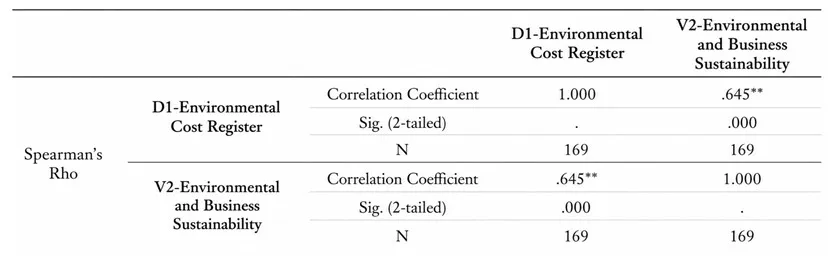
Table 1: Relationship between Environmental Costs Recording and Corporate Sustainability.
Note: The correlation is significant at the 0.01 level (two-tailed)
Comment: According to Spearman’s Rho, the correlation coefficient is p = 0.645 with a two-tailed significance level of p = 0.000. Since the significance value is less than 0.01, a significant relationship between the two variables is established. The result indicated a moderate and statistically significant positive correlation.
Specific objective 2: To determine how the application of tools relates to corporate sustainability in construction companies.
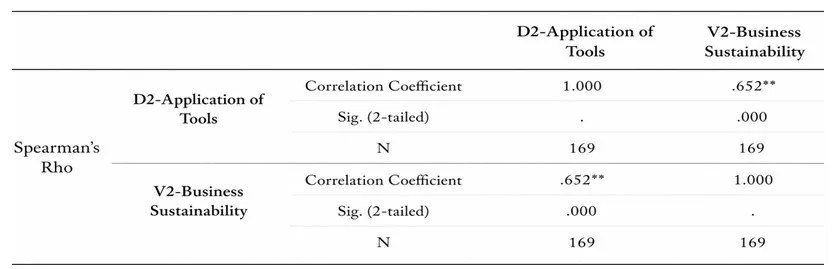
Table 2: Relationship between the application of tools and corporate sustainability
Note: The correlation is significant at the 0.01 level (two-tailed).
Comment: Applying Spearman’s correlation test yielded a correlation coefficient of p = 0.652 and a two-tailed significance level of p = 0.000, which establishes a significant relationship between the two variables. The coefficient obtained reflects a moderate and statistically significant positive correlation.
Specific Objective 3: To determine how environmental reporting relates to corporate sustainability in construction companies.
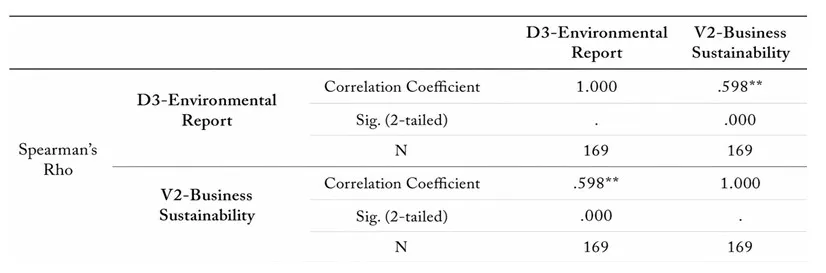
Table 3: Relationship between environmental reporting and corporate sustainability.
Note: The correlation is significant at the 0.01 level (two-tailed)
Comment: For this objective, using Spearman’s correlation test, a coefficient of p = 0.598 and a two-tailed significance level of p = 0.000 were obtained, indicating the existence of a statistically significant relationship between the two variables. The coefficient obtained shows a moderate and significant positive correlation.
Specific objective 4: To determine how strategic integration relates to corporate sustainability in construction companies.
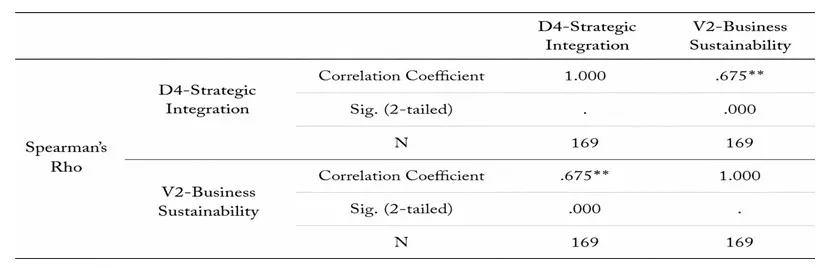
Table 4: Relationship between Strategic Integration and Business Sustainability
Note: The correlation is significant at the 0.01 level (two-tailed)
Comment: In this case, Spearman’s Rho yielded a correlation coefficient of p = 0.675, with a two-tailed significance level of p = 0.000, thus confirming the existence of a significant relationship between the two variables. The coefficient value reflects a moderate and statistically significant positive correlation.
Specific objective 5: To determine how organizational culture relates to corporate sustainability in construction companies.
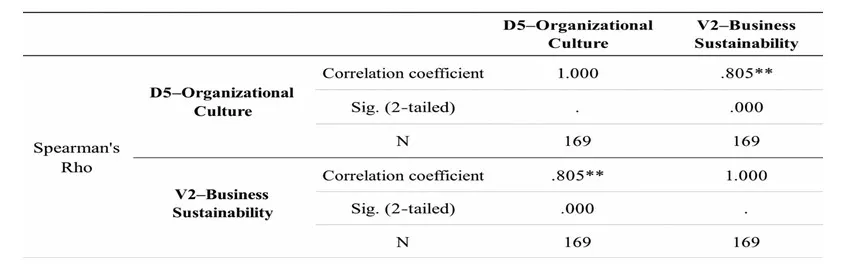
Table 5: Relationship between Organizational Culture and Corporate Sustainability
Note: The correlation is significant at the 0.01 level (two-tailed)
Comment: For this objective, a correlation coefficient of p = 0.805 was obtained, with a two-tailed significance level of p = 0.000. Since the significance value is less than 0.01, this reaffirms the existence of a statistically significant relationship between the two variables. The coefficient obtained indicates a high and significant positive correlation.
General Objective: To determine how Environmental Accounting relates to Corporate Sustainability in construction companies.
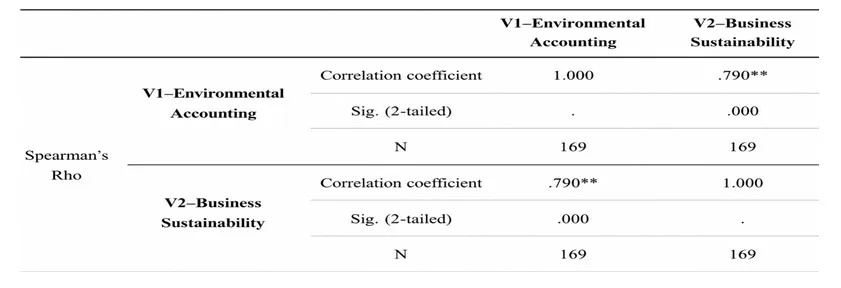
Table 6: Relationship between Environmental Accounting and Corporate Sustainability
Note: The correlation is significant at the 0.01 level (two-tailed)
Comment: According to this table, a correlation coefficient of p = 0.790 was obtained, with a two-tailed significance of p = 0.000; therefore, it is confirmed that a significant relationship does exist. The result indicates a high and statistically significant positive correlation.
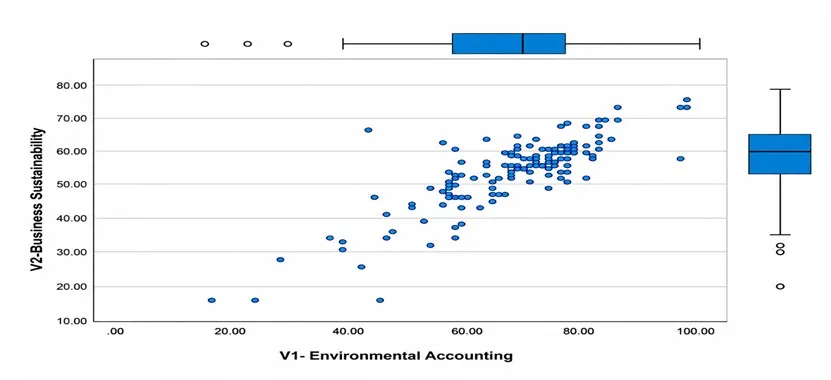
Figure 1. Relationship between Environmental Accounting and Corporate Sustainability
Generated in IBM SPSS Statistics 27.
Scatterplot with boxplots
Comment: Analysis of the scatterplot reveals a simultaneous movement between Environmental Accounting and Corporate Sustainability, corroborating the previous results, which confirm a positive relationship with a Spearman’s Rho coefficient (p = 0.790; p < 0.001).
Discussion and Conclusions
Based on the results obtained in this study, with regard to the overall objective, there is a strong positive correlation between Environmental Accounting and Corporate Sustainability in construction companies; therefore, it was confirmed that a proper management of Environmental Accounting contributes decisively to strengthening Corporate Sustainability in the construction sector. Consequently, Le et al. (2019) assert that environmental accounting improves financial efficiency, serving as a strategy for sustainable development, while Reyes et al. (2024) note that environmental accounting, when integrated with eco-efficiency indicators, enhances the management of environmental accounting and strengthens corporate sustainability when incorporated into organizational strategy. Rasyid et al. (2024) maintain that environmental accounting is a useful tool for strengthening corporate sustainability, especially in SMEs. Finally, Xia et al. (2025) demonstrated that environmental accounting is the financial language that makes sustainability measurable and manageable.
The positive relationship observed among the study variables highlights that environmental accounting plays a strategic role, enabling sustainable decision-making in addition to its financial function. Similarly, it allows for the identification of expenditures resulting from various environmental practices, thereby significantly strengthening corporate social responsibility. Organizational performance is optimized, requiring greater environmental control in the construction sector given its long-term impact; furthermore, it enables the generation of sustainability reports to enhance the institutional image, thereby legitimizing operations in the eyes of stakeholders. Thanks to Environmental accounting, external factors that negatively impact the achievement of business objectives in construction companies can be identified.
With regard to the first specific objective, there is a moderate positive correlation between the recording of environmental costs and corporate sustainability, indicating that, as companies improve their recording of environmental costs, their level of corporate sustainability in the construction sector increases. This result is consistent with the findings of Carandang and Ferrer (2020), who demonstrate that the disclosure of environmental costs can have positive effects on economic performance. Similarly, Zhringri and Zapata (2023) note that a lack of knowledge regarding environmental costs limits the ability to mitigate environmental impact and advance toward corporate sustainability. On the other hand, Ahmed et al. (2024) indicated that integrating environmental costs into sustainable management improves both financial and environmental performance. Similarly, Liu et al. (2024) concluded that environmental costs serve as the necessary starting point as a strategic asset for corporate sustainability. Finally, Camargo (2024) demonstrated that environmental costs are the key to transforming an expense into an investment capable of generating long-term value.
Regarding the second specific objective, there is evidence of a moderate positive correlation between the application of tools and corporate sustainability, demonstrating that the proper application of tools contributes to strengthening corporate sustainability in the construction sector. Meanwhile, Le et al. (2019) assert that EMA tools improve companies’ environmental and financial efficiency, thereby strengthening corporate sustainability. According to Sinforoso and Pelegrin (2021), the application of environmental accounting tools is essential for responsible decision-making and for strengthening ethical and sustainable business management. In turn, Camargo (2024) argues that the application of these tools, such as material and cost flow analysis, is what enables the transformation of environmental obligations into opportunities that generate economic value in sustainability.
With regard to the third specific objective, there is evidence of a moderate positive correlation between environmental reporting and corporate sustainability, indicating that the proper presentation of environmental reports contributes to strengthening corporate sustainability in the construction sector. Along these lines, Sinforoso et al. (2021) demonstrate that environmental accounting facilitates the preparation of sustainability reports, enabling companies to comply with regulatory requirements and strengthen their sustainable performance. Likewise, Carandang and Ferrer (2020) note that the impact of environmental reporting on sustainability depends on the type of information disclosed, highlighting that reports on environmental costs have positive effects on financial indicators which is communicated effectively and to high-quality standards, thereby strengthening corporate sustainability. In turn, Liu et al. (2024) conclude that environmental reporting, based on cost tracking, is a key driver of Environmental, Social, and Governance (ESG) performance.
Similarly, with regard to specific objective 4, there is evidence of a moderate positive correlation between strategic integration and corporate sustainability, indicating that the strategic integration of environmental management is a major factor in strengthening corporate sustainability in the construction sector. Consequently, Muñoz and Enciso (2021) assert that the strategic integration of proper environmental accounting is the only path to achieving the SDGs. Along the same lines, Sinforoso (2022) notes that integrating environmental impacts into corporate strategy not only meets ethical criteria but also positively influences financial profitability. Subsequently, Ahmed et al (2024) demonstrate that integrating environmental costs with sustainable management improves the financial and environmental performance of the construction sector. Finally, Reyes et al. (2024) demonstrate that integrating environmental accounting with sustainable management improves eco-efficiency and strengthens decision-making.
With regard to the fifth specific objective, there is evidence of a moderate positive correlation between organizational culture and corporate sustainability, indicating that an organizational culture oriented toward environmental management is a determining factor in the consolidation of corporate sustainability in the construction sector. Consequently, Zhingri and Zapata (2023) show that the absence of an organizational culture oriented toward environmental accounting reflects low staff awareness, and that the lack of environmental accounting systems limits corporate sustainability. According to Reyes et al. (2024), active environmental management reflects a sustainable organizational culture and is associated with better eco-efficiency indicators, thereby strengthening corporate sustainability. For his part, Camargo (2024) argues that corporate sustainability is strengthened when organizational culture integrates environmental protection, generating long-term benefits. Meanwhile, Jankalová and Jankal (2024) note that a proactive organizational culture, supported by technology, drives sustainable, ethical, and innovative practices to address environmental challenges.
The results show a positive and significant relationship between environmental accounting and corporate sustainability, supported by stakeholder theory (Freeman, 1984), which notes that transparent management strengthens relationships with various stakeholder groups. Similarly, institutional theory (DiMaggio and Powell, 1983) explains that companies adopt environmental practices to respond to the demands of their environment. In turn, the resources and capabilities theory (Barney, 1991) helps us understand that environmental accounting can become an internal strength that promotes more sustainable performance.
Conclusions
In concordance with the general objective, it is concluded that there is a high positive correlation between environmental accounting and corporate sustainability in companies in the construction sector, demonstrating that the information reported through accounting constitutes a strategy to strengthen sustainability and enable companies to align themselves with the principles of social and environmental responsibility.
There is a moderate positive relationship between the recording of environmental costs and corporate sustainability in the construction sector; since the recognition and accounting for these costs, through the use of records, allow for the quantification of allocations related to environmental aspects, thereby generating economic value.
There is a moderate positive relationship between the application of environmental accounting tools and corporate sustainability in construction companies; this leads to the conclusion that environmental accounting contributes significantly to strengthening corporate sustainability. To this end, it is imperative to use digital tools that enable efficient resource management, reduce negative impacts, foster innovation, and generate value for sustainability.
There is a moderate positive relationship between environmental reporting and corporate sustainability; therefore, it is concluded that it is necessary to ensure the quality and transparency of the information derived from financial reports, in strict compliance with regulatory requirements, to improve ESG indicators, and to strengthen stakeholder trust.
The strategic integration of environmental accounting into corporate management is moderately and positively related to corporate sustainability; therefore, environmental impacts must be incorporated into organizational strategy, thereby allowing for the alignment of economic and environmental objectives and ensuring compliance with environmental management standards. Furthermore, it shows a very high correlation with corporate sustainability in the construction sector.
These results provide empirical evidence in a largely understudied context and offer useful information for companies to incorporate environmental accounting practices into their management processes. Among the limitations, it should be noted that the research was conducted exclusively among small construction firms and employed a cross-sectional design with a correlational scope; therefore, the results cannot be generalized to other sectors or used to establish causal relationships. In this regard, it is recommended that future research expand the sample, include companies of different sizes and sectors, adopt longitudinal designs, and employ more comprehensive statistical techniques to further explore the relationship between the two variables.
References
Ahmad, I., Abdullah, A., Khalik, A. and Putra, A.H.P.K. (2025) ‘The mediating role of green accounting management on financial performance: Integrated stakeholder theory and natural resource-based view’, International Journal of Energy Economics and Policy, 15(3), pp. 245–261. doi:10.32479/ijeep.18135.
Ahmed, A.I., Obaid, S.A.A., Majeed, Y. and Khattab, H.Y. (2024) ‘Integrating environmental cost accounting with sustainable management for impact assessment’, Journal of Eco humanism, 3(5), pp. 909–926. doi:10.62754/joe. v3i5.3946.
Ahn, S., Kim, T. and Jeon, M. (2022) ‘Critical analysis of trends in integrated modular construction research with a focus on sustainability’, Sustainability, 14(19), Article 12282. doi:10.3390/su141912282.
Alnaim, M. and Metwally, A.B.M. (2024) ‘Institutional pressures and environmental management accounting adoption: Do environmental strategy matter?’, Sustainability, 16(7), Article 3020. doi:10.3390/su16073020.
Astari, T.A., Laurens, S., Wicaksono, A. and Sujarminto, A. (2023) ‘Green accounting and disclosure of sustainability report on firm values in Indonesia’, E3S Web of Conferences, 426, Article 02024. doi:10.1051/e3sconf/202342602024.
Atkins, J.F., Doni, F., McBride, K. and Napier, C. (2023) ‘Exploring the historical roots of environmental and ecological accounting from the dawn of human consciousness’, Accounting, Auditing & Accountability Journal, 36(6), pp. 1473–1502. doi:10.1108/AAAJ-03-2023-6354.
Barney, J. (1991) ‘Firm resources and sustained competitive advantage’, Journal of Management, 17(1), pp. 99–120. doi:10.1177/014920639101700108.
Burritt, R.L., Schaltegger, S. and Christ, K.L. (2023) ‘Environmental management accounting: Developments over the last 20 years from a framework perspective’, Australian Accounting Review, 33(4), pp. 336–351. doi:10.1111/auar.12407.
Camargo Estrella, J.A. (2024) ‘Environmental accounting: challenges and opportunities for companies and society in environmental stewardship’, Revista de Investigación Académica Sin Frontera, (41). doi:10.46589/riasf.vi41.686.
Candy, J. and Peña, M. (2022) ‘A framework for a green accounting system: Exploratory study in a developing country context, Colombia’, Environment, Development and Sustainability. doi:10.1007/s10668-022-02445-w.
Cantillo Orozco, A., Rincón Rodríguez, I.C., Bernal Payares, O. and Chaparro Medina, J.E. (2020) ‘ Perspective on environmental accounting policy and administrative and financial information systems’, Utopía y Praxis Latinoamericana, 25(Suppl. 3), pp. 201–223. doi:10.5281/zenodo.3907071.
Carandang, J.C. and Ferrer, R.C. (2020) ‘Effect of environmental accounting on financial performance and firm value of listed mining and oil companies in the Philippines’, Asia-Pacific Social Science Review, 20(1), Article 11. doi:10.59588/2350-8329.1287.
Centro Nacional de Planeamiento Estratégico (CEPLAN) (n.d.) The negative impact of human activities on the environment in Peru. Gobierno del Perú. Available at: https://www.gob.pe/institucion/ceplan/noticias/ (Accessed: 29 June 2026).
Dhar, B.K., Sarkar, S.M. and Ayittey, F.K. (2022) ‘Impact of social responsibility disclosure on green accounting practices and sustainable development: A study of heavily polluting companies in Bangladesh’, Corporate Social Responsibility and Environmental Management, 29(1), pp. 71–78. doi:10.1002/csr.2174.
DiMaggio, P.J. and Powell, W.W. (1983) ‘The iron cage revisited: Institutional isomorphism and collective rationality in organizational fields’, American Sociological Review, 48(2), pp. 147–160. doi:10.2307/2095101.
Freeman, R.E. (1984) Strategic Management: A Stakeholder Approach. Boston: Pitman.
Gomes, K.F., Blazquez, A. de L.T., Leite, E. and González García, G. (2020) ‘Environmental Accounting: From a social responsibility perspective’, International Journal of Professional Business Review, 5(1), pp. 17–27. doi:10.26668/businessreview/2020.v5i1.171.
Huamaní Peralta, A. and Quispe Mamani, J.C. (2024) ‘The Ecological Footprint de la Universidad Nacional del Altiplano, Peru: A tool for Sustainable Management’, Sustainability, 16(15), Article 6672. doi:10.3390/su16156672.
Jankalová, M. and Jankal, R. (2024) ‘Contribution of accounting to sustainable development’, Sustainability, 16(24), Article 11090. doi:10.3390/su162411090.
Kurniawan, P.S. and Basuki, B. (2024) ‘Sustainability accounting as a business strategy for small and medium-sized enterprises: Theoretical arguments’, Quality – Access to Success, 25(203), pp. 102–109. doi:10.47750/QAS/25.203.11.
Le, T.T., Nguyen, T.M.A. and Phan, T.T.H. (2019) ‘Environmental management accounting and performance efficiency in the Vietnamese construction material industry: A managerial implication for sustainable development’, Sustainability, 11(19), Article 5152. doi:10.3390/su11195152.
Liu, J.B., Yuan, X.Y. and Lee, C.-C. (2024) ‘Prediction of carbon emissions in China’s construction industry using an improved grey prediction model’, Science of the Total Environment, 938, Article 173351. doi: 10.1016/j.scitotenv.2024.173351.
Muñoz Prieto, M. and Enciso Yzaguirre, V. (2021) ‘Environmental Accounting as a tool for incorporating environmental sustainability into social economy enterprises’, CIRIEC-España, Revista de Economía Pública, Social y Cooperativa, (103), pp. 149–277. doi:10.7203/CIRIEC-E.103.17838.
Nielsen, C. (2023) ‘ESG reporting and metrics: From double materiality to key performance indicators’, Sustainability, 15(24), Article 16844. doi:10.3390/su152416844.
Nwogu, F.U., Ubuoh, E.A., Kanu, C., Ogbaji, E.E. and Nwawuike, N. (2025) ‘Effect of cement production processes on dry atmospheric chemistry in South-South Nigeria’, Environmental Sciences Europe, 37, Article 90. doi:10.1186/s12302-025-01135-4.
Pasupuleti, A., Ayyagari, L.R. and Vadapalli, T.K. (2025) ‘Sustainability through green finance: A quantile analysis of Indian manufacturing firms’, Discover Sustainability. doi:10.1007/s43621-025-01394-4.
Qi, H., Dong, Z., You, X., Zhou, S. and Zhu, Y. (2025) ‘Extended exergy accounting of agricultural resources in China’s four provinces of mountains and rivers’, Scientific Reports, 15, Article 22213. doi:10.1038/s41598-025-06828-7.
Rasyid, S., Azis, N.A. and Rahmat, A. (2024) ‘Green accounting for medium-sized enterprises: A review of participatory action research towards a sustainable future’, International Journal of Economics and Financial Issues, 15(1), pp. 84–92. doi:10.32479/ijefi.17331.
Ren, L., Ru, H., Xiao, R. and Ju, Y. (2025) ‘Comprehensive utilization and optimal allocation of environmental protection building materials in the construction of civil engineering’, Journal of Applied Science and Engineering, 29(2), Article 17. doi:10.6180/jase.202602_29(2).0017.
Reyes Maldonado, N.M., Durán Peña, J.A. and Angarita Vargas, D.A. (2024) ‘Eco-efficiency indicators and sustainability strategies in the Colombian manufacturing industry: An exploratory study focusing on environmental accounting’, Innovate: Journal of Administrative and Social Sciences, 34(94), pp. 1–27. doi:10.15446/innovar. v34n94.116814.
Sinforoso Martínez, S. (2022) ‘Environmental accounting in the finances of sustainable companies in Mexico’, Revista de Gestão Social e Ambiental, 16(2), pp. 1–15. doi:10.24857/rgsa. v16n2-00.
Sinforoso Martínez, S. and Pelegrin Mesa, A. (2021) ‘An in-depth look at the status of environmental financial accounting in Mexico from the point of view of stakeholder theory: Myth or reality?’, Revista Brasileira de Gestão de Negócios, 23(2), pp. 318–336. doi:10.7819/rbgn.v23i2.4107.
Sinforoso Martínez, S., Álvarez Velázquez, E. and Salas Benítez, L. (2021) ‘Environmental Water Accounting in Sustainable Companies established in Mexico’, Revista Venezolana de Gerencia, 26(5), pp. 614–631. doi:10.52080/rvgluz.26.e5.39.
Stanitsas, M., Kirytopoulos, K. and Aretoulis, G. (2021) ‘Evaluating organizational sustainability: A multi-criteria-based approach to sustainable project management indicators’, Systems, 9(3), Article 58. doi:10.3390/systems9030058.
Suchman, M.C. (1995) ‘Managing legitimacy: Strategic and institutional approaches’, Academy of Management Review, 20(3), pp. 571–610. doi:10.2307/258788.
Tri Ayu Astari, A., Laurens, S., Wicaksono, A. and Sujarminto, A. (2023) ‘Green accounting and disclosure of sustainability report on firm value: Evidence from Indonesian manufacturing companies’, E3S Web of Conferences, 426, Article 02024. doi:10.1051/e3sconf/202342602024.
World Commission on Environment and Development (WCED) (1987) Our Common Future. Oxford: Oxford University Press.
Xia, L., Fatema, N., Rahman, M.M. and Hossain, A. (2025) ‘Nexus of environmental management accounting and carbon emission management on environmental, social, and governance performance: Evidence from symmetrical and asymmetrical approaches’, Humanities and Social Sciences Communications, 12, Article 1073. doi:10.1057/s41599-025-05465-9.
Zhao, Y., Li, C.Z., Shen, G.Q., Teng, Y., Wu, H. and Liu, R. (2025) ‘Managing carbon emissions in construction: Current status and emerging trends’, Renewable and Sustainable Energy Reviews, 211, Article 115243. doi: 10.1016/j.rser.2024.115237.
Zhingri Lalvay, C.A. and Zapata Sánchez, P.E. (2023) ‘Environmental Accounting and its contribution to mitigating Environmental Impact: The case of Telecomunicaciones del Sur, Ecuador’, Religación, 8(36), Article e2301046. doi:10.46652/rgn. v8i36.1046.